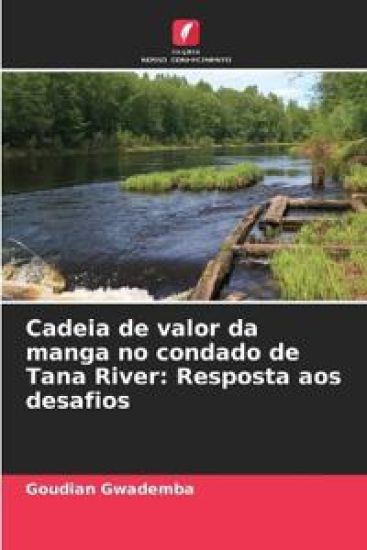
Tana River County ist einer der siebenundvierzig (47) Bezirke in Kenia. Der Bezirk, der nach dem Tana River benannt ist, grenzt im Norden an Garissa, im Nordwesten an Isiolo, im Nordosten an Lamu, im S dosten an Kilifi, im S den an Taita Taveta und im Westen an Kitui. Der Bezirk liegt in der ehemaligen Provinz Coast und ist nach dem Tana-Fluss benannt, der durch ihn flie t, w hrend er in den Indischen Ozean m ndet. Der Bezirk hat eine Gesamtfl che von 38.475 km , einen K stenstreifen von 35 km und macht 6,61 Prozent der Gesamtfl che Kenias aus. Die Hauptstadt des Bezirks ist die Stadt Hola mit 17.337 Einwohnern. Weitere gr ere St dte sind Madogo, Bura und Garsen. Eine der wichtigsten nat rlichen Ressourcen des Landkreises ist der Fluss Tana, Kenias gr ter Fluss, der durch den Landkreis flie t und in den Indischen Ozean m ndet. Der Fluss bildet auch das Tana-Flussdelta, ein Feuchtgebiet, das etwa 1.300 km umfasst und mehr als 100.000 Einwohner versorgt (Leauthaud et al., 2013).
Le comt de Tana River est l'un des quarante-sept (47) comt s du Kenya. Ce comt , qui tire son nom de la rivi re Tana, est bord au nord par Garissa, au nord-ouest par Isiolo, au nord-est par Lamu, au sud-est par Kilifi, au sud par Taita Taveta et l'ouest par Kitui. Il se trouve dans l'ancienne province de la C te et doit son nom la rivi re Tana qui le traverse et se jette dans l'oc an Indien. Le comt a une superficie totale de 38 475 km2 et une bande c ti re de 35 km. Il repr sente 6,61 % de la superficie totale du Kenya. La capitale du comt est la ville de Hola, qui compte 17 337 habitants. Les autres villes importantes sont Madogo, Bura et Garsen. L'une des principales ressources naturelles du comt est la rivi re Tana, le plus grand fleuve du Kenya, qui traverse le comt et se jette dans l'oc an Indien. Le fleuve forme galement le delta de la rivi re Tana, une zone humide qui couvre environ 1 300 km2 et abrite plus de 100 000 habitants (Leauthaud et al., 2013).
La contea di Tana River una delle quarantasette (47) contee del Kenya. La contea, che prende il nome dallo stesso fiume Tana, confina a nord con Garissa, a nord-ovest con Isiolo, a nord-est con Lamu, a sud-est con Kilifi, a sud con Taita Taveta e a ovest con Kitui. Si trova nell'ex provincia della Costa e prende il nome dal fiume Tana che la attraversa per sfociare nell'Oceano Indiano. La contea ha una superficie totale di 38.475 km2, una fascia costiera di 35 km e rappresenta il 6,61% della superficie totale del Kenya. Il capoluogo della contea la citt di Hola, che ha una popolazione di 17.337 abitanti. Altre citt importanti sono Madogo, Bura e Garsen. Una delle importanti risorse naturali della contea il fiume Tana, il pi grande fiume del Kenya, che attraversa la contea e sfocia nell'Oceano Indiano. Il fiume forma anche il Delta del fiume Tana, una zona umida che copre circa 1.300 km2 e supporta pi di 100.000 abitanti (Leauthaud et al., 2013).
O Condado de Tana River um dos quarenta e sete (47) condados do Qu nia. O condado, cujo nome deriva do pr prio rio Tana, faz fronteira com Garissa a norte, Isiolo a noroeste, Lamu a nordeste, Kilifi a sudeste, Taita Taveta a sul e Kitui a oeste. Situa-se na antiga prov ncia da Costa e o seu nome deriva do rio Tana, que o atravessa e desagua no Oceano ndico. O condado tem uma rea total de 38.475 km2, uma faixa costeira de 35 km e representa 6,61% da superf cie total do Qu nia. A capital do Condado a cidade de Hola, que tem uma popula o de 17.337 habitantes. Outras cidades importantes incluem Madogo, Bura e Garsen. Um dos recursos naturais mais importantes do condado o rio Tana, o maior rio do Qu nia, que atravessa o condado e desagua no Oceano ndico. O rio tamb m forma o Delta do Rio Tana, uma zona h mida que cobre cerca de 1.300 km2 e suporta mais de 100.000 habitantes (Leauthaud et al., 2013).
Fourteen years ago, a corpus of bamboo-strip texts was found in a late-fourth-century-BCE tomb at Jingmen, Hubei province in central China. The discovery of the "Guodian" texts, together with other recently discovered Warring States manuscripts, has revolutionized the study of early Chinese intellectual history. Kenneth Holloway argues that the Guodian corpus puts forth a political philosophy based on the harmonious interconnection of individuals engaged in moral self cultivation. This unique worldview, says Holloway, cannot meaningfully be categorized as "Confucian" or "Daoist," because it shares important concepts and vocabulary with a number of different textual traditions that have anachronistically been characterized as competing or incompatible "schools" of thought. He finds that within the Guodian corpus familiar philosophical concepts and texts are applied in distinctive ways, presenting a worldview that is quite different from the received textual traditions. In addition to contributing to our understanding of this particular body of texts, Holloway proposes a methodology for assessing a corpus of texts without relying on assumptions and definitions that derive from two millennia of scholarship.
Writing more than one hundred years ago, African American scholar W.E.B. Du Bois speculated that the great dilemma of the twentieth century would be the problem of "the color line." Nowhere was the dilemma of racial discrimination more entrenched--and more complex--than South Africa. This book looks at South Africa's freedom struggle in the years surrounding African decolonization, and it uses the global apartheid debate to explore the way new nation-states changed the international community during the mid-twentieth century. At the highpoint of decolonization, South Africa's problems shaped a transnational conversation about nationhood. Arguments about racial justice, which crested as Europe relinquished imperial control of Africa and the Caribbean, elided a deeper contest over the meaning of sovereignty, territoriality, and development. This contest was influenced--and had an impact on--the United States. Initially hopeful that liberal international institutions would amicably resolve the color line problem, Washington lost confidence as postcolonial diplomats took control of the U.N. agenda. The result was not only America's abandonment of the universalisms that propelled decolonization, but also the unraveling of the liberal order that remade politics during the twentieth century. Based on research in African, American, and European archives, Gordian Knot advances a bold new interpretation about African decolonization's relationship to American power. The book promises to shed light on U.S. foreign relations with the Third World and recast our understanding of liberal internationalism's fate after World War II.
Immense disasters throughout the world have changed people's lives, entire towns and cities, and the course of history. Each title in this series discusses a disaster, including the cause, damage, aftermath, and rebuilding. This series is at a Level 3 and is written specifically for transitional readers. Aligned to the Common Core standards & correlated to state standards. Dash is an imprint of Abdo Zoom, a division of ABDO.
gordian objective is the second chronicle in the saga, Madman Chronicles: The Warrior. Wulf is taken to the labyrinth against his will to have a one on one conversation with Hood, a friend and fellow soldier who had gone MIA and was presumed killed in action. And the dead are many. They fill vehicles and buildings in every stage of decomposition. They're steam-shoveled into piles, dumped into manmade canals then set on fire.There is no escaping the prison of war. The house is on fire and children inside. Elders and warriors, fathers and mothers, caretakers are burdened with difficult life decisions at every turn of the wheel. Helpless in the face of a war machine that devours their young, soldiering; imprisoning and criminalizing those who refuse to serve when the only way out is money and they have none, the choice is to surrender them to the machine or strip them bare and drive them into the guns of those who set the house aflame to bring them to ground. They're waiting just outside, brothers and sisters, others' children, trained, locked, cocked and ready to drop the hammer on established targets, dissenters, children of rebels, heretics, those who refuse to take part in the braggadocio and glory of "We're number one ". The elders dig a hole, climb in and take the children, mothers, and the infirm with them. Warriors arm themselves as best they can, paint their skin, mount their dragons. Rats in a corner, a corner of their time and choosing, these warriors circle the hole, the digging of the hole, prepare to fight and die to protect those inside, one way in and no way out. We hid in brown shirts until infiltrated.A society that condones the death of children to convenience and war is lost.
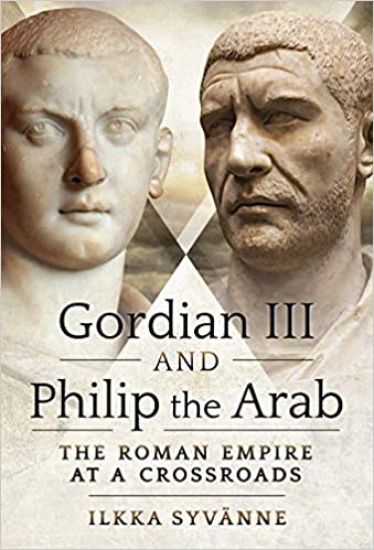
This is a dual biography of the emperors Marcus Antonius Gordianus ('Gordian III', reigned 238-244) and Marcus Julius Philippus Augustus ('Philip the Arab', reigned 244-249), focusing mainly on the political and military events during this crucial stage of the 'Third Century Crisis'. The tumultuous 'Year of the Six Emperors' saw Gordian raised to the purple at just thirteen years of age, becoming the youngest emperor in the Empire's history at a time when the borders were threatened by the powerful Sassanid Persians and the Goths, among others. Gordian died on a campaign against the Persians, either in battle or possibly murdered by his own men. Philip, succeeded Gordian, made peace with Shapur I and returned to Italy. His reign encompassed the spectacular celebration of Rome's millennium in 248 but the wars in the Balkans and East together with crippling taxation led to mutinies and rebellions. Philip and his brother had until then fought successfully against the Persians and others but this did not save Philip, who was killed by a usurper's forces at the Battle of Verona in 249\. He had been Rome's first Christian emperor and the author considers why it was fifty years before she had another.
gouldian fiinch If you are thinking of bringing home a beautiful, honey-voiced Gouldian Finch, then you should know that the birds are a big responsibility. Although they are small in size, these birds require just as much care as any other species of birds that are kept as pets. Gouldian Finches are extremely colorful birds, which has earned them the name, Rainbow Finch. These birds also go by the name of Lady Gouldian. Before you decide to bring a Gouldian Finch home, learning as much as you can about the bird will do you a lot of good. This will help you understand specific needs of the bird and provide for the bird as needed. This book is ideal for beginners in the world of Finches. It takes you through everything that you need to know about Gouldian Finches including: - Cage requirements - Diet - Grooming - Healthcare for the birds- Natural history of the bird- Personality of these birds- Safety of the birds - The right source to get the bird- Tips to help the bird settle into your home- Training There is a lot more information that will also help you decide if, in fact, the Gouldian Finch is the right bird for your home or not.
The essays contained in this volume include a number of substantial works: on the Yoga tradition, and how it has emerged in the modern age; on an exploration of the roots of the view of an absolutist god and the way this has shaped the development of Western civilisation; some reflections on what it is to be a human being in the world; an exploration of three significant figures: Freud, Plato, and Buddha so that they can be seen and compared as figures in a landscape today. There are also essays on Rudolf Steiner's Esotericism; the year 1948, that gave birth to the NHS and the State of Israel, and thoughts following the reading of 'The Essence of Nihilism' by Emmanuele Severino. Then there are some short pieces on: Buddhism; Death and Dying; the Buddha's Enlightenment in the Majjhima Nikaya and the Lalitavistara Sutra; Stanislav Grof's The Cosmic Game; the cosmopsychism of Itay Shani and on Greek Tragedy.