Kirjojen hintavertailu. Mukana 11 244 527 kirjaa ja 12 kauppaa.

Kirjahaku

Etsi kirjoja tekijän nimen, kirjan nimen tai ISBN:n perusteella.

1000 tulosta hakusanalla Graham Rendoth; Reg Lynch

Bent

Bent

Graham Rendoth; Reg Lynch

StudiOh!
2021
pokkari
Bent is a graphic collection by Graham Rendoth that includes 97 pen and digital images that explore notions of line, space and mass. The coathanger drawings evolved from long-lost works made from wire coathangers that came from his mother's dry-cleaning shop. His cloud-like popcorns are the only evidence that the corns were ever popped, as each buttery piece was devoured immediately after being profiled. Other images reflect his interests in different realms of physics and nature - there is enjoyment in following his line move around the page to find out where it never knew it was going. What should be an odd family of figurative and abstract images now live together in a comfortably bent way within these pages.As said by artist/cartoonist Reg Lynch, who wrote the pithy foreword: 'These lovely, clear, unselfconscious drawings are like X-rays or biological slides or coat hangers. To be looked through, out to a vastness beyond and at the same time back in, to us humans.'
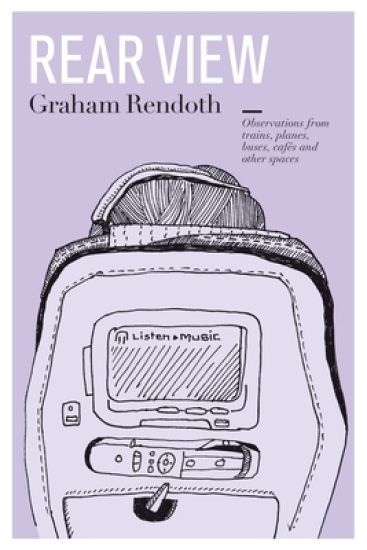
Rear View

Rear View

Graham Rendoth

StudiOh!
2021
pokkari
From 1975 for about 200 days each year over four years Graham Rendoth travelled one-and-a-half hours each way by train and bus from my Wiley Park home in Sydney's south-west to study at Randwick Technical College and later to Sydney College of the Arts in Balmain. That was a lot of travel, with time to think about college projects, read, and to look at people. For decades as a traveller on public transport, these rear-view portraits have been a discreet way to sketch fellow travellers, while avoiding the confrontation of looking at these 'sitters' directly, he still fondly captures something of their essence and their immediate space. He sees a challenge in capturing just enough detail so that each person remained individual. The photographs are more recent, but again there is a need to wonder about what that person is thinking and how they fit into this world. With pencil and pen, digital sketches, photography, collage and printmaking, the 226 drawings in Rear View are a diverse, fresh alternative to traditional face-view portraits. There are also 43 photographs.
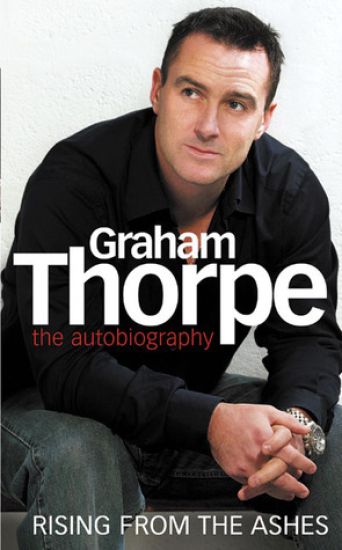
Graham Thorpe

Graham Thorpe

Graham Thorpe

HarperSport
2006
nidottu
RIP GRAHAM THORPE 1969-2024 Graham Thorpe’s achievements on the cricket field contrasted wildly with his personal problems, where drink and depression combined to send him spiralling off the rails. This is his brutally honest life story. Graham Thorpe was one of the best batsmen in world cricket for more than a decade. Yet the national press hounded him as 'English cricket's most disturbed player' for pulling out of a series of tours and turning his back on the game more than once. With painful candour and often unexpected humour, Thorpe dissects his career in cricket and the inner recesses of his private life: the impact of his bitter divorce; the suicidal depression that afflicted him in his darkest hours; the reasons why he needed to 'save himself' by withdrawing from past England tours; the elation of his magnificent century on his comeback Test at the Oval in 2003; and his fresh outlook in life with a new partner after confronting his own failings and past troubles. Twelve years on from his Test debut against Australia, Thorpe took the decision to retire from international cricket after the disappointment of his controversial non-selection for the Ashes 2005 tour. With updated material on his coaching spell in Australia – where he gained valuable insight into cricket’s No 1 nation. Graham Thorpe died in August 2024.
The Portable Graham Greene

The Portable Graham Greene

Graham Greene

PENGUIN CLASSICS
2005
nidottu
In his essays, criticism, screenplays, autobiography, and novels, Graham Greene explored a territory located somewhere on the border between despair and faith, treachery and love. This cross-section of Greene's work was originally selected with the author's help in 1973 and has now been extensively revised and updated. It includes the complete novels The Heart of the Matter and The Third Man, along with excerpts from ten other novels; short stories; selections from Greene's memoirs and travel writings; essays on English and American literature; and public statements on issues that range from repression in the Soviet Union to torture in Northern Ireland to the paradoxical virtue of disloyalty. An extensive critical and biographical introduction, headnotes, chronology, and bibliography by editor Philip Stratford make The Portable Graham Greene as invaluable for scholars as it is essential for any traveler through Greene's richly menacing and strangely seductive literary landscapes. For more than seventy years, Penguin has been the leading publisher of classic literature in the English-speaking world. With more than 1,700 titles, Penguin Classics represents a global bookshelf of the best works throughout history and across genres and disciplines. Readers trust the series to provide authoritative texts enhanced by introductions and notes by distinguished scholars and contemporary authors, as well as up-to-date translations by award-winning translators.
Graham Greene's Journeys in Spain and Portugal

Graham Greene's Journeys in Spain and Portugal

Carlos Villar Flor

Oxford University Press
2023
sidottu
In the 1970s and 1980s, Graham Greene adopted the yearly habit of touring Spain and Portugal in the company of his Spanish friend, the priest and university professor Leopoldo Durán. The most outstanding fruit of these trips, almost always in summer, was the inspiration for his major Hispanic novel, Monsignor Quixote (1982), a celebration of friendship above ideological, political, or religious differences, incorporating allusions to Cervantes' famous comic novel within a critical vision of post-Franco Spain. Graham Greene's Journeys in Spain and Portugal: Travels with My Priest reconstructs each of Greene's trips through the Iberian Peninsula between 1976 and 1989, detailing their preparations, itineraries, anecdotes, companions, topics of conversation, and often surprising repercussions. Carlos Villar Flor outlines the trips' biographical importance and fills numerous gaps of documented information on this final phase of Greene's life. His detailed inquiry into Greene's Iberian adventures with Durán also helps us better to understand the genesis and resonances of Monsignor Quixote, which over time became Greene's favourite of his own novels, and the subsequent television adaptation. The book also addresses incidents and aspects that, for one reason or another, never emerged in Durán's own account of their travels together, Graham Greene: Friend and Brother (1994). These include the possible motivations for Greene's first visit to Spain, related to his role as an informant for MI6; the mysterious visits to an old English lady located in Sintra; the writer's attempts in the early 1980s to establish links with Spanish socialists; or the fascinating story of a Spanish nobleman's suspicious proposal to create a Greene Foundation. Ultimately, Greene's trips to Spain and Portugal appear as more layered and intriguing than Durán's account suggests, whilst Durán himself emerges aptly as a complex and quixotic figure--as much the protagonist of this book as Greene.
Graham Greene's Catholic Imagination

Graham Greene's Catholic Imagination

Mark Bosco

Oxford University Press Inc
2005
sidottu
Much has been written about Graham Greene's relationship to his Catholic faith and its privileged place within his texts. His early books are usually described as 'Catholic Novels' - understood as a genre that not only uses Catholic belief to frame the issues of modernity, but also offers Catholicism's vision and doctrine as a remedy to the present crisis in Western civilization. Greene's later work, by contrast, is generally regarded as falling into political and detective genres. In this book, Mark Bosco argues that this is a false dichotomy created by a narrowly prescriptive understanding of the Catholic genre and obscures the impact of Greene's developing religious imagination on his literary art.
Graham Greene's Narrative Strategies

Graham Greene's Narrative Strategies

M. Roston

Palgrave Macmillan
2006
sidottu
In Narrative Strategies Roston focuses upon the Greene's texts themselves and their manipulation of reader response, highlighting the innovative strategies that Greene developed to cope with the mid-century invalidation of the traditional hero. The result is a stimulating new reading of the major novels.
Graham Greene and the Politics of Popular Fiction and Film
One of the most popular, respected and controversial writers of the twentieth century, Greene's work has still attracted relatively little scholarly comment. Thomson charts the intricate dance between his novels and screenplays, his many audiences, and an intellectual establishment reluctant to identify the work of a popular writer as 'literature'.
Graham Greene: The Dangerous Edge

Graham Greene: The Dangerous Edge

Judith Adamson

Palgrave Macmillan
1990
sidottu
Since the war Graham Greene has travelled habitually to the world's trouble-spots and has provided leading newspapers and journals with articles about what he saw. While contending that a writer must be free of political affiliations he has commmitted himself to many countries and causes, and while insisting that literature must never be used for political ends he has written novels informed by a political urgency. The Dangerous Edge is about his political reportage and how the observations that formed it were transformed into literature. It is about how a novelist who struggled to record public issues dispassionately became in the process an important political conscience.
Graham Greene

Graham Greene

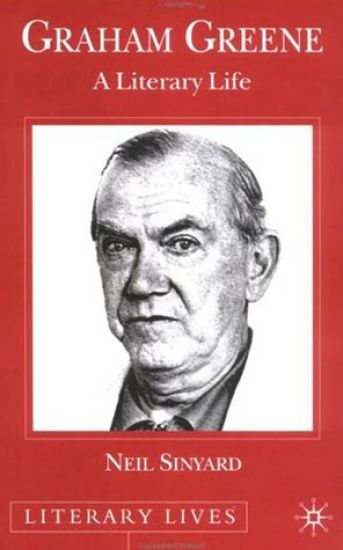
Neil Sinyard

Palgrave Macmillan
2003
sidottu
A new title in Palgrave Macmillan's Literary Lives series, this is a biographical narrative of Graham Greene's literary career. Among other things, it explores his motives for writing; the literary and cinematic influences that shaped his work; his writing routine and the importance of his childhood experience. Greene was elusive and enigmatic, and this book teases out the fiction from his autobiographies, the autobiography from his fictions, sharing Paul Theroux's view that you may not know Greene from his face or speech 'but from his writing, you know everything.'
Graham Greene

Graham Greene

Neil Sinyard

Palgrave Macmillan
2003
nidottu
A new title in Palgrave Macmillan's Literary Lives series, this is a biographical narrative of Graham Greene's literary career. Among other things, it explores his motives for writing; the literary and cinematic influences that shaped his work; his writing routine and the importance of his childhood experience. Greene was elusive and enigmatic, and this book teases out the fiction from his autobiographies, the autobiography from his fictions, sharing Paul Theroux's view that you may not know Greene from his face or speech 'but from his writing, you know everything.'
Graham Greene: A Life In Letters
One of the undisputed masters of English prose in the twentieth century, Graham Greene (1904-91) wrote tens of thousands of personal letters. This substantial volume presents a new and engrossing account of his life constructed out of his own words. Meticulously chosen and engagingly annotated, this selection of Greene's letters - including many to his family and close friends that were unavailable even to his official biographer - gives an entirely new perspective on a life that combined literary achievement, political action, espionage, travel, and romantic entanglement. The letters describe his travels in Mexico, Africa, Malaya, Vietnam, Haiti, Cuba and other trouble spots, where he observed the struggles of victims and victors with a compassionate and truthful eye. The book includes a vast number of unpublished letters to Evelyn Waugh, Auberon Waugh, Anthony Powell, Edith Sitwell, R. K. Narayan, Muriel Spark and other leading writers of the time. Some letters reveal the agonies of his romantic life, especially his relations with his wife, Vivien Greene, and with his mistress Catherine Walston. The sheer range of experience contained in Greene's correspondence defies comparison.