Kirjojen hintavertailu. Mukana 11 342 296 kirjaa ja 12 kauppaa.

Kirjahaku

Etsi kirjoja tekijän nimen, kirjan nimen tai ISBN:n perusteella.

1000 tulosta hakusanalla Grant F. C. Gillard

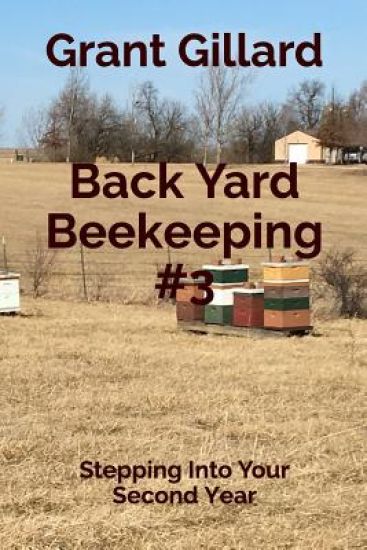
Back Yard Beekeeping #3: Stepping Into Your Second Year

Back Yard Beekeeping #3: Stepping Into Your Second Year

Grant F. C. Gillard

Independently Published
2019
nidottu
So you started keeping honey bees last year. Your first year, no doubt, was overwhelming. You meticulously prepared them for winter and much to your surprise, they survived Now what? On the other hand, if your first year ended in a total loss over the winter, what now? What lessons does a winter dead-out provide? What are the strategies to get a fresh start? How do you prevent repeating the same lessons over a second time?Second-year bee hives that survive the winter are an entirely different animal than the nuc or package you installed a year ago. These hives are ready go, which means a potential honey harvest awaits you. But before you order up your plastic squeeze bears and dream of winning a blue ribbon at the county fair, you will need to think about managing the swarming impulse. All colonies of honey bees carry a genetic instinct to swarm. If your honey bees swarm, you lose the margin of foragers responsible for your harvestable honey.Now the question becomes of whether or not you address the swarming inclination, and whether or not you want to harvest honey. Spoiler Alert: If you have close neighbors, it's a good idea to develop a strategy for swarm management. Secondarily, how will you prepare for a potential honey harvest? Where and how will you harvest your honey? Once harvested, then what? Where will you store it?Your second year also holds the promise of splitting hives, making nucs, and the possibilities of expanding. Maybe you'll need an additional location. How far do you want to take this dream of expanding your hobby?Second-year beekeeping holds a lot of promise. Each choice contains a variety of options. In this volume from the Back Yard Beekeeping series, Missouri beekeeper Grant Gillard explores potential scenarios and the possible options. Grant started keeping honey bees in 1981, back in the days when this hobby was far less complicated. Today, he manages around 200 colonies and sells his honey at local farmer's markets. Follow Grant's advice and suggestions to make the most of your hobby, with the special emphasis on choosing the option that works best for you.
Backyard Beekeeping #1: What to Expect When You're Expecting Honey Bees

Backyard Beekeeping #1: What to Expect When You're Expecting Honey Bees

Grant F. C. Gillard

Createspace Independent Publishing Platform
2017
nidottu
It never fails. I'm selling honey at the farmer's market, having a delightful conversation with a customer about the merits of my locally produced, unfiltered, raw honey. After we finish our exchange, the customer turns to leave, then pauses as if something else is on their mind. I wait with anticipation, but I know what's coming.Turning back to me, they lean in, and in a low, secretive tone as if someone else might be listening, they share, "I've been thinking about getting some bees, myself. What can I expect?" This manuscript is a compilation of questions I have asked, and more than a few questions I wish I had asked myself in 1981 when I started keeping bees. These are the questions most beekeepers fail to think about, largely because they don't have the experience to even think about what to think about. Beekeeping is more complicated than you can imagine, and not everyone is cut out to be a beekeeper. Asking intelligent questions might avoid a lot of wasted time, energy, and effort.My intent in this manuscript is to get you thinking about your plans and what preparations will bring those plans to fruition. I hope to give you realistic expectations without sounding like the proverbial wet blanket.
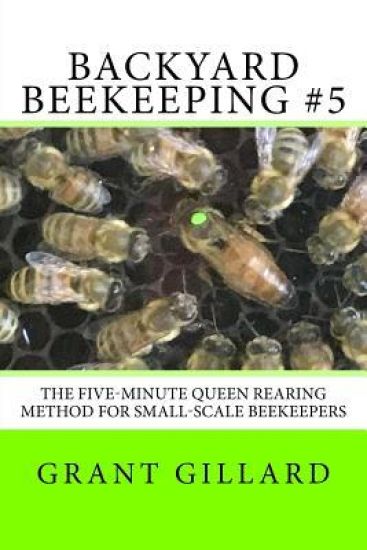
Backyard Beekeeping #5: The Five-Minute Queen Rearing Method for Small-Scale Beekeepers

Backyard Beekeeping #5: The Five-Minute Queen Rearing Method for Small-Scale Beekeepers

Grant F. C. Gillard

Createspace Independent Publishing Platform
2017
nidottu
I am frequently asked, "Grant, if there was one thing I could do, as a new beekeeper, what would you recommend? What one thing can I start doing that would make my beekeeping a little easier, make my hives a little more productive, and make my hobby a little more enjoyable?" My response is universal. "Raise your own locally adapted queens from the hives that excel in your area and survive under your management." To their stunned silence and escalating apprehension, I offer, "It's not as challenging as you might think. I follow a simple, uncomplicated method of queen rearing that empowers the most timid beekeeper. With little or no experience, without purchasing a bucket of expensive, specialized equipment, even if you don't have a mentor, you can raise your own queens. You possess the power to enhance the sustainability of your hobby." Raising your own queens is a small investment of time and energy that pays huge dividends. With the simple plan I offer in this manuscript, you have all the tools and education needed to raise your own queens. All you need to bring to this process is a willing spirit and about five minutes of your time in the bee yard.
NICOT Queen Rearing: The Non-Grafting Method for Raising Local Queens Updated 2nd Edition
For a beekeeper, raising your own queen honey bees is a game-changer. The queen honey bee is the heart and soul of the bee hive, and without a young, productive queen, everything, including a colony's future is at stake.Local queen rearing holds tremendous potential for the beekeeper, on any scale, to take control of their genetics and reshape the destiny of their apiaries.It's never been easier, even for the backyard beekeeper, to raise their own, locally-adapted queens from their best hives. The biggest obstacle has always been learning how to graft larvae. With the NICOT non-grafting queen-rearing unit, that excuse has been eliminated."NICOT Queen Rearing" details another aspect of pastor and beekeeper, Grant F. C. Gillard, and his successful beekeeping operation in West Central Missouri, outside of Kansas City. This book takes the reader, step-by-step, through the process of raising queens without learning the necessity of grafting larvae.Grant raises queens originating from feral swarms caught in pheromone-baited traps, choosing the best strains of bees that excel under his management (for better, and for worse) and thrive in the early-season nectar flows of Western Missouri.Preferring to avoid chemical treatments, Grant selects his potential queens from survivor stock and open-mated queens. Grant's management includes practicing sustainable beekeeping methods which, in his opinion, begins with raising locally-adapted queens.
Poems by Larry K - Volume 3: Christian...Comedy...Life

Poems by Larry K - Volume 3: Christian...Comedy...Life

Grant F. C. Gillard; Larry E. Kuntze

Createspace Independent Publishing Platform
2015
nidottu
Beloved and respected poet, Larry Kuntze, writes from his home south of Jackson, Missouri, where he enjoys his retirement with his wife, Loretta. Larry tenderly observes the deeper richness of life, along with the sacred ironies that befall us all, often noting the unseen and gracious infusion of God's mercy as we travel along this journey we call, "life." Larry's poetry offers a unique perspective originating from the depth of his life and faith, his work and his most cherished relationships. He is a poet, a gentleman, and most of all, a friend.
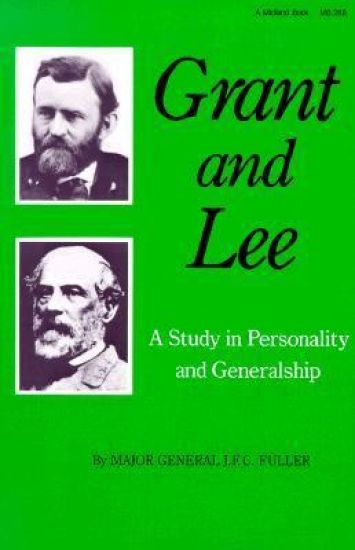
Grant and Lee

Grant and Lee

J.F.C. Fuller

Indiana University Press
1982
pokkari
" . . . cuts squarely across the accepted tradition . . . Fuller examines these two great soldiers from a fresh viewpoint and refuses to let himself be bound by tradition." —New York Times Book Review " . . . readable, instructive, stimulating, and . . . controversial as when first published." —Military Review First published fifty years ago, Fuller's study of Ulysses S. Grant and Robert E. Lee remains one of his most brilliant and durable works, Grant and Lee is a compelling study not only of the two men, but also of the nature of leadership and command in wartime.
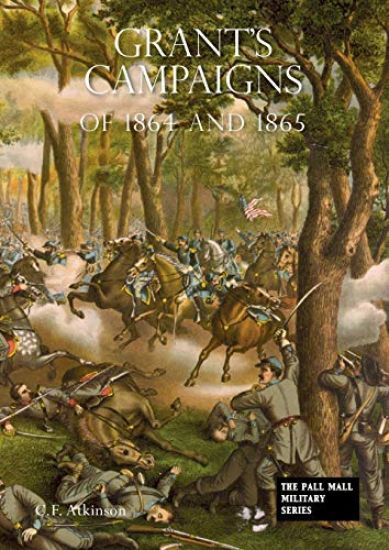
GRANT'S CAMPAIGNS of 1864 and 1865

GRANT'S CAMPAIGNS of 1864 and 1865

C F Atkinson

Naval Military Press
2020
pokkari
This a detailed and scholarly account of Lee and Grant's first encounter. Originally published in 1898 as part of the valued 'Pall Mall Series' of military text books, works that are now regarded as classics of military theory Intended for serious or professional students of military history, each volume in this sought after series is interspersed with strategical and tactical comments and illustrated by numerous maps.On the morning of May 5, the Union Fifth Corps encountered Confederate troops on the Orange Turnpike, and the Battle of the Wilderness began in earnest. The woods thundered with gunfire, and men fell like forest leaves to the ground. The thick underbrush neutered the Union cavalry and made it impossible for units to move in an orderly fashion. More than 18,000 Union soldiers were killed or wounded. The two-day Battle of the Wilderness ended in a tactical draw. The Army of the Potomac expected that Grant would order their retreat as his predecessors had done repeatedly when repelled by Lee. Grant wasn't like the other generals, though. He told them to press on toward Richmond. Lee, however, knew that Grant was unlike his previous counterparts as well and anticipated his next move, so when Union soldiers arrived at the crossroads town of Spotsylvania Court House on the morning of May 8, the rebels were already waiting.Mere hours apart, the Battle of the Wilderness bled right into the Battle of Spotsylvania Court House. The Confederates dug themselves into a system of entrenchment's shaped like an inverted U, and the fierce stand-off climaxed at dawn on May 12 when Grant commanded 20,000 men under Winfield Scott Hancock to pierce the rebels' curved battle line. For 20 hours in a driving rainstorm, shooting and hand-to-hand combat raged at "Bloody Angle."The protracted battled continued for nearly two weeks as forces attacked and counterattacked. When Grant became convinced that he would not be able to dislodge the rebels, he disengaged his army on May 21 and, still confident that he could win a war of attrition even after losing another 18,000 men at Spotsylvania, ordered them to march Southeast toward Richmond. After the armies of Grant and Lee engaged again at North Anna and Totopotomoy Creek, they squared off at Cold Harbor, 10 miles Northeast of Richmond. Grant's decision to order a massive assault on June 3 resulted in the killing and wounding of as many as 7,000 Union soldiers in less than an hour, and the Confederate victory at the Battle of Cold Harbor would be one the war's most lopsided engagements.
What to Look for in Autumn

What to Look for in Autumn

Elliott Lovegood 1885- Grant Watson; C. F. (Charles Frederick) Tunnicliffe

Hassell Street Press
2021
sidottu
This work has been selected by scholars as being culturally important and is part of the knowledge base of civilization as we know it.This work is in the public domain in the United States of America, and possibly other nations. Within the United States, you may freely copy and distribute this work, as no entity (individual or corporate) has a copyright on the body of the work.Scholars believe, and we concur, that this work is important enough to be preserved, reproduced, and made generally available to the public. To ensure a quality reading experience, this work has been proofread and republished using a format that seamlessly blends the original graphical elements with text in an easy-to-read typeface.We appreciate your support of the preservation process, and thank you for being an important part of keeping this knowledge alive and relevant.