

Kirjahaku
Etsi kirjoja tekijän nimen, kirjan nimen tai ISBN:n perusteella.
83 tulosta hakusanalla Grazyna Erhard

Grazyna Bacewicz, The 'First Lady of Polish Music'
Diana Ambache
Cambridge University Press
2022
pokkari
This Element explores the life and work of Grazyna Bacewicz (1909-1969), as a composer, violinist, pianist and author. She lived a remarkable life in Poland, navigating the complex world of Polish communist society and Soviet dominance after the Second World War, and brought Polish music to wider European attention. The Element describes the historical context of her life, her major achievements, and the language and development of her compositions, which attracted notable interest in Polish musical life. She wrote a wide range of pieces, making a significant contribution to the string repertoire, with important String Quartets and violin works. In her sixty years she achieved impressive triumphs as a women composer, served the Polish Composers Union and often judged major international competitions.

Grazyna Bacewicz (1909-1969) was a composer with an individual, expressive style. She was also an excellent violinist, a very fine pianist, and a talented author. She studied composition at the Conservatory in Warsaw with Kazimierz Sikorski, violin with Jozef Jarzebski and piano with Jozef Turczynski. Graduating in 1932, she travelled to Paris to study with Nadia Boulanger, later returning there to work with Carl Flesch. Her compositional output covered many genres, from ballets to songs and choral works, but also ranging from symphonies, concerti, and chamber works to pieces for solo piano. In 1936 she became principal violinist in the Polish Radio Orchestra. She then toured Europe as a soloist in the two years leading up to World War II, later resuming her career as a concert violinist and pianist after the war. For many years, Grazyna Bacewicz held the post of Vice-President of the Union of Polish Composers. She also served as a judge in many prestigious international music competitions. Strong and sensitive, and exceptionally family oriented, Grazyna Bacewicz was also blessed with unusual charm, phenomenal energy and huge creative potential. Grazyna Bacewicz became world famous and won numerous prizes for her compositions, which were regularly performed by the best musicians, and picked up for publication. She received enthusiastic reviews from music critics, among them Stefan Kisielewski, who noted the 'passionate ferocity' of her playing and described her concerto for string orchestra as 'a rare piece of healthy and tasty music'. This biographical story, based on letters and other family documents, has been brought to us first hand by the composer's grand-daughter, the writer Joanna Sendlak.

According to the author, in Australia, men drink alcohol as a mark of masculinity, and women take care of drinking men as a part of normative femininity. And while research on alcoholics and alcoholism is common, very few studies consider the lives of the women who are married to alcoholics. Here, Zajdow details and explores the lives of such women who belong to Al-Anon, where they may share their experiences and offer their stories in a nonthreatening and supportive environment. The author presents the narratives of these women in the context of her analysis of the self-help group to demonstrate how people construct and reconstruct their lives as coherent stories about themselves, and to show how these self-stories can be changed and reconceptualized within the context of the group. Unique in its examination of self-stories offered within a self-help group, this book challenges sociological knowledge about the way these mutual-aid groups operate as communities of interest and help.Zajdow begins by laying the groundwork through a discussion of the professional and lay discourses on women's relationships to alcoholic men. She then provides the basis for using self-stories to examine a group of people, the individuals in the group, and the behavior of the group in general. A history of Al-Anon as a self-help group is also detailed, and the author compares the Australian meetings to meetings in other parts of the world. The stories themselves are then examined and discussed in terms of how they relate to group processes and individual change through Al-Anon. Tracing the way that these women move from a place of despair to one of hope and meaningful change, this also represents a sociological exploration of gender, families, and communities.

For the first time, this book unites the theory, experimental techniques and computational tools used to describe the diffusion of atoms, molecules and nanoparticles across metal surfaces. Starting with an outline of the formalism that describes diffusion on surfaces, the authors guide the reader through the principles of atomic movement, before moving on to diffusion under special circumstances, such as the presence of defects or foreign species. With an initial focus on the behaviour of single entities on a surface, later chapters address the movement of clusters of atoms and the interactions between adatoms. While there is a special emphasis on experimental work, attention is paid to the increasingly valuable contributions theoretical work has made in this field. This book has wide interdisciplinary appeal and is ideal for researchers in solid state physics, chemistry as well as materials science, and engineering.
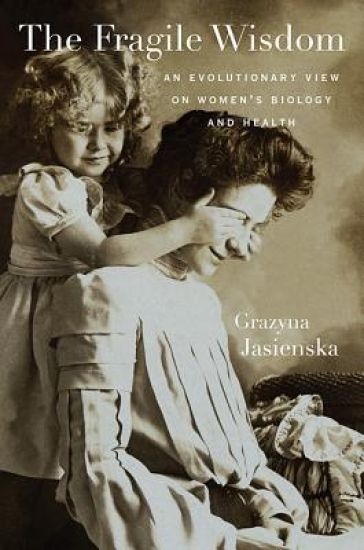
So many women who do everything right to stay healthy still wind up with breast cancer, heart disease, or osteoporosis. In The Fragile Wisdom, Grazyna Jasienska provides an evolutionary perspective on the puzzle of why disease prevention among women is so frustratingly difficult. Modern women, she shows, are the unlucky victims of their own bodies’ conflict of interest between reproductive fitness and life-long health.The crux of the problem is that women’s physiology has evolved to facilitate reproduction, not to reduce disease risk. Any trait—no matter how detrimental to health in the post-reproductive period—is more likely to be preserved in the next generation if it increases the chance of giving birth to offspring who will themselves survive to reproductive age. To take just one example, genes that produce high levels of estrogen are a boon to fertility, even as they raise the risk of breast cancer in mothers and their daughters.Jasienska argues that a mismatch between modern lifestyles and the Stone Age physiology that evolution has bequeathed to every woman exacerbates health problems. She looks at women’s mechanisms for coping with genetic inheritance and at the impact of environment on health. Warning against the false hope gene therapy inspires, Jasienska makes a compelling case that our only avenue to a healthy life is prevention programs informed by evolutionary understanding and custom-fitted to each woman’s developmental and reproductive history.

Writing the Polish American Woman in Postwar Ethnic Fiction
Grazyna J. Kozaczka
Ohio University Press
2019
sidottu
Though often unnoticed by scholars of literature and history, Polish American women have for decades been fighting back against the patriarchy they encountered in America and the patriarchy that followed them from Poland. Through close readings of several Polish American and Polish Canadian novels and short stories published over the last seven decades, Writing the Polish American Woman in Postwar Ethnic Fiction traces the evolution of this struggle and women's efforts to construct gendered and classed ethnicity. Focusing predominantly on work by North American born and immigrant authors that represents the Polish American Catholic tradition, Grazyna J. Kozaczka puts texts in conversation with other American ethnic literatures. She positions ethnic gender construction and performance at an intersection of social class, race, and sex. She explores the marginalization of ethnic female characters in terms of migration studies, theories of whiteness, and the history of feminist discourse. Writing the Polish American Woman in Postwar Ethnic Fiction tells the complex story of how Polish American women writers have shown a strong awareness of their oppression and sought empowerment through resistive and transgressive behaviors.
Gloria E. Anzaldúa is a crucial figure in contemporary border and women’s studies. When in 1987 she published her groundbreaking book Borderlands/La Frontera: The New Mestiza, she became one of the most often quoted writers of the US–Mexico border, but she remains relatively little known outside Americas.In one of the first monographs written on her work, Grazna Zygadlo introduces Anzaldúa’s work and outlines her feminist revisionist thinking to new audiences, especially in Europe. The author defines these borderlands as areas where numerous systems of power, exploitation, and oppression intersect – capitalism, patriarchy, racism, and white man’s supremacy. She also concentrates on the innovative philosophy of women’s writing from the body that Anzaldúa has propagated and on her formative role in the women of color feminism. Zygadlo also works to expand Anzaldúa’s borderland thinking by applying it to the recent issues related to migration crisis and border problems in the European Union – namely the contradictory treatment of refugees at the Polish eastern border.Gloria E. Anzaldúa is situated at the intersection of various disciplines, in particular, American cultural studies, feminist criticism, and Latin American postcolonial studies, and is a valuable source of knowledge about Anzaldúa’s ideas for undergraduate and graduate students.

Gloria E. Anzaldúa is a crucial figure in contemporary border and women’s studies. When in 1987 she published her groundbreaking book Borderlands/La Frontera: The New Mestiza, she became one of the most often quoted writers of the US–Mexico border, but she remains relatively little known outside Americas.In one of the first monographs written on her work, Grazna Zygadlo introduces Anzaldúa’s work and outlines her feminist revisionist thinking to new audiences, especially in Europe. The author defines these borderlands as areas where numerous systems of power, exploitation, and oppression intersect – capitalism, patriarchy, racism, and white man’s supremacy. She also concentrates on the innovative philosophy of women’s writing from the body that Anzaldúa has propagated and on her formative role in the women of color feminism. Zygadlo also works to expand Anzaldúa’s borderland thinking by applying it to the recent issues related to migration crisis and border problems in the European Union – namely the contradictory treatment of refugees at the Polish eastern border.Gloria E. Anzaldúa is situated at the intersection of various disciplines, in particular, American cultural studies, feminist criticism, and Latin American postcolonial studies, and is a valuable source of knowledge about Anzaldúa’s ideas for undergraduate and graduate students.

Bioinorganic Photochemistry
Grazyna Stochel; Zofia Stasicka; Malgorzata Brindell; Wojciech Macyk; Konrad Szacilowski
Wiley-Blackwell (an imprint of John Wiley Sons Ltd)
2009
sidottu
Bioinorganic photochemistry is a rapidly evolving field integrating inorganic photochemistry with biological, medical and environmental sciences. The interactions of light with inorganic species in natural systems, and the applications in artificial systems of medical or environmental importance, form the basis of this challenging inter-disciplinary research area. Bioinorganic Photochemistry provides a comprehensive overview of the concepts and reactions fundamental to the field, illustrating important applications in biological, medical and environmental sciences. Topics covered include: Cosmic and environmental photochemistryPhotochemistry of biologically relevant nanoassembliesMolecular aspects of photosynthesisPhotoinduced electron transfer in biosystemsModern therapeutic strategies in photomedicine The book concludes with an outlook for the future of environmental protection, discussing emerging techniques in the field of pollution abatement, and the potential for bioinorganic photochemistry as a pathway to developing cheap, environmentally friendly sources of energy. Written as an authoritative guide for researchers involved in the development of bioinorganic photochemical processes, Bioinorganic Photochemistry is also accessible to scientists new to the field, and will be a key reference source for advanced courses in inorganic, and bioinorganic chemistry.

This biography of the Polish British anthropologist Maria Czaplicka (1884–1921) is also a cultural study of the dynamics of the anthropological collective presented from a researcher-centric perspective. Czaplicka, together with Bronislaw Malinowski, studied anthropology in London and later at Oxford, then she headed the Yenisei Expedition to Siberia (1914–15) and was the first female lecturer of anthropology at Oxford. She was an engaged feminist and an expert on political issues in Northern Asia and Eastern Europe. But this remarkable woman’s career was cut short by suicide. Like many women anthropologists of the time, Czaplicka journeyed through various academic institutions, and her legacy has been dispersed and her field materials lost. Grazyna Kubica covers the major events in Czaplicka’s life and provides contextual knowledge about the intellectual formation in which Czaplicka grew up, including the Warsaw radical intelligentsia and the contemporary anthropology of which she became a part. Kubica also presents a critical analysis of Czaplicka’s scientific and literary works, related to the issues of gender, shamanism, and race. Kubica shows how Czaplicka’s sense of agency and subjectivity enriched and shaped the practice of anthropology and sheds light on how scientific knowledge arises and is produced.


Eroticism of More- and Other-than-Human Bodies
Grazyna Gajewska
Springer Nature Switzerland AG
2020
sidottu
Focusing on non-human actors, Grazyna Gajewska expands the discussion of eroticism in contemporary culture by bringing in material culture, object studies, and “the anthropology of things.” She sets out from the assumption that things (such as, for instance, attire, underwear, shoes, or jewelry) play an important role in arousing erotic imagination—they are genuine participants in the process, not mere signifiers of eroticism. Their use does not denote only undeniable facts of everyday life associated with functionality, the pragmatic or aesthetic aspect, but also contribute to the shaping of human emotions, fantasies and phantasms. In her study, Gajewska brings eroticism in contemporary culture to light through applying gender studies to new contexts—animals, robots, virtual worlds—even as she explores a new methodology, the anthropology of things.

Eroticism of More- and Other-than-Human Bodies
Grazyna Gajewska
Springer Nature Switzerland AG
2021
nidottu
Focusing on non-human actors, Grazyna Gajewska expands the discussion of eroticism in contemporary culture by bringing in material culture, object studies, and “the anthropology of things.” She sets out from the assumption that things (such as, for instance, attire, underwear, shoes, or jewelry) play an important role in arousing erotic imagination—they are genuine participants in the process, not mere signifiers of eroticism. Their use does not denote only undeniable facts of everyday life associated with functionality, the pragmatic or aesthetic aspect, but also contribute to the shaping of human emotions, fantasies and phantasms. In her study, Gajewska brings eroticism in contemporary culture to light through applying gender studies to new contexts—animals, robots, virtual worlds—even as she explores a new methodology, the anthropology of things.

Bidirectional Comparison of Nominal Sets
Grazyna Szkatula; Maciej Krawczak
Springer International Publishing AG
2024
sidottu
The authors propose a novel measure of proximity between two sets of nominal elements. This measure describes the changes in the first set after adding the second set or changes in the second set after adding the first set.It is crucial to note that this measure is not symmetric, it means that the perturbation of the first set on the second set can be different than the perturbation of the opposition direction. The introduced set impact measure allows for the direct treatment of objects described by nominal-valued attributes. The ordinary sets, multisets, fuzzy sets, and the intuitionistic fuzzy sets are considered. The book is intended for data science professionals, philosophers as well as cognitive psychologists, who struggle with practical problems in which asymmetry of proximity of objects cannot be neglected. The use of the proposed measures of perturbation between compared objects can be very important in data mining or in exploration of Internetresources.

Bidirectional Comparison of Nominal Sets
Grazyna Szkatula; Maciej Krawczak
Springer International Publishing AG
2025
nidottu
The authors propose a novel measure of proximity between two sets of nominal elements. This measure describes the changes in the first set after adding the second set or changes in the second set after adding the first set.It is crucial to note that this measure is not symmetric, it means that the perturbation of the first set on the second set can be different than the perturbation of the opposition direction. The introduced set impact measure allows for the direct treatment of objects described by nominal-valued attributes. The ordinary sets, multisets, fuzzy sets, and the intuitionistic fuzzy sets are considered. The book is intended for data science professionals, philosophers as well as cognitive psychologists, who struggle with practical problems in which asymmetry of proximity of objects cannot be neglected. The use of the proposed measures of perturbation between compared objects can be very important in data mining or in exploration of Internetresources.

Die Studie leistet einen Beitrag zur Beschreibung der Strukturen mittelalterlicher Lyrik und fokussiert dabei das Tagelied und die bisher kaum beachtete Traumdichtung der Romania. Möglichkeiten zu komparatistischer Weiterarbeit eröffnet die Anthologie romanischer alba- und somni-Dichtungen, die, mit eigenen deutschen Übersetzungen versehen, insbesondere die Poesien der Trobadors und der Trouvères, galego-portugiesische cantigas, mittellateinische Beispiele sowie Texte der scuola siciliana versammelt.

PRAXIS Des Übersetzens Polnisch-Deutsch/Deutsch-Polnisch
Grazyna Milinska
Walter de Gruyter
1998
sidottu
Hier ist endlich ein praxisnahes bersetzungslehrbuch f r das Sprachpaar Deutsch-Polnisch. Die verwendeten Texte aus Politik, Wirtschaft und Kultur entstammen deutschen und polnischen Tageszeitungen. Die bersetzungen sind mit einem ausf hrlichen Kommentar versehen, der die Schritte des bersetzungsprozesses nachzeichnet, Strategien f r die L sung von Problemen aufzeigt und bersetzungsvarianten sowie "falsche Freunde" anf hrt.
PRAXIS Des Übersetzens Polnisch-Deutsch/Deutsch-Polnisch
Grazyna Milinska
Walter de Gruyter
2011
pokkari
Dieses Buch zeigt nicht nur, was eine korrekte bersetzung ausmacht und wann diese inhaltlich kippt, sondern auch wie eine dem Sinn nach korrekte bersetzung stilistisch aufpoliert werden kann und wie man mit Fehlern im Original umgeht. Das Buch enth lt einen lexikalisch breitgef cherten bungsteil mit L sungen, Kommentaren und Fehleranalysen und ist mit einem Register von Eigennamen und einem Vokabelregister ausgestattet. Die Textgrundlagen und Lernvorlagen haben eine gro e Bandbreite und behandeln aktuelle politische und gesellschaftliche Themen. Auch Selbstlernern kann dieses Werk nur empfohlen werden.