Kirjahaku
Etsi kirjoja tekijän nimen, kirjan nimen tai ISBN:n perusteella.
1000 tulosta hakusanalla Gregory Brad Cutler

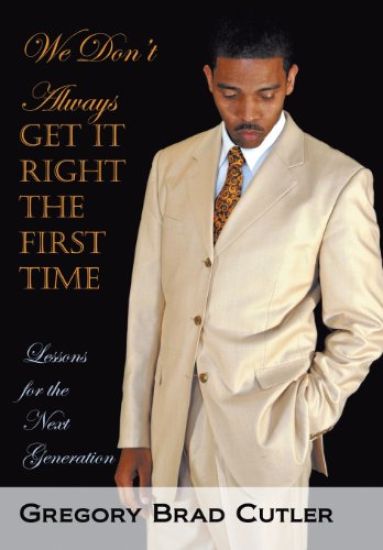
- Sometimes it's better to finish last and have 99 people cheering for you, than to finish first and have to stand there all alone. - A liar tells the truth every time he lies. - When someone pulls out a camera, don't ask them to take a picture of you. - If you don't think it's funny, don't laugh. - Control your animals ... and your children - Stop quoting people when you don't know what you're talking about. - Live your funeral every day.
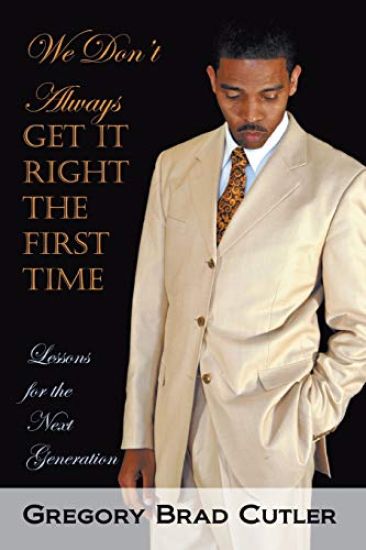
- Sometimes it's better to finish last and have 99 people cheering for you, than to finish first and have to stand there all alone. - A liar tells the truth every time he lies. - When someone pulls out a camera, don't ask them to take a picture of you. - If you don't think it's funny, don't laugh. - Control your animals ... and your children - Stop quoting people when you don't know what you're talking about. - Live your funeral every day.

Don't put this book down Keep reading so you can learn how to: - Get inspired every day - Smile just because you feel like it - See yourself better today than you were yesterday - Get motivated - Set a goal - Start a conversation - Dream with your eyes wide open - Paint on a canvas that has no end - Inhale the breath of the Creator - Lend a helping hand - Throw a party in the rain




When Martin Luther published his 95 Theses in October 1517, he had no intention of starting a revolution. But very quickly his criticism of indulgences became a rejection of the papacy and the Catholic Church emphasizing the Bible as the sole authority for Christian faith, radicalizing a continent, fracturing the Holy Roman Empire, and dividing Western civilization in ways Luther--a deeply devout professor and spiritually-anxious Augustinian friar--could have never foreseen, nor would he have ever endorsed. From Germany to England, Luther's ideas inspired spontaneous but sustained uprisings and insurrections against civic and religious leaders alike, pitted Catholics against Protestants, and because the Reformation movement extended far beyond the man who inspired it, Protestants against Protestants. The ensuing disruptions prompted responses that gave shape to the modern world, and the unintended and unanticipated consequences of the Reformation continue to influence the very communities, religions, and beliefs that surround us today.How Luther inadvertently fractured the Catholic Church and reconfigured Western civilization is at the heart of renowned historian Brad Gregory's Rebel in the Ranks. While recasting the portrait of Luther as a deliberate revolutionary, Gregory describes the cultural, political, and intellectual trends that informed him and helped give rise to the Reformation, which led to conflicting interpretations of the Bible, as well as the rise of competing churches, political conflicts, and social upheavals across Europe. Over the next five hundred years, as Gregory's account shows, these conflicts eventually contributed to further epochal changes--from the Enlightenment and self-determination to moral relativism, modern capitalism, and consumerism, and in a cruel twist to Luther's legacy, the freedom of every man and woman to practice no religion at all. With the scholarship of a world-class historian and the keen eye of a biographer, Gregory offers readers an in-depth portrait of Martin Luther, a reluctant rebel in the ranks, and a detailed examination of the Reformation to explain how the events that transpired five centuries ago still resonate--and influence us--today.
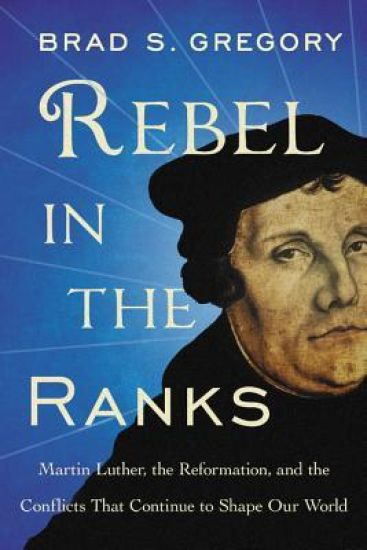
When Martin Luther published his 95 Theses in October 1517, he had no intention of starting a revolution. But very quickly his criticism of indulgences became a rejection of the papacy and the Catholic Church emphasizing the Bible as the sole authority for Christian faith, radicalizing a continent, fracturing the Holy Roman Empire, and dividing Western civilization in ways Luther--a deeply devout professor and spiritually-anxious Augustinian friar--could have never foreseen, nor would he have ever endorsed. From Germany to England, Luther's ideas inspired spontaneous but sustained uprisings and insurrections against civic and religious leaders alike, pitted Catholics against Protestants, and because the Reformation movement extended far beyond the man who inspired it, Protestants against Protestants. The ensuing disruptions prompted responses that gave shape to the modern world, and the unintended and unanticipated consequences of the Reformation continue to influence the very communities, religions, and beliefs that surround us today.How Luther inadvertently fractured the Catholic Church and reconfigured Western civilization is at the heart of renowned historian Brad Gregory's Rebel in the Ranks. While recasting the portrait of Luther as a deliberate revolutionary, Gregory describes the cultural, political, and intellectual trends that informed him and helped give rise to the Reformation, which led to conflicting interpretations of the Bible, as well as the rise of competing churches, political conflicts, and social upheavals across Europe. Over the next five hundred years, as Gregory's account shows, these conflicts eventually contributed to further epochal changes--from the Enlightenment and self-determination to moral relativism, modern capitalism, and consumerism, and in a cruel twist to Luther's legacy, the freedom of every man and woman to practice no religion at all. With the scholarship of a world-class historian and the keen eye of a biographer, Gregory offers readers an in-depth portrait of Martin Luther, a reluctant rebel in the ranks, and a detailed examination of the Reformation to explain how the events that transpired five centuries ago still resonate--and influence us--today.

Thousands of men and women were executed for incompatible religious views in sixteenth-century Europe. The meaning and significance of those deaths are studied here comparatively for the first time, providing a compelling argument for the importance of martyrdom as both a window onto religious sensibilities and a crucial component in the formation of divergent Christian traditions and identities.Brad S. Gregory explores Protestant, Catholic, and Anabaptist martyrs in a sustained fashion, addressing the similarities and differences in their self-understanding. He traces the processes and impact of their memorialization by co-believers, and he reconstructs the arguments of the ecclesiastical and civil authorities responsible for their deaths. In addition, he assesses the controversy over the meaning of executions for competing views of Christian truth, and the intractable dispute over the distinction between true and false martyrs. He employs a wide range of sources, including pamphlets, martyrologies, theological and devotional treatises, sermons, songs, woodcuts and engravings, correspondence, and legal records. Reconstructing religious motivation, conviction, and behavior in early modern Europe, Gregory shows us the shifting perspectives of authorities willing to kill, martyrs willing to die, martyrologists eager to memorialize, and controversialists keen to dispute.
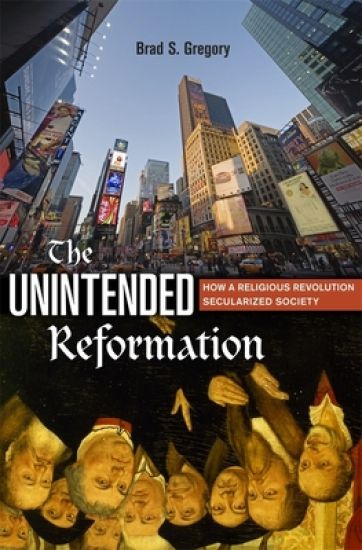
In a work that is as much about the present as the past, Brad Gregory identifies the unintended consequences of the Protestant Reformation and traces the way it shaped the modern condition over the course of the following five centuries. A hyperpluralism of religious and secular beliefs, an absence of any substantive common good, the triumph of capitalism and its driver, consumerism—all these, Gregory argues, were long-term effects of a movement that marked the end of more than a millennium during which Christianity provided a framework for shared intellectual, social, and moral life in the West.Before the Protestant Reformation, Western Christianity was an institutionalized worldview laden with expectations of security for earthly societies and hopes of eternal salvation for individuals. The Reformation’s protagonists sought to advance the realization of this vision, not disrupt it. But a complex web of rejections, retentions, and transformations of medieval Christianity gradually replaced the religious fabric that bound societies together in the West. Today, what we are left with are fragments: intellectual disagreements that splinter into ever finer fractals of specialized discourse; a notion that modern science—as the source of all truth—necessarily undermines religious belief; a pervasive resort to a therapeutic vision of religion; a set of smuggled moral values with which we try to fertilize a sterile liberalism; and the institutionalized assumption that only secular universities can pursue knowledge.The Unintended Reformation asks what propelled the West into this trajectory of pluralism and polarization, and finds answers deep in our medieval Christian past.
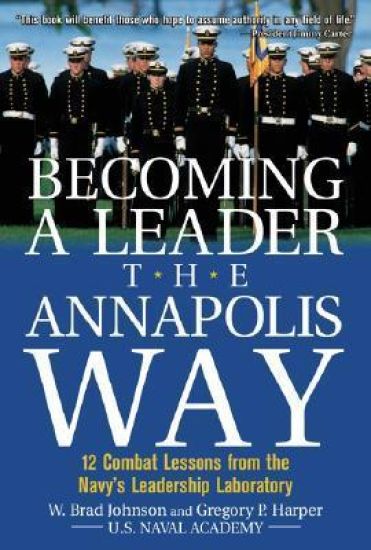
Becoming a Leader the Annapolis Way
W. Brad Johnson; Gregory Harper
McGraw-Hill Professional
2004
sidottu
'The school of hard knocks has proven inadequate as a leadership laboratory. More than 230 years of American naval experience has taught us this lesson: if you want great leaders, prepare them to lead. The remainder of this book is dedicated to highlighting the range of leadership lessons inculcated at USNA' - From Chapter 1. The ability to lead others is a learned skill. And like any learned skill, its traits and tenets can be acquired through study and honed through practice before they are tested in the field. "Becoming a Leader the Annapolis Way" is a hands-on account of how a number of today's most accomplished global leaders - not just in the military but in business, politics, and virtually every walk of life - were trained in effective leadership at the United States Naval Academy, and how the skills and tools they learned can be taught to anyone.This step-by-step book removes the veil of mystery by breaking leadership down into its identifiable, educable components, then discussing how each can be acquired through education, drilling, and the acceptance of nothing less than true mastery.Whether you are looking to unravel the 'secrets' of leadership for your personal development, or have been given the responsibility of developing leaders in your company or organization, this straightforward and plain-spoken book details: six common personality traits that inhibit the ability to lead effectively - and how each can be overcome; the tenets of practising great followership - more than any other anything else the key to becoming a great leader; techniques for inoculating future leaders against the stress they will experience tomorrow by exposing them to brief but intense doses today; the secrets to emotional intelligence - becoming self-aware, self-regulated, self-motivated, and socially skilled; and, strategies for developing the three D's of empowerment - decide, delegate, and disappear. Exceptional leadership skills can be taught. Furthermore, they must be taught if the business world is to bring itself out of its current global leadership malaise. Let "Becoming a Leader the Annapolis Way" provide you with the knowledge and tools you need to train and develop leaders with integrity, vision, and drive - who consistently do the right thing if for no other reason than it is the right thing to do - and stock your organization with trained leaders who exhibit character and commitment.The battle-proven program for teaching anyone how to take initiative, triumph over adversity, and become a leader. Each day's business news seems to bring a new tale of questionable corporate ethics and decision-making leading to financial disaster. In virtually every case, the roots of the problem can be traced to weak, ineffective, and incompetent leadership. But one organization - the United States Naval Academy - is unprecedented in its ability to turn out consistently well-trained, capable, and successful leaders. "Becoming a Leader the Annapolis Way" takes you inside the classrooms and corridors of USNA.This illuminating book reveals the secrets of the Navy's documented successes and provides you with: twelve timeless leadership principles, with a full chapter devoted to each; techniques for training emotionally intelligent leaders, as opposed to teaching 'book smarts'; and, fascinating real-life examples of USNA grads who succeeded in combat, government, and business. Today more than ever, business needs leaders who possess frontline knowledge on everything from supervision and communication to teaching and team building. USNA has been shaping such battle-prepared young leaders since 1845. "Becoming a Leader the Annapolis Way" will show you how to bring USNA techniques and practices to your own business, and construct your own stable of young, competent, leadership-trained professionals.
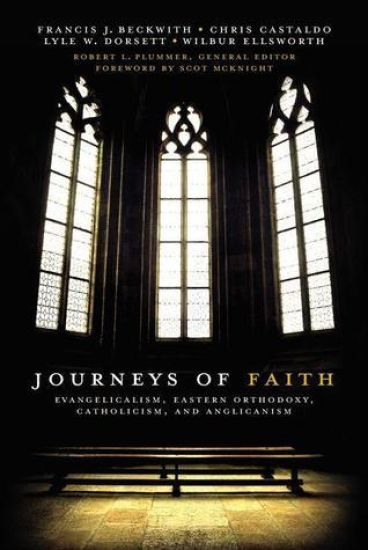
Journeys of Faith
Francis J. Beckwith; Christopher A. Castaldo; Lyle W. Dorsett; Craig A. Blaising; Gregg Allison; Brad S. Gregory; Robert A. Peterson; Wilbur Ellsworth; Scot McKnight
Zondervan
2012
nidottu
Research indicates that, on average, Americans change their religious affiliation at least once during their lives. Journeys of Faith examines the movement between four Christian traditions and what led believers to make a shift. Four prominent converts to Eastern Orthodoxy, Catholicism, Evangelicalism and Anglicanism describe their new faith traditions and doctrines and their spiritual journeys into them. Response chapters offer respectful critiques.Contributors include:Wilbur Ellsworth (Eastern Orthodoxy), with a response by Craig BlaisingFrancis J. Beckwith (Roman Catholicism), with Gregg Allison respondingChris Castaldo (Evangelicalism) and Brad S. Gregory's Catholic responseLyle W. Dorsett (Anglicanism), with a response by Robert A. Peterson.This book provides you with a series of first-hand accounts of thoughtful Christians changing religious affiliation or remaining true to the traditions they have always known and their rationale for those decisions. Gain a wealth of insight into the attractions of each of the represented denominations and an understanding of the current faith migration within the church today.
![The Encyclical Letter [On the Authority of the Church] of Pope Gregory Xvi. Bearing Date August 16Th [Really 15Th] 1832, Tr., With Notes](/covers/9781023983976.jpg)
The Encyclical Letter [On the Authority of the Church] of Pope Gregory Xvi. Bearing Date August 16Th [Really 15Th] 1832, Tr., With Notes
Gregory
Hutson Street Press
2025
sidottu
This is a translated edition of the Encyclical Letter of Pope Gregory XVI, originally issued on August 15, 1832. Addressed to all patriarchs, primates, archbishops, and bishops of the Catholic Church, the encyclical, titled "On the Authority of the Church," reflects the Pope's views on various contemporary issues and challenges facing the Church. This historical document provides insight into the religious and political climate of the 19th century and showcases the Pope's stance on matters of faith, governance, and social order. It remains a valuable resource for scholars and anyone interested in the history of the Catholic Church and papal pronouncements. This work has been selected by scholars as being culturally important, and is part of the knowledge base of civilization as we know it. This work was reproduced from the original artifact, and remains as true to the original work as possible. Therefore, you will see the original copyright references, library stamps (as most of these works have been housed in our most important libraries around the world), and other notations in the work. This work is in the public domain in the United States of America, and possibly other nations. Within the United States, you may freely copy and distribute this work, as no entity (individual or corporate) has a copyright on the body of the work. As a reproduction of a historical artifact, this work may contain missing or blurred pages, poor pictures, errant marks, etc. Scholars believe, and we concur, that this work is important enough to be preserved, reproduced, and made generally available to the public. We appreciate your support of the preservation process, and thank you for being an important part of keeping this knowledge alive and relevant.
![The Encyclical Letter [On the Authority of the Church] of Pope Gregory Xvi. Bearing Date August 16Th [Really 15Th] 1832, Tr., With Notes](/covers/9781023989367.jpg)
The Encyclical Letter [On the Authority of the Church] of Pope Gregory Xvi. Bearing Date August 16Th [Really 15Th] 1832, Tr., With Notes
Gregory
Hutson Street Press
2025
nidottu
This is a translated edition of the Encyclical Letter of Pope Gregory XVI, originally issued on August 15, 1832. Addressed to all patriarchs, primates, archbishops, and bishops of the Catholic Church, the encyclical, titled "On the Authority of the Church," reflects the Pope's views on various contemporary issues and challenges facing the Church. This historical document provides insight into the religious and political climate of the 19th century and showcases the Pope's stance on matters of faith, governance, and social order. It remains a valuable resource for scholars and anyone interested in the history of the Catholic Church and papal pronouncements. This work has been selected by scholars as being culturally important, and is part of the knowledge base of civilization as we know it. This work was reproduced from the original artifact, and remains as true to the original work as possible. Therefore, you will see the original copyright references, library stamps (as most of these works have been housed in our most important libraries around the world), and other notations in the work. This work is in the public domain in the United States of America, and possibly other nations. Within the United States, you may freely copy and distribute this work, as no entity (individual or corporate) has a copyright on the body of the work. As a reproduction of a historical artifact, this work may contain missing or blurred pages, poor pictures, errant marks, etc. Scholars believe, and we concur, that this work is important enough to be preserved, reproduced, and made generally available to the public. We appreciate your support of the preservation process, and thank you for being an important part of keeping this knowledge alive and relevant.

A Panegyrick Upon the Maccabees, by St. Gregory Nazianzen
Gregory
Gale Ecco, Print Editions
2010
pokkari