Kirjojen hintavertailu. Mukana 11 213 693 kirjaa ja 11 kauppaa.

Kirjahaku

Etsi kirjoja tekijän nimen, kirjan nimen tai ISBN:n perusteella.

1000 tulosta hakusanalla Gregory Allen Scott

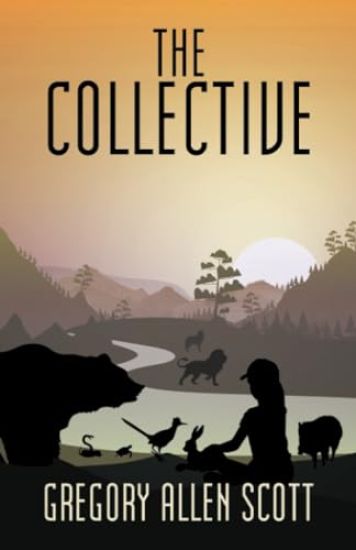
The Collective

The Collective

Gregory Allen Scott

Archway Publishing
2025
pokkari
The Collective is a fiction piece that explores the overarching effects of negativity and positivity in the world on both an individual and worldwide level. The book explores racism, power-motivated people, religion, misogyny and the critical importance for all human beings to question the value of positive and negative thinking in their personal lives.
The Collective

The Collective

Gregory Allen Scott

Archway Publishing
2025
sidottu
The Collective is a fiction piece that explores the overarching effects of negativity and positivity in the world on both an individual and worldwide level. The book explores racism, power-motivated people, religion, misogyny and the critical importance for all human beings to question the value of positive and negative thinking in their personal lives.
Functional Magnetic Resonance Imaging

Functional Magnetic Resonance Imaging

Scott A. Huettel; Allen W. Song; Gregory McCarthy

Oxford University Press Inc
2014
sidottu
Functional Magnetic Resonance Imaging provides a comprehensive introduction to fMRI. The Third Edition has been extensively updated, including a discussion of the physiological basis of fMRI and coverage of ethical and methodological controversies. Example are drawn from both seminal historical work and cutting-edge current research.
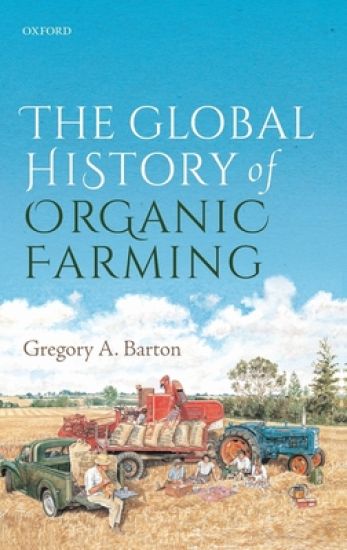
The Global History of Organic Farming

The Global History of Organic Farming

Gregory Allen Barton

Oxford University Press
2018
sidottu
Organic farming is a major global movement that is changing land-use and consumer habits around the world. This book tells the untold story of how the organic farming movement nearly faltered after an initial flurry of scientific interest and popular support. Drawing on newly-unearthed archives, Barton argues that organic farming first gained popularity in an imperial milieu before shifting to the left of the political spectrum after decolonization and served as a crucial middle stage of environmentalism. Modern organic protocols developed in British India under the guidance of Sir Albert Howard before spreading throughout parts of the British Empire, Europe, and the USA through the advocacy of his many followers and his second wife Louise. Organic farming advocates before and during World War II challenged the industrialization of agriculture and its reliance on chemical fertilizers. They came tantalizingly close to influencing government policy. The decolonization of the British Empire, the success of industrial agriculture, and the purging of holistic ideas from medicine side-lined organic farming advocates who were viewed increasingly as cranks and kooks. Organic farming advocates continued to spread their anti-chemical farming message through a small community that deeply influenced Rachel Carson's ideas in Silent Spring, a book that helped to legitimize anti-chemical concerns. The organic farming movement re-entered the scientific mainstream in the 1980s only with the reluctant backing of government policy. It has continued to grow in popularity ever since and explains why organic farming continues to inspire those who seek to align agriculture and health.
Empire Forestry and the Origins of Environmentalism

Empire Forestry and the Origins of Environmentalism

Gregory Allen Barton

Cambridge University Press
2007
pokkari
What we now know of as environmentalism began with the establishment of the first empire forest in 1855 in British India, and during the second half of the nineteenth century, over ten per cent of the land surface of the earth became protected as a public trust. Sprawling forest reservations, many of them larger than modern nations, became revenue-producing forests that protected the whole 'household of nature', and Rudyard Kipling and Theodore Roosevelt were among those who celebrated a new class of government foresters as public heroes. Imperial foresters warned of impending catastrophe, desertification and global climate change if the reverse process of deforestation continued. The empire forestry movement spread through India, Africa, Australia, New Zealand, Canada and then the United States to other parts of the globe, and Gregory Barton's study looks at the origins of environmentalism in a global perspective.
Empire Forestry and the Origins of Environmentalism

Empire Forestry and the Origins of Environmentalism

Gregory Allen Barton

Cambridge University Press
2002
sidottu
What we now know of as environmentalism began with the establishment of the first empire forest in 1855 in British India, and during the second half of the nineteenth century, over ten per cent of the land surface of the earth became protected as a public trust. Sprawling forest reservations, many of them larger than modern nations, became revenue-producing forests that protected the whole 'household of nature', and Rudyard Kipling and Theodore Roosevelt were among those who celebrated a new class of government foresters as public heroes. Imperial foresters warned of impending catastrophe, desertification and global climate change if the reverse process of deforestation continued. The empire forestry movement spread through India, Africa, Australia, New Zealand, Canada and then the United States to other parts of the globe, and Gregory Barton's study looks at the origins of environmentalism in a global perspective.
Politics in the Parish

Politics in the Parish

Gregory Allen Smith

Georgetown University Press
2008
pokkari
For well over a century the Catholic Church has articulated clear positions on many issues of public concern, particularly economics, capital punishment, foreign affairs, sexual morality, and abortion. Yet the fact that some of the Church's positions do not mesh well with the platforms of either of the two major political parties in the U.S. may make it difficult for Americans to look to Catholic doctrine for political guidance. Scholars of religion and politics have long recognized the potential for clergy to play an important role in shaping the voting decisions and political attitudes of their congregations, yet these assumptions of political influence have gone largely untested and undemonstrated. "Politics in the Parish" is the first empirical examination of the role Catholic clergy play in shaping the political views of their congregations. Gregory Allen Smith draws from recent scholarship on political communication, and the comprehensive "Notre Dame Study of Parish Life", as well as case studies he conducted in nine parishes in the mid-Atlantic region, to investigate the extent to which and the circumstances under which Catholic priests are influential in shaping the politics of their parishioners. Smith is able to verify that clergy do exercise political influence, but he makes clear that such influence is likely to be nuanced, limited in magnitude, and exercised indirectly by shaping parishioner religious attitudes that in turn affect political behavior. He shows that the messages that priests deliver vary widely, even radically, from parish to parish and priest to priest. Consequently, he warns that scholars should exercise caution when making any global assumptions about the political influence that Catholic clergy affect upon their congregations.
Poland - Culture Smart!

Poland - Culture Smart!

Gregory Allen; Magdalena Lipska

KUPERARD
2023
nidottu
Don't just see the sights get to know the people. Culture Smart! guides provide travelers with vital information about the values and attitudes of the people they will meet, and practical advice on how to make the most of their time abroad. Travelers to Poland in particular, a country in transition from its Communist past, need to be open-minded and well-informed. Today's Poland is very much a mix of the old and the new, and the two are not always in harmony. Background knowledge of the land, people, and history is crucial to understanding who the Poles are today: the Polish sense of identity has been forged by history, and the reader is introduced to the main events of Poland's turbulent past. A chapter on values and attitudes provides essential insights into this relationship-based society, and will help visitors understand why things are done the way they are. Further chapters describe important festivals and rites of passage, as well as how Poles go about their daily social and work lives. Valuable advice is also offered on how to get along with them. The Polish people are warm and generous and place great value on personal relationships. Show an interest in their history and an awareness of their culture, and your welcome will be warmer still.