Kirjojen hintavertailu. Mukana 11 244 527 kirjaa ja 12 kauppaa.

Kirjahaku

Etsi kirjoja tekijän nimen, kirjan nimen tai ISBN:n perusteella.

1000 tulosta hakusanalla Gregory Gondwe

The Encyclical Letter [On the Authority of the Church] of Pope Gregory Xvi. Bearing Date August 16Th [Really 15Th] 1832, Tr., With Notes
This is a translated edition of the Encyclical Letter of Pope Gregory XVI, originally issued on August 15, 1832. Addressed to all patriarchs, primates, archbishops, and bishops of the Catholic Church, the encyclical, titled "On the Authority of the Church," reflects the Pope's views on various contemporary issues and challenges facing the Church. This historical document provides insight into the religious and political climate of the 19th century and showcases the Pope's stance on matters of faith, governance, and social order. It remains a valuable resource for scholars and anyone interested in the history of the Catholic Church and papal pronouncements. This work has been selected by scholars as being culturally important, and is part of the knowledge base of civilization as we know it. This work was reproduced from the original artifact, and remains as true to the original work as possible. Therefore, you will see the original copyright references, library stamps (as most of these works have been housed in our most important libraries around the world), and other notations in the work. This work is in the public domain in the United States of America, and possibly other nations. Within the United States, you may freely copy and distribute this work, as no entity (individual or corporate) has a copyright on the body of the work. As a reproduction of a historical artifact, this work may contain missing or blurred pages, poor pictures, errant marks, etc. Scholars believe, and we concur, that this work is important enough to be preserved, reproduced, and made generally available to the public. We appreciate your support of the preservation process, and thank you for being an important part of keeping this knowledge alive and relevant.
The Encyclical Letter [On the Authority of the Church] of Pope Gregory Xvi. Bearing Date August 16Th [Really 15Th] 1832, Tr., With Notes
This is a translated edition of the Encyclical Letter of Pope Gregory XVI, originally issued on August 15, 1832. Addressed to all patriarchs, primates, archbishops, and bishops of the Catholic Church, the encyclical, titled "On the Authority of the Church," reflects the Pope's views on various contemporary issues and challenges facing the Church. This historical document provides insight into the religious and political climate of the 19th century and showcases the Pope's stance on matters of faith, governance, and social order. It remains a valuable resource for scholars and anyone interested in the history of the Catholic Church and papal pronouncements. This work has been selected by scholars as being culturally important, and is part of the knowledge base of civilization as we know it. This work was reproduced from the original artifact, and remains as true to the original work as possible. Therefore, you will see the original copyright references, library stamps (as most of these works have been housed in our most important libraries around the world), and other notations in the work. This work is in the public domain in the United States of America, and possibly other nations. Within the United States, you may freely copy and distribute this work, as no entity (individual or corporate) has a copyright on the body of the work. As a reproduction of a historical artifact, this work may contain missing or blurred pages, poor pictures, errant marks, etc. Scholars believe, and we concur, that this work is important enough to be preserved, reproduced, and made generally available to the public. We appreciate your support of the preservation process, and thank you for being an important part of keeping this knowledge alive and relevant.

Gregory

Gregory

Brenda Dixon

Createspace Independent Publishing Platform
2014
nidottu
"All groundhogs want to be weathermen."Or at least that's what Gregory's father says. He's been predicting the weather for years and wants Gregory to do the same. Gregory has dreams that don't include the family business. But when his father becomes ill on Groundhog Day, Gregory must step up and take over. If you've ever had a tough decision to make, then you will fall in love with this story. Join Gregory as he learns he can fulfill his responsibilities and still be true to himself.
Gregory

Gregory

Jorjan Jane

Authors' Tranquility Press
2024
pokkari
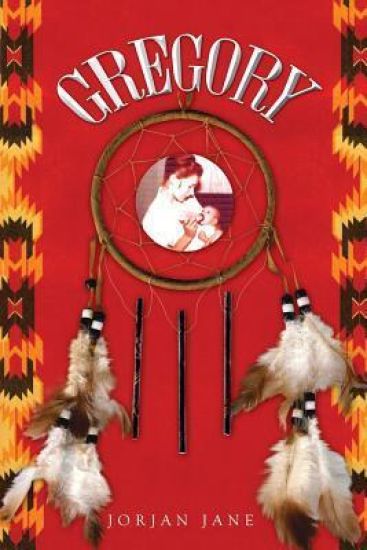
Gregory, a deeply personal and poignant memoir, is a candid account of Gregory's early years that weaves by his mother with unwavering love and honesty. The story begins on the day Gregory's father disappears, leaving his mother to navigate the challenges of single parenthood and the complexities of growing up without a father figure. Through a series of heartfelt vignettes, she shares the intimate struggles and triumphs of raising a boy in a world that often feels incomplete.As Gregory navigates his childhood, he grapples with feelings of abandonment, identity, and belonging. The narrative captures the complexities of love, longing, and resilience, offering a raw and authentic glimpse into a life shaped by absence. Through his mother's eyes, we see Gregory's struggles and triumphs, as well as the ways in which his mother's love and determination shape his young life. "Gregory" is more than just a story of absence; it is a celebration of perseverance and the indomitable spirit of a mother and son finding their way together.
Gregory

Gregory

Jorjan Jane

Authors' Tranquility Press
2024
sidottu
Gregory, a deeply personal and poignant memoir, is a candid account of Gregory's early years that weaves by his mother with unwavering love and honesty. The story begins on the day Gregory's father disappears, leaving his mother to navigate the challenges of single parenthood and the complexities of growing up without a father figure. Through a series of heartfelt vignettes, she shares the intimate struggles and triumphs of raising a boy in a world that often feels incomplete.As Gregory navigates his childhood, he grapples with feelings of abandonment, identity, and belonging. The narrative captures the complexities of love, longing, and resilience, offering a raw and authentic glimpse into a life shaped by absence. Through his mother's eyes, we see Gregory's struggles and triumphs, as well as the ways in which his mother's love and determination shape his young life. "Gregory" is more than just a story of absence; it is a celebration of perseverance and the indomitable spirit of a mother and son finding their way together.
Gregory

Gregory

Panos Ioannides

Armida Publications Ltd
2009
nidottu
A translation of twelve award winning short stories and novellas. Gregory, The Bath, Uniforms, The Suitcase and The Escape have been adapted for the theater by the author and staged in theaters in Cyprus and abroad (such as Greece, England, USA and Germany) whereas all the short stories have been included in prestigious anthologies such as Short Story International, Sudden Fiction and others.
Gregory, the Terrible Eater

Gregory, the Terrible Eater

Ariane Dewey

Prentice Hall IBD
1984
sidottu
Gregory, the Terrible Eater, wants orange juice and eggs for breakfast. His parents are terribly upset Why can't Gregory eat striped ties and violins, like the rest of the goats? Jose Aruego and Ariane Dewey have entered into the spirit of Mitchell Sharmat's upside-down, turned-around world with bold, wacky, expressive illustrations. The trio's exuberant collaboration provokes healthy laughter and even includes a colorful chart which gives fresh meaning to the concept of "junk food."
Gregory Of Nyssa

Gregory Of Nyssa

Emilie Griffin

HarperCollins
2006
nidottu
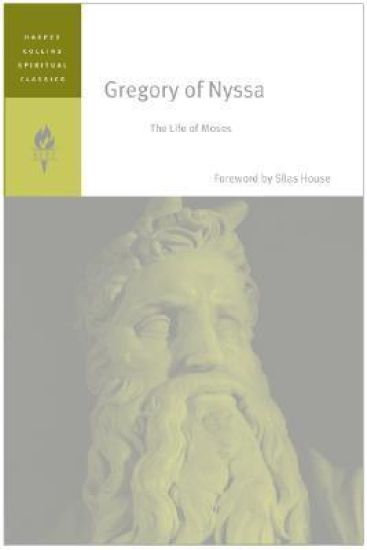
The fourth-century bishop and saint chronicles the events of Moses's life based on the Old Testament stories in Exodus and Numbers, using the scriptures as the foundation for a series of spiritual teachings, and reflects on the topics of the solitary life, asceticism, control of the passion, right conduct, knowledge of God, and the spiritual quest. Original. 15,000 first printing.
Gregory's Shadow

Gregory's Shadow

Don Freeman

Puffin
2002
pokkari
Gregory is a shy groundhog, and having his friend Shadow close by makes him feel brave. But one day Gregory and Shadow go outside to look for food, and they get separated. Scared and lonely, they search and search for one another. To make matters worse, tomorrow is Groundhog Day, and everyone will be waiting to see if Gregory and his shadow leave their home together. Will the two friends find each other in time for Groundhog Day? Freeman's adorable, loosely sketched illustrations are colored in a palette of blues for the snowscapes and earth tones for the underground scenes. The simple story line is just right for preschoolers. (Booklist)
Gregory of Nyssa: On the Human Image of God
This book presents the first modern critical edition of the work of Gregory of Nyssa, On the Human Image of God (formerly known as On the Making of Man, De hominis opificio) and the first English translation since the nineteenth century. This treatise is one of the most important of Gregory's texts. Paralleling the structure of Plato's Timaeus, Gregory's work begins by offering two analyses of the human being. The first presents the human being as the culmination of the ascent made by nature through the various levels of life, and as made, body and soul, in the image of God. The second considers why this is not immediately apparent, the need for time to be able to grow, individually and collectively, to this status, as the body of Christ, the image of God, and the role of sexuality within this growth. The third part of the work brings both analyses together, to see the same movement in the life-span of each person. The extensive introduction provided in this volume examines the philosophical and theological background of Gregory's text, beginning with Anaxagoras, Plato (the Timaeus), Philo, and Origen, and also compares aspects of Gregory's work with that of Irenaeus of Lyons and Maximos the Confessor.
Gregory of Nyssa and the Concept of Divine Persons

Gregory of Nyssa and the Concept of Divine Persons

Lucian Turcescu

Oxford University Press Inc
2005
sidottu
The concept of personhood is central to a wide range of contemporary issues, ranging from reproductive rights to the death penalty and euthanasia. We may think that the concept of person is a modern discovery. In fact, however, this idea does not originate with our discovery of human rights, consciousness, and individuality. As this study shows, for example, the fourth-century theologian Gregory of Nyssa developed a very sophisticated concept of the person in the context of his attempts to clarify the paradox of the Trinity - a single God comprising three distinct persons. Turcescu offers the first in-depth analysis of Gregory's writings about the divine persons. Turcescu's work not only contributes to our knowledge of the history of Trinitarian theology but can be helpful to theologians who are dealing with issues in contemporary ethics.
Gregory of Nazianzus on the Trinity and the Knowledge of God

Gregory of Nazianzus on the Trinity and the Knowledge of God

Christopher A. Beeley

Oxford University Press Inc
2008
sidottu
Gregory of Nazianzus, a 4th-century bishop of Constantinople, receives relatively little attention from modern Western scholars, yet he is one of the most influential theologians in the history of Christian doctrine. Many modern Christians understand their religious beliefs through ideas originally expounded by Gregory, yet probably would not recognize his name. As an advocate for the conceptual understanding of the Trinity, Gregory set precedents for the way his fellow and future Christians would perceive and worship God. Holding that Jesus was both fully divine and fully human, Gregory added new complexity to Christianitys grasp of the mysterious relationship between the Son and the Father. He also explored the nature of the Holy Spirit by means of scriptural analysis, both in the Hebrew Scriptures and the New Testament. Gregorys enlightening revelations resonate throughout the varied religious landscape of Christian creed, cult, and code. Christopher A. Beeley examines Gregorys doctrine of the Trinity in the full range of his theological and practical vision of the Christian life. Beeley examines and analyzes Gregorys teachings on the purification, illumination, and limitations of the theologian; the saving work of Christ within the context of Gregorys understanding of salvation; the place of the Holy Spirit in the work of the Trinity; and the Trinitarian purpose of pastoral ministry. This book combines expansive coverage of Gregorys works with meticulous close-readings and analyses to impart new interpretations in the areas of Christology, Pneumatology, and Christian ministry.
Gregory of Nazianzus: Poemata Arcana

Gregory of Nazianzus: Poemata Arcana

St Gregory of Nazianzus

Clarendon Press
1997
sidottu
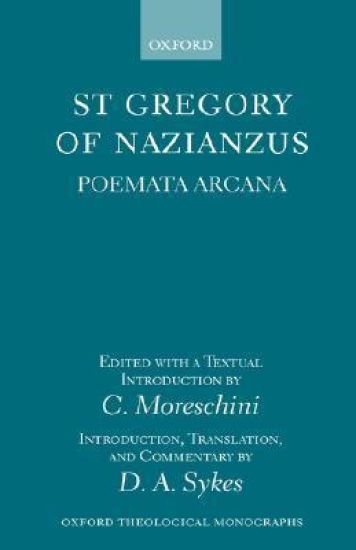
Known as "the Theologian", St Gregory of Nazianzus (in the eastern part of Turkey) is, with St Basil and St Gregory of Nyssa, one of the celebrated Cappadocian Fathers of the fourth-century Christian Church. Highly educated in both Christian theology and classical Greek literature, he found himself torn between a solitary, contemplative life and the reluctantly accepted, though in actuality relished, public figure of bishop, vigorous in defence of orthodoxy against the attacks of the Arians. He was even, briefly, Bishop of Constantinople and chairman of the Council in 381 which produced what we now know as the Nicene Creed. This edition of his poems brings together his theological acumen in a formative period and shows his ability to operate in the genre of didactic verse going back to the eighth century BC. The poems cover a range of topics, from the strictly theological to others dealing more broadly with the creation of the world, providence, the world of spiritual beings, and the human soul. They give a unique new insight both on the theological ideas of the period and on the uneasy emergence of Christian culture from the pagan past.