Kirjojen hintavertailu. Mukana 11 244 527 kirjaa ja 12 kauppaa.

Kirjahaku

Etsi kirjoja tekijän nimen, kirjan nimen tai ISBN:n perusteella.

1000 tulosta hakusanalla Gregory McNamee

Moveable Feasts

Moveable Feasts

Gregory McNamee

Praeger Publishers Inc
2006
sidottu
Food has functioned both as a source of continuity and as a subject of adaptation in the course of human history. Onions have been a staple of the European diet since the Paleolithic era, while the orange is once again being cultivated in great quantities in Southern China, where it was originally cultivated. Other foods—such as the apple and pear in Central Asia, the tomato in Mexico, the chili pepper in South America, and rice in South Asia—remain staples of their original regions and of the world diet today.Still other items are now grown in places that would have seemed impossible in the past-bananas in geothermally heated greenhouses in Iceland, corn on the fringes of the Gobi, and tomatoes in space. But how did humans discover how to grow and consume these foods in the first place? How were they chosen over competing foods? How did they come to be so important to us? In this charming and frequently surprising compendium, Gregory McNamee gathers revelations from history, anthropology, chemistry, biology, and many other fields, and spins them into entertaining tales of discovery, complete with delicious recipes from many culinary traditions around the world. Among the 30 types of food discussed in the course of this alphabetically-arranged work are: the apple, the banana, chocolate, coffee, corn, garlic, honey, millet, the olive, the peanut, the pineapple, the plum, rice, the soybean, the tomato, and the watermelon. All of the recipes included with these diverse food histories have been adapted for recreation in the modern kitchen.
Moveable Feasts

Moveable Feasts

Gregory McNamee

Bison Books
2008
pokkari
Food has functioned both as a source of continuity and as a subject of adaptation over the course of human history. Onions have been a staple of the European diet since the Paleolithic era; by contrast, the orange is once again being cultivated in large quantities in southern China, where it was originally grown. Other foods remain staples of their original regions as well as of the world diet at large. Still others are now grown in places that would have seemed impossible in the past—bananas in heated greenhouses in Iceland, corn on the fringes of the Gobi Desert, tomatoes on the International Space Station. But how did humans discover how to grow and incorporate these foods into their diet in the first place? How were they chosen over competing foods? In this charming and frequently surprising compendium, Moveable Feasts gathers revelations from history, anthropology, chemistry, biology, and many other fields and spins them into entertaining tales of discovery while adding more than ninety delicious recipes from various culinary traditions around the world. Among the thirty types of food discussed in the course of this alphabetically arranged work are the apple, the banana, chocolate, coffee, corn, garlic, honey, millet, the olive, the peanut, the pineapple, the plum, rice, the soybean, the tomato, and the watermelon. All the recipes accompanying these diverse food histories have been adapted for re-creation in the modern kitchen.
Gila

Gila

Gregory McNamee

University of New Mexico Press
2012
nidottu
For sixty million years, the Gila River, longer than the Hudson and the Delaware combined, has shaped the ecology of the Southwest from its source in New Mexico to its confluence with the Colorado River in Arizona. Today, for at least half its length, the Gila is dead, like so many of the West’s great rivers, owing to overgrazing, damming, and other practices. This richly documented cautionary tale narrates the Gila’s natural and human history. Now updated, McNamee’s study traces recent efforts to resuscitate portions of this important riparian corridor.
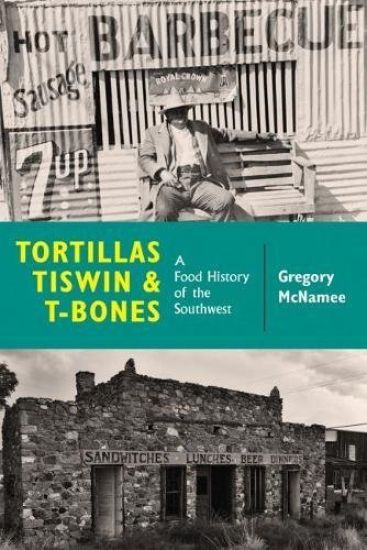
Tortillas, Tiswin, and T-Bones

Tortillas, Tiswin, and T-Bones

Gregory McNamee

University of New Mexico Press
2017
nidottu
In this entertaining history, Gregory McNamee explores the many ethnic and cultural traditions that have contributed to the food of the Southwest. He traces the origins of the cuisine to the arrival of humans in the Americas, the work of the earliest farmers of Mesoamerica, and the most ancient trade networks joining peoples of the coast, plains, and mountains. From the ancient chile pepper and agave to the comparatively recent fare of sushi and Frito pie, this complex culinary journey involves many players over space and time. Born of scarcity, migration, and climate change, these foods are now fully at home in the Southwest of today—and with the “southwesternization” of the American palate at large, they are found across the globe. McNamee extends that story across thousands of years to the present, even imagining what the southwestern menu will look like in the near future.
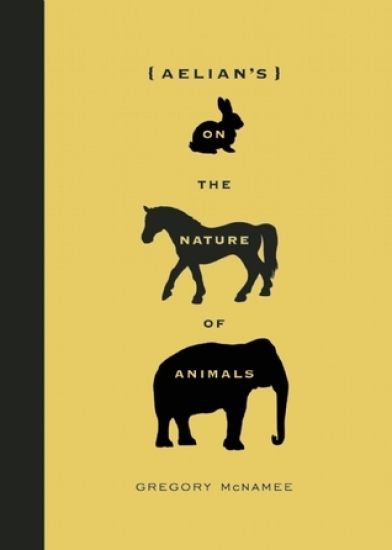
Aelian's On the Nature of Animals

Aelian's On the Nature of Animals

Gregory McNamee

Trinity University Press,U.S.
2011
pokkari
Not much can be said with certainty about the life of Claudius Aelianus, known to us as Aelian. He was born sometime between A.D. 165 and 170 in the hill town of Praeneste, what is now Palestrina, about twenty-five miles from Rome, Italy. He grew up speaking that town's version of Latin, a dialect that other speakers of the language seem to have found curious, but--somewhat unusually for his generation, though not for Romans of earlier times--he preferred to communicate in Greek. Trained by a sophist named Pausanias of Caesarea, Aelian was known in his time for a work called Indictment of the Effeminate, an attack on the recently deceased emperor Marcus Aurelius Antoninus, who was nasty even by the standards of Imperial Rome. He was also fond of making almanac-like collections, only fragments of which survive, devoted to odd topics such as manifestations of the divine and the workings of the supernatural. His De Natura Animalium (On the Nature of Animals) has a similar patchwork quality, but it was esteemed enough in his time to survive more or less whole, and it is about all that we know of Aelian's work today. A mostly randomly ordered collection of stories that he found interesting enough to relate about animals--whether or not he believed them--Aelian's book constitutes an early encyclopedia of animal behavior, affording unparalleled insight into what ancient Romans knew about and thought about animals--and, of particular interest to modern scholars, about animal minds. If the science is sometimes sketchy, the facts often fanciful, and the history sometimes suspect, it is clear enough that Aelian had a fine time assembling the material, which can be said, in the most general terms, to support the notion of a kind of intelligence in nature and that extends human qualities, for good and bad, to animals. His stories, which extend across the known world of Aelian's time, tend to be brief and to the point, and many return to a trenchant question: If animals can respect their elders and live honorably within their own tribes, why must humans be so appallingly awful? Aelian is as brisk, as entertaining, and as scholarly a writer as Pliny, the much better known Roman natural historian. That he is not better known is simply an accident: he has not been widely translated into English, or indeed any European language. This selection from his work will introduce readers to a lively mind and a witty writer who has much to tell us.
The University of Arizona

The University of Arizona

Gregory McNamee

University of Arizona Press
2024
nidottu
The University of Arizona: A History in 100 Stories is a celebration of the people, ideas, inventions, teaching, and structures that have been part of the school’s evolution from a small land-grant institution to an internationally renowned research institution. Drawing on half a century of connection with the University of Arizona as a student, staff member, and faculty member, Gregory McNamee presents a history through the lens of a hundred subjects. That story begins in 1885, with the establishment of the school, which quickly proved itself to be a powerhouse in its foundational “four pillars”: agriculture and earth sciences, followed by astronomy and anthropology. In the years following World War II, those four pillars became ever more important to the University, even as countless other fields of study gained prominence: optical sciences, women’s studies, the humanities, mathematics, and more. This phenomenal institution has as its setting the Sonoran Desert, and, closer to home, to a built environment that is widely considered among the most scenic in the country, from the Historic District with its buildings that are more than a century old to the latest steel-and-glass constructions on the edges of the ever-expanding campus. McNamee relates this history in an entertaining manner, peppering discussion of serious intellectual and institutional themes with lighter moments—the origins of the university's rivalry with Arizona State, the ghosts that are said to lurk about campus, and more. Wildcats everywhere will delight in McNamee’s celebration of the people, places, learning, books, and pastimes that have distinguished our school.
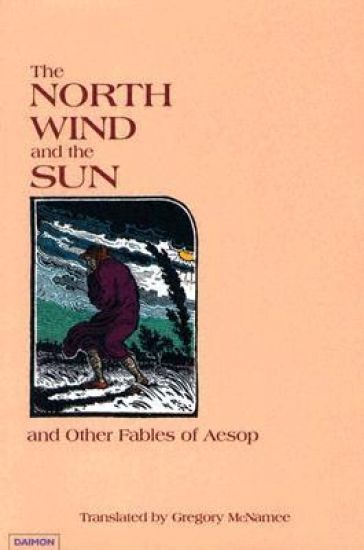
North Wind & the Sun

North Wind & the Sun

Gregory McNamee

Daimon Verlag
2004
nidottu
For 2,500 years, adults and children alike have been listening to the stories of Aesop. Originating in the folk wisdom of rural Asia Minor, these popular fables have been retold, repurposed, and altered over the centuries; in the process, they have sometimes been changed so much that they bear little resemblance to their simple forebears, which ask their listeners and readers to think for themselves, to supply their own conclusions. In this collection, Gregory McNamee draws on the Greek originals to provide Aesop's fables in a form that Aesop himself might recognise -- ones in which fleas and foxes converse, people sometimes learn from their errors, and things are not always what they seem.
On Canadas Frontier;  Sketches of History, Sport, and Adventure and of the Indians, Missionaries, Fur-traders, and Newer Settlers of Western Canada
Philoktetes, a classical book, has been considered essential throughout the human history, and so that this work is never forgotten we at Alpha Editions have made efforts in its preservation by republishing this book in a modern format for present and future generations. This whole book has been reformatted, retyped and designed. These books are not made of scanned copies of their original work and hence the text is clear and readable.
Otero Mesa

Otero Mesa

Gregory McNamee; Bill Richardson

University of New Mexico Press
2008
nidottu
Full-color images by renowned photographers Stephen Strom and Stephen Capra unite with text by prizewinning nature and geography writer Gregory McNamee to document the subtle landscape of 1.2 million acres of remote Chihuahuan Desert grassland in southern New Mexico. Home to many species of wildlife and native plants, Otero Mesa is a place of extraordinary beauty and ecological significance faced with the increasing threat of oil and gas development that has plagued the Rocky Mountain West.
Trees

Trees

Gregory McNamee; Art Wolfe

Earth Aware Editions
2018
sidottu
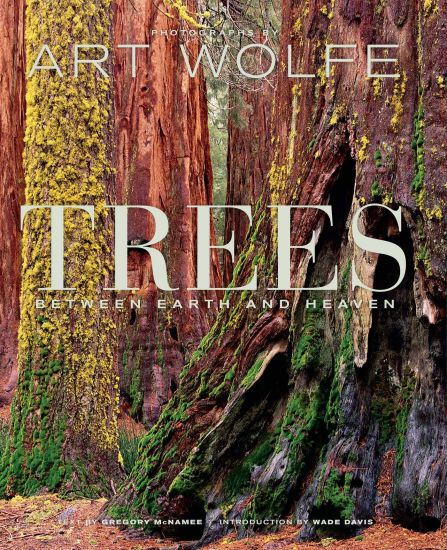
Art Wolfe's immersive photos capture the wonder humans have felt about trees for millennia. From the biblical Tree of Life to the Native American Tree of Peace, trees have played an archetypal role in human culture and spirituality since time immemorial. An integral part of a variety of faiths--from Buddhism and Hinduism to Native American and aboriginal religions--trees were venerated long before any written historical records existed. Through the vivid images of legendary photographer Art Wolfe, Trees focuses on both individual specimens and entire forests with traditional and cultural significance to communities of people and offers a sweeping yet intimate look at the arboreal world that spans six continents. The text by Gregory McNamee presents a diverse account of the legends, literary works, and conservation efforts that convey the long-standing symbiosis between trees and humans. Wolfe shares his personal views in brief photographer's notes, and renowned ethnobotanist Wade Davis anchors the text with a knowledgeable introduction.
Frommer's Arizona and the Grand Canyon

Frommer's Arizona and the Grand Canyon

Robrt Pela; Gregory McNamee

Frommermedia
2025
nidottu
Take the guesswork out of vacation planning. Frommer's hires only seasoned experts, in this case two renowned journalists who live in Arizona. Their advice is savvy, dependable, and based not on one or two short trips to the state, but on a lifetime of exploration.They offer an up-to-date, detail- and tip-rich commentary on Arizona's iconic sights, and will introduce you to restaurants, off-the-beaten-path attractions, nature spots, tours, bars, and shops, that few tourists know to visit. So whether you're going to be rafting the Grand Canyon, hiking in Sedona, living the high life in Phoenix and Scottsdale, or walking in the path of Native American history, this is the book for you.Frommer's Arizona and the Grand Canyon contains: Dozens of stunning, full-color photos throughoutHelpful maps throughout, including a fully-detachable fold-out mapStrategic itineraries, including for families and weeklong stays, so you can make the most of your timeAuthentic experiences to help you appreciate this unique Southwestern culture, cuisine, historic sights and customs like a localCandid reviews, with star ratings of the best restaurants, attractions, tours, shops, and experiences--and advice on the ones not worth your time and moneyAccurate, up-to-date info on transportation, useful websites, costs, telephone numbers, health care options, and moreBudget-planning help with the lowdown on prices and ways to save money, whether you're traveling on a shoestring or in the lap of luxury. Note: Frommer's always lists exact prices, not ranges, so there's less guessing with this guidebookAbout Frommer's: There's a reason that Frommer's has been the most trusted name in travel for more than sixty-five years. Arthur Frommer created the best-selling guide series in 1957 to help American servicemen fulfill their dreams of travel in Europe, and since then, we have published thousands of titles became a household name helping millions upon millions of people realize their own dreams of seeing our planet. Travel is easy with Frommer's.
Trees

Trees

Art Wolfe; Gregory McNamee

Earth Aware Editions
2020
sidottu
Art Wolfe's immersive photos capture the wonder humans have felt about trees for millennia. From the ancient Assyrian Tree of Life to the Iroquois peoples' Tree of Peace, trees have played an archetypal role in human culture and spirituality since time immemorial. An integral part of a variety of faiths--from Buddhism and Hinduism to Nordic and aboriginal religions--trees were venerated long before any written historical records existed. This sense of reverence and wonder is beautifully evoked in these vivid images from legendary photographer Art Wolfe. The new, giftable format of his celebrated book on the topic, Trees, focuses on both individual specimens and entire forests, offering a sweeping yet intimate look at an arboreal world that spans six continents. To accompany these timeless images, author Gregory McNamee weaves a diverse and global account of the myths, cultures, and traditions that convey the long-standing symbiosis between trees and humans, and renowned ethnobotanist Wade Davis anchors the text with a penetrating introduction. Humans have always shared this planet with trees, and this book is both a breathtaking journey through and an homage to that relationship and its past, present, and future--now in a new, beautiful, and highly giftable format.
The Encyclical Letter [On the Authority of the Church] of Pope Gregory Xvi. Bearing Date August 16Th [Really 15Th] 1832, Tr., With Notes
This is a translated edition of the Encyclical Letter of Pope Gregory XVI, originally issued on August 15, 1832. Addressed to all patriarchs, primates, archbishops, and bishops of the Catholic Church, the encyclical, titled "On the Authority of the Church," reflects the Pope's views on various contemporary issues and challenges facing the Church. This historical document provides insight into the religious and political climate of the 19th century and showcases the Pope's stance on matters of faith, governance, and social order. It remains a valuable resource for scholars and anyone interested in the history of the Catholic Church and papal pronouncements. This work has been selected by scholars as being culturally important, and is part of the knowledge base of civilization as we know it. This work was reproduced from the original artifact, and remains as true to the original work as possible. Therefore, you will see the original copyright references, library stamps (as most of these works have been housed in our most important libraries around the world), and other notations in the work. This work is in the public domain in the United States of America, and possibly other nations. Within the United States, you may freely copy and distribute this work, as no entity (individual or corporate) has a copyright on the body of the work. As a reproduction of a historical artifact, this work may contain missing or blurred pages, poor pictures, errant marks, etc. Scholars believe, and we concur, that this work is important enough to be preserved, reproduced, and made generally available to the public. We appreciate your support of the preservation process, and thank you for being an important part of keeping this knowledge alive and relevant.
The Encyclical Letter [On the Authority of the Church] of Pope Gregory Xvi. Bearing Date August 16Th [Really 15Th] 1832, Tr., With Notes
This is a translated edition of the Encyclical Letter of Pope Gregory XVI, originally issued on August 15, 1832. Addressed to all patriarchs, primates, archbishops, and bishops of the Catholic Church, the encyclical, titled "On the Authority of the Church," reflects the Pope's views on various contemporary issues and challenges facing the Church. This historical document provides insight into the religious and political climate of the 19th century and showcases the Pope's stance on matters of faith, governance, and social order. It remains a valuable resource for scholars and anyone interested in the history of the Catholic Church and papal pronouncements. This work has been selected by scholars as being culturally important, and is part of the knowledge base of civilization as we know it. This work was reproduced from the original artifact, and remains as true to the original work as possible. Therefore, you will see the original copyright references, library stamps (as most of these works have been housed in our most important libraries around the world), and other notations in the work. This work is in the public domain in the United States of America, and possibly other nations. Within the United States, you may freely copy and distribute this work, as no entity (individual or corporate) has a copyright on the body of the work. As a reproduction of a historical artifact, this work may contain missing or blurred pages, poor pictures, errant marks, etc. Scholars believe, and we concur, that this work is important enough to be preserved, reproduced, and made generally available to the public. We appreciate your support of the preservation process, and thank you for being an important part of keeping this knowledge alive and relevant.
Gregory

Gregory

Brenda Dixon

Createspace Independent Publishing Platform
2014
nidottu
"All groundhogs want to be weathermen."Or at least that's what Gregory's father says. He's been predicting the weather for years and wants Gregory to do the same. Gregory has dreams that don't include the family business. But when his father becomes ill on Groundhog Day, Gregory must step up and take over. If you've ever had a tough decision to make, then you will fall in love with this story. Join Gregory as he learns he can fulfill his responsibilities and still be true to himself.