Kirjojen hintavertailu. Mukana 11 239 951 kirjaa ja 12 kauppaa.

Kirjahaku

Etsi kirjoja tekijän nimen, kirjan nimen tai ISBN:n perusteella.

1000 tulosta hakusanalla Gregory Scott Sanders

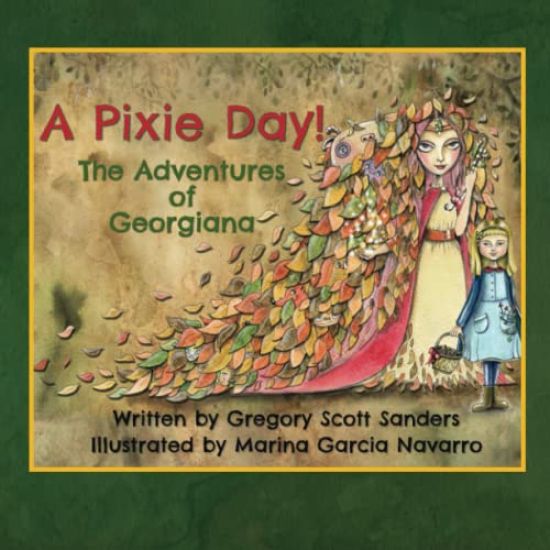
A Pixie Day!

A Pixie Day!

Gregory Scott Sanders

5 Acorns Publishing
2021
pokkari
A Pixie Day follows Georgiana Buttercup on her journey to discover if today is indeed her Pixie Day Georgiana is a seven year-old girl who is ready and anxious to become a pixie. Her sister was a pixie and is now a faerie. When will it be Georgie's turn? What happens when Georgiana wakes up and believes it is her special "Pixie Day?" A Pixie Day encompasses the vibrant themes of self-discovery and healthy curiosity that are the pillars of solid character and good will. This work is meant to inspire strength and confidence in children of all ages and show them that dreams can come true. It just takes some work and belief
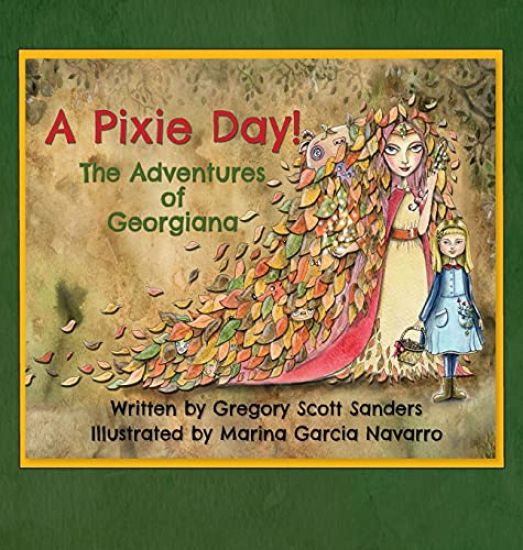
A Pixie Day!

A Pixie Day!

Gregory Scott Sanders

5 Acorns Publishing
2021
sidottu
A Pixie Day follows Georgiana Buttercup on her journey to discover if today is indeed her Pixie Day Georgiana is a seven year-old girl who is ready and anxious to become a pixie. Her sister was a pixie and is now a faerie. When will it be Georgie's turn? What happens when Georgiana wakes up and believes it is her special "Pixie Day?" A Pixie Day encompasses the vibrant themes of self-discovery and healthy curiosity that are the pillars of solid character and good will. This work is meant to inspire strength and confidence in children of all ages and show them that dreams can come true. It just takes some work and belief
¡Un Día de Duendecilla!

¡Un Día de Duendecilla!

Gregory Scott Sanders

5 Acorns Publishing
2021
sidottu
A Pixie Day follows Georgiana Buttercup on her journey to discover if today is indeed her Pixie Day Georgiana is a seven year-old girl who is ready and anxious to become a pixie. Her sister was a pixie and is now a faerie. When will it be Georgie's turn? What happens when Georgiana wakes up and believes it is her special "Pixie Day?" A Pixie Day encompasses the vibrant themes of self-discovery and healthy curiosity that are the pillars of solid character and good will. This work is meant to inspire strength and confidence in children of all ages and show them that dreams can come true. It just takes some work and belief Un D a de Duendecilla sigue a Georgiana Buttercup en su viaje para descubrir si hoy es su d a de Pixie Georgiana es una ni a de siete a os que est lista y ansiosa por convertirse en una pixie. Su hermana era una pixie y ahora es una hada. Cu ndo ser el turno de Georgi? Qu pasa cuando Georgiana se despierta y cree que es su especial Pixie Day? Un d a de Pixie abarca los vibrantes temas de autodescubrimiento y sana curiosidad que son los pilares del car cter s lido y la buena voluntad. Este trabajo est destinado a inspirar fuerza y confianza en los ni os de todas las edades y mostrarles que los sue os pueden hacerse realidad. Solo se necesita algo de trabajo y creencia
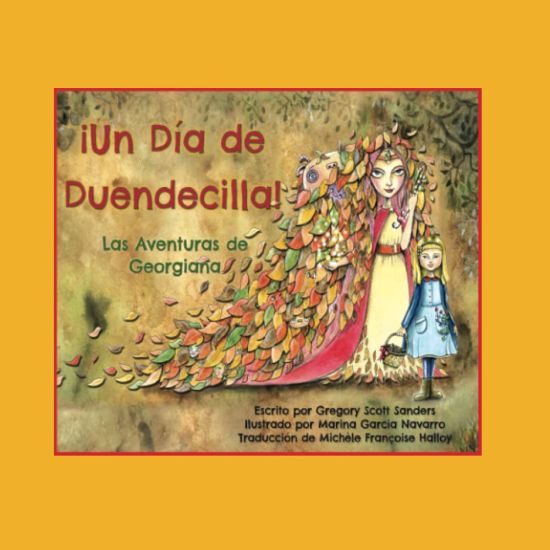
¡Un Día de Duendecilla!

¡Un Día de Duendecilla!

Gregory Scott Sanders

5 Acorns Publishing
2021
pokkari
A Pixie day explores the magical world of young Georgiana Buttercup. She is about to become a pixie and her world will change. This story is about innocence, love and inner discovery as Georgiana comes to better understand her place in the world and the magical powers she holds. You will discover a little girl who loves life and really, really wants to be a pixie and have pixie dust in her pockets. Come join Georgiana and see what she discovers about the world and about herself. Una joven que viene de una familia m gica ya deber a haberse convertido en una pixie, pero la transformaci n no ha sucedido y decide salir y obtener algunas respuestas. Un d a de Pixie explora el mundo m gico de la joven Georgiana Buttercup. Ella espera convertirse en una pixie y, con la ayuda de sus amigos animales, descubre una gran cantidad de magia en el camino. Esta historia es sobre inocencia, amor y descubrimiento interior mientras Georgiana llega a entender mejor el mundo y los poderes m gicos que tiene.
Dancing in Dreamtime

Dancing in Dreamtime

Scott Russell Sanders; Gregory Frost; Lee Martin; Erin Stalcup; Carmen Machado

Indiana University Press
2016
pokkari
Fans today may be surprised to learn Scott Russell Sanders was previously one of the brightest science-fiction newcomers of the 1980s. In Dancing in Dreamtime, he returns to his roots, exploring both inner and outer space in a speculative collection of short stories. At a time when humankind faces unprecedented, global-scale challenges from climate change, loss of biodiversity, dwindling vital resources, and widespread wars, this collection of planetary tales will strike a poignant chord with the reader. Sanders has created worlds where death tolls rise due to dream deprivation, where animals only exist in mechanical form, and where poisoned air forces people to live in biodomes. Never before has Sanders's writing been so relevant and never before have the lessons in these stories been so important.
Aristotle on Dramatic Musical Composition: The Real Role of Literature, Catharsis, Music and Dance in the POETICS
This book revolutionizes the 1000-year old tradition that stems from the first commentaries on the Poetics by the Arabic scholars. (No commentary exists from antiquity or Byzantine times.) Starting with those scholars, Aristotle's treatise has always been thought to be about poetic-literary theory, with tragedy being its paradigm. Scott demonstrates, however, that Aristotle (c. 384-322 BCE) employs poiesis not in the way universally assumed until now, as "poetry," which the sophist Gorgias only coined in 415 BCE. Rather, Aristotle follows Diotima, who in the Symposium of Plato (c. 424-347) explains poiesis as mousike kai metra (typically "'music' and verses" but better "music-dance and verses"). One reason Aristotle employs the Diotiman and not the Gorgian sense of poiesis is that not one poem exists in the so-called "Poetics"; another reason is that the definition of tragedy includes music and dance (rhuthmos).Scott subsequently demonstrates that Aristotle considers tragedy not to be a species of literature but one of dramatic musical theater that also requires dance and spectacle. Chapter 2 includes a revised version of Scott's "The Poetics of Performance" (Cambridge University Press, 1999).The book also supplements his arguments of "Purging the Poetics" (Oxford Studies in Ancient Philosophy, 2003), reprinted here as Chapter 5, providing the additional reasons why Aristotle could not have written the clause with the words catharsis, pity, and fear in the definition of tragedy, as a number of internationally known ancient Greek specialists have already been accepting. As part of his reasons, Scott shows that, despite their recent, very admirable paleography, Leonardo Tar n and Dmitri Gutas too often mangle the philosophical interpretations and even some of the philology regarding the "musical" terms, especially when they try to sweep the problems of catharsis under the rug. Also, Tar n and Gutas never even recognize the Diotiman sense of poiesis that Aristotle uses, nor do they recognize the philosophical contradictions with keeping the katharsis-clause.All of this allows a fresh and better reading of the treatise that even with its fundamental misinterpretations has been a major part of the foundation of Western literary, dramatic and artistic theory.UPDATES & ERRATA: www.epspress.com/ADMCupdates.htmlContentsVolume 1 includes: Plato's meanings of poiesis as "music-dance and verse" and his use of rhuthmos often not as "rhythm" but "dance"; the importance of dance in the state for Plato; Aristotle's agreement with his mentor on the meaning of the musical terms and the requirement of dance not only in the Poetics but in the Politics, along with the proof that Aristotle considers tragedy to be a species of dramatic "musical" art, not literature.Volume 2 is available at: www.amazon.com/dp/099970494XIt includes the issues of catharsis, pity, and fear, and a complete rebuttal of the only attempted rigorous reply (by Stephen Halliwell in Between Ecstasy and Truth, 2011) to "Purging the Poetics." This volume also contains: Aristotle's response to Plato without catharsis; comedy; whether or not the principles of "musical" dramatic theater can be applied to art forms like literature and cinema; the history of the Poetics with regards to the two fundamental misconceptions; Bibliography; and Index for both volumes. 300 pages. List: Hardcover $53; Softcover $39.
Aristotle on Dramatic Musical Composition: The Real Role of Literature, Catharsis, Music and Dance in the POETICS
This book revolutionizes the 1000-year old tradition that stems from the first commentaries on the Poetics by the Arabic scholars. (No commentary exists from antiquity or Byzantine times.) Starting with those scholars, Aristotle's treatise has always been thought to be about poetic-literary theory, with tragedy being its paradigm. Scott demonstrates, however, that Aristotle (c. 384-322 BCE) employs poiesis not in the way universally assumed until now, as "poetry," which the sophist Gorgias only coined in 415 BCE. Rather, Aristotle follows Diotima, who in the Symposium of Plato (c. 424-347) explains poiesis as mousike kai metra (typically "'music' and verses" but better "music-dance and verses"). One reason Aristotle employs the Diotiman and not the Gorgian sense of poiesis is that not one poem exists in the so-called "Poetics"; another reason is that the definition of tragedy includes music and dance (rhuthmos).Scott subsequently demonstrates that Aristotle considers tragedy not to be a species of literature but one of dramatic musical theater that also requires dance and spectacle. Chapter 2 includes a revised version of Scott's "The Poetics of Performance" (Cambridge University Press, 1999).The book also supplements his arguments of "Purging the Poetics" (Oxford Studies in Ancient Philosophy, 2003), reprinted here as Chapter 5, providing the additional reasons why Aristotle could not have written the clause with the words catharsis, pity, and fear in the definition of tragedy, as a number of internationally known ancient Greek specialists have already been accepting. As part of his reasons, Scott shows that, despite their recent, very admirable paleography, Leonardo Tar n and Dmitri Gutas too often mangle the philosophical interpretations and even some of the philology regarding the "musical" terms, especially when they try to sweep the problems of catharsis under the rug. Also, Tar n and Gutas never even recognize the Diotiman sense of poiesis that Aristotle uses, nor do they recognize the philosophical contradictions with keeping the katharsis-clause.All of this allows a fresh and better reading of the treatise that even with its fundamental misinterpretations has been a major part of the foundation of Western literary, dramatic and artistic theory.UPDATES & ERRATA: www.epspress.com/ADMCupdates.htmlContentsVolume 1 includes: Plato's meanings of poiesis as "music-dance and verse" and his use of rhuthmos often not as "rhythm" but "dance"; the importance of dance in the state for Plato; Aristotle's agreement with his mentor on the meaning of the musical terms and the requirement of dance not only in the Poetics but in the Politics, along with the proof that Aristotle considers tragedy to be a species of dramatic "musical" art, not literature. 364 pages. List: Hardcover $68; Softcover $48.Volume 1 is available at www.amazon.com/dp/0999704923Volume 2 (this book) includes the issues of catharsis, pity, and fear, and a complete rebuttal of the only attempted rigorous reply (by Stephen Halliwell in Between Ecstasy and Truth, 2011) to "Purging the Poetics." This volume also contains: Aristotle's response to Plato without catharsis; comedy; whether or not the principles of "musical" dramatic theater can be applied to art forms like literature and cinema; the history of the Poetics with regards to the two fundamental misconceptions; Bibliography; and Index for both volumes.
Selections from the Infernal Notebook
Intense prose poems in the tradition of Burroughs and Borges, words mined from the unconscious, dream landscapes and stark imagery that recalls the work of Francis Bacon, Bosch, and Witkin, peels back layers of the real exposing the hidden truths of dreams and the aesthetic of nightmares.
Jesus Will F-ck Up Your Life

Jesus Will F-ck Up Your Life

Gregory Scott

Createspace Independent Publishing Platform
2013
nidottu
Jesus Will F-ck Up Your Life is a down and dirty look at the God of the Bible, Jesus, Angels and Christians. Experience the story you've never heard in a way it's never been told. Be careful The truth will set you free. Gregory and his wife live on the Navajo Indian Reservation where they love to hang out with the people who surround them, write books and teach the true story of the cosmic war in which we live.
The Self-Healing Mind

The Self-Healing Mind

Gregory Scott Brown

HARPERCOLLINS PUBLISHERS INC
2022
sidottu
Self-care is a powerful, evidence-based medicine for the mind. Mental health is the driving force behind every decision we make—how we live, work, and love. Many of us suffer from depression and anxiety, which impede our choices and quality of life, and despite the proliferation of prescription drugs, the numbers are growing across the globe. But there is another, proven way to achieve mental wellness, beyond antidepressants and talk therapy. Practicing psychiatrist Gregory Scott Brown believes that mental health begins with actionable self-care.The Self-Healing Mind is a holistic approach to emotional and psychological healing that focuses on how evidence-based self-care strategies can be used to improve and sustain mental health. Dr. Brown challenges the current state of mental health care and the messaging around it, showing us how to move past outdated notions of “broken” brains and chemical imbalances. While he agrees that prescription drugs and talk therapy in many cases are important for healing, his personal and professional experience has taught him that lifestyle interventions are also key to sustainable mental wellness.Dr. Brown’s clinical philosophy supports an integrative approach that combines conventional treatments (medication and psychotherapy) with what he calls the Five Pillars of Self-Care: breathing mindfully, sleep, spirituality, nutrition, and movement. These purposeful lifestyle practices, backed by science and proven in his clinical practice, can be adopted by everyone. Dr. Brown’s advice and insight put the power of healing back in your control.
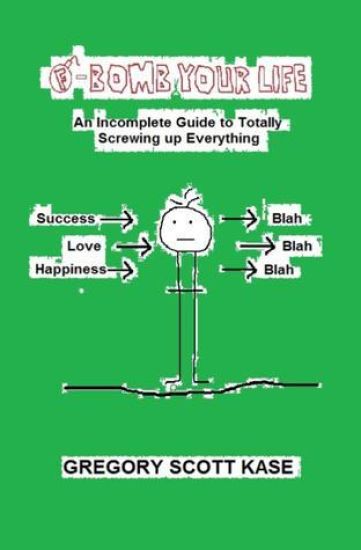
F-Bomb Your Life

F-Bomb Your Life

Gregory Scott Kase

King Kong Fuzi Publishing
2013
pokkari
From the time you took your first breath, there has been someone telling you what to do...under the guise of making you better and keeping you safe. But it's rare to be told what NOT to do and WHY? I'm not talking about the "don't put your feet on the table" knowledge, but rather the real-life experience that proves what a dumbass we can be. Life can be one mean SOB, but F-BOMB YOUR LIFE peels back the curtain to show you how easy it is to F*CK your life without you even knowing it. Full of bona fide methods (once thought to be pearls of wisdom) that have served to nearly (and secretly) destroy every aspect of the human condition. The establishment does not want you to learn this stuff. I am not the establishment. So put your feet on the table, read this book, and crack the code to living a better life. You won't be disappointed, unless of course you have already been victimized by these methods. In that case, rise above and don't continue to be the victim; it's not a good look on anybody. People who stand out most in life are those who are either credibly awesome or incredibly awful. This book can lead to awesome or awful--the choice is yours. You are the author of your life, so take hold of this book and create your masterpiece