The Something Burger is a very detailed accounting of all the evidence Robert Mueller has on President Trump regarding the collusion that went on with Russia during the 2016 Presidential Election. Of course the book is mostly blank and contains well under a 1000 words. This book will be an instant collector's item for MAGA Trump supporters. - "This is a Witch Hunt " --President Trump, 45th President of the United States
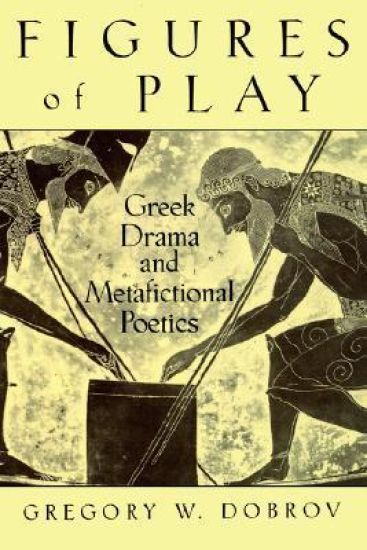
Figures of Play explores the reflexive aspects of ancient theatrical culture across genres. Fifth century tragedy and comedy sublimated the agonistic basis of Greek civilization in a way that invited the community of the polis to confront itself. In the theatre, as in the courts and assemblies, a significant subset of the Athenian public was spectator and judge of contests where important social and ideological issues were played to it by its own members. The "syntax" of drama is shown to involve specific "figures of play" through which the theatrical medium turns back on itself to study the various contexts of its production. Greek tragedy and comedy were argued to be tempermentally metafictional in that they are always involved in recycling older fictions into contemporary scenarios of immediate relevance to the polis. The phemonenology of this process is discussed under three headings, each a "figure of play": 1) surface play--momentary disruption of the theatrical pretense through word, sign, gesture; 2) mise en abyme--a mini-drama embedded in a larger framework; 3) contrafact--an extended remake in which one play is based on another. Following three chapters in which this framework is set forth and illustrated with concrete examples there are five case studies named after the protagonists of the plays in question: Aias, Pentheus, Tereus, Bellerophontes, Herakles. Hence the other meaning of "figures of play" as stage figures. In the second section of the book on "the Anatomy of Dramatic Fiction," special attention is paid to the interaction between genres. In particular, Aristophanic comedy is shown to be engaged in an intense rivalry with tragedy that underscores the different ways in which each genre deployed its powers of representation. Tragedy refashions myth: in Bakkhai, for example, it is argued that Euripides reinvented Dionysis to be specifically a theatrical god, a symbol of tragedy's powers of representation. Comedy refashions tragedy: in a series of utopian comedies, Aristophanes re-enacts a tragic scenario in a way that revals comedy as a superior means of solving political and social crisis.
Using Nicaragua as a case study, this book demonstrates how Soviet foreign policy has been the instrument for projecting Moscow's power and influence in a region that has been in the U.S. sphere of influences since 1898. Soviet Aims in Central America lays down the facts about the Soviets' drive since the 1950s to undermine U.S. influence in Central America by fueling guerrilla wars. G. W. Sand examines key Sandinista, Castroite, and Guatemalan Communist documents and reveals how Soviet military power is being used by the Sandinistas and their Cuban allies to consolidate power, threaten Nicaragua's neighbors, and ultimately revolutionize all of Central America. This, Sand claims, threatens the future of the United States itself.The foreword by former ambassador to Costa Rica, Lewis A. Tambs, chillingly describes the unprecedented threat to U.S. security by Soviet satellization of Central American countries. Sand begins the book with a detailed review of Soviet aims and strategies in the Americas. The book offers a history of the Sandinista movement as well as Soviet foreign policy toward Nicaragua. Further chapters explore the Sandinistas' record with regard to human rights and the current civil war in Nicaragua. Sand's detailed reading of Central American Communist documents reveals Soviet aims for the region. Finally, the book offers a possible strategy for averting Moscow's incursion into the United States' sphere of influence. Students of political science and scholars of Central America, or anyone interested in this volatile region, will find Soviet Aims in Central America provocative reading.
This work provides a documentary record of the correspondence, official and private, between Harry S Truman and Winston Churchill, from Truman's accession to the presidency in April 1945. Official communications between the two resumed during Churchill's second premiership (1951-1955) and more personal correspondence would continue into Churchill's retirement. Subjects of note range from events surrounding German surrender to the Cold War. Completing previously published wartime correspondence between Churchill and Roosevelt up to the latter's death in 1945, this material records the thoughts and decisions of Truman and Churchill from April 12, 1945, nearly a month before Germany's surrender, until Churchill's defeat in the General Election in late July at Potsdam, shortly before the dramatic close of the Pacific war against Japan little more than a fortnight later. The two would subsequently maintain personal contact, first as associates and later as friends, a situation shaped by their meeting at Fulton, Missouri, where Churchill would deliver his famed Iron Curtain speech.
Bringing together more than over 120 expert contributors from otolaryngology, general surgery, endocrinology, and pathology, Surgery of the Thyroid and Parathyroid Glands, 3rd Edition, presents an interdisciplinary approach to surgical management and treatment of benign and malignant disease. This renowned text/atlas is an ideal resource at all levels of surgical experience: for residents and junior surgeons, it clearly provides all relevant anatomy, surgical procedures, and workup; for experienced surgeons, it details the management of difficult cases, including revision surgery. Highly illustrated and accompanied by dozens of videos, this edition brings you up to date with the full continuum of care in thyroid and parathyroid surgery. Easy-to-follow, templated chapters cover preoperative evaluation, surgical anatomy, intraoperative techniques, and postoperative management, for a full range of disorders of the thyroid and parathyroid glands. More than 30 procedural videos walk you step by step through minimally invasive thyroid surgery, surgical anatomy and monitoring of the recurrent laryngeal nerve, surgery for locally advanced thyroid cancer and nodal disease, and more; plus 23 chapter guide videos from the authors with Surgical Text Video Editor-in-Chief Gregory W. Randolph, Jr . Coverage of cutting-edge topics includes recurrent laryngeal nerve monitoring, minimally invasive surgery and the role of PET in staging and surgical planning. Expert guidance on thyroid cancer, including multiple chapters on PTC, MTC and HCC, ATC and NIFTP. New chapters cover medical oncology and TKI therapy. Extensive coverage of key topics such as FNA mutational analysis, transoral and minimally invasive surgery, recurrent laryngeal nerve monitoring, management of RLN paralysis, all aspects of parathyroid disease, ethics, malpractice, and more. Enhanced eBook version included with purchase. Your enhanced eBook allows you to access all of the text, figures, and references from the book on a variety of devices.
For more than 30 years, historians have rejected what they call the ‘warfare thesis’ – the idea that there is an inevitable conflict between religion and science – insisting that scientists and believers can live in harmony. This book disagrees. Taking as its starting point the most famous of all such conflicts, the Galileo affair, it argues that religious and scientific communities exhibit very different attitudes to knowledge. Scripturally based religions not only claim a source of knowledge distinct from human reason. They are also bound by tradition, insist upon the certainty of their beliefs, and are resistant to radical criticism in ways in which the sciences are not. If traditionally minded believers perceive a clash between what their faith tells them and the findings of modern science, they may well do what the Church authorities did in Galileo’s time. They may attempt to close down the science, insisting that the authority of God’s word trumps that of any ‘merely human’ knowledge. Those of us who value science must take care to ensure this does not happen.
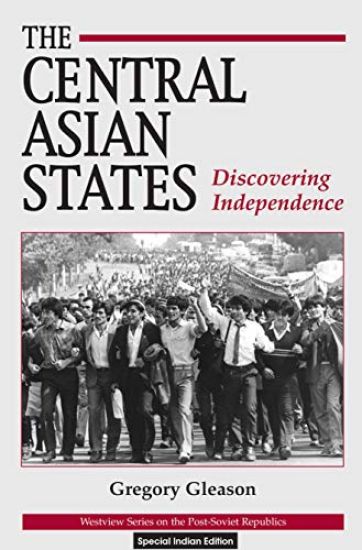
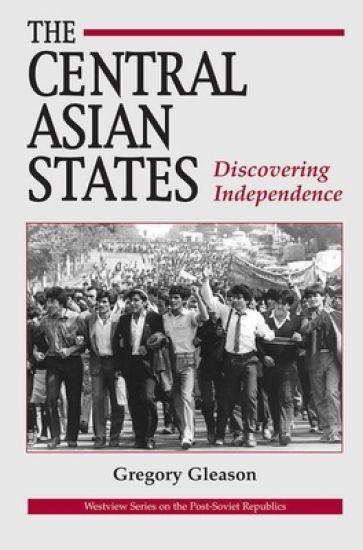
The lands of Central Asia are united by a common history and historical identity as well as by common traditions. A heritage of tribal mountain and steppe confederations and oasis emirates gave way in the Soviet period to the creation of artificial ?nation-states? in the heart of Asia. With the collapse of the Soviet Union, these nations?Kazakstan,
In this timely study, Dawes defends the methodological naturalism of the sciences. Though religions offer what appear to be explanations of various facts about the world, the scientist, as scientist, will not take such proposed explanations seriously. Even if no natural explanation were available, she will assume that one exists. Is this merely a sign of atheistic prejudice, as some critics suggest? Or are there good reasons to exclude from science explanations that invoke a supernatural agent? On the one hand, Dawes concedes the bare possibility that talk of divine action could constitute a potential explanation of some state of affairs, while noting that the conditions under which this would be true are unlikely ever to be fulfilled. On the other hand, he argues that a proposed explanation of this kind would rate poorly, when measured against our usual standards of explanatory virtue.
The purpose of this unique book is to establish purely algebraic foundations for the development of certain parts of topology. Some topologists seek to understand geometric properties of solutions to finite systems of equations or inequalities and configurations which in some sense actually occur in the real world. Others study spaces constructed more abstractly using infinite limit processes. Their goal is to determine just how similar or different these abstract spaces are from those which are finitely described. However, as topology is usually taught, even the first, more concrete type of problem is approached using the language and methods of the second type. Professor Brumfiel's thesis is that this is unnecessary and, in fact, misleading philosophically. He develops a type of algebra, partially ordered rings, in which it makes sense to talk about solutions of equations and inequalities and to compare geometrically the resulting spaces. The importance of this approach is primarily that it clarifies the sort of geometrical questions one wants to ask and answer about those spaces which might have physical significance.
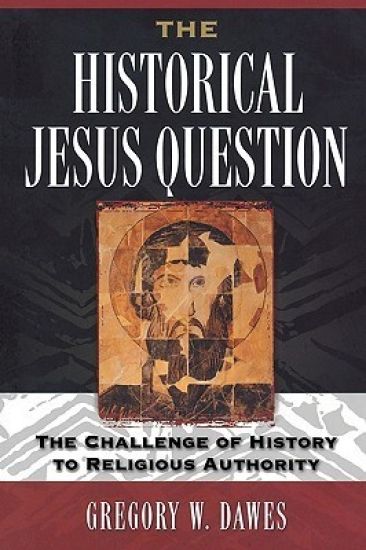
A natural sequel to The Historical Jesus Quest, The Historical Jesus Question offers commentary on the work and significance of the classic writers presented in the earlier volume--Spinoza, Strauss, Schweitzer, Troeltsch, Bultmann, Kasemann--and some additional comment on the work of Pannenberg. Not merely a summary discussion of these important writers, this book goes beyond to follow the implications for theology of the ongoing challenge history presents to biblical authority.
Here is a broad and richly documented examination of a little studied social group--the German nobility outside Prussia. Gregory Pedlow considers the nobles of the small but representative state of Hesse-Kassel from the end of the ancien regime to the era of German unification. Although this period has been most often described in terms of the "triumph of the bourgeoisie," the author shows that landholding Hessian nobles were able to preserve much of their political prestige and social and economic power during these years. By demonstrating a mixture of conservatism and flexibility instead of blind reaction, the Hessian nobility maintained its position as a landed elite. The author focuses on four main areas: the noble family, with material showing changes in marriage patterns and family size and the impact of such demographic changes on inheritance practices; noble landownership, with documentation as to how noble landholdings and landed income survived the loss of traditional noble privileges and payments by peasants; noble occupations, with information (including collective biography) showing nobles' education, career choices, and degree of success in obtaining positions in government service; and the nobility's political response to the growing pressure for reform during the nineteenth century. Originally published in 1988. The Princeton Legacy Library uses the latest print-on-demand technology to again make available previously out-of-print books from the distinguished backlist of Princeton University Press. These editions preserve the original texts of these important books while presenting them in durable paperback and hardcover editions. The goal of the Princeton Legacy Library is to vastly increase access to the rich scholarly heritage found in the thousands of books published by Princeton University Press since its founding in 1905.
This book traces the development of the Communists unique approach to postwar German democratization, showing how the Soviet Union approached the German problem primarily as a task of social and economic restructuring. Originally published in 1983. The Princeton Legacy Library uses the latest print-on-demand technology to again make available previously out-of-print books from the distinguished backlist of Princeton University Press. These editions preserve the original texts of these important books while presenting them in durable paperback and hardcover editions. The goal of the Princeton Legacy Library is to vastly increase access to the rich scholarly heritage found in the thousands of books published by Princeton University Press since its founding in 1905.
This book traces the development of the Communists unique approach to postwar German democratization, showing how the Soviet Union approached the German problem primarily as a task of social and economic restructuring. Originally published in 1983. The Princeton Legacy Library uses the latest print-on-demand technology to again make available previously out-of-print books from the distinguished backlist of Princeton University Press. These editions preserve the original texts of these important books while presenting them in durable paperback and hardcover editions. The goal of the Princeton Legacy Library is to vastly increase access to the rich scholarly heritage found in the thousands of books published by Princeton University Press since its founding in 1905.
Here is a broad and richly documented examination of a little studied social group--the German nobility outside Prussia. Gregory Pedlow considers the nobles of the small but representative state of Hesse-Kassel from the end of the ancien regime to the era of German unification. Although this period has been most often described in terms of the "triumph of the bourgeoisie," the author shows that landholding Hessian nobles were able to preserve much of their political prestige and social and economic power during these years. By demonstrating a mixture of conservatism and flexibility instead of blind reaction, the Hessian nobility maintained its position as a landed elite. The author focuses on four main areas: the noble family, with material showing changes in marriage patterns and family size and the impact of such demographic changes on inheritance practices; noble landownership, with documentation as to how noble landholdings and landed income survived the loss of traditional noble privileges and payments by peasants; noble occupations, with information (including collective biography) showing nobles' education, career choices, and degree of success in obtaining positions in government service; and the nobility's political response to the growing pressure for reform during the nineteenth century. Originally published in 1988. The Princeton Legacy Library uses the latest print-on-demand technology to again make available previously out-of-print books from the distinguished backlist of Princeton University Press. These editions preserve the original texts of these important books while presenting them in durable paperback and hardcover editions. The goal of the Princeton Legacy Library is to vastly increase access to the rich scholarly heritage found in the thousands of books published by Princeton University Press since its founding in 1905.
Parents love. Parents worry. Parenthood is a joy. It is difficult and stressful as well. How can you maximize the joy and minimize the stress? That is the goal of this book. Giggling is perhaps the most beautiful sound in nature. It makes those who hear it smile, especially when it comes from a child. Doctors' offices have too much crying and not enough giggling. The same is true of many homes. "Giggle More, Worry Less" is a different kind of parenting book. It is not an encyclopedia. Instead, it focuses on important topics. I want you to understand when to worry, and when to relax. This way you can focus more time on love and having fun- giggling, as it were. Common sense is central to my approach, and so is compassion and so is a sense of humor. You will learn "How to manipulate your mother" and that "Spit happens". Each of the topics is covered in just a few pages, so you can choose what you need, when you need it. As a pediatrician and father for 20 years, I have learned to laugh at myself and to adapt. My approach to pediatrics is traditional. Having said that, I am willing to question whether our teaching makes sense. With experience, you learn that even absolute, official guidelines have a habit of evolving every few years. Just ask your parents- they will tell you that "everything has changed" since you were a baby. Learning to listen is essential. Patients and parents are often trying to tell the doctor what is going on if he or she is just able to listen. The same is true for babies communicating with their parents. This book ultimately tries to hone in on things that every parent should know. If I could sit down and share with you, this is what I would share. I hope it helps.
Tracing the origins of daily prayer from the New Testament and Patristic period, through the Reformation and Renaissance to the present, this book examines the development of daily rites across a broad range of traditions including: Pre-Crusader Constantinopolitan, East and West Syrian, Coptic and Ethiopian, non-Roman and Roman Western. Structure, texts and ceremonial are examined, and contemporary scholarship surveyed. Concluding with a critique of the present tenor of liturgical revision, Gregory Woolfenden raises key questions for current liturgical change, suggests to whom these questions should be addressed, and proposes that the daily office might be the springboard for an authentic baptismal spirituality. The author explores how prayer and poetic texts indicate that the thrust of the ancient offices was a movement from night to morning - from death to resurrection.
Tracing the origins of daily prayer from the New Testament and Patristic period, through the Reformation and Renaissance to the present, this book examines the development of daily rites across a broad range of traditions including: Pre-Crusader Constantinopolitan, East and West Syrian, Coptic and Ethiopian, non-Roman and Roman Western. Structure, texts and ceremonial are examined, and contemporary scholarship surveyed. Concluding with a critique of the present tenor of liturgical revision, Gregory Woolfenden raises key questions for current liturgical change, suggests to whom these questions should be addressed, and proposes that the daily office might be the springboard for an authentic baptismal spirituality. The author explores how prayer and poetic texts indicate that the thrust of the ancient offices was a movement from night to morning - from death to resurrection.