

Kirjahaku
Etsi kirjoja tekijän nimen, kirjan nimen tai ISBN:n perusteella.
1000 tulosta hakusanalla Guillaume Stefani

The romantic evocation of the Brazilian exile of the Zweigs, from September 1941 to February 1942, becomes a graphic novel magnified by intense watercolours.
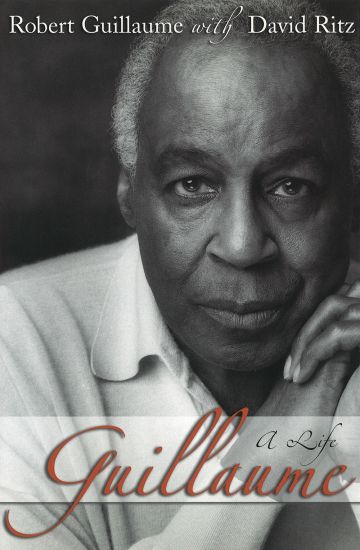
Guillaume: A Life is the autobiography of esteemed Broadway, Hollywood, and television star Robert Guillaume. Ten months after suffering a stroke, Guillaume—perhaps best known as television’s Benson—began this autobiography with award-winning author and collaborator David Ritz.The book goes beyond the recounting of a long and successful career to examine the forces that shaped the man: family, religion, race, and class. Startlingly candid and disarmingly self-aware, Guillaume seeks to know and understand himself, his treatment of the women in his life, and the choices he made along the way. He pursues the truth, however painful it may be, says Ritz, guided by two questions, “Who the hell am I?” and “What made me do what I did?”Born in St. Louis in 1927 to a young, abused, unstable mother, and reared by a strong, hardworking grandmother, Robert Guillaume managed to move from the poverty and adversity of his youth to a rich, full career as an actor and a singer. Fierce determination and sharp focus enabled this man born to hardship and racial discrimination to study, learn, cultivate his natural talents, and succeed at the performance career he pursued with a vengeance. Guillaume first performed in the strict Catholic schools and churches to which his grandmother, who understood that education would be the key to any success he might achieve, sent him. There his love of classical music was nurtured, and he was encouraged to perform.From a child longing for his mother’s love to a man unsure of the meaning of love for many of the women in his life, from a young performer struggling to succeed on Broadway and in Hollywood to a grief-stricken father watching his son die of AIDS, Robert Guillaume tells what it was like to realize celebrity and what he sacrificed in the process. Readers will savor the success story of this artist who achieved great recognition and fame, but who never lost sight of his beginnings. Appealing to all audiences, Guillaume is a revealing and poignant autobiography of an extraordinary and distinguished American thespian.


Guillaume d'Orange is the most extensive epic cycle of the Middle Ages. Set in the ninth century, the poems on the life of William of Orange grew out of several centuries of oral composition and were written down for the first time in the twelfth century. Changing and growing through the years, the poems reflect historical events from the ninth to the twelfth century. Joan M. Ferrante writes in the Introduction, "History tells us little of the medieval William of Orange, but legend tells us a great deal. From the legends grew the most extensive epic cycle of the Middle Ages."

Guillaume d'Orange is the most extensive epic cycle of the Middle Ages. Set in the ninth century, the poems on the life of William of Orange grew out of several centuries of oral composition and were written down for the first time in the twelfth century. Changing and growing through the years, the poems reflect historical events from the ninth to the twelfth century. Joan M. Ferrante writes in the Introduction, "History tells us little of the medieval William of Orange, but legend tells us a great deal. From the legends grew the most extensive epic cycle of the Middle Ages."

Thierry Jan est n en 1958 Nice, apr s des tudes de droit l'universit de Nice et une carri re sportive en planche voile, il se d couvre une passion: l' criture, laquelle va tr s vite l'accaparer avec des romans, une nouvelle, une s rie de polars et les m mentos d'histoire.
This work has been selected by scholars as being culturally important, and is part of the knowledge base of civilization as we know it. This work was reproduced from the original artifact, and remains as true to the original work as possible. Therefore, you will see the original copyright references, library stamps (as most of these works have been housed in our most important libraries around the world), and other notations in the work.This work is in the public domain in the United States of America, and possibly other nations. Within the United States, you may freely copy and distribute this work, as no entity (individual or corporate) has a copyright on the body of the work.As a reproduction of a historical artifact, this work may contain missing or blurred pages, poor pictures, errant marks, etc. Scholars believe, and we concur, that this work is important enough to be preserved, reproduced, and made generally available to the public. We appreciate your support of the preservation process, and thank you for being an important part of keeping this knowledge alive and relevant.

Déploration De Guillaume Crétin Sur Le Trépas De Jean Okeghem, Remise Au Jour Et Annotée Par E. Thoinan
Guillaume DuBois
Wentworth Press
2018
sidottu
Guillaume Lethiere
YALE UNIVERSITY PRESS
2024
sidottu
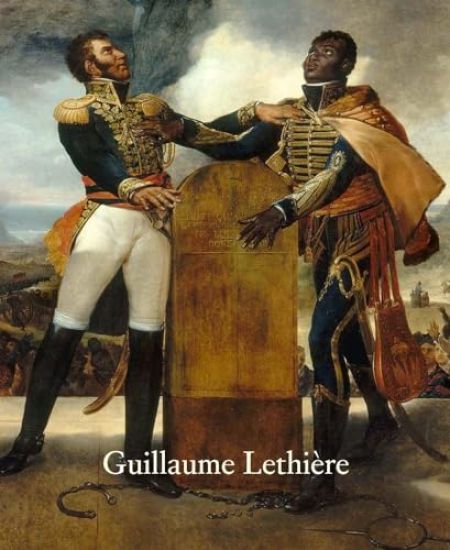
A groundbreaking publication on the Caribbean-born French Neoclassical painter Guillaume Lethière and his extraordinary, yet largely unexamined career Born in the French colony of Guadeloupe, Guillaume Lethière (1760–1832) was a key figure in the history of art during the late eighteenth and early nineteenth centuries. The son of a formerly enslaved woman of color and a white government official and plantation owner, Lethière moved to France with his father at age fourteen. He trained as an artist and successfully navigated the tumult of the French Revolution and its aftermath in order to achieve the highest levels of recognition in his time. A favorite artist of Napoleon’s brother, Lucien Bonaparte, Lethière also held important positions at the Académie de France in Rome, Institut de France, and École des Beaux-Arts. A well-respected teacher, he operated a robust studio that rivaled those of his contemporaries Jacques-Louis David and Antoine-Jean Gros. Despite his remarkable accomplishments and considerable corpus of paintings and drawings, Lethière is relatively unknown today. Lavishly illustrated and authoritative, this groundbreaking study serves to introduce Lethière to new and broader audiences and restore him to his rightful place as one of the most eminent artist of his generation. An international group of scholars offer the first comprehensive view of Lethière’s extraordinary career in its political, social, and art historical context, addressing issues of colonialism, slavery, and diaspora, as well as shedding new light on the presence and reception of Caribbean artists in France during this time. Distributed for the Clark Art Institute Exhibition Schedule: Clark Art Institute, Williamstown, MA (June 15–October 14, 2024) Louvre, Paris (November 14, 2024–February 17, 2025)
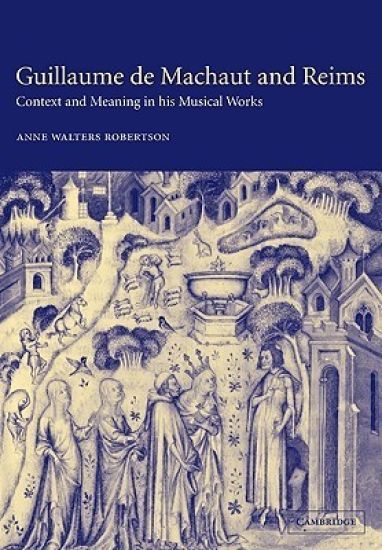
Guillaume de Machaut, renowned fourteenth-century French composer and poet, wrote the first polyphonic Mass and many other important musical works. Friend of royalty, prelates, noted poets and musicians, Machaut was a cosmopolitan presence in late medieval Europe. He also served as canon of the cathedral of Reims, an ancient and influential archiepiscopal see and the coronation site of French kings. This exploration of Machaut's life and work focuses on his music based on ecclesiastical chants: twenty-three motets, the David Hocket, and the Mass of Our Lady. The meaning of his music can often be understood through study of its context in fourteenth-century Reims. Machaut emerges as a composer deeply involved in the great crises of his day, one who skilfully and artfully expresses profound themes of human existence in ardent music and poetry.
Guillaume de Machaut
Ashgate Publishing Limited
2001
sidottu
Guillaume de Machaut, a man famous for both his poetry and his musical compositions, wrote his Prise d’Alexandrie (or Capture of Alexandria) just a few years after the death of his hero, King Peter I of Cyprus (1359-69). It is a verse history of Peter’s reign, and was Machaut’s last major literary work. Peter’s ancestors had ruled the island of Cyprus since the 1190s, and in 1365 Peter gained notoriety throughout western Europe as leader of a crusading expedition which captured the Egyptian port of Alexandria. His forces, however, were unable to retain control, and Peter was left with a war against the Egyptian sultan. It was his increasingly desperate measures to continue the struggle and carry opinion with him that resulted in his murder in 1369. Machaut relied on information relayed by French participants in Peter’s wars, but although he was not an eyewitness of these events, his account is independent of other narratives of the reign which were written in Cyprus apparently under the auspices of the king’s heirs.
Guillaume de Palerne
McFarland Co Inc
2004
pokkari
This popular and important romance in the Middle Ages was written in Picard, one of the more difficult regional dialects of Old French. Guillaume de Palerne is a non-Arthurian romance offering a different vision of the medieval world, one in which we find the hero in a more realistic setting confronting the obstacles that fate--not his quest for fame--has set in his path. It is the story of a young prince of Sicily who is kidnapped by a werewolf at the age of four. Woven into the story of the eponymous hero is the parallel story of Alphonse, the Spanish prince who was transformed into a werewolf by his stepmother when he was still a toddler. The anonymous poet has woven humor, contemporary allusions, reworkings of traditional motifs and a hidden moral lesson into the story's engaging plot. The romance also presents the reader and scholar with a complex portrayal of the constancy and changeability of identity that provides new insight into the medieval attitude toward individuality. Based primarily on Alexandre Micha's 1990 edition, this translation is intended as a guide to reading the original rather than as a substitute. The editor has attempted to be as literal as possible and to remain faithful to the register and tone of the original, including its original word order and grammatical structure. In addition to the translation, the finished text includes an introduction, notes and a select bibliography.
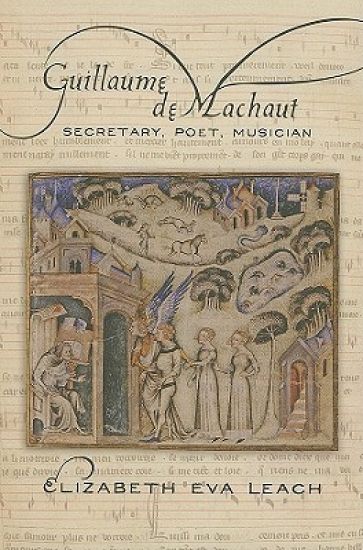
At once a royal secretary, a poet, and a composer, Guillaume de Machaut was one of the most protean and creative figures of the late Middle Ages. Rather than focus on a single strand of his remarkable career, Elizabeth Eva Leach gives us a book that encompasses all aspects of his work, illuminating it in a distinctively interdisciplinary light. The author provides a comprehensive picture of Machaut's artistry, reviews the documentary evidence about his life, charts the different agendas pursued by modern scholarly disciplines in their rediscovery and use of specific parts of his output, and delineates Machaut's own poetic and material presentation of his authorial persona. Leach treats Machaut's central poetic themes of hope, fortune, and death, integrating the aspect of Machaut's multimedia art that differentiates him from his contemporaries' treatment of similar thematic issues: music. In restoring the centrality of music in Machaut's poetics, arguing that his words cannot be truly understood or appreciated without the additional layers of meaning created in their musicalization, Leach makes a compelling argument that musico-literary performance occupied a special place in the courts of fourteenth-century France.
At once a royal secretary, a poet, and a composer, Guillaume de Machaut was one of the most protean and creative figures of the late Middle Ages. Rather than focus on a single strand of his remarkable career, Elizabeth Eva Leach gives us a book that encompasses all aspects of his work, illuminating it in a distinctively interdisciplinary light. The author provides a comprehensive picture of Machaut's artistry, reviews the documentary evidence about his life, charts the different agendas pursued by modern scholarly disciplines in their rediscovery and use of specific parts of his output, and delineates Machaut's own poetic and material presentation of his authorial persona. Leach treats Machaut's central poetic themes of hope, fortune, and death, integrating the aspect of Machaut's multimedia art that differentiates him from his contemporaries' treatment of similar thematic issues: music. In restoring the centrality of music in Machaut's poetics, arguing that his words cannot be truly understood or appreciated without the additional layers of meaning created in their musicalization, Leach makes a compelling argument that musico-literary performance occupied a special place in the courts of fourteenth-century France.
Guillaume de Mauchaut
CRC Press Inc
2001
sidottu
This is the first edition in more than a century and the first modern English translation of the crowning masterwork of Machaut's literary career. Based on his extensive discussion with returning crusaders, the poet recounts King Peter I of Cyprus's successful attack and capture of the Egyptian city of Alexandria in 1365. This volume features a full discussion of Machaut's life and career, historical commentary, extensive annotation and a select bibliography.