Kirjojen hintavertailu. Mukana 11 238 995 kirjaa ja 12 kauppaa.

Kirjahaku

Etsi kirjoja tekijän nimen, kirjan nimen tai ISBN:n perusteella.

1000 tulosta hakusanalla Gunter Grass

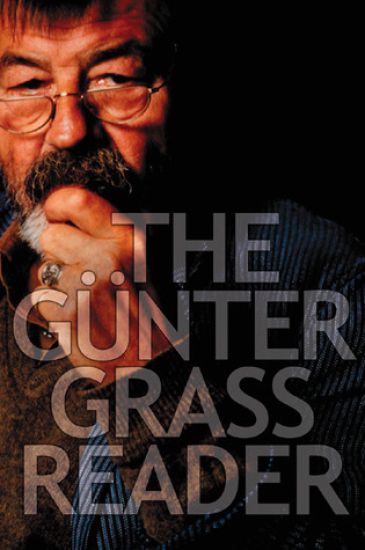
The Gunter Grass Reader

The Gunter Grass Reader

Gunter Grass

Harpervia
2004
nidottu
An anthology of selected works by the Nobel Prize-winning writer of Crabwalk and Too Far Afield includes excerpts from his major novels, numerous short fictional works, essays, and poems, in a volume that recounts the author's participation in political causes, his observations of current events, and his advocacy of the disadvantaged. Simultaneous. 35,000 first printing.
Günter Grass

Günter Grass

Ronald Hayman

TAYLOR FRANCIS LTD
2024
sidottu
Günter Grass is one of the writers who grew up in a Germany already in the grip of Nazism. None of them has found better ways than his of translating the sordid history of the movement into fiction; none has looked more critically at the ‘denazification’ and reconstruction of Germany. In this important study, originally published in 1985, Ronald Hayman scrutinizes Grass’s development and assesses his achievement. He finds that Grass’s more recent work does not fulfil the promise of the The Tin Drum and his other early novels. While this study focuses mainly on the fiction, it also takes into account the poetry, plays, political writing, criticism and graphic work. Grass is important not only as an exemplar of the guilt-laden German conscience but as one of the most ambitious and accomplished living fabulists.
Günter Grass

Günter Grass

Ronald Hayman

TAYLOR FRANCIS LTD
2026
nidottu
Günter Grass is one of the writers who grew up in a Germany already in the grip of Nazism. None of them has found better ways than his of translating the sordid history of the movement into fiction; none has looked more critically at the ‘denazification’ and reconstruction of Germany. In this important study, originally published in 1985, Ronald Hayman scrutinizes Grass’s development and assesses his achievement. He finds that Grass’s more recent work does not fulfil the promise of the The Tin Drum and his other early novels. While this study focuses mainly on the fiction, it also takes into account the poetry, plays, political writing, criticism and graphic work. Grass is important not only as an exemplar of the guilt-laden German conscience but as one of the most ambitious and accomplished living fabulists.
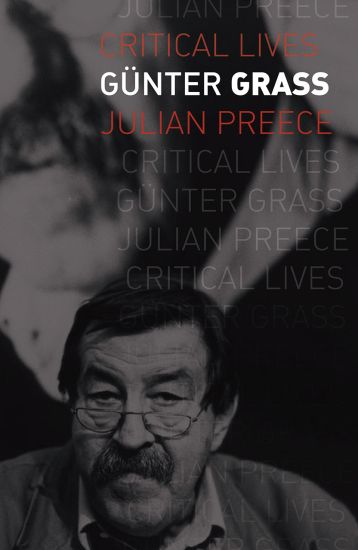
Gunter Grass

Gunter Grass

Reaktion Books
2018
nidottu
Günter Grass (1927–2015) was Germany’s foremost writer for more than half a century, and his books were and remain bestsellers across the world. The Tin Drum was made into an Oscar-winning film in 1979 and the memoir Peeling the Onion in 2006 astounded readers by revealing that Grass had been drafted into the most criminal component of the Nazi war machine, the Waffen SS, in the closing months of the Second World War. He wrote memorably about the student movement, feminism and German reunification, and was a key influence on magic realist authors such as Gabriel García Márquez and Salman Rushdie, as well as the popular novelist John Irving. Grass redefined the role of `literary commitment’, campaigning as a citizen for the German Social Democrats and helping the anti-Nazi Willy Brandt become Chancellor in 1969. Günter Grass is the first biographical study in English of this Nobel Prize-winning writer. Julian Preece introduces Grass’s key works and chronicles his interaction with major figures from literary and public life, including Chancellor Helmut Kohl and co-founder of the Red Army Faction Ulrike Meinhof, and places his fiction and public campaigning in the context of Cold War European politics and post-unification Germany.
Günter Grass

Günter Grass

Steidl Verlag
2008
sidottu
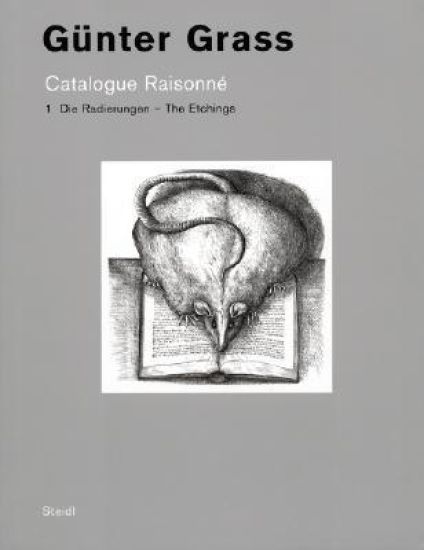
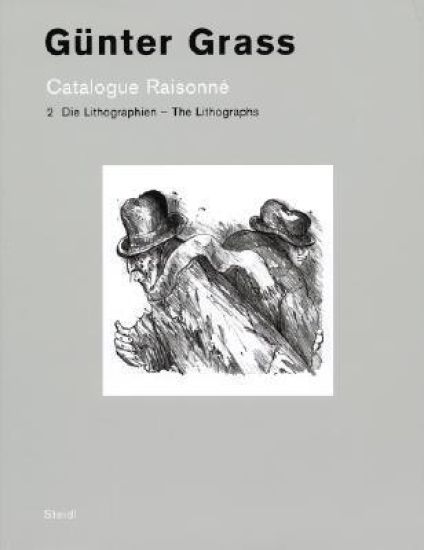
Before Gunter Grass achieved worldwide fame as a novelist, the future author of The Tin Drum studied sculpture at the art academies of Dusseldorf and Berlin. Over the past 60 years of artistic life, he has created not only novels, poems, stories and plays, but an extensive body of artworks in a diverse array of media. His writings are inconceivable without their visual counterpart for reasons both private and public. As a matter of method, during the slow, intimate process of painting, drawing and modeling, Grass develops the ideas for new novels. After he has finished a book, he moves back to his studio and his drawing table. As a matter of aesthetics, he created the dust jacket illustrations for each of his first editions, which has lent his literary works a distinctive unified style. These first installments of a five-volume Catalogue Raisonne encompass Grass's most graphic and best-known work--fish, cockerels, rats, portraits and self-portraits, Oscar and the tin-drum player. The complete five-volume Catalogue Raisonne will include his complete etchings, lithographs, watercolors, drawings and sculptures. Readers of Grass's novels will discover a new dimension of his world, which, he once wrote, is "of the same ink" as his writing; others will simply discover an accomplished, unexpected artist.
Günter Grass

Günter Grass

Steidl Verlag
2008
sidottu
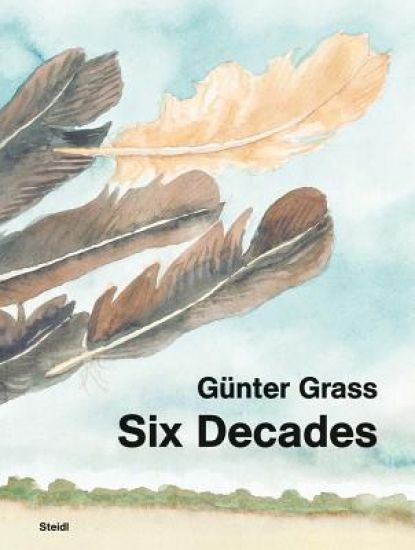
Before Gunter Grass achieved worldwide fame as a novelist, the future author of The Tin Drum studied sculpture at the art academies of Dusseldorf and Berlin. Over the past 60 years of artistic life, he has created not only novels, poems, stories and plays, but an extensive body of artworks in a diverse array of media. His writings are inconceivable without their visual counterpart for reasons both private and public. As a matter of method, during the slow, intimate process of painting, drawing and modeling, Grass develops the ideas for new novels. After he has finished a book, he moves back to his studio and his drawing table. As a matter of aesthetics, he created the dust jacket illustrations for each of his first editions, which has lent his literary works a distinctive unified style.
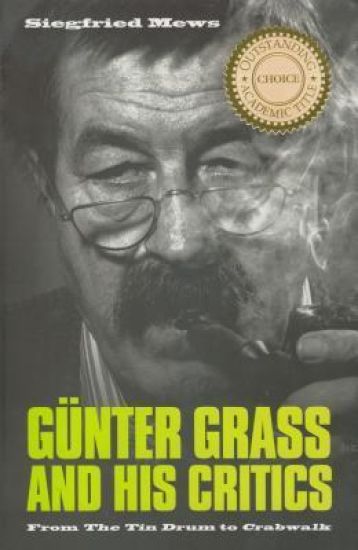
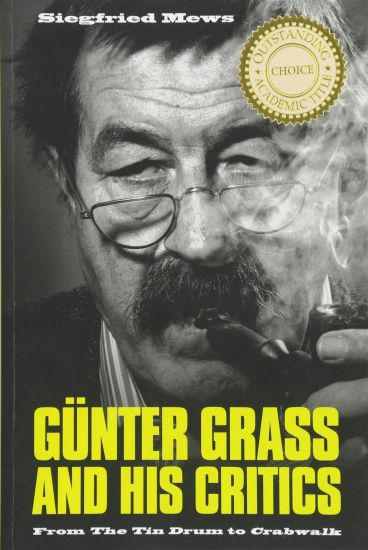
Günter Grass and His Critics

Günter Grass and His Critics

Siegfried Mews

Camden House Inc
2008
sidottu
A comprehensive narrative overview and analysis of the criticism of the controversial German author's works. When the Swedish Academy announced that Günter Grass had been awarded the 1999 Nobel Prize for Literature, it singled out his first novel The Tin Drum (1959, English translation 1963) as a seminal work that had signaled thepostwar rebirth of German letters, auguring "a new beginning after decades of linguistic and moral destruction." Nearly fifty years after its publication, the novel's significance has been generally acknowledged: it is the uncontested favorite among Grass's works of fiction on the part of reading public and critics alike, yet its canonical status tends to obscure the decidedly mixed and even hostile reactions it initially elicited. Along with The Tin Drum, Grass's impressive body of literary work since the 1950s has spawned a cottage industry of Grass criticism, making a reliable guide through the thicket of sometimes contradictory readings a definite desideratum. SiegfriedMews fills this lacuna in Grass scholarship by way of a detailed but succinct, descriptive as well as analytical and evaluative overview of the scholarship from 1959 to 2005. Grass's politically motivated interventions in publicdiscourse have kept him highly visible, blurring the boundaries between politics and aesthetics. Mews therefore examines not only academic criticism but also the daily and weekly press (and other news media), providing additionalinsight into the reception of Grass's works. Siegfried Mews is Professor of German at the University of North Carolina at Chapel Hill.
Günter Grass and His Critics

Günter Grass and His Critics

Siegfried Mews

Camden House Inc
2018
pokkari
A comprehensive narrative overview and analysis of the criticism of the controversial German author's works. When the Swedish Academy announced that Günter Grass had been awarded the 1999 Nobel Prize for Literature, it singled out his first novel The Tin Drum (1959, English translation 1963) as a seminal work that had signaled thepostwar rebirth of German letters, auguring "a new beginning after decades of linguistic and moral destruction." Nearly fifty years after its publication, the novel's significance has been generally acknowledged: it is the uncontested favorite among Grass's works of fiction on the part of reading public and critics alike, yet its canonical status tends to obscure the decidedly mixed and even hostile reactions it initially elicited. Along with The Tin Drum, Grass's impressive body of literary work since the 1950s has spawned a cottage industry of Grass criticism, making a reliable guide through the thicket of sometimes contradictory readings a definite desideratum. SiegfriedMews fills this lacuna in Grass scholarship by way of a detailed but succinct, descriptive as well as analytical and evaluative overview of the scholarship from 1959 to 2005. Grass's politically motivated interventions in publicdiscourse have kept him highly visible, blurring the boundaries between politics and aesthetics. Mews therefore examines not only academic criticism but also the daily and weekly press (and other news media), providing additionalinsight into the reception of Grass's works. Siegfried Mews is Emeritus Professor of German at the University of North Carolina at Chapel Hill.
Günter Grass and the Genders of German Memory

Günter Grass and the Genders of German Memory

Timothy B. Malchow

Camden House Inc
2021
sidottu
The first book to examine the connection between gender and memory in Grass's oeuvre, which is especially timely in light of current concerns about male privilege. Günter Grass (1927-2015) was a fixture at the heart of German cultural life, a self-styled spokesman of the Kulturnation (cultural nation) who imagined it linking him to canonical male literary figures and their authority. He was also the object of valid feminist criticism: a rigid conception of gender permeates his works, belying his professed skepticism toward ideologies. A heterosexual male, Grass lent his representative persona a natural veneer by appropriating his era's gendered discursive constructs, including Heimat, the Bildungsroman, and narratives about German wartime victims and perpetrators. Such appropriation elevated his remembering artist's masculinity above that of the status quo's defenders and exploiters of memory. This book is the first to evaluate the connection between gender and memory in Grass's oeuvre and its legacy in light of current concerns about male privilege. It highlights his breakthrough novel The Tin Drum (1959) and his memoir Peeling the Onion (2006). The former establishes the gendered persona that Grass would develop in subsequent decades to relate contemporary issues to Nazi-era memories. The latter reclaims the novel's autobiographical material but fails to account for his decades-long silence about having served in the Nazi Waffen-SS. Instead, it foregrounds his mourning for his mother, allowing for a more personal reading of his oeuvre and its gendered imagery.
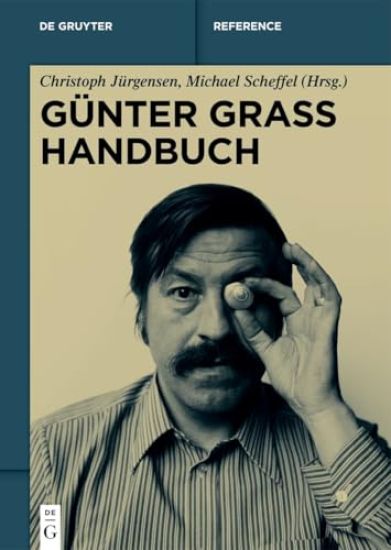
Günter Grass Handbuch
Das Handbuch erschlie t erstmals alle biographischen Phasen und s mtliche Facetten der Arbeit des gattungs bergreifend produktiven Schriftstellers, bildenden K nstlers und engagierten Zeitgenossen G nter Grass. Der jederzeit umstrittene K nstler und Zeitgenosse z hlt unumstritten zu den wirkm chtigsten deutschsprachigen Schriftstellern des 20. Jahrhunderts und er wird, zumal im Ausland, immer wieder als der wichtigste Autor der Nachkriegsliteratur in Deutschland angesehen. Best tigt wurde seine herausragende Position im Jahr 1999 mit der Verleihung des Nobelpreises an Grass. Das Lebenswerk des deutschsprachigen Autors mit kaschubischen Wurzeln, der aus einer der infolge des Zweiten Weltkriegs f r immer verlorenen, ehemals deutschen Ost-Provinzen stammt, stellt eine Art Brennspiegel dar, mit dessen Hilfe sich Deutschlands Entwicklung von den Kriegs- und Nachkriegsjahren bis hinein ins 21. Jahrhundert verfolgen, vielleicht sogar besser begreifen l sst. Das eine breite ffentlichkeit ansprechende Handbuch m chte einen aktuellen, klar gegliederten Zugang zu diesem Lebenswerk bieten, zugleich will es neue Perspektiven auf Werk, Autor und ihre Rezeption er ffnen und jedenfalls zur lebendigen Auseinandersetzung mit dem Autor und allzeit unbequemen Zeitgenossen Grass beitragen.
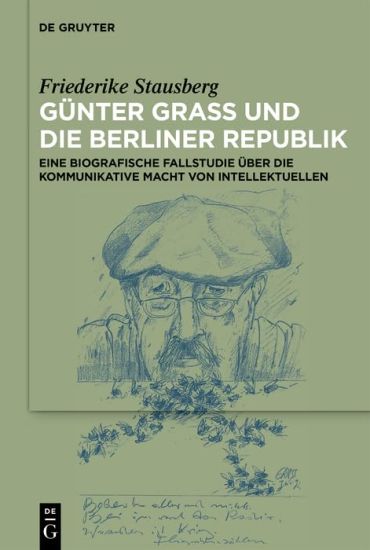
Günter Grass und die Berliner Republik

Günter Grass und die Berliner Republik

Friederike Laura Stausberg

De Gruyter
2023
sidottu
Günter Grass war nicht nur Schriftsteller und Künstler, sondern er äußerte sich auch kontinuierlich als Intellektueller zur Politik im In- und Ausland. Der "politische Günter Grass" wurde vielfach in den Medien kritisiert, bislang aber nicht wissenschaftlich fundiert erforscht. Sein Engagement wird vor allem auf die Ära Brandt reduziert, dabei prägte er auch in der Berliner Republik öffentliche Diskurse und stand im direkten Kontakt zu einer Vielzahl von SPD-Politikern. Er unterstützte sie nicht nur öffentlichkeitswirksam im Wahlkampf, sondern beriet sie auch bei informellen Treffen. Seine Resonanz war nicht auf Deutschland beschränkt, sondern als internationaler Intellektueller nutze er seine Bekanntheit auch im Ausland für politische Zwecke. Die Vielfältigkeit seines Engagements wird nachgezeichnet durch bislang unveröffentlichte Briefe mit Politikern sowie durch rund 50 Interviews mit führenden Politikern der SPD, wie beispielsweise Gerhard Schröder, Oskar Lafontaine, Rudolf Scharping, Björn Engholm, Martin Schulz oder Kurt Beck. Günter Grass verfügte als Intellektueller über eine kommunikative Macht in der Berliner Republik, mit deren Hilfe er einen direkten Einfluss auf politische Prozesse generierte.
Günter Grass Und Die Berliner Republik: Eine Biografische Fallstudie Über Die Kommunikative Macht Von Intellektuellen
G nter Grass war nicht nur Schriftsteller und K nstler, sondern er u erte sich auch kontinuierlich als Intellektueller zur Politik im In- und Ausland. Der "politische G nter Grass" wurde vielfach in den Medien kritisiert, bislang aber nicht wissenschaftlich fundiert erforscht. Sein Engagement wird vor allem auf die ra Brandt reduziert, dabei pr gte er auch in der Berliner Republik ffentliche Diskurse und stand im direkten Kontakt zu einer Vielzahl von SPD-Politikern. Er unterst tzte sie nicht nur ffentlichkeitswirksam im Wahlkampf, sondern beriet sie auch bei informellen Treffen. Seine Resonanz war nicht auf Deutschland beschr nkt, sondern als internationaler Intellektueller nutze er seine Bekanntheit auch im Ausland f r politische Zwecke. Die Vielf ltigkeit seines Engagements wird nachgezeichnet durch bislang unver ffentlichte Briefe mit Politikern sowie durch rund 50 Interviews mit f hrenden Politikern der SPD, wie beispielsweise Gerhard Schr der, Oskar Lafontaine, Rudolf Scharping, Bj rn Engholm, Martin Schulz oder Kurt Beck. G nter Grass verf gte als Intellektueller ber eine kommunikative Macht in der Berliner Republik, mit deren Hilfe er einen direkten Einfluss auf politische Prozesse generierte.