Kirjojen hintavertailu. Mukana 11 213 693 kirjaa ja 12 kauppaa.

Kirjahaku

Etsi kirjoja tekijän nimen, kirjan nimen tai ISBN:n perusteella.

1000 tulosta hakusanalla Gustav Adolf Breymann

Gustav Adolf

Gustav Adolf

Johann Gustav Droysen

Hansebooks
2017
pokkari
Gustav Adolf ist ein unver nderter, hochwertiger Nachdruck der Originalausgabe aus dem Jahr 1869. Hansebooks ist Herausgeber von Literatur zu unterschiedlichen Themengebieten wie Forschung und Wissenschaft, Reisen und Expeditionen, Kochen und Ern hrung, Medizin und weiteren Genres. Der Schwerpunkt des Verlages liegt auf dem Erhalt historischer Literatur. Viele Werke historischer Schriftsteller und Wissenschaftler sind heute nur noch als Antiquit ten erh ltlich. Hansebooks verlegt diese B cher neu und tr gt damit zum Erhalt selten gewordener Literatur und historischem Wissen auch f r die Zukunft bei.
Gustav Adolf

Gustav Adolf

Marcus Junkelmann

Pustet, Friedrich GmbH
1993
sidottu
Gustav II. Adolf (1594-1632) war der bedeutendste König Schwedens. Durch umfassende Reformen machte er aus einem zurückgebliebenen Land einen modernen Staat und eine europäische Großmacht. Im Kampf um die Herrschaft im Ostseeraum wurde Gustav Adolf zu einem der größten Feldherrn der Neuzei.- Sein Eingreifen in den Dreissigjährigen Krieg bildete den entscheidenden Wendepunkt in diesem schicksalsschweren Ringen: Nach seinem Sieg bei Breitenfeld (1631) hatte sich das Gesicht Europas gründlich verändert...
Gustav Adolf the Great

Gustav Adolf the Great

Nils Ahnlund

Literary Licensing, LLC
2013
sidottu
""Gustav Adolf The Great"" is a historical biography written by Ahnlund, Nils. The book tells the story of Gustav II Adolf, also known as Gustavus Adolphus, who was the King of Sweden from 1611 to 1632. Gustav is widely regarded as one of the greatest military leaders in European history, and his reign saw Sweden rise to become a major European power. The book covers Gustav's life from his childhood to his death in battle at the age of 38. It explores his military campaigns, including his victories in the Thirty Years' War and his innovations in military tactics and technology. The book also delves into Gustav's personal life, including his relationships with his family, his advisors, and his enemies. Throughout the book, Ahnlund provides a detailed and nuanced portrait of Gustav as a complex and multifaceted figure. He examines the political, religious, and cultural context of Gustav's reign, and considers the impact of his legacy on Sweden and Europe. Overall, ""Gustav Adolf The Great"" is a comprehensive and engaging biography of one of the most important figures in European history. It is a must-read for anyone interested in military history, European politics, or the life of a remarkable leader.This is a new release of the original 1940 edition.This scarce antiquarian book is a facsimile reprint of the old original and may contain some imperfections such as library marks and notations. Because we believe this work is culturally important, we have made it available as part of our commitment for protecting, preserving, and promoting the world's literature in affordable, high quality, modern editions, that are true to their original work.
Gustav Adolf Hirn Sein Leben und seine Werke

Gustav Adolf Hirn Sein Leben und seine Werke

K. Keller

Springer-Verlag Berlin and Heidelberg GmbH Co. K
1912
nidottu
Dieser Buchtitel ist Teil des Digitalisierungsprojekts Springer Book Archives mit Publikationen, die seit den Anfängen des Verlags von 1842 erschienen sind. Der Verlag stellt mit diesem Archiv Quellen für die historische wie auch die disziplingeschichtliche Forschung zur Verfügung, die jeweils im historischen Kontext betrachtet werden müssen. Dieser Titel erschien in der Zeit vor 1945 und wird daher in seiner zeittypischen politisch-ideologischen Ausrichtung vom Verlag nicht beworben.
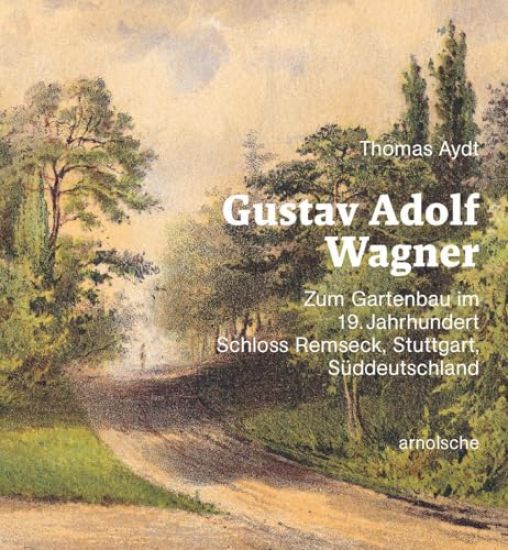
Gustav Adolf Wagner

Gustav Adolf Wagner

Thomas Aydt

Arnoldsche
2025
sidottu
This publication depicts the life and work of the Stuttgart garden designer Gustav Adolf Wagner (1817–1893), who in the second half of the 19th century adopted C.C.L. Hirschfeld’s and Ludwig Sckell’s new concepts of garden aesthetics and translated them into romantic park landscapes. His most significant works—which include the Stadtgarten in Stuttgart, the Faberpark near Nuremberg, and other public gardens in the City of Stuttgart such as Hasenberg, Karlshöhe, Feuersee, and Uhlandshöhe, which he supervised as the first garden inspector—are presented here in-depth for the very first time. Wagner’s gardens symbolise the need for public green spaces and urban park landscapes for an increasingly self-assured middle-class society. Numerous hitherto unpublished projects, for example from Wilhelm Neubert’s Schlüssel zur Bildenden Gartenkunst (1853) or from other contemporary sources, throw new light onto 19th-century garden landscape design and reintroduce the life and work of this unjustly forgotten garden designer. Text in German.