

Kirjahaku
Etsi kirjoja tekijän nimen, kirjan nimen tai ISBN:n perusteella.
1000 tulosta hakusanalla Gustav Ratzenhofer


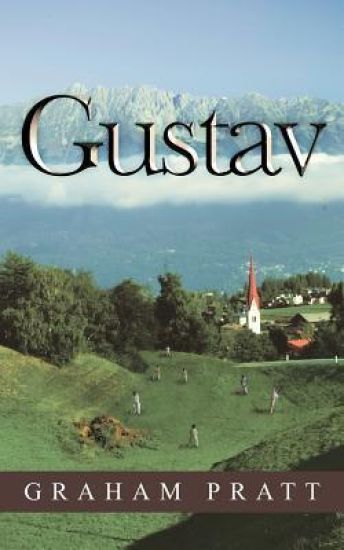
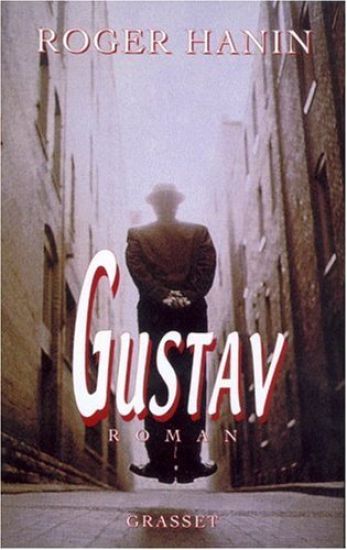


Frida er moren til Gustav, en fantasifull og kreativ gutt som sliter med å få seg venner. Hun bærer med seg alle hans forventinger og nederlag, og bruker mye av sin tid på å legge til rette for hans sosiale liv. Da jevngamle Isak flytter inn i naboleiligheten, og ikke bare guttene, men også foreldrene finner tonen, gjør Frida det hun kan for at vennskapet skal bestå. Gustav er en roman som handler om hvor sammenvevd foreldre og barns følelsesliv kan bli, om en kvinne som lever mer i sitt barns kropp enn sin egen.

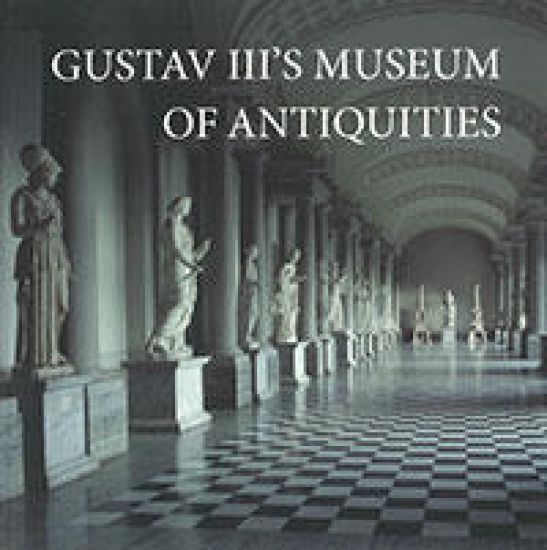
GUSTAV III''S MUSEUM OF ANTIQUITIES
Anne-Marie Leander Touati; Johan Flemberg
Nationalmuseum
2012
nidottu

Gustav Mahler: Volume 2. Vienna: The Years of Challenge (1897-1904)
Henry-Louis de La Grange
Oxford University Press
1995
sidottu
Gustav Mahler was one of the supremely gifted musicians of his generation. His contemporaries came to know him as a composer of startling originality whose greatest successes with the public never failed to provoke controversy among the critics. As a conductor, his relentless pursuit of perfection was sometimes viewed as tyrannical by the singers and musicians who came under his baton. Professor Henry-Louis de La Grange has devoted over thirty years of painstaking resarch to this study of Mahler's life and works. His biography, ultimately to be completed in four volumes, is drawn from a vast archive of documents, autographs, and pictures, assembled by La Grange at the Bibliotheque Musicale Gustav Mahler, Paris. This second volume covers the years 1897-1904, when the focus shifts to Vienna. It opens with Mahler's triumphant debut as director of the Vienna Court Opera, and follows with the revolution he wrought there in standards of performance and, with the Secession painter Alfred Roller, in scenic representation. An account is also given of Mahler's story and brief engagement as conductor of the Vienna Philharmonic Concerts, following Richter's resignation in 1989. La Grange depicts the brilliant society of pre-war Vienna, then the centre of the intellectual and artistic world; the extraordinary range of artists among whom Mahler lived and worked included the composers Dvorak, Gustave Charpentier, Richard Strauss, Zemlinsky, and Schoenberg and his two disciples, Berg and Webern; the painters architects and decorators of the Secession with Klmit at their head; the writers Hauptmann, Dehmel, Hofmannsthal, and Schnitzler. There he also met Alma Schindler, 'the most beautiful woman in Vienna', and La Grange tells the story of their engagement and marriage in 1902 and the early years of their tempestuous relationship. As his fame spread throughout Europe, Mahler travelled with his music to Germany, Russia, Holland, Poland, and Belguim, meeting many other leading musicians of his day, including Pfitzner, Mengelberg, Diepenbrock, Oskar Fried, and many others. During this period Mahler wrote some of his best-loved works, including the fourth and Fifth Symphonies, and the three orchestral song-cyles and collections - the Wunderhorn -, Ruckert-, and Kindertotenlieder. For each of these works La Grange provides full notes and analytical descriptions. Scrupulously researched, richly documented, this is a study worthy of the extraordinary artistic achievement of Gustav Mahler's Vienna years.

Gustav Mahler: Volume 3. Vienna: Triumph and Disillusion (1904-1907)
Henry-Louis de La Grange
Oxford University Press
2000
sidottu
Gustav Mahler was one of the supremely gifted musicians of his generation. His contemporaries came to know him as a composer of startling originality whose greatest successes with the public never failed to provoke controversy among the critics. As a conductor, his relentless pursuit of perfection was sometimes viewed as tyrannical by the singers and musicians who came under his baton. Professor Henry-Louis de La Grange has devoted over thirty years of painstaking research to this study of Mahlers life and works. His biography, ultimately to be completed in four volumes, is drawn from a vast archive of documents, autographs, and pictures, assembled by La Grange at the Bibliothèque Musicale Gustav Mahler, Paris. This third volume covers the years 1904-1907 and shows Mahler in his final years at the Hofoper coping with the rival demands on his energy and creative powers of the Opera on the one hand and his continuing struggle for recognition as a composer in his own right on the other. The first signs of marital difficulties with Alma emerge. Mahlers trials culminate in 1907 with the death of Putzi, his eldest daughter, a terminal crisis at the Opera which makes him decide to leave Vienna, and the alarming diagnosis by the doctors of a cardiac deficiency. True to life portraits are drawn of Mahler the human being, the family man, and the composer, as well as the administrator, producer, and conductor at the Vienna Opera. Innumerable testimonies and anecdotes throw new light on the many aspects of Mahler's complex personality.
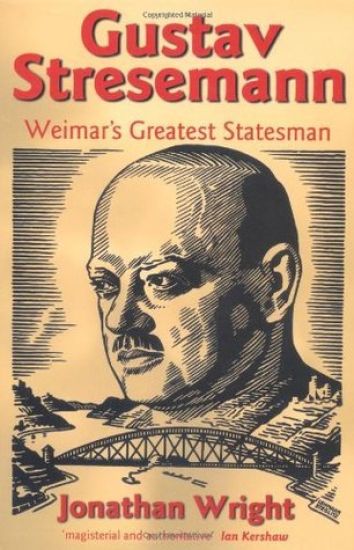
Gustav Stresemann was the exceptional political figure of his time. His early death in 1929 has long been viewed as the beginning of the end for the Weimar Republic and the opening through which Hitler was able to come to power. His career was marked by many contradictions but also a pervading loyalty to the values of liberalism and nationalism. This enabled him in time both to adjust to defeat and revolution and to recognize in the Republic the only basis on which Germans could unite, and in European cooperation the only way to avoid a new war. His attempt to build a stable Germany as an equal power in a stable Europe throws an important light on German history in a critical time. Hitler was the beneficiary of his failure but, so long as he was alive, Stresemann offered Germans a clear alternative to the Nazis. Jonathan Wright's fascinating new study is the first modern biography of Stresemann to appear in English or German.

Gustav Stresemann was the exceptional political figure of his time. His early death in 1929 has long been viewed as the beginning of the end for the Weimar Republic and the opening through which Hitler was able to come to power. His career was marked by many contradictions but also a pervading loyalty to the values of liberalism and nationalism. This enabled him in time both to adjust to defeat and revolution and to recognize in the Republic the only basis on which Germans could unite, and in European cooperation the only way to avoid a new war. His attempt to build a stable Germany as an equal power in a stable Europe throws an important light on German history in a critical time. Hitler was the beneficiary of his failure but, so long as he was alive, Stresemann offered Germans a clear alternative to the Nazis. Jonathan Wright's fascinating new study is the first modern biography of Stresemann to appear in English or German.




This is the travel diary of a young German businessman who came to Texas and worked for several years in Houston and the surrounding areas. His diary, originally published in German as Texanisches Tagebuch, gives a fascinating view of life in the Texas republic.

The life of the brilliant composer and conductor Gustav Mahler was punctuated by crisis. His parents both died in 1889, leaving him the reluctant head of a household of siblings. He himself endured a nearly fatal medical ordeal in 1901. A beloved daughter died in 1907 and that same year, under pressure, Mahler resigned from the directorship of the Vienna Opera. In each case Mahler more than mastered the trauma; he triumphed in the creation of new major musical works. The final crisis of Mahler's career occurred in 1910, when he learned that his wife, Alma, was having an affair with the architect Walter Gropius. The revelation precipitated a breakdown while Mahler was working on his Tenth Symphony. The anguished, suicidal notes Mahler scrawled across the manuscript of the unfinished symphony revealed his troubled state. A four-hour consultation with Sigmund Freud in Leiden, Holland, restored the composer's equilibrium. Although Mahler left little record of what transpired in Leiden, Stuart Feder has reconstructed the encounter on the basis of surviving evidence. The cumulative stresses of the crises in Mahler's life, in particular Alma's betrayal, left him physically and emotionally vulnerable. He became ill and died soon after in 1911. At once a sophisticated consideration of Mahler's work and a psychologically acute portrait of the life events that shaped it, this book extends our thinking about one of the great masters of modern music.

The definitive biography of the celebrated composer, published in English to coincide with the centenary of his death A best seller when first published in Germany in 2003, Jens Malte Fischer's Gustav Mahler has been lauded by scholars as a landmark work. He draws on important primary resources—some unavailable to previous biographers—and sets in narrative context the extensive correspondence between Mahler and his wife, Alma; Alma Mahler's diaries; and the memoirs of Natalie Bauer-Lechner, a viola player and close friend of Mahler, whose private journals provide insight into the composer's personal and professional lives and his creative process.Fischer explores Mahler's early life, his relationship to literature, his achievements as a conductor in Vienna and New York, his unhappy marriage, and his work with the Metropolitan Opera and the New York Philharmonic in his later years. He also illustrates why Mahler is a prime example of artistic idealism worn down by Austrian anti-Semitism and American commercialism. Gustav Mahler is the best-sourced and most balanced biography available about the composer, a nuanced and intriguing portrait of his dramatic life set against the backdrop of early 20th century America and fin de siècle Europe.

The popularity of Mahler's symphonic works is unremitting. More recordings have been made during the past ten years than in the previous six decades. This work is a companion to the first volume, published in 1986; together, the two review virtually every recording commercially released (as well as some private issues). The intention of both works is to provide a comprehensive analysis of all recordings. A general overview is combined with details of particular importance. Recordings of special merit are noted. The objective critical discussions will appeal to the newcomer as well as the knowledgeable devotee and the work will serve as a valuable addition to university, music school, and public libraries, as well as any music lover's library. This guide provides a symphony-by-symphony commentary, including the unfinished Tenth Symphony, Das Lied von der Erde, and piano and chamber music reductions of the works. It includes all new recordings issued worldwide as well as compact disc reissues of previously released recordings and all performances on videocassette. Listings are arranged alphabetically by conductor, and headings for each recording contain specific information about the performers, record label, catalog number, and timing. Helpful indexes by conductor, orchestra, vocal and instrumental soloists, chorus, and record label are included.