Kirjojen hintavertailu. Mukana 11 244 527 kirjaa ja 12 kauppaa.

Kirjahaku

Etsi kirjoja tekijän nimen, kirjan nimen tai ISBN:n perusteella.

1000 tulosta hakusanalla Gustav Stickley

Gustav Stickley

Gustav Stickley

Phaidon

Phaidon Press Ltd
2011
nidottu
Gustav Stickley (1858-1942) is an iconic character and one of the most influential figures of the American Arts & Crafts movement. A self-made man whose furniture company, Craftsman Workshops, and the seminal magazine he founded in 1901, The Craftsman, held wide-ranging influence over American interior design and decorative arts for decades.
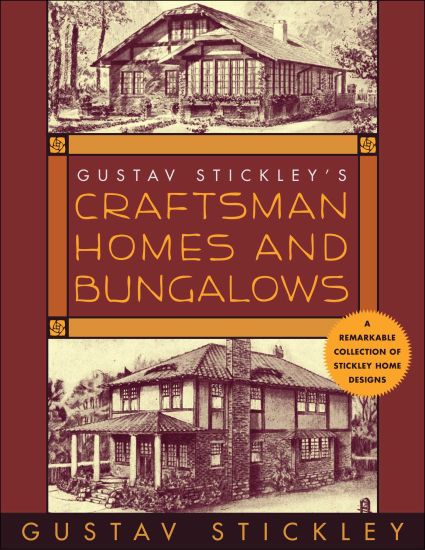
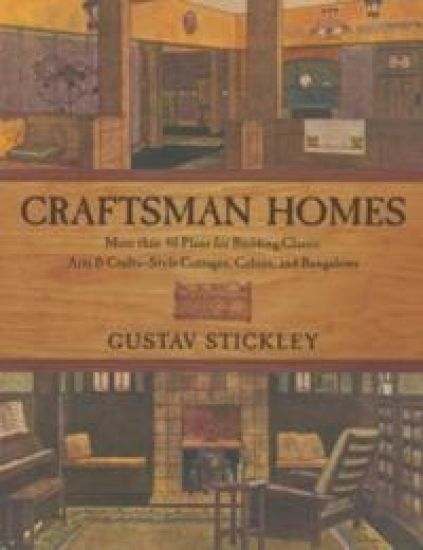
Gustav Stickley's Craftsman Homes and Bungalows

Gustav Stickley's Craftsman Homes and Bungalows

Gustav Stickley

Skyhorse Publishing
2022
pokkari
A remarkable collection of Stickley home designs. In 1901, Gustav Stickley created the first uniquely American style of furniture and home design—known as Craftsman. A leader of the Arts and Crafts movement in homebuilding and a major influence on Frank Lloyd Wright, Stickley created home designs that valued construction in harmony with its landscape: open floor plans, built-in storage, and natural lighting. In his lifetime, he designed at least 241 homes in this style and published more than 200 plans in his journal, The Craftsman. Stickley remains one of the great names in design, and Craftsman Homes and Bungalows showcases his work in an affordable, attractive new edition. Featuring several hundred black-and-white photographs, line drawings, and sketches of cabins, cottages, and bungalows from concept to finished product, it presents easy-to-understand directions for both home construction and improvement. This new, all-encompassing volume will provide guidance and inspiration to everyone who wants to understand or reproduce the Stickley style.
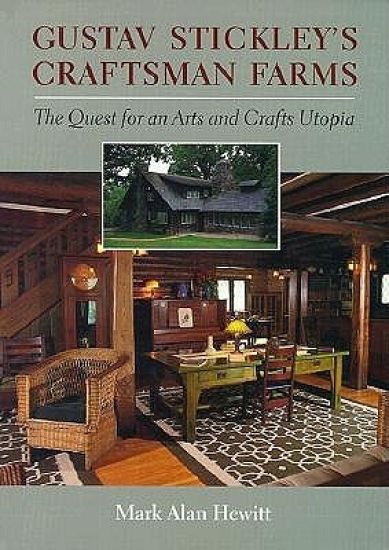
Gustav Stickley's Craftsman Farms

Gustav Stickley's Craftsman Farms

Mark Alan Hewitt

Syracuse University Press
2001
sidottu
From 1911 to 1917 Craftman Farms was the home of Gustav Stickley, one of the central figures in the American Arts and Crafts Movement. This book unravels the, sometimes contradictory, ideas that informed many of the artists and literary figures in the progressive era in America.
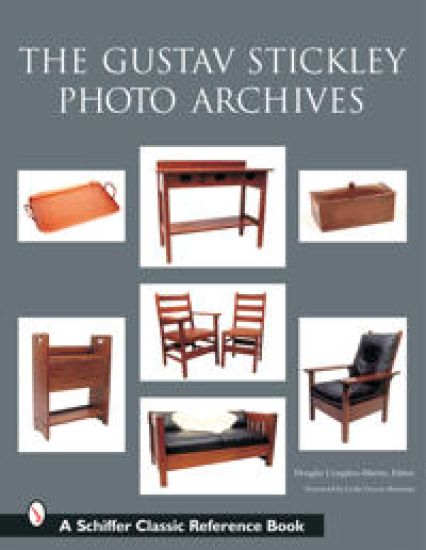
The Gustav Stickley Photo Archives

The Gustav Stickley Photo Archives

Douglas Congdon-Martin

Schiffer Publishing Ltd
2002
sidottu
During his production years, Gustav Stickley made photographs of much of his work. Some were used in his Craftsman magazine, and some were used in a series of catalogs. Many of Stickley's glass negatives are now in the collection of the Winterthur Museum in Delaware, and are reprinted here for the first time. Many have never before been published, and those that were published by Stickley, now benefit from high quality modern printing. Whenever possible dimensions and catalog references are given, making this an important compilation of Stickley's work. A foreword by Leslie Greene Bowman, Director and C.E.O. of Winterthur Museum, Garden & Library, further enriches the work. A driving force in the American Arts & Crafts Movement, Gustav Stickley produced furniture inspired by a vision of craftsmanship and comfortable functionality. Its high quality makes it a standard of the period. Today pieces from his Craftsman Studio are cherished antiques. This new volume of his photographic archives will be a welcomed addition to the literature.
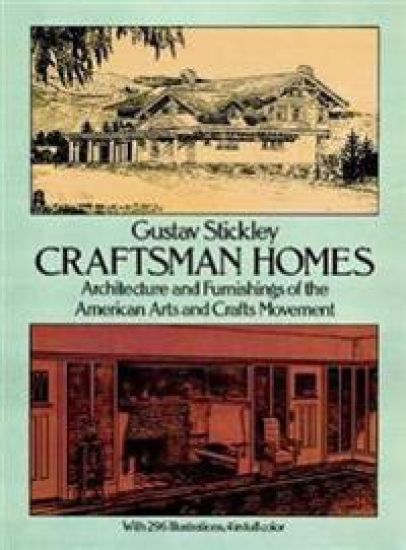
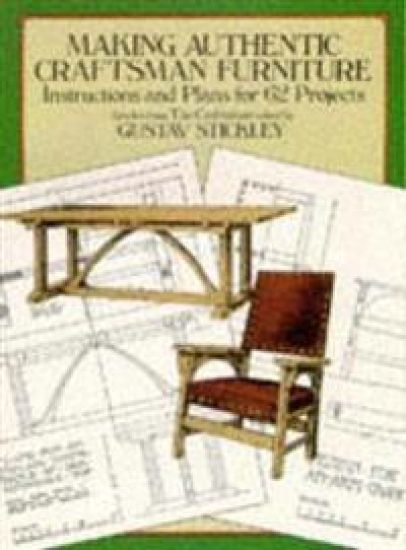
Making Authentic Craftsman Furniture

Making Authentic Craftsman Furniture

Gustav Stickley

Dover Publications Inc.
2003
nidottu
Make authentic reproductions of handsome, functional, durable furniture: tables, chairs, wall cabinets, desks, a hall tree, and more. Construction plans with drawings, schematics, dimensions, and lumber specs reprinted from 1900s The Craftsman magazine.
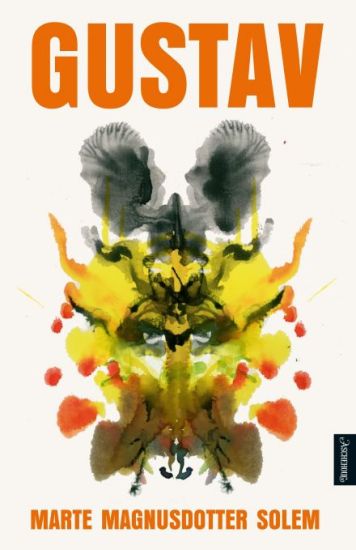
Gustav

Gustav

Marte Magnusdotter Solem

Aschehoug
sidottu
Frida er moren til Gustav, en fantasifull og kreativ gutt som sliter med å få seg venner. Hun bærer med seg alle hans forventinger og nederlag, og bruker mye av sin tid på å legge til rette for hans sosiale liv. Da jevngamle Isak flytter inn i naboleiligheten, og ikke bare guttene, men også foreldrene finner tonen, gjør Frida det hun kan for at vennskapet skal bestå. Gustav er en roman som handler om hvor sammenvevd foreldre og barns følelsesliv kan bli, om en kvinne som lever mer i sitt barns kropp enn sin egen.
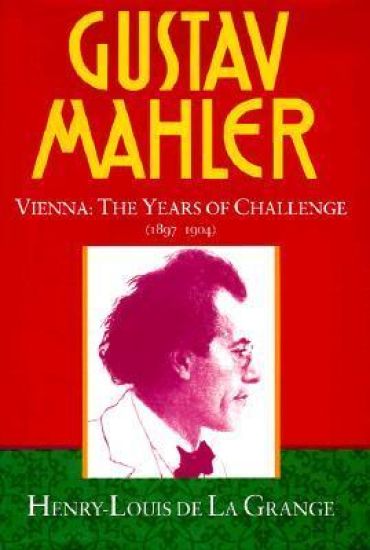
Gustav Mahler: Volume 2. Vienna: The Years of Challenge (1897-1904)

Gustav Mahler: Volume 2. Vienna: The Years of Challenge (1897-1904)

Henry-Louis de La Grange

Oxford University Press
1995
sidottu
Gustav Mahler was one of the supremely gifted musicians of his generation. His contemporaries came to know him as a composer of startling originality whose greatest successes with the public never failed to provoke controversy among the critics. As a conductor, his relentless pursuit of perfection was sometimes viewed as tyrannical by the singers and musicians who came under his baton. Professor Henry-Louis de La Grange has devoted over thirty years of painstaking resarch to this study of Mahler's life and works. His biography, ultimately to be completed in four volumes, is drawn from a vast archive of documents, autographs, and pictures, assembled by La Grange at the Bibliotheque Musicale Gustav Mahler, Paris. This second volume covers the years 1897-1904, when the focus shifts to Vienna. It opens with Mahler's triumphant debut as director of the Vienna Court Opera, and follows with the revolution he wrought there in standards of performance and, with the Secession painter Alfred Roller, in scenic representation. An account is also given of Mahler's story and brief engagement as conductor of the Vienna Philharmonic Concerts, following Richter's resignation in 1989. La Grange depicts the brilliant society of pre-war Vienna, then the centre of the intellectual and artistic world; the extraordinary range of artists among whom Mahler lived and worked included the composers Dvorak, Gustave Charpentier, Richard Strauss, Zemlinsky, and Schoenberg and his two disciples, Berg and Webern; the painters architects and decorators of the Secession with Klmit at their head; the writers Hauptmann, Dehmel, Hofmannsthal, and Schnitzler. There he also met Alma Schindler, 'the most beautiful woman in Vienna', and La Grange tells the story of their engagement and marriage in 1902 and the early years of their tempestuous relationship. As his fame spread throughout Europe, Mahler travelled with his music to Germany, Russia, Holland, Poland, and Belguim, meeting many other leading musicians of his day, including Pfitzner, Mengelberg, Diepenbrock, Oskar Fried, and many others. During this period Mahler wrote some of his best-loved works, including the fourth and Fifth Symphonies, and the three orchestral song-cyles and collections - the Wunderhorn -, Ruckert-, and Kindertotenlieder. For each of these works La Grange provides full notes and analytical descriptions. Scrupulously researched, richly documented, this is a study worthy of the extraordinary artistic achievement of Gustav Mahler's Vienna years.
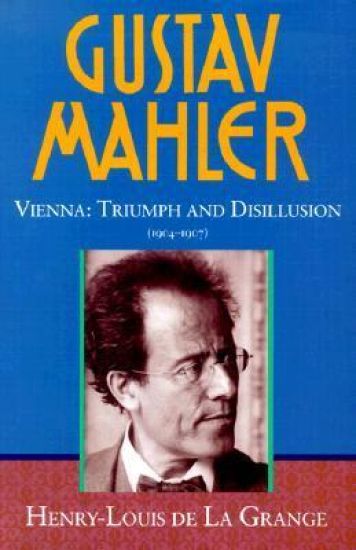
Gustav Mahler: Volume 3. Vienna: Triumph and Disillusion (1904-1907)

Gustav Mahler: Volume 3. Vienna: Triumph and Disillusion (1904-1907)

Henry-Louis de La Grange

Oxford University Press
2000
sidottu
Gustav Mahler was one of the supremely gifted musicians of his generation. His contemporaries came to know him as a composer of startling originality whose greatest successes with the public never failed to provoke controversy among the critics. As a conductor, his relentless pursuit of perfection was sometimes viewed as tyrannical by the singers and musicians who came under his baton. Professor Henry-Louis de La Grange has devoted over thirty years of painstaking research to this study of Mahlers life and works. His biography, ultimately to be completed in four volumes, is drawn from a vast archive of documents, autographs, and pictures, assembled by La Grange at the Bibliothèque Musicale Gustav Mahler, Paris. This third volume covers the years 1904-1907 and shows Mahler in his final years at the Hofoper coping with the rival demands on his energy and creative powers of the Opera on the one hand and his continuing struggle for recognition as a composer in his own right on the other. The first signs of marital difficulties with Alma emerge. Mahlers trials culminate in 1907 with the death of Putzi, his eldest daughter, a terminal crisis at the Opera which makes him decide to leave Vienna, and the alarming diagnosis by the doctors of a cardiac deficiency. True to life portraits are drawn of Mahler the human being, the family man, and the composer, as well as the administrator, producer, and conductor at the Vienna Opera. Innumerable testimonies and anecdotes throw new light on the many aspects of Mahler's complex personality.
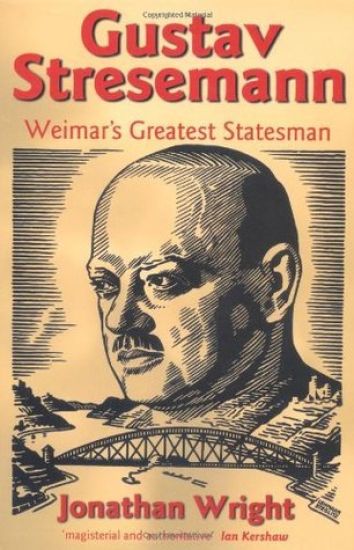
Gustav Stresemann

Gustav Stresemann

Jonathan Wright

Oxford University Press
2002
sidottu
Gustav Stresemann was the exceptional political figure of his time. His early death in 1929 has long been viewed as the beginning of the end for the Weimar Republic and the opening through which Hitler was able to come to power. His career was marked by many contradictions but also a pervading loyalty to the values of liberalism and nationalism. This enabled him in time both to adjust to defeat and revolution and to recognize in the Republic the only basis on which Germans could unite, and in European cooperation the only way to avoid a new war. His attempt to build a stable Germany as an equal power in a stable Europe throws an important light on German history in a critical time. Hitler was the beneficiary of his failure but, so long as he was alive, Stresemann offered Germans a clear alternative to the Nazis. Jonathan Wright's fascinating new study is the first modern biography of Stresemann to appear in English or German.
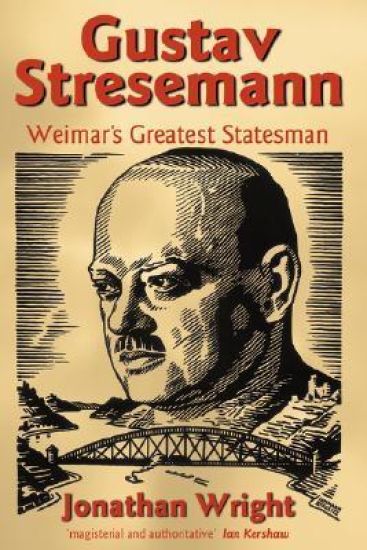
Gustav Stresemann

Gustav Stresemann

Jonathan Wright

Oxford University Press
2004
nidottu
Gustav Stresemann was the exceptional political figure of his time. His early death in 1929 has long been viewed as the beginning of the end for the Weimar Republic and the opening through which Hitler was able to come to power. His career was marked by many contradictions but also a pervading loyalty to the values of liberalism and nationalism. This enabled him in time both to adjust to defeat and revolution and to recognize in the Republic the only basis on which Germans could unite, and in European cooperation the only way to avoid a new war. His attempt to build a stable Germany as an equal power in a stable Europe throws an important light on German history in a critical time. Hitler was the beneficiary of his failure but, so long as he was alive, Stresemann offered Germans a clear alternative to the Nazis. Jonathan Wright's fascinating new study is the first modern biography of Stresemann to appear in English or German.