Kirjojen hintavertailu. Mukana 11 244 527 kirjaa ja 12 kauppaa.

Kirjahaku

Etsi kirjoja tekijän nimen, kirjan nimen tai ISBN:n perusteella.

1000 tulosta hakusanalla Gustave Dutruc

Mémorial Du Ministère Public. Tome 1

Mémorial Du Ministère Public. Tome 1

Gustave Dutruc

Hachette Livre - BNF
2016
pokkari
Memorial du ministere public, ou Repertoire alphabetique et abrege de jurisprudence, de doctrine, de legislation, d'instructions ministerielles et de documents divers concernant les attributions administratives et judiciaires du ministere public.... Tome 1 / par Gustave Dutruc, ...Date de l'edition originale: 1871Ce livre est la reproduction fidele d'une oeuvre publiee avant 1920 et fait partie d'une collection de livres reimprimes a la demande editee par Hachette Livre, dans le cadre d'un partenariat avec la Bibliotheque nationale de France, offrant l'opportunite d'acceder a des ouvrages anciens et souvent rares issus des fonds patrimoniaux de la BnF.Les oeuvres faisant partie de cette collection ont ete numerisees par la BnF et sont presentes sur Gallica, sa bibliotheque numerique.En entreprenant de redonner vie a ces ouvrages au travers d'une collection de livres reimprimes a la demande, nous leur donnons la possibilite de rencontrer un public elargi et participons a la transmission de connaissances et de savoirs parfois difficilement accessibles.Nous avons cherche a concilier la reproduction fidele d'un livre ancien a partir de sa version numerisee avec le souci d'un confort de lecture optimal. Nous esperons que les ouvrages de cette nouvelle collection vous apporteront entiere satisfaction.Pour plus d'informations, rendez-vous sur www.hachettebnf.fr
Mémorial Du Ministère Public. Tome 2

Mémorial Du Ministère Public. Tome 2

Gustave Dutruc

Hachette Livre - BNF
2016
pokkari
Memorial du ministere public, ou Repertoire alphabetique et abrege de jurisprudence, de doctrine, de legislation, d'instructions ministerielles et de documents divers concernant les attributions administratives et judiciaires du ministere public.... Tome 2 / par Gustave Dutruc, ...Date de l'edition originale: 1871Ce livre est la reproduction fidele d'une oeuvre publiee avant 1920 et fait partie d'une collection de livres reimprimes a la demande editee par Hachette Livre, dans le cadre d'un partenariat avec la Bibliotheque nationale de France, offrant l'opportunite d'acceder a des ouvrages anciens et souvent rares issus des fonds patrimoniaux de la BnF.Les oeuvres faisant partie de cette collection ont ete numerisees par la BnF et sont presentes sur Gallica, sa bibliotheque numerique.En entreprenant de redonner vie a ces ouvrages au travers d'une collection de livres reimprimes a la demande, nous leur donnons la possibilite de rencontrer un public elargi et participons a la transmission de connaissances et de savoirs parfois difficilement accessibles.Nous avons cherche a concilier la reproduction fidele d'un livre ancien a partir de sa version numerisee avec le souci d'un confort de lecture optimal. Nous esperons que les ouvrages de cette nouvelle collection vous apporteront entiere satisfaction.Pour plus d'informations, rendez-vous sur www.hachettebnf.fr
Gustave Doré and the Modern Biblical Imagination

Gustave Doré and the Modern Biblical Imagination

Sarah C. Schaefer

Oxford University Press Inc
2021
sidottu
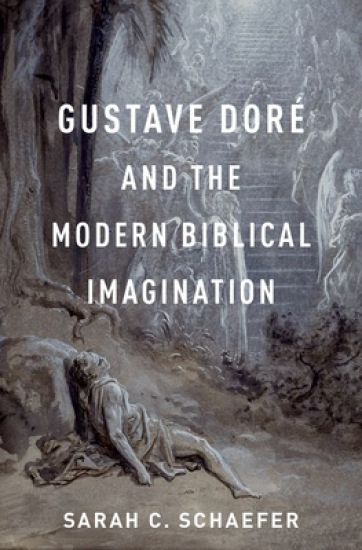
Gustave Doré and the Modern Biblical Imagination explores the role of biblical imagery in modernity through the lens of Gustave Doré (1832-83), whose work is among the most reproduced and adapted scriptural imagery in the history of Judeo-Christianity. First published in France in late 1865, Doré's Bible illustrations received widespread critical acclaim among both religious and lay audiences, and the next several decades saw unprecedented dissemination of the images on an international scale. In 1868, the Doré Gallery opened in London, featuring monumental religious paintings that drew 2.5 million visitors over the course of a quarter-century; when the gallery's holdings travelled to the United States in 1892, exhibitions at venues like the Art Institute of Chicago drew record crowds. The United States saw the most creative appropriations of Doré's images among a plethora of media, from prayer cards and magic lantern slides to massive stained-glass windows and the spectacular epic films of Cecile B. DeMille. This book repositions biblical imagery at the center of modernity, an era that has often been defined through a process of secularization, and argues that Doré's biblical imagery negotiated the challenges of visualizing the Bible for modern audiences in both sacred and secular contexts. A set of texts whose veracity and authority were under unprecedented scrutiny in this period, the Bible was at the center of a range of historical, theological, and cultural debates. Gustave Doré is at the nexus of these narratives, as his work established the most pervasive visual language for biblical imagery in the past two and a half centuries, and constitutes the means by which the Bible has persistently been translated visually.
Letters of Gustave Courbet

Letters of Gustave Courbet

Gustave Courbet

University of Chicago Press
1992
sidottu
The French Realist painter Gustave Courbet (1819-77), a pivotal figure in the emergence of modern painting, remains an artist whose interests, attitudes, and friendships are little understood. A voluminous correspondent, Courbet himself, through his letters, offers a tantalizing avenue toward a keener assessment of his character and accomplishments. In her critical edition of over six hundred of the artist's letters, Petra ten-Doesschate Chu presents just such a look at the inner life of the artist; her unparalleled feat of gathering together all of Courbet's known letters, many heretofore unpublished and untranslated, is sure to change our evaluation of Courbet's creativity and of his place in nineteenth-century French life. Beginning when Courbet left his provincial home at eighteen and ending eight days before his death in exile in Switzerland, this correspondence enables readers to follow the artist's development from youth to mature artist of international repute. Addressed to correspondents such as the poet Charles Baudelaire, the painter Claude Monet, the writers Champfleury, Victor Hugo, and Théeophile Gautier, the political theorist Pierre-Joseph Proudhon, and the politician Jules Simon, the letters offer numerous insights into Courbet's life and art as well as the cultural and political activity of his day. In fascinating detail, they present the artist's relation to the contemporary media, his deliberate choice of subject matter for Salon paintings, his preoccupation with photography, and his participation in the Commune. Besides collecting, translating, and annotating the letters, Chu provides an introduction, a chronology, biographies of persons appearing frequently in the letters, and a list of paintings and sculptures mentioned in the letters. Her work is an essential resource of immediate use to historians of art and culture, political and social historians, and readers of biography. Petra ten-Doesschate Chu is professor and head of the Department of Art and Music at Seton Hall University.
Gustave Caillebotte

Gustave Caillebotte

Mary Morton; George Shackelford

University of Chicago Press
2015
sidottu
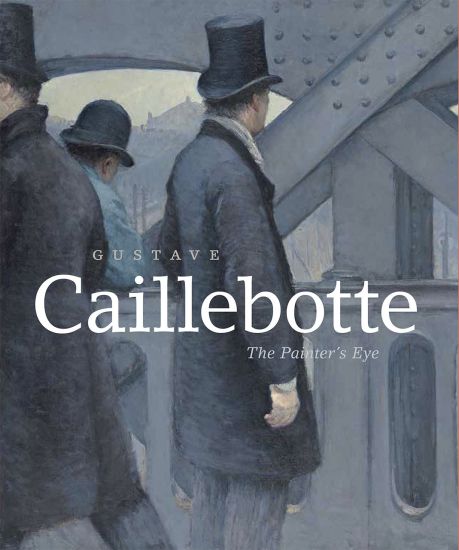
Though largely out of the public eye for more than a century, Gustave Caillebotte (1848 - 94) has come to be recognized as one of the most dynamic and original artists of the impressionist movement in Paris. His paintings are favorites of museum-goers, and recent restoration of his work has revealed more color, texture, and detail than was visible before while heightening interest in all of Caillebotte's artwork. This lush companion volume to the National Gallery of Art's major new exhibition, coorganized with the Kimbell Art Museum, explores the power and technical brilliance of his oeuvre. The book features fifty of Caillebotte's strongest paintings, including post-conservation images of Paris Street, Rainy Day, along with The Floorscrapers and Pont de l'Europe, all of which date from a particularly fertile period between 1875 and 1882. The artist was criticized at the time for being too realistic and not impressionistic enough, but he was a pioneer in adopting the angled perspective of a modern camera to compose his scenes. Caillebotte's skill and originality are evident even in the book's reproductions, and essays offer critical insights into his inspiration and subjects. This sumptuously illustrated publication makes clear why Caillebotte is among the most intriguing artists of nineteenth-century France, and it deepens our understanding of the history of impressionism.
Gustave Courbet

Gustave Courbet

Gerstle Mack

Da Capo Press Inc
1989
pokkari
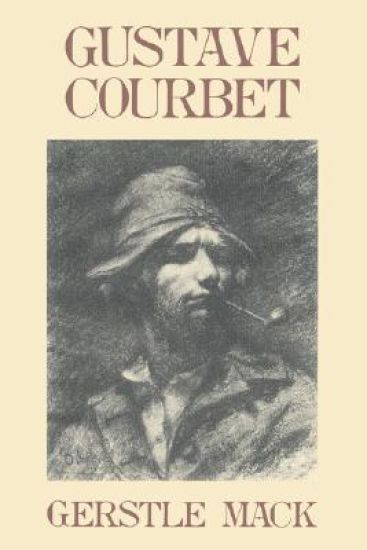
No biographer could ask for a more colourful or difficult subject than the painter and revolutionary Gustave Courbet. One of the fathers of Realism, a style he created with his huge canvases of his birthplace in Ornans ( After Dinner at Ornans, 1949 Funeral at Ornans, 1850, and The Stonebreakers, 1850), Courbet chose his subjects from ordinary life and portrayed them with the same monumental dignity as the great men of history. A man with big appetites for life, women, and politics, he frequently found himself at odds with French authorities, especially during the period of the Commune when he and his friends pulled down the Vendome Column. Impressionism and Modernism would be unthinkable without his fierce opposition to the academies of art. This biography by one of the most reliable students of French art paints a large and fascinating canvas, which Courbet dominates but never overwhelms.
The Letters of Gustave Flaubert: 1830-1857: 1830-1857
Gustave Flaubert wrote to his mistress, Louise Colet: "An author in his book must be like God in the universe, present everywhere and visible nowhere." In his books, Flaubert sought to observe that principle; but in his many impassioned letters he allowed his feelings to overflow, revealing himself in all of his human complexity. Sensuous, witty, exalted, ironic, grave, analytical, the letters illustrate the artist's life--and they trumpet his artistic opinions--in an outpouring of uninhibited eloquence. An acknowledged master of translation, Francis Steegmuller has given us by far the most generous and varied selection of Flaubert's letters in English. He presents these with an engrossing narrative that places them in the context of the writer's life and times. We follow Flaubert through his unhappy years at law school, through his tumultuous affair with Louise Colet; we share his days and nights amid the temples and brothels of Egypt, then on to Palestine, Turkey, Greece, and Rome. And the letters chronicle one of the central events in literary history--the conception and composition of what has been called the first modern novel, Madame Bovary. Steegmuller's selection concludes with Flaubert's standing trial for immoral writing, Madame Bovary's immediate popular success, and Baudelaire's celebration of its psychological and literary power. Throughout this exposition in Flaubert's own words of his views on life, literature, and the passions, readers of his novels will be powerfully reminded of the fertility of his genius, and delighted by his poetic enthusiasm. "Let us sing to Apollo as in ancient days," he wrote to Louise Colet, "and breathe deeply of the fresh cold air of Parnassus; let us strum our guitars and clash our cymbals and whirl like dervishes in the eternal hubbub of forms and ideas " Flaubert's letters are documents of life and art; lovers of literature and of the literary adventure can rejoice in this edition.
The Letters of Gustave Flaubert: 1857-1880

The Letters of Gustave Flaubert: 1857-1880

Gustave Flaubert

Belknap Press
1982
sidottu
Having been acquitted of the charge of "outrage of public morals and religion" brought against him upon the publication Madame Bovary, Gustave Flaubert found himself, in 1857, a celebrity and one of the most admired literary men of his day. Francis Steegmuller's volume of Flaubert's letters from the years culminating in that triumph was hailed by the New York Times as "brilliantly edited and annotated...a splendid, intimate account of the development of a writer who changed the nature of the novel." It went on to garner widespread critical acclaim and to win an American Book Award for Translation. Now, in the second volume, we see Flaubert in the years of his fame--the years in which he wrote Salammb , L' ducation sentimentale, The Temptation of Saint Anthony, Three Tales, and the unfinished Bouvard and Pecuchet. In writing the novels, Flaubert followed his precept, "An author in his book must be like God in the universe, present everywhere and visible nowhere," but in these letters of his maturity he gives full scope to his feelings and expresses forceful opinions on matters public and private. We see Flaubert traveling to Tunisia to document the exotic Salammb , then calling on his own memories and those of his friends to bring to life the Revolution of 1848 and the loves of his hero Frederic Moreau in the pages of L' ducation sentimentale, which many today consider his greatest novel. Flaubert is taken up by the Second Empire Court of Napoleon III and Eugenie, and becomes a lifelong friend of Princess Mathilde Bonaparte. But the most powerful feminine presence in this volume is the warm, sympathetic George Sand, with whom he maintains a fascinating correspondence for more than ten years. This dialogue on life, letters, and politics between the "two troubadours," as they called themselves, reveals both of them at their idiosyncratic best. The deaths of Flaubert's mother, of his closest friend and mentor, Louis Bouilhet, and of Th ophile Gautier, Sainte-Beuve, and other intimates, and Flaubert's financial ruin at the hands of his beloved niece Caroline and her rapacious husband, make a somber story of the post war years. Despite these and other losses, Flaubert's last years are brightened by the affection of Guy de Maupassant, Zola, and other younger writers. Together with Francis Steegmuller's masterly connecting narrative and essential annotation, these letters, most of which appear here in English for the first time, constitute an intimate and engrossing new biography of the great master of the modern novel.