Kirjojen hintavertailu. Mukana 11 717 486 kirjaa ja 12 kauppaa.

Kirjahaku

Etsi kirjoja tekijän nimen, kirjan nimen tai ISBN:n perusteella.

610 tulosta hakusanalla György Csaba

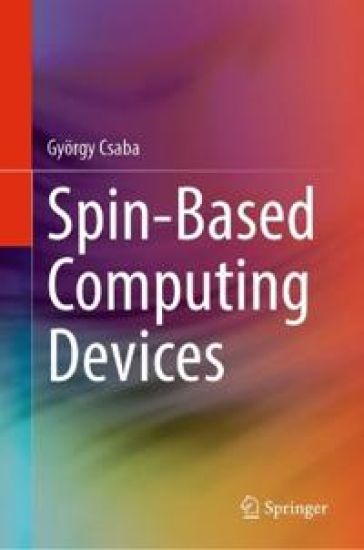
Spin-Based Computing Devices

Spin-Based Computing Devices

György Csaba

Springer International Publishing AG
2025
sidottu
This book provides readers with a single-source reference to the state of the art in domain-wall, nanomagnet and spin-wave-based computing devices, enabling them to provide additional computing functions and lower the power consumption of electronic devices by orders of magnitudes. Tutorial chapters gives a thorough introduction to the preliminaries and the theory behind spin-based devices, and additional chapters give an overview of the most promising spin-based computing concepts. This book is designed to be a ‘first read’ for anyone interested in the field of spin-based (magnetic) computing devices. The author provides an overview of how information can be processed by single-domain nanomagnets, domain walls, spin-waves or spin torque oscillators. Both Boolean approaches (magnetic logic gates) and non-Boolean devices (image processing circuits, etc.) are discussed.
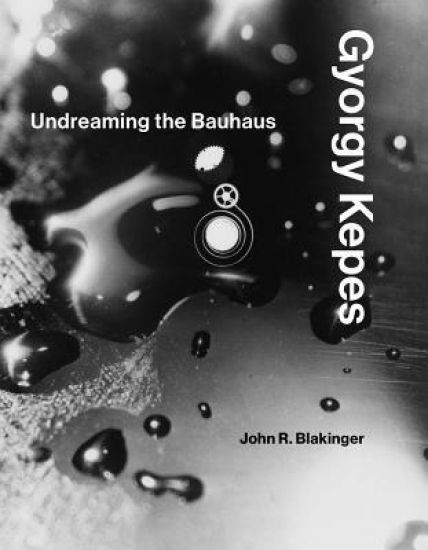
Gyorgy Kepes

Gyorgy Kepes

John R. Blakinger

MIT Press
2019
sidottu
How Gyorgy Kepes, the last disciple of Bauhaus modernism, became the single most significant artist within a network of scientific experts and elites.Gyorgy Kepes (1906-2001) was the last disciple of Bauhaus modernism, an acolyte of Laszlo Moholy-Nagy and a self-styled revolutionary artist. But by midcentury, transplanted to America, Kepes found he was trapped in the military-industrial-aesthetic complex. In this first book-length study of Kepes, John Blakinger argues that Kepes, by opening the research laboratory to the arts, established a new paradigm for creative practice: the artist as technocrat. First at Chicago's New Bauhaus and then for many years at MIT, Kepes pioneered interdisciplinary collaboration between the arts and sciences-what he termed "interthinking" and "interseeing." Kepes and his colleagues-ranging from metallurgists to mathematicians-became part of an important but little-explored constellation: the Cold War avant-garde.Blakinger traces Kepes's career in the United States through a series of episodes: Kepes's work with the military on camouflage techniques; his development of a visual design pedagogy, as seen in the exhibition The New Landscape and his book The New Landscape in Art and Science; his encyclopedic Vision + Value series; his unpublished magnum opus, the Light Book; the Center for Advanced Visual Studies (CAVS), an art-science research institute established by Kepes at MIT in 1967; and the Center's proposals for massive environmental installations that would animate the urban landscape. CAVS was entangled in the antiwar politics of the late 1960s, as many students and faculty protested MIT's partnerships with defense contractors-some of whom had ties to the Center. In attempting to "undream" the Bauhaus into existence in the postwar world, Kepes faced profound resistance.Generously illustrated, drawing on the vast archive of Kepes's papers at Stanford and MIT's CAVS Special Collection, this book supplies a missing chapter in our understanding of midcentury modern and Cold War visual culture.
Gyorgy Ligeti

Gyorgy Ligeti

Robert Richart

Greenwood Press
1990
sidottu
Richart's bio-bibliography is a most welcome addition to the literature. For the first time, Richart has made available a comprehensive bibliography, discography, and up-to-date worklist. Ligeti's writings, writings about Ligeti, and reviews and analyses of his works, mainly after his 1956 flight from Hungary to the West, are listed and annotated. . . . Richart's short, concise biography is informative and well written. . . . Highly recommended for public, college, and university libraries with music collections. Choice Gyorgy Ligeti is one of the most significant of contemporary composers. Most often described as innovative, he has been able to combine beauty and emotional meaning with that innovation. This bio-bibliography describes rather than evaluates the considerable body of writings by and about Ligeti. The book is divided into four sections: biography, worklist, discography, and bibliography. The biography is a brief survey designed to acquaint the reader, if necessary, with the basic and widely available facts of Ligeti's life. The bibliography is divided into two parts: writings by Ligeti and writings about him. The largest section in the latter part consists of concert and record reviews. Cross references link all items dealing with each individual music work. An appendix lists, in chronological order, all of the concerts devoted entirely to works by Ligeti. Writings listed in the bibliography are dated from the 1940s onward. The bulk of the material was written after Ligeti's flight to the west in 1956. This first book-length work on Gyorgy Ligeti will be welcomed by music scholars.
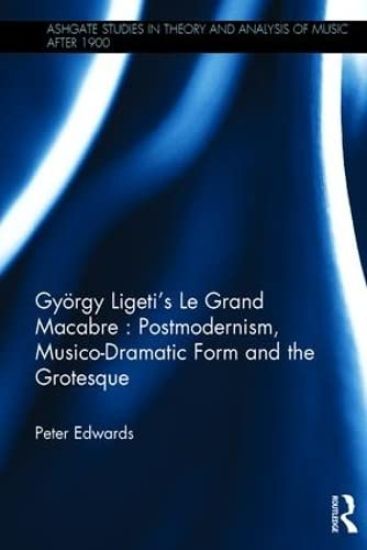
György Ligeti's Le Grand Macabre: Postmodernism, Musico-Dramatic Form and the Grotesque
György Ligeti’s Le Grand Macabre (1974–77, revised 1996) has consolidated its position as one of the major operatic works of the twentieth century. Few operas composed since the 1970s have received such numerous productions, bringing the eclectic score to a global audience. Famously dubbed by Ligeti as an ‘anti-anti-opera’, the piece is a highly ambiguous, apocalyptic fable about the human condition, fear of death and the final judgement. As the first book in English solely dedicated to discussion of this work, György Ligeti’s Le Grand Macabre: Postmodernism, Musico-Dramatic Form and the Grotesque offers new perspectives on the opera’s musico-dramatic identity in the context of musical postmodernism. Peter Edwards draws on a range of modernist and postmodernist theories to explore the collision of past styles and genre models in the opera, its expressive states and its engagement with the grotesque. This is ably supported by musical analysis and extensive study of Ligeti’s sketch materials held at the Paul Sacher Foundation in Basel. Edwards’s analyses culminate in a new approach to examining the opera’s rich multiplicities, the composition of the musical material and the nature of Ligeti’s relationship with the musical past. This is a key reference work in the fields of musical modernism and postmodernism, opera studies and the music of Ligeti.
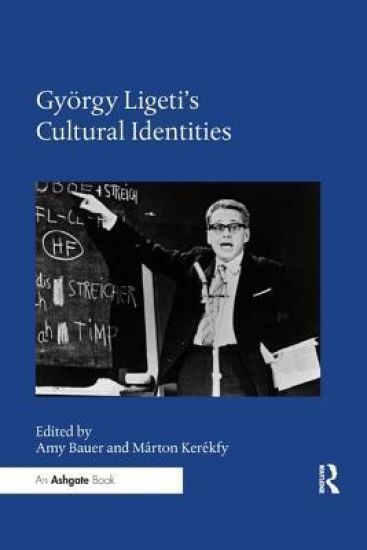
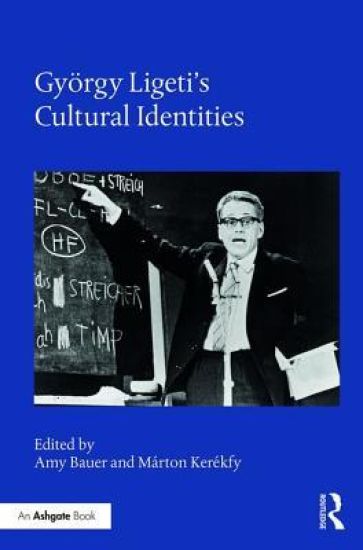
György Ligeti's Cultural Identities
Since György Ligeti’s death in 2006, there has been a growing acknowledgement of how central he was to the late twentieth-century cultural landscape. This collection is the first book devoted to exploring the composer’s life and music within the context of his East European roots, revealing his dual identities as both Hungarian national and cosmopolitan modernist. Contributors explore the artistic and socio-cultural contexts of Ligeti’s early works, including composition and music theory, the influence of East European folk music, notions of home and identity, his ambivalent attitude to his Hungarian past and his references to his homeland in his later music. Many of the valuable insights offered profit from new research undertaken at the Paul Sacher Foundation, Basel, while also drawing on the knowledge of long-time associates such as the composer’s assistant, Louise Duchesneau. The contributions as a whole reveal Ligeti’s thoroughly cosmopolitan milieu and values, and illuminate why his music continues to inspire new generations of performers, composers and listeners.
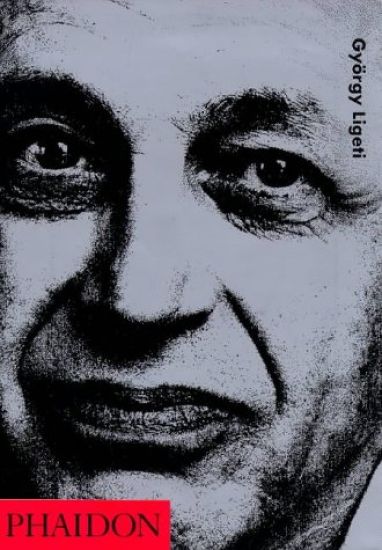
Gyorgy Ligeti

Gyorgy Ligeti

Richard Toop

Phaidon Press Ltd
1999
pokkari
The Hungarian Gyorgy Ligeti (1923-2006) was at the head of the avant garde from the early 1960s, and remained at the forefront of musical change and innovation. The use of his music in Stanley Kubrick's films 2001: A Space Odyssey and The Shining has ensured that his music has reached a wider audience. Richard Toop appraises all the principal compositions of Ligeti as well as his work as a teacher and mentor, and traces the composer's life beginning with his survival as a Jew during World War II, his flight to West Germany during the 1956 Hungarian Revolution and his subsequent work in the Cologne electronic studios. To many of the composers who came to prominence during the 1960s and 70s Ligeti's music has been a lasting inspiration.
György Ligeti's Le Grand Macabre: Postmodernism, Musico-Dramatic Form and the Grotesque
György Ligeti’s Le Grand Macabre (1974–77, revised 1996) has consolidated its position as one of the major operatic works of the twentieth century. Few operas composed since the 1970s have received such numerous productions, bringing the eclectic score to a global audience. Famously dubbed by Ligeti as an ‘anti-anti-opera’, the piece is a highly ambiguous, apocalyptic fable about the human condition, fear of death and the final judgement. As the first book in English solely dedicated to discussion of this work, György Ligeti’s Le Grand Macabre: Postmodernism, Musico-Dramatic Form and the Grotesque offers new perspectives on the opera’s musico-dramatic identity in the context of musical postmodernism. Peter Edwards draws on a range of modernist and postmodernist theories to explore the collision of past styles and genre models in the opera, its expressive states and its engagement with the grotesque. This is ably supported by musical analysis and extensive study of Ligeti’s sketch materials held at the Paul Sacher Foundation in Basel. Edwards’s analyses culminate in a new approach to examining the opera’s rich multiplicities, the composition of the musical material and the nature of Ligeti’s relationship with the musical past. This is a key reference work in the fields of musical modernism and postmodernism, opera studies and the music of Ligeti.
György Ligeti's Cultural Identities
Since György Ligeti’s death in 2006, there has been a growing acknowledgement of how central he was to the late twentieth-century cultural landscape. This collection is the first book devoted to exploring the composer’s life and music within the context of his East European roots, revealing his dual identities as both Hungarian national and cosmopolitan modernist. Contributors explore the artistic and socio-cultural contexts of Ligeti’s early works, including composition and music theory, the influence of East European folk music, notions of home and identity, his ambivalent attitude to his Hungarian past and his references to his homeland in his later music. Many of the valuable insights offered profit from new research undertaken at the Paul Sacher Foundation, Basel, while also drawing on the knowledge of long-time associates such as the composer’s assistant, Louise Duchesneau. The contributions as a whole reveal Ligeti’s thoroughly cosmopolitan milieu and values, and illuminate why his music continues to inspire new generations of performers, composers and listeners.
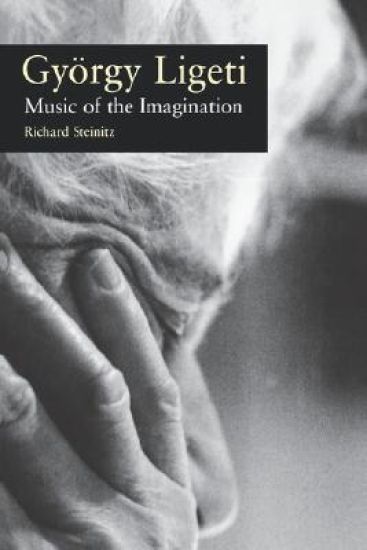
György Ligeti

György Ligeti

Richard Steinitz

Northeastern University Press
2003
sidottu
One of the world's best known living composers, Gyoergy Sandor Ligeti is widely acknowledged as the most influential and admired creative figure of the late twentieth century. His brilliantly conceived and challenging pieces, searingly intense at times and full of humor and irony at others, include the orchestral Apparitions and Atmospheres, piano etudes, the opera Le Grand Macabre, and the unaccompanied choral work Lux aeterna, which Stanly Kubrick actually pirated for the film soundtrack of 2001: A Space Odyssey.In this book, Richard Steinitz fuses biographical, stylistic, and technical analysis to examine thoroughly the evolution of Ligeti's innovative music. Drawing extensively on his own private conversations with the composer as well as on many published and recorded interviews, Steinitz places Ligeti's extraordinary body of work within the context of his complex personal life.
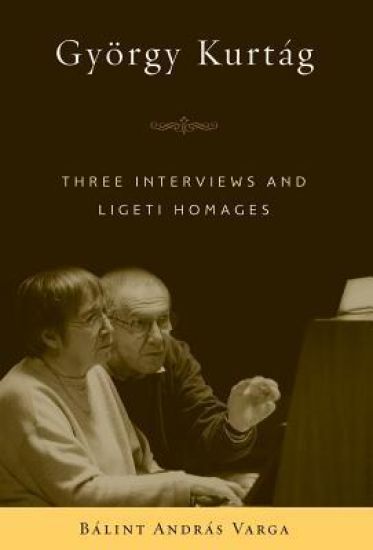
György Kurtág

György Kurtág

Bálint András Varga

University of Rochester Press
2009
sidottu
Uniquely revealing interviews with one of the world's greatest living composers. György Kurtág (b. 1926) is widely regarded as one of the foremost composers in the second half of the twentieth century and the early twenty-first. Born in Romania, he received crucial training in Paris from Olivier Messiaen and Marianne Stein. He was also shaped by his broadening contact there with the music of Webern and such challenging literary works as the plays of Samuel Beckett. After many years in Hungary, teaching at the Budapest Academy of Music,Kurtág settled near Bordeaux with his wife Márta. The two regularly perform duo-recitals of his music. In 2006, his . . . concertante . . . (2003, for violin, viola and orchestra) won the coveted Grawemeyer Award for MusicComposition. This unique set of interviews with Kurtág, alone or with his wife, gives a fascinating insight into the composer's personality, which is marked by shyness but also an unquenchable thirst for impressions of every kind [artistic, natural and human]. The two speak with disarming openness about their lives -- the background against which masterpieces like Messages of the Late Miss R. V. Troussova (1976-80, for soprano and chamber orchestra) or Stele (1994, for orchestra) were written. The analysis of certain of Kurtág's works, especially of . . . concertante . . ., shows the way that his mind works: no system, no dogma, no formulae -- rather, basic human emotions expressed through means that speak directly to the listener's innermost feelings. The Hungarian music publisher Bálint András Varga has spent nearly forty years working for and with composers.He has published several books, including extensive interviews with Lutoslawski, Berio, and Xenakis.
György Ligeti

György Ligeti

The Boydell Press
2011
sidottu
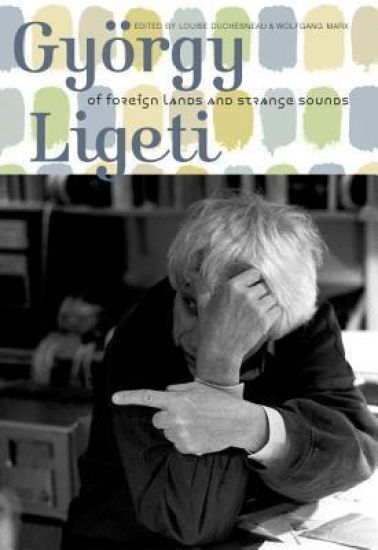
The combination of new insights into Ligeti by people who knew him with new analytical approaches will make this a core publication not only for Ligeti scholars, but also for readers interested in post-war music history and in Hungarian culture. Shortlisted for the RPS Music Award 2012 for Creative Communication. György Ligeti: Of Foreign Lands and Strange Sounds offers a new assessment of a composer whose constant exploration of new sound worlds- based on the musics of different cultures and ages - contributed in crucial ways to making him one of the most important musical voices of the last 50 years. The book combines texts by former students, colleagues and friends, who reflect on different and so far unknown aspects of Ligeti's persona, with new musicological interpretations of his style and several of his main works. Among the contributors are some of the most eminent Ligeti scholars, including Richard Steinitz and Paul Griffiths. Louise Duchesneau, Ligeti's assistant of over 20 years, acts not only as contributor but also as co-editor of the volume. Many of the musicological chapters are based on studies of Ligeti's sketches, which are now housed by the Paul Sacher Foundation in Basle and were made available for research only recently. Two close collaborators representing disciplines which deeply interested Ligeti - Heinz-Otto Peitgen (a mathematician who introduced Ligeti to fractal geometry, which influenced many if his works since 1985) and Simha Arom (an ethnomusicologist who acquainted Ligeti with the complex rhythmic patters of the music of Sub-saharan Africa) - also reflect on the composer for the very first time in writing. The combination of new insights into Ligeti by people who knew him with new analytical approaches will make this a core publication not only for Ligeti scholars, but also for readers interested in music of the second half of the twentieth century and in Hungarian culture. WOLFGANG MARX is Lecturer in Music, University College Dublin. LOUISE DUCHESNEAU was Ligeti's assistant for 20 years Contributors: SIMHA AROM, JONATHAN W. BERNARD, CIARÁN CRILLY, LOUISE DUCHESNEAU, BENJAMIN DWYER, TIBORC FAZEKAS, PAUL GRIFFITHS, ILDIKÓ MÁNDI-FAZEKAS, WOLFGANG MARX, HEINZ-OTTO PEITGEN, FRIEDEMANN SALLIS, WOLFGANG-ANDREAS SCHULTZ, MANFRED STAHNKE, RICHARD STEINITZ
Gyorgy Faludy's Villon Ballads

Gyorgy Faludy's Villon Ballads

Gyorgy Faludy

Createspace Independent Publishing Platform
2017
nidottu
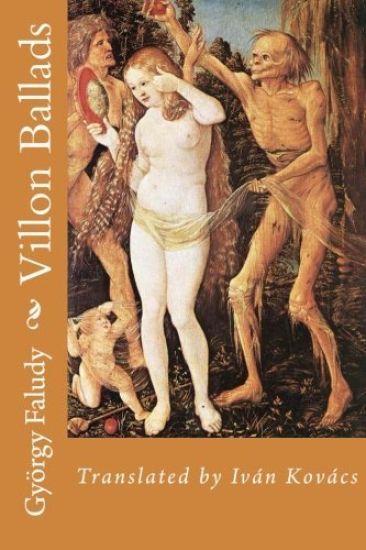
Fran ois Villon's poetic genius remains undisputed, and to this day he is considered one of the most important poets of medieval times. He has been translated into all major languages with varying success, and the critic Gy rgy B lint describes his tone as 'raw' and his words as 'compact, hard and folksy in a basic and robust way', thus not easy to translate. Gy rgy Faludy, one of several Hungarian translators, threw all conventions to the wind, and changed Villon's tone to what can only be described as 'talkative, smooth, emotional and piquant." Yet Faludy maintained that the spirit of Villon and his age have been retained. Although many English translations of Villon have been published, Faludy's unique version in English is now made available in the present translation by Iv n Kov cs, who is also known for having translated Attila J zsef's Suburban Night and other Poems.
György Ligeti im Spiegel seiner Hamburger Kompositionsklasse
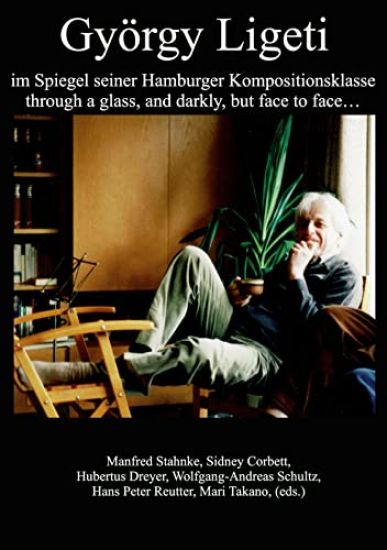
Gy rgy Ligeti is a composer whose stance always extended into a multidimensional field. The old and the new in music, or, more generally, artistic and scientific thinking as a whole, were his closest and most inspiring companions and everything new had to be further developed. Yet for him, nothing could be really new without a deep relationship with the old. And the power of the old had to be woven into every new idea. This necessity to subsume what came before into all things new was also his "torture rack". His students in Hamburg experienced this great seeker, this indeed desperate seeker in a most intense way. And he imbued upon us the extreme necessity of taking the next steps, and challenged us to participate and challenged us as, in a great game, to join in the search. A great many of Gy rgy Ligeti's students collaborated on this book. The result is a colorful bouquet of articles, some of which provide astonishing insights into the person, the teacher, the composer Gy rgy Ligeti, and all in all include many aspects that would scarcely be accessible to a musicologist coming from outside this inner circle.
György Ligetis Oper "Le Grand Macabre"

György Ligetis Oper "Le Grand Macabre"

Ute Luislampe

AV Akademikerverlag
2019
pokkari
Warum berarbeitet Gy rgy Ligeti seine einzige Oper schon kurz nach ihrer Urauff hrung im Jahre 1978, obwohl sich die Werkgenese bereits ber zehn Jahre hingezogen hat? Wie wirkt sich die General berholung anl sslich einer Auff hrung bei den Salzburger Festspielen 1997 auf das Werk aus? Aus welchen Gr nden macht sich der Komponist so viel Arbeit mit einem Projekt, das ihn nie wirklich zufrieden stellen kann, von dem er sich gar lossagt?Die Betrachtung der zweiten Fassung gibt Aufschluss dar ber.