Kirjojen hintavertailu. Mukana 11 627 467 kirjaa ja 12 kauppaa.

Kirjahaku

Etsi kirjoja tekijän nimen, kirjan nimen tai ISBN:n perusteella.

1000 tulosta hakusanalla H J Wood

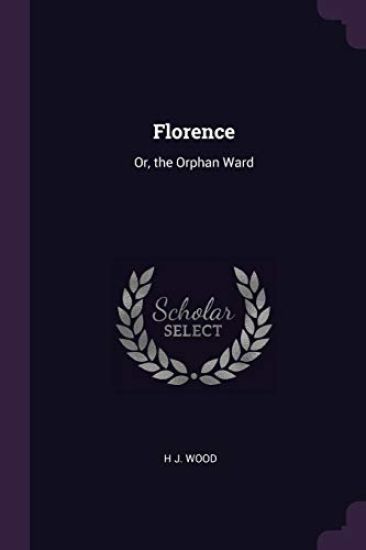
Florence

Florence

H J Wood

Palala Press
2018
pokkari
This work has been selected by scholars as being culturally important, and is part of the knowledge base of civilization as we know it. This work was reproduced from the original artifact, and remains as true to the original work as possible. Therefore, you will see the original copyright references, library stamps (as most of these works have been housed in our most important libraries around the world), and other notations in the work.This work is in the public domain in the United States of America, and possibly other nations. Within the United States, you may freely copy and distribute this work, as no entity (individual or corporate) has a copyright on the body of the work.As a reproduction of a historical artifact, this work may contain missing or blurred pages, poor pictures, errant marks, etc. Scholars believe, and we concur, that this work is important enough to be preserved, reproduced, and made generally available to the public. We appreciate your support of the preservation process, and thank you for being an important part of keeping this knowledge alive and relevant.
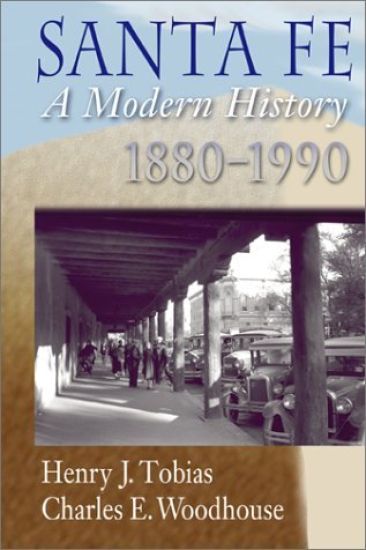
Santa Fe

Santa Fe

Henry J. Tobias; Charles E. Woodhouse; Tobias H.J.

University of New Mexico Press
2001
sidottu
From 1880, when the railroad reached Santa Fe, to the early 1990s, the city was transformed from a territorial outpost to a modern community. This book focuses on what changes over the past 110 years have meant to the city's inhabitants. The result is a readable, captivating social history centred on the essence of Santa Fe -- the lives of its Hispano and Anglo residents.
Leonard Wood and Cuban Independence 1898–1902
This is a study of the Military Government of Cuba from 1898 to 1902. Tracing and explaining the actions of General Leonard Wood's adminis­ tration during those years reveals how the United States Government re­ solved the questions of independence, strategic security, and economic inter­ ests in regard to Cuba. Leonard Wood, Secretary of War Elihu Root, Senator Orville H. Platt, and President William McKinley formulated and carried out policies that had a strong influence on subsequent Cuban-American relations. The broader aspects of this study, civil-military relations and American imperialism, are topics of importance to all citizens today. This is institutional and biographical history, written in the belief that a full ac­ count of the men, action, and circumstances will add to our understanding of the period when the United States emerged as a world power. I am indebted to Professors Gerald E. Wheeler of San Jose State College and Armin Rappaport of the University of California, San Diego, who di­ rected my research in the early stages, and to Professor Eric Bellquist of the University of California, Berkeley, for his criticism of the manuscript when it was in dissertation stage. To Professor Raymond J. Sontag I would like to pay special tribute for his guidance and inspiration through the years. The assistance of my mother, Mrs. Sue Hitchman, is deeply appreciated. My thanks go also to the staffs at the Library of the U. S.
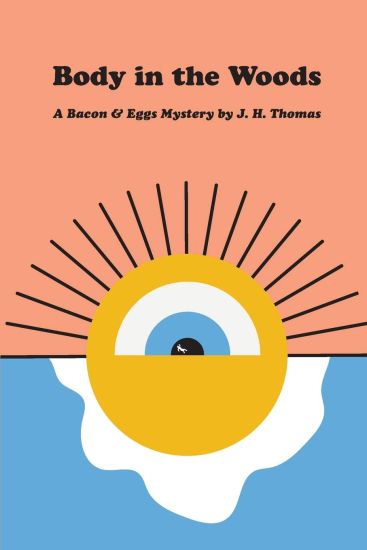
Body in the Woods

Body in the Woods

J H Thomas

Those Bros. Media
2020
pokkari
Reagan has won the presidency, Diana is to become a princess, and everywhere you turn people are getting physical with Olivia. In Woodcliff Bay, however, golden-aged friends Sylvia Hamm and Evelyn Benedict get roped into the monkey business of murder. With Sylvia's artistic gift of observation and Evelyn's penchant for ciphers, this unlikely duo becomes entangled in a dangerous world of drugs, bets, and betrayals. It's a far cry from nightly Wheel of Fortune, but if persistence prevails, they'll not only discover whodunit, but who's about to do it... to them.
Tales from the Whispering Woods

Tales from the Whispering Woods

Sarah J H Powell

Quarto Publishing Group USA Inc
2025
sidottu
Explore the wildwood and uncover the origins of famous--and not so famous--cryptids, ghosts, goblins, and other supernatural creatures and phenomena. For the intrepidly curious comes an essential guide to the cultural origins behind some of your favorite urban legends, superstitions, and ghost stories. Dare to step into the wildwood and traverse the world's folklore from the comfort of your own home!Sarah J H Powell, author and spooky thrillseeker behind the podcast The Whispering Woods, curates a collection of twenty-one creepy creatures, ghastly ghosts, and paranormal phenomena, including: The Wild Hunt: A group of ghostly or supernatural beings in search of souls to chase and steal away, variations are found throughout European folklore. It is said witnessing a Wild Hunt is an omen of disaster.El Silbón: A legendary figure in the countries of Colombia and Venezuela and known for his eerie whistle. Why is it that whistling at night is such a taboo?The Baubas: An example in a long line of creepy bogeymen intended to scare children into correcting their bad behavior. Werewolves: These creatures appear everywhere, from ancient Mesopotomia to Viking-era Scandinavia. Each chapter provides possible explanations for why these creatures, stories, and superstitions came to be. Just looking for frights? This book has got you covered, with stories of possibly true encounters with the creature or phenomenon in question. For the truth seeker, the horror-story connoisseur, or anyone in between, Tales from the Whispering Woods is sure to have something for everyone.
Biological Principles

Biological Principles

J.H. Woodger

Routledge
2000
sidottu
First published in 2000. This is Volume VI of six in the Library of Philosophy series on the Philosophy of Science. Written in 1929, using the initial ideas of A.N. Whitehead, this book on Biological Principles includes the concept of abstraction methodology in biology. This expands into an investigation into the general problems of the theory of knowledge, difficulties in biological knowledge and finally suggestions towards a resolution of certain traditional biological conflicts.
Biological Principles

Biological Principles

J.H. Woodger

Routledge
2010
nidottu
First published in 2000. This is Volume VI of six in the Library of Philosophy series on the Philosophy of Science. Written in 1929, using the initial ideas of A.N. Whitehead, this book on Biological Principles includes the concept of abstraction methodology in biology. This expands into an investigation into the general problems of the theory of knowledge, difficulties in biological knowledge and finally suggestions towards a resolution of certain traditional biological conflicts.
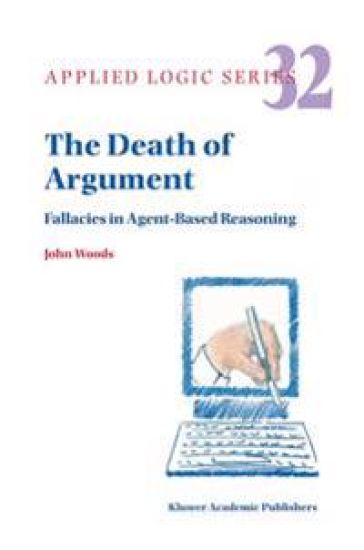
The Death of Argument

The Death of Argument

J.H. Woods

Springer-Verlag New York Inc.
2004
sidottu
The present work is a fair record of work I've done on the fallacies and related matters in the fifteen years since 1986. The book may be seen as a sequel to Fallacies: Selected papers 1972-1982, which I wrote with Douglas Walton, and which appeared in 1989 with Foris. This time I am on my own. Douglas Walton has, long since, found his own voice, as the saying has it; and so have I. Both of us greatly value the time we spent performing duets, but we also recognize the attractions of solo work. If I had to characterize the difference that has manifested itself in our later work, I would venture that Walton has strayed more, and I less, from what has come to be called the Woods-Walton Approach to the study of fallacies. Perhaps, on reflection "stray" is not the word for it, inasmuch as Walton's deviation from and my fidelity to the WWA are serious matters of methodological principle. The WWA was always conceived of as a way of handling the analysis of various kinds of fallacious argument or reasoning. It was a response to a particular challenge [Hamblin, 1970]. The challenge was that since logicians had allowed the investigation of fallacious reasoning to fall into disgraceful disarray, it was up to them to put things right. Accordingly, the WWA sought these repairs amidst the rich pluralisms of logic in the 1970s and beyond.
The Death of Argument

The Death of Argument

J.H. Woods

Springer
2010
nidottu
The present work is a fair record of work I've done on the fallacies and related matters in the fifteen years since 1986. The book may be seen as a sequel to Fallacies: Selected papers 1972-1982, which I wrote with Douglas Walton, and which appeared in 1989 with Foris. This time I am on my own. Douglas Walton has, long since, found his own voice, as the saying has it; and so have I. Both of us greatly value the time we spent performing duets, but we also recognize the attractions of solo work. If I had to characterize the difference that has manifested itself in our later work, I would venture that Walton has strayed more, and I less, from what has come to be called the Woods-Walton Approach to the study of fallacies. Perhaps, on reflection "stray" is not the word for it, inasmuch as Walton's deviation from and my fidelity to the WWA are serious matters of methodological principle. The WWA was always conceived of as a way of handling the analysis of various kinds of fallacious argument or reasoning. It was a response to a particular challenge [Hamblin, 1970]. The challenge was that since logicians had allowed the investigation of fallacious reasoning to fall into disgraceful disarray, it was up to them to put things right. Accordingly, the WWA sought these repairs amidst the rich pluralisms of logic in the 1970s and beyond.
Vitamin C

Vitamin C

S. Nobile; J.H. Woodhill

Springer
2012
nidottu
Parents and ancestors are always important: they endow us with a genetic inheritance for better or for worse, for the balanced diet, for overfeeding or for starvation. Some of us die young, some succumb in middle age to chronic disease, others join the gero­ cracy - the healthy, happy people in their 70s, 80s or even 90s. Genetic inheritance, nurture and nutrition, all play their part. The nurture and nutrition are our own responsibility; we make our choices and live with the consequences. This book is dedicated to the students of nutrition who may be interested in the subject for themselves alone, for their families, for teaching and counselling others and for research and investi­ gations. We found it necessary to include basic information in order to support some of the statements we make or advice we give; this material appears either in the main body of the text or as footnotes. If the student of nutrition is familiar with the basic con­ cepts, these sections can be skipped. At the end of the book we have included appendices, with examples of daily menus pro­ viding adequate vitamin C, an extensive bibliography, a glossary and an index. We have drawn up a food table of the vitamin C content of specific foods and described the point-system which is a ready-reckoner for approximate calculation of the vitamin C content of foods and diets.