Kirjojen hintavertailu. Mukana 12 026 656 kirjaa ja 12 kauppaa.

Kirjahaku

Etsi kirjoja tekijän nimen, kirjan nimen tai ISBN:n perusteella.

1000 tulosta hakusanalla H. D.; Hilda Doolittle

H.D. (Hilda Doolittle)

H.D. (Hilda Doolittle)

Lara Vetter

REAKTION BOOKS
2023
nidottu
H.D. (Hilda Doolittle, 1886–1961) was one of the first writers of free verse in English, best known for her sparse Imagist poems. For over forty years she wrote poetry that resurrected forgotten ancient goddesses, and autobiographical prose that explored her trauma, her desires and the unique struggles of a twentieth-century woman writer. She was also a scholar of religion, mythology and history, a translator of ancient Greek, and worked in early avant-garde film. Dubbed the ‘perfect bi-’ by Sigmund Freud, she placed issues of sexuality and gender at the centre of her writings. This new biography explores the fascinating life and work of this important modernist figure, once written out of literary history but now receiving the attention she deserves.
Notes on Thought and Vision & the Wise Sappho

Notes on Thought and Vision & the Wise Sappho

H. D. (Hilda Doolittle)

City Lights Books
1982
pokkari
Notes on Thought and Vision by Imagist poet H.D. (Hilda Doolittle) is an aphoristic meditation on how one works toward an ideal body-mind synthesis; a contemplation of the sources of imagination and the creative process; and a study of gender differences H.D. believed to be inherent in women's and men's consciousness. Here, too, is The Wise Sappho, a lyrical tribute to the great poet of Lesbos, for whom H.D. felt deep personal kinship.""Notes" is filled with dualisms that seem to split experience at all levels: body and spirit, womb and head, feeling and thought, the unconscious and ego consciousness, female and male, nature and divinity, classical and Christian, Greek and Hebrew, Greek and Egyptian, Sphinx and Centaur, Pan and Helios, Naiads and Athene, thistle and serpent. But the impulse behind "Notes" is to account for those mysterious moments in which the polarities seemed to fall away, or more accurately to find their contradictions lifted and subsumed into a gestalt that illuminated the cross-patch of the past and released her to the chances of the future."  Albert Gelpi, Introduction"H. D.'s Notes on Thought and Vision [is] such a unique, inspiring, exploration of her notion of the creative process, orchestrated through an array of fully female, not feminine, not feminist, female figures."  Paul Kameen, University of Pittsburgh, English DepartmentHilda "H.D." Doolittle (1886-1961) was a poet, novelist, and memoirist well-known for her role with the avant-gard Imagist group. Though born in Bethlehem, Pennsylvania, her publications took off in London and earned her a spot within the emerging Imagist movement. She is also known for being unapologetic about her sexuality and is an icon for LGBT rights and feminist movements.
Havsträdgård

Havsträdgård

H. D.; Hilda Doolittle

Bokförlaget Faethon
2025
nidottu
H.D. (Hilda Doolittle) var en amerikansk poet som levde mellan åren 1886–1961. År 1916 debuterade hon med Sea Garden, Havsträdgård, som vann kritikernas uppskattning. Den storartade debuten kom dock att bli en börda eftersom hon framgent inte ansågs »utveckla« sin poesi. Numera tillhör dock H.D. de stora modernisterna. Havsträdgård är märkt av första världskriget och poesin tematiserar män­niskans destruktiva sidor, något som gör henne ständigt aktuell. Havsträdgård är översatt av Bo Gustavsson som också skrivit ett efterord.
Tribute to Freud

Tribute to Freud

H. D. (Hilda Doolittle); Norman Holmes (AFT) Pearson; Adam (INT) Philips

New Directions Publishing Corporation
2012
pokkari
My bat-like thought-wings would beat painfully in that sudden searchlight, H.D. writes in Tribute to Freud, her moving memoir. Compelled by historical as well as personal crises, H.D. underwent therapy with Freud during 1933 34, as the streets of Vienna were littered with tokens dropped like confetti on the city stating Hitler gives work, Hitler gives bread. Having endured World War I, she was now gathering her resources to face the cataclysm she knew was approaching. The first part of the book, Writing on the Wall, was composed some ten years after H.D. s stay in Vienna; the second part, Advent, is a journal she kept during her analysis. Revealed here in the poet s crystal shard-like words and in Freud s own letters (which comprise an appendix) is a remarkably tender and human portrait of the legendary Doctor in the twilight of his life. Time double backs on itself, mingling past, present, and future in a visionary weave of dream, memory, and reflections.
Asphodel

Asphodel

Hilda Doolittle (H.D.)

Duke University Press
1992
sidottu
"DESTROY," H.D. had pencilled across the title page of this autobiographical novel. Although the manuscript survived, it has remained unpublished since its completion in the 1920s. Regarded by many as one of the major poets of the modernist period, H.D. created in Asphodel a remarkable and readable experimental prose text, which in its manipulation of technique and voice can stand with the works of Joyce, Woolf, and Stein; in its frank exploration of lesbian desire, pregnancy and motherhood, artistic independence for women, and female experience during wartime, H.D.'s novel stands alone.A sequel to the author's HERmione, Asphodel takes the reader into the bohemian drawing rooms of pre-World War I London and Paris, a milieu populated by such thinly disguised versions of Ezra Pound, Richard Aldington, May Sinclair, Brigit Patmore, and Margaret Cravens; on the other side of what H.D. calls "the chasm," the novel documents the war's devastating effect on the men and women who considered themselves guardians of beauty. Against this riven backdrop, Asphodel plays out the story of Hermione Gart, a young American newly arrived in Europe and testing for the first time the limits of her sexual and artistic identities. Following Hermione through the frustrations of a literary world dominated by men, the failures of an attempted lesbian relationship and a marriage riddled with infidelity, the birth of an illegitimate child, and, finally, happiness with a female companion, Asphodel describes with moving lyricism and striking candor the emergence of a young and gifted woman from her self-exile.Editor Robert Spoo's introduction carefully places Asphodel in the context of H.D.'s life and work. In an appendix featuring capsule biographies of the real figures behind the novel's fictional characters, Spoo provides keys to this roman à clef.
Asphodel

Asphodel

Hilda Doolittle (H.D.)

Duke University Press
1992
pokkari
"DESTROY," H.D. had pencilled across the title page of this autobiographical novel. Although the manuscript survived, it has remained unpublished since its completion in the 1920s. Regarded by many as one of the major poets of the modernist period, H.D. created in Asphodel a remarkable and readable experimental prose text, which in its manipulation of technique and voice can stand with the works of Joyce, Woolf, and Stein; in its frank exploration of lesbian desire, pregnancy and motherhood, artistic independence for women, and female experience during wartime, H.D.'s novel stands alone.A sequel to the author's HERmione, Asphodel takes the reader into the bohemian drawing rooms of pre-World War I London and Paris, a milieu populated by such thinly disguised versions of Ezra Pound, Richard Aldington, May Sinclair, Brigit Patmore, and Margaret Cravens; on the other side of what H.D. calls "the chasm," the novel documents the war's devastating effect on the men and women who considered themselves guardians of beauty. Against this riven backdrop, Asphodel plays out the story of Hermione Gart, a young American newly arrived in Europe and testing for the first time the limits of her sexual and artistic identities. Following Hermione through the frustrations of a literary world dominated by men, the failures of an attempted lesbian relationship and a marriage riddled with infidelity, the birth of an illegitimate child, and, finally, happiness with a female companion, Asphodel describes with moving lyricism and striking candor the emergence of a young and gifted woman from her self-exile.Editor Robert Spoo's introduction carefully places Asphodel in the context of H.D.'s life and work. In an appendix featuring capsule biographies of the real figures behind the novel's fictional characters, Spoo provides keys to this roman à clef.
Fin al tormento / El libro de Hilda
Fin al tormento es el diario personal que llev la poeta Hilda Doolittle (H.D.) durante una parte del a o 1958, cuando su amigo y mentor Ezra Pound fue liberado del manicomio de St. Elizabeth, y regres a Italia. Alentada por varios conocidos comunes, y por las noticias que le llegaban desde Estados Unidos, H.D., hospitalizada en Suiza, sinti la necesidad de poner por escrito los recuerdos de su relaci n con Pound, desde el noviazgo adolescente que se remontaba a 1905, hasta la posterior amistad y colaboraci n po tica. Los recuerdos ntimos contados en este libro, que sostienen la certeza de dos vidas po ticas irrevocablemente entremezcladas, tienen su complemento ideal en una serie de veinticinco poemas que forman el primero de los libros conocidos de Pound: El Libro de Hilda. El manuscrito de estos poemas, dedicado y encuadernado por el propio autor, fue entregado a la destinataria antes de partir a Europa, en 1908. Se consider perdido durante el bombardeo de Londres en la Segunda Guerra Mundial, y reapareci en los a os setenta. Esta es la primera traducci n al espa ol de ambos textos. (Ernesto Hern ndez Busto)
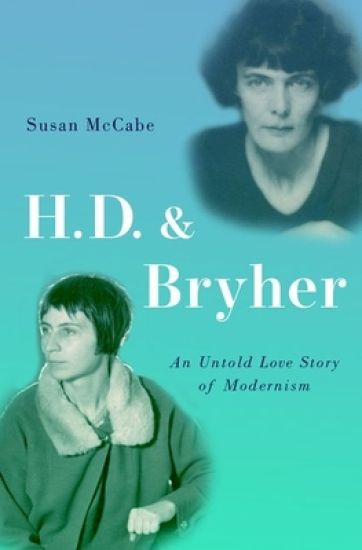
H. D. & Bryher

H. D. & Bryher

Susan McCabe

Oxford University Press Inc
2022
sidottu
H.D. & Bryher: An Untold Love Story of Modernism takes on the daring task of examining the connection between two queer women, one a poet and the other a historical novelist, living from the late 19th century through the 20th century. When they met in 1918, H.D. was a modernist poet, married to a shell-shocked adulterous poet, and pregnant by another man. She fell in love with Bryher, who was entrapped by her wealthy secretive family. Their bond grew over Greek poetry, geography, ancient history and literature, the telegraph, and telepathy. They felt their love-and their true identities existed invisibly- a giddy, and disturbing element to their relationship; they lived off and on in distant geographies, though in near continual contact. This book exposes why literary history has occluded this love story of the world wars and poetic modernism.
H. D. and Hellenism

H. D. and Hellenism

Eileen Gregory

Cambridge University Press
2009
pokkari
H. D. and Hellenism: Classic Lines concerns a prominent aspect of the writing of the modern American poet H. D. (Hilda Doolittle): a lifelong engagement with hellenic literature, mythology and art. H. D.'s hellenic intertextuality is examined in the context of classical fictions operative at the turn of the century: the war of words among literary critics establishing a new 'classicism' in reaction to romanticism; the fictions of classical transmission and the problem of women within the classical line; nineteenth-century romantic hellenism, represented in the writing of Walter Pater; and the renewed interest in ancient religion brought about by anthropological studies, represented in the writing of Jane Ellen Harrison. Eileen Gregory explores at length H. D.'s intertextual engagement with specific classical writers: Sappho, Theocritus and the Greek Anthology, Homer and Euripides. The concluding chapter sketches chronologically H. D.'s career-long study and reinvention of Euripidean texts. An appendix catalogues classical subtexts in Collected Poems, 1912-1944, edited by Louis Martz.
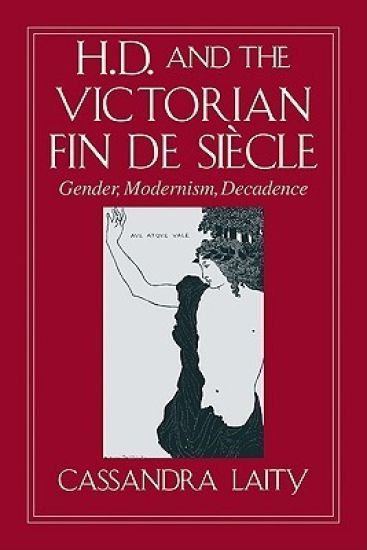
H. D. and the Victorian Fin de Siècle

H. D. and the Victorian Fin de Siècle

Cassandra Laity

Cambridge University Press
2009
pokkari
H. D and the Victorian Fin de Siecle argues foremost that H. D. eluded the male modernist flight from Romantic 'effeminacy' and 'personality' by embracing the very cults of personality in the Decadent Romanticism of Oscar Wilde, A. C. Swinburne, Walter Pater and D. G. Rossetti that her male contemporaries most deplored: the cult of the demonic femme fatale and of the 'effeminate' Aesthete androgyne. H. D., Laity maintains, used these sexually aggressive masks to shape a female modernism that freely engaged female and male androgyny, homoeroticism, narcissism and maternal eroticism. Focusing on the early Sea Garden, the plays and poetry of the 1920s and her late epic Trilogy, H. D. and the Victorian Fin de Siecle demonstrates H. D.'s shift from the homoerotic 'white', vanishing tropology of the male androgyne fashioned by Pater and Wilde to the 'abject' monstrously sexual body of the Pre-Raphaelite and Decadent femme fatale.
H. D. and Hellenism

H. D. and Hellenism

Eileen Gregory

Cambridge University Press
1997
sidottu
H. D. and Hellenism concerns a prominent aspect of the writing of the modern American poet H. D. (Hilda Doolittle): her career-long engagement with Hellenic literature, mythology, and art. H. D.’s Hellenic intertextuality is examined in the context of classical fictions operative at the turn of the century: the war of words among literary critics establishing a new ‘classicism’ in reaction to romanticism; the fictions of classical transmission, and the problem of women within the classical line; nineteenth-century romantic Hellenism, represented in the writing of Walter Pater; and the renewed interest in ancient religion brought about by anthropological studies, represented in the writing of Jane Ellen Harrison. Eileen Gregory explores at length H. D.’s intertextual engagement with specific classical writers; Sappho, Theocritus, Homer, and Euripides. The concluding chapter sketches chronologically H. D.’s career-long study and reinvention of Euripidean texts.
H. D. and the Victorian Fin de Siècle

H. D. and the Victorian Fin de Siècle

Cassandra Laity

Cambridge University Press
1996
sidottu
H. D and the Victorian Fin de Siecle argues foremost that H. D. eluded the male modernist flight from Romantic 'effeminacy' and 'personality' by embracing the very cults of personality in the Decadent Romanticism of Oscar Wilde, A. C. Swinburne, Walter Pater and D. G. Rossetti that her male contemporaries most deplored: the cult of the demonic femme fatale and of the 'effeminate' Aesthete androgyne. H. D., Laity maintains, used these sexually aggressive masks to shape a female modernism that freely engaged female and male androgyny, homoeroticism, narcissism and maternal eroticism. Focusing on the early Sea Garden, the plays and poetry of the 1920s and her late epic Trilogy, H. D. and the Victorian Fin de Siecle demonstrates H. D.'s shift from the homoerotic 'white', vanishing tropology of the male androgyne fashioned by Pater and Wilde to the 'abject' monstrously sexual body of the Pre-Raphaelite and Decadent femme fatale.
H?c d?o trong d?i

H?c d?o trong d?i

Nguyên Minh

United Buddhist Publisher
2019
pokkari
"Học đạo trong đời" l nỗ lực vận dụng lời Phật dạy v o đời sống thường ng y một c ch c hệ thống, với c c phần gi o l căn bản nhất như Năm giới, như tiến tr nh tu tập Giới Định Tuệ, hoặc thiết thực hơn l những lợi ch của sự tu tập v p dụng lời Phật dạy v o đời sống. Những l thư n y được viết ra tr n căn bản ban đầu l sự chia sẻ hằng tuần với th nh vi n của cộng đồng Rộng Mở T m Hồn (www.rongmotamhon.net), v thế kh ng tr nh khỏi một số những nội dung được nhắm đến trao đổi trực tiếp với c c vấn đề được th nh vi n n u ra c ng ch ng t i, cũng như ph hợp với c c diễn tiến của thực tế đang diễn ra trong từng thời điểm. Trong qu tr nh bi n soạn th nh s ch, ch ng t i đ c một số điều chỉnh th ch hợp, nhưng đ i khi những t nh chất c biệt của một số vấn đề c thể vẫn cần được nhận hiểu trong bối cảnh cụ thể đ ph t sinh vấn đề đ . D vậy, khi nh n từ một g c độ kh c th ch nh những yếu tố thực tiễn n y sẽ tạo ra t nh sinh động v thiết thực cho những vấn đề được tr nh b y trong s ch. Do đ , ch ng t i đ quyết định vẫn giữ lại thay v lược bỏ ch ng đi. Mong rằng qu độc giả sẽ xem những yếu tố thực tiễn n y như những v dụ minh họa sống động cho c c vấn đề đang được đề cập đến. Mặc d đ hết sức nỗ lực trong qu tr nh h nh th nh tập s ch nhưng chắc chắn cũng kh ng thể tr nh khỏi t nhiều khiếm khuyết. K nh mong qu độc giả gần xa rộng l ng lượng thứ.