Kirjojen hintavertailu. Mukana 11 342 296 kirjaa ja 12 kauppaa.

Kirjahaku

Etsi kirjoja tekijän nimen, kirjan nimen tai ISBN:n perusteella.

1000 tulosta hakusanalla H. G. Cibele

Terapia Emocional para La Atracción Sistema TEA: Sistema TEA

Terapia Emocional para La Atracción Sistema TEA: Sistema TEA

H. G. Cibele

Createspace Independent Publishing Platform
2011
nidottu
El gran secreto detr s de la ley de atracci n son las emociones. sabemos c mo liberarlas para evitar que frustren nuestros sue os? Terapia Emocional para la Atracci n ense a a descubrir mediante test y ejercicios que emociones y necesidades del ego est n saboteando tu vida . Y te ense a t cnicas para liberar los saboteos, con un sistema individualizado y a la medida de cada persona.
Chateando con el Universo: Una conversación real y sorprendente

Chateando con el Universo: Una conversación real y sorprendente

H. G. Cibele

Createspace Independent Publishing Platform
2011
nidottu
Una experiencia especial y asombrosa. Un chateo real en una reconocida plataforma de chat entre H. G. CIBELE y un ser de Nick "Universo". Decenas de preguntas sobre la vida, Dios, las emociones, las relaciones, el ser, qui nes somos, el pensamiento positivo y negativo, la consciencia colectiva, qu hacemos aqu y mucho m s. Decida usted cuanta verdad tienen las sorprendente respuestas de "Universo". Tenga esta experiencia y cambiar para mejor su experiencia en esta vida.
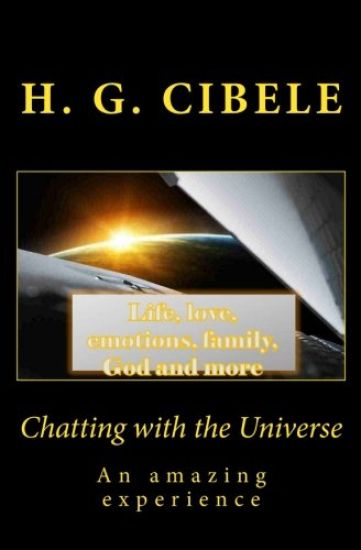
Chatting with the Universe: An amazing experience

Chatting with the Universe: An amazing experience

H. G. Cibele

Createspace Independent Publishing Platform
2011
nidottu
A special and amazing experience. A real chat on a website recognized between H. G. Cibele and a being with Nick "Universe". Dozens of questions about life, God, emotions, relationships, who we are, positive and negative thinking, the collective consciousness, what we do here and much more. You decide the truth that they have the amazing answers of "Universe". Lives this experience and will change for better your world.
Encontrando la felicidad. Guía práctica en 4 pasos: Guía práctica en 4 pasos

Encontrando la felicidad. Guía práctica en 4 pasos: Guía práctica en 4 pasos

H. G. Cibele

Createspace Independent Publishing Platform
2014
nidottu
Encontrando la felicidad es una visi n pr ctica, basada en la vida cotidiana del autor y en sus m s de 20 a os como coach de vida plena. Puede ser utilizado como un manual, con tips importantes para ser practicados y cambiar la visi n aprendida subconscientemente de la cotidianidad. El libro esta escrito en un lenguaje sencillo y de amena lectura. No esperes m s para ser feliz
H. G. Adler

H. G. Adler

Peter Filkins

Oxford University Press Inc
2019
sidottu
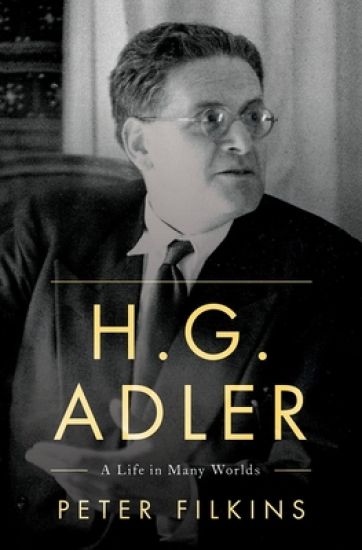
The biography of H.G. Adler (1910-88) is the story of a survivor of Theresienstadt, Auschwitz, and two other concentration camps who not only lived through the greatest cataclysm of the 20th century, but someone who also devoted his literary and scholarly career to telling the story of those who perished in over two dozen books of fiction, poetry, history, sociology, and religion. And yet for much of his life he remained almost entirely unknown. A writer's writer, a scholar of seminal, pioneering works on the Holocaust, a renowned radio essayist in postwar Germany, a last representative of the Prague Circle of literature headed by Kafka, a key contributor to the prosecution in the trial of Adolf Eichmann, Adler was a man of his time whose times lived through him. His is the story of many others, but also one that is singularly his own. And at its heart lies a profound story of love and perseverance amid the loss of his first wife, Gertrud Klepetar, who accompanied her mother to the gas chamber in Auschwitz, and the courtship and extended correspondence with Bettina Gross, a Prague artist who escaped to the Britain, only to later learn that her mother had also been in Theresienstadt with Adler before her eventual death in Auschwitz. His delivery of a lecture in Theresienstadt commemorating Kafka's sixtieth birthday, and with Kafka's favorite sister present; the nurturing of a younger generation of artists and intellectuals, including the Israeli artist Jehuda Bacon and the Serbian novelist Ivan Ivanji; the preservation of Viktor Ullmann's compositions and his opera The Emperor of Atlantis, only to see them premiered decades later to world acclaim; and the penury of postwar life while churning out the novels, poetry, and scholarship that would make his reputation - all of these are part of a life survived in the moment, but dedicated to the future, and that of a man committed to helping human dignity survive in his time and that to come.
H. G. Wells and the Culminating Ape

H. G. Wells and the Culminating Ape

Peter Kemp

Palgrave Macmillan
1996
nidottu
H.G. Wells's view of the world - and hence his writing - was strongly influenced by the biologist's training he received during his three years as a student at the Normal School of Science, South Kensington (now Imperial College, London). Those things which a creature needs in order for it and its species to thrive get particular attention in Wells's books. Tracing biological themes through Wells's work, as Peter Kemp does here, shows the pattern of his thought and brings to light the bizarre workings of a fascinating imagination. For the book's reissue in paperback, an afterword has been added.
H. G. J. Moseley

H. G. J. Moseley

J. L. Heilbron

University of California Press
2022
pokkari
H. G. J. Moseley (1887 - 1915), the son and grandson of distinguished English scientists, a favorite student of Rutherford's and a colleague of Bohr's, completed researches of capital importance for atomic physics just before the outbreak of World War I. He was urged to devote himself to scientific war work in England, but his duty as he aw it was to join the battle. He procured himself command of a signaling section in the Royal Engineers, a speedy trip to Gallipoli, and death in the bloody battle for Sari Bair. In this work the author presents a full record of Moseley's brief and brilliant career. It gives instructive detail about Eton, which, as Heilbron shows, offered more opportunity for acquiring a foundation in science than its emphasis on Greek and games would suggest; about Oxford, a scientific backwater in Moseley's time; and about Rutherford's thriving laboratory at the University of Manchester. It describes in detail Moseley's apprenticeship in experimental physics, his growth under the tight supervision of Manchester, and his classical independent work on X rays, which almost certainly would have brought him the Nobel Prize. An epilogue sketches the chief results secured by other in the decade after his death in the research lines he opened. Heilbron's account is informed by an unequaled acquaintance with the relevant manuscript material, including all of Moseley's known correspondence (most of which he discovered) and the paper of colleagues such as Bohr, W. H. Bragg, G. H. Darwin, F. A. Lindemann (Lord Cherwell), Rutherford, Henry Tizard, Georges Ubrain, and G. von Hevesy. An important feature of the book is the publication, in extenso, of Moseley's surviving correspondence. These letters are not only a rich source for historians of science and of education. Tehy are also splendid reading: well-written records of the maturing of a strong mind, pithy commentaries on the Establishment as Moseley saw it, and exciting notices of the course of one of the most important researches in modern physical science. This title is part of UC Press's Voices Revived program, which commemorates University of California Press's mission to seek out and cultivate the brightest minds and give them voice, reach, and impact. Drawing on a backlist dating to 1893, Voices Revived makes high-quality, peer-reviewed scholarship accessible once again using print-on-demand technology. This title was originally published in 1974.
H. G. J. Moseley

H. G. J. Moseley

J. L. Heilbron

University of California Press
2022
sidottu
H. G. J. Moseley (1887 - 1915), the son and grandson of distinguished English scientists, a favorite student of Rutherford's and a colleague of Bohr's, completed researches of capital importance for atomic physics just before the outbreak of World War I. He was urged to devote himself to scientific war work in England, but his duty as he aw it was to join the battle. He procured himself command of a signaling section in the Royal Engineers, a speedy trip to Gallipoli, and death in the bloody battle for Sari Bair. In this work the author presents a full record of Moseley's brief and brilliant career. It gives instructive detail about Eton, which, as Heilbron shows, offered more opportunity for acquiring a foundation in science than its emphasis on Greek and games would suggest; about Oxford, a scientific backwater in Moseley's time; and about Rutherford's thriving laboratory at the University of Manchester. It describes in detail Moseley's apprenticeship in experimental physics, his growth under the tight supervision of Manchester, and his classical independent work on X rays, which almost certainly would have brought him the Nobel Prize. An epilogue sketches the chief results secured by other in the decade after his death in the research lines he opened. Heilbron's account is informed by an unequaled acquaintance with the relevant manuscript material, including all of Moseley's known correspondence (most of which he discovered) and the paper of colleagues such as Bohr, W. H. Bragg, G. H. Darwin, F. A. Lindemann (Lord Cherwell), Rutherford, Henry Tizard, Georges Ubrain, and G. von Hevesy. An important feature of the book is the publication, in extenso, of Moseley's surviving correspondence. These letters are not only a rich source for historians of science and of education. Tehy are also splendid reading: well-written records of the maturing of a strong mind, pithy commentaries on the Establishment as Moseley saw it, and exciting notices of the course of one of the most important researches in modern physical science. This title is part of UC Press's Voices Revived program, which commemorates University of California Press's mission to seek out and cultivate the brightest minds and give them voice, reach, and impact. Drawing on a backlist dating to 1893, Voices Revived makes high-quality, peer-reviewed scholarship accessible once again using print-on-demand technology. This title was originally published in 1974.

H. G. Wells

H. G. Wells

John Batchelor

Cambridge University Press
1985
pokkari
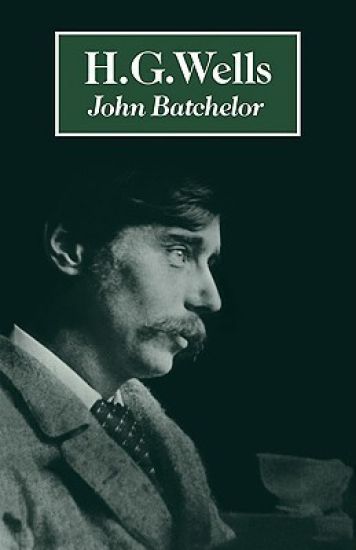
H. G. Wells wrote almost a hundred books, yet he is generally remembered for only a handful of them. He is known above all as a writer who heralded the future, yet throughout his life he clung to fixed attitudes from the Victorian past. He began his career as a draper's apprentice; by the age of forty-five he had secured an international reputation as the author of The Time Machine, The War of the Worlds, Kipps and Tono Bungay; he went on to establish himself as an influential educator, polemicist and sage. In this book John Batchelor offers a readable introduction to Wells's huge and varied output as a writer and thinker. He guides the reader through the whole oeuvre, and argues persuasively that at his best Wells was a great artist: a man with a remarkable, restless imagination (not limited, as many critics have implied, merely to his early romances) and with a coherent and responsible theory of fiction.
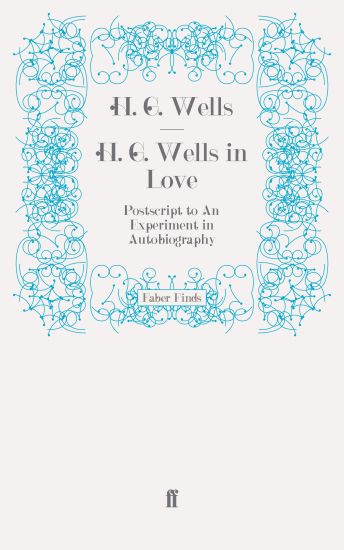
H. G. Wells in Love

H. G. Wells in Love

H. G. Wells

Faber Faber
2008
nidottu
'I was never a great amorist,' wrote H. G. Wells in his Experiment in Autobiography in 1934, 'though I have loved several people very deeply.'H. G. Wells composed his most candid volume of autobiography, H. G. Wells in Love, secretly, knowing it would never be published in his own lifetime. It is a great writer's true confession of the loves of his life, beginning in the 1930s when Wells was at the summit of fame having published The Invisible Man, Kipps, and The War of the Worlds. Though he had already written his published autobiography (the two volumes of Experiment in Autobiography are also available as Faber Finds), he saved his most private reflections for this, detailing his engagement in a series of romantic affairs, including his famous liason with feminist author Rebecca West, twenty-six years his junior, and his second wife, Amy Catherine Robbins. This volume completes and complements the published volumes and offers a unique insight into the life of one of the best-loved of British writers.
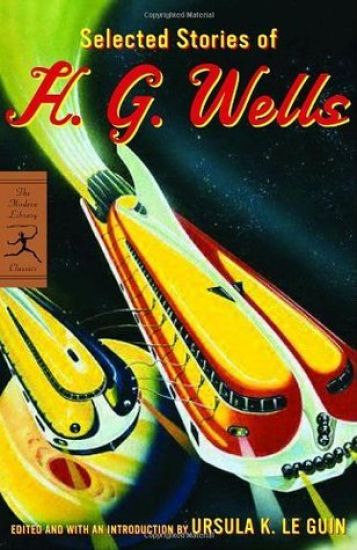
Selected Stories of H. G. Wells

Selected Stories of H. G. Wells

H. G. Wells

Modern Library Inc
2004
pokkari
Ursula K. Le Guin's selection of twenty-six stories showcases H. G. Wells's genius and reintroduces readers to his singular talent for making the unbelievable seem utterly plausible. He envisioned a sky filled with airplanes before Orville Wright ever left the ground. He described the spectacle of space travel decades before men set foot on the moon. H. G. Wells was a visionary, a man of science with an enduring literary touch, and his originality and inventiveness are fully on display in this essential collection. "Wells imagined both dark and bright futures because his creed allowed both while promising neither, and because the eighty years of his life were years of immense intellectual and technological accomplishment and appalling violence and destruction."--Ursula K. Le Guin, from the introduction "Everything one imagines in the way of genius and fun."--Rebecca West Including these stories: "A Slip Under the Microscope" "The Remarkable Case of Davidson's Eyes" "The Plattner Story" "Under the Knife" "The Crystal Egg" "The New Accelerator" "The Stolen Body" "The Argonauts of the Air" "In the Abyss" "The Star" "The Land Ironclads" "A Dream of Armageddon" "The Lord of the Dynamos" "The Valley of Spiders" "The Story of the Late Mr. Elvesham" "The Man Who Could Work Miracles" "The Magic Shop" "Mr. Skelmersdale in Fairyland" "The Door in the Wall" "The Presence by the Fire" "A Vision of Judgment" "The Story of the Last Trump" "The Wild Asses of the Devil" "Answer to Prayer" "The Queer Story of Brownlow's Newspaper" "The Country of the Blind"
H. G. Wells's Perennial Time Machine

H. G. Wells's Perennial Time Machine

University of Georgia Press
2016
pokkari
Acclaimed as a work of genius when first published in 1895, The Time Machine represents a revolution in storytelling. H. G. Wells's first--and greatest--novel has been recognized worldwide as a founding text of the science fiction genre and one of the most seminal narratives of the last hundred years.This collection of essays offers a series of original, penetrating, and wide-ranging perspectives on Wells's masterpiece by an international group of major Wells and science fiction scholars. The authors explore such textual topics as the narrative techniques and mythological undertones of the novel as well as its contribution to modern ideas of time and evolution and its focusing of the intellectual cross-currents of the late nineteenth century. This insightful volume captures the innovative imagination, richness, and fascinating ambiguity that resulted in a classic literary work and demonstrates that Wells's novel is both a visionary story and an unstoppable idea.