Kirjojen hintavertailu. Mukana 11 244 527 kirjaa ja 12 kauppaa.

Kirjahaku

Etsi kirjoja tekijän nimen, kirjan nimen tai ISBN:n perusteella.

1000 tulosta hakusanalla H. G. Well

The Invisible Man (1897) Novel by: H.G. Wells

The Invisible Man (1897) Novel by: H.G. Wells

H. G. Wells

Createspace Independent Publishing Platform
2017
nidottu
The Invisible Man is a 1897 science fiction novel, originally serialized in Pearson's Magazine. The Invisible Man of the title is "Griffin", a scientist who theorizes that if a person's refractive index is changed to exactly that of air and his body does not absorb or reflect light, then he will not be visible. He successfully carries out this procedure on himself, but cannot become visible again, becoming mentally unstable as a result.Herbert George Wells (21 September 1866 - 13 August 1946)-known as H. G. Wells-was a prolific English writer in many genres, including the novel, history, politics, social commentary, and textbooks and rules for war games. Wells is now best remembered for his science fiction novels and is called a "father of science fiction", along with Jules Verne and Hugo Gernsback. His most notable science fiction works include The Time Machine (1895), The Island of Doctor Moreau (1896), The Invisible Man (1897), and The War of the Worlds (1898). He was nominated for the Nobel Prize in Literature four times.
H.G. Wells, Colección

H.G. Wells, Colección

H. G. Wells

Createspace Independent Publishing Platform
2014
nidottu
Herbert George Wells, m s conocido como H. G. Wells (21 de septiembre de 1866 en Bromley, Kent - 13 de agosto de 1946 en Londres), fue un escritor, novelista, historiador y fil sofo brit nico. Es famoso por sus novelas de ciencia ficci n y es considerado junto a Julio Verne, uno de los precursores de este g nero. Por sus escritos relacionados con ciencia, en 1970 se decidi en su honor llamarle H. G. Wells a un astroblema lunar ubicado en el lado oscuro de la Luna. En 1997 fue incluido en el Sal n de la Fama de la ciencia ficci n con car cter p stumo en reconocimiento a su obra pionera en el g nero y es considerado uno de los mejores autores de ciencia ficci n de todos los tiempos. Sus obras La m quina del tiempo y La guerra de los mundos obtuvieron tambi n esta distinci n.
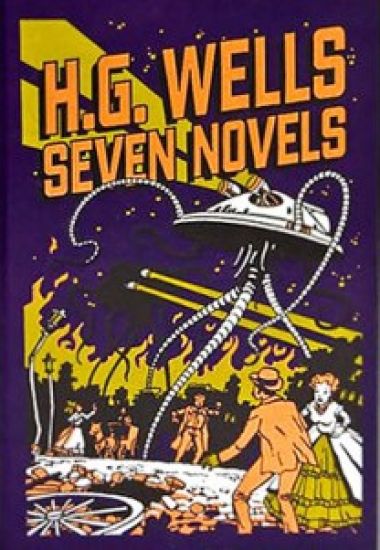
H.G. Wells: Seven Novels

H.G. Wells: Seven Novels

H. G. Wells

Union Square Co.
2009
sidottu
Immensely popular during his lifetime, H. G. Wells, along with Jules Verne, is credited with inventing science fiction. This new volume Wells’s best-loved and most critically acclaimed works. In each, the author grounds his fantastical imagination in scientific fact and conjecture while lacing his narrative with vibrant action, not merely to tell a “ripping yarn,” but to offer a biting critique on the world around him. “The strength of Mr. Wells,” wrote Arnold Bennett, “lies in the fact that he is not only a scientist, but a most talented student of character, especially quaint character. He will not only ingeniously describe for you a scientific miracle, but he will set down that miracle in the midst of a country village, sketching with excellent humor the inn-landlady, the blacksmith, the chemist’s apprentice, the doctor, and all the other persons whom the miracle affects.”
H. G. Wells and the Culminating Ape

H. G. Wells and the Culminating Ape

Peter Kemp

Palgrave Macmillan
1996
nidottu
H.G. Wells's view of the world - and hence his writing - was strongly influenced by the biologist's training he received during his three years as a student at the Normal School of Science, South Kensington (now Imperial College, London). Those things which a creature needs in order for it and its species to thrive get particular attention in Wells's books. Tracing biological themes through Wells's work, as Peter Kemp does here, shows the pattern of his thought and brings to light the bizarre workings of a fascinating imagination. For the book's reissue in paperback, an afterword has been added.
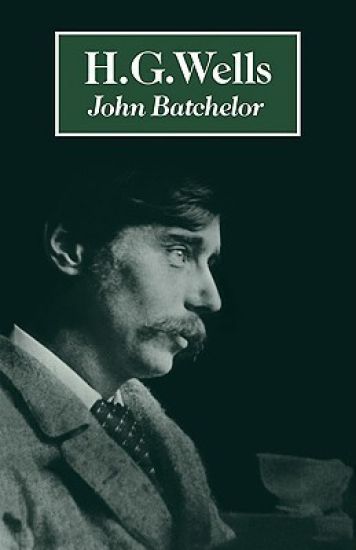
H. G. Wells

H. G. Wells

John Batchelor

Cambridge University Press
1985
pokkari
H. G. Wells wrote almost a hundred books, yet he is generally remembered for only a handful of them. He is known above all as a writer who heralded the future, yet throughout his life he clung to fixed attitudes from the Victorian past. He began his career as a draper's apprentice; by the age of forty-five he had secured an international reputation as the author of The Time Machine, The War of the Worlds, Kipps and Tono Bungay; he went on to establish himself as an influential educator, polemicist and sage. In this book John Batchelor offers a readable introduction to Wells's huge and varied output as a writer and thinker. He guides the reader through the whole oeuvre, and argues persuasively that at his best Wells was a great artist: a man with a remarkable, restless imagination (not limited, as many critics have implied, merely to his early romances) and with a coherent and responsible theory of fiction.