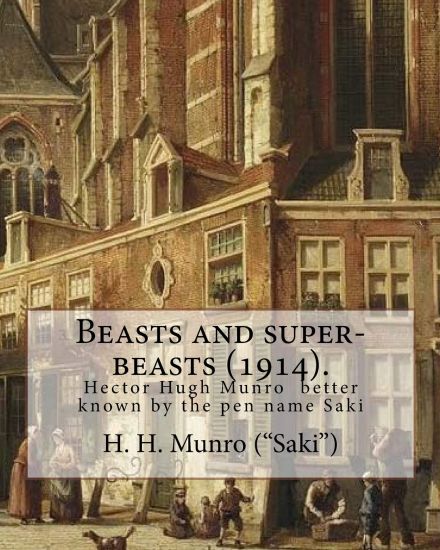
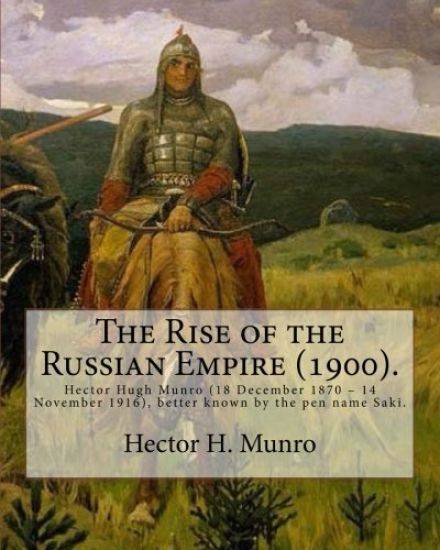
Hector Hugh Munro (18 December 1870 - 14 November 1916), better known by the pen name Saki, and also frequently as H. H. Munro, was a British writer whose witty, mischievous and sometimes macabre stories satirize Edwardian society and culture. He is considered a master of the short story, and often compared to O. Henry citation needed] and Dorothy Parker citation needed]. Influenced by Oscar Wilde, Lewis Carroll and Rudyard Kipling, he himself influenced A. A. Milne, No l Coward and P. G. Wodehouse. Besides his short stories (which were first published in newspapers, as was customary at the time, and then collected into several volumes), he wrote a full-length play, The Watched Pot, in collaboration with Charles Maude; two one-act plays; a historical study, The Rise of the Russian Empire, the only book published under his own name; a short novel, The Unbearable Bassington; the episodic The Westminster Alice (a parliamentary parody of Alice in Wonderland); and When William Came, subtitled A Story of London Under the Hohenzollerns, a fantasy about a future German invasion and occupation of Britain. Early life Hector Hugh Munro was born in Akyab, British Burma, which was then still part of the British Raj, and was governed from Calcutta under the authority of the Viceroy of India. Saki was the son of Charles Augustus Munro, an Inspector General for the Indian Imperial Police, by his marriage to Mary Frances Mercer (1843-1872), the daughter of Rear Admiral Samuel Mercer. Her nephew, Cecil William Mercer, later became a famous novelist as Dornford Yates. In 1872, on a home visit to England, Mary Munro was charged by a cow, and the shock caused her to miscarry. She never recovered and soon died. After the death of Munro's mother, Charles Munro sent his children, including two-year-old Hector, home to England. The children were sent to Broadgate Villa, in Pilton village near Barnstaple, North Devon to be raised by their grandmother and paternal maiden aunts Charlotte and Augusta in a strict and puritanical household. It is said that they were most likely models for a few of his characters, notably 'The Lumber Room' and 'Sredni Vashtar". Leading slightly insular lives Munro and his siblings, during their early years were educated under tutelage of governesses. At the age of 12 the young Hector Munro was educated at Pencarwick School in Exmouth and then as a boarder at Bedford School. In 1887, after his retirement, his father returned from Burma, and embarked upon a series of European travels with Hector and his siblings. Hector followed his father in 1893 into the Indian Imperial Police and was posted to Burma, but successive bouts of fever meant his return home after only fifteen months Writing career In 1896, he decided to move to London to make a living as a writer. Munro started his writing career as a journalist for newspapers such as the Westminster Gazette, the Daily Express, the Morning Post, and magazines such as the Bystander and Outlook. His first book The Rise of the Russian Empire, a historical study modelled upon Edward Gibbon's The Decline and Fall of the Roman Empire, appeared in 1900, under his real name, but proved to be something of a false start. Whilst he was writing The Rise of the Russian Empire, he made his first foray into short story writing and published a piece called 'Dogged' in St Paul's in February 1899. He then moved into the world of political satire in 1900 with a collaboration with Francis Carruthers Gould entitled "Alice in Westminster". Gould produced the sketches, and Munro wrote the text accompanying them, using the pen-name "Saki" for the first time. The series lampooned political figures of the day ('Alice in Downing Street' begins with the memorable line, '"Have you ever seen an Ineptitude?"' - referring to a zoomorphised Arthur Balfour), and was published in the Liberal Westminster Gazette.....
Hector Hugh Munro (18 December 1870 - 14 November 1916), better known by the pen name Saki, and also frequently as H. H. Munro, was a British writer whose witty, mischievous and sometimes macabre stories satirize Edwardian society and culture. He is considered a master of the short story, and often compared to O. Henry citation needed] and Dorothy Parker citation needed]. Influenced by Oscar Wilde, Lewis Carroll and Rudyard Kipling, he himself influenced A. A. Milne, No l Coward and P. G. Wodehouse.
Hector Hugh Munro (18 December 1870 - 14 November 1916), better known by the pen name Saki, and also frequently as H. H. Munro, was a British writer whose witty, mischievous and sometimes macabre stories satirize Edwardian society and culture. He is considered a master of the short story, and often compared to O. Henry citation needed] and Dorothy Parker citation needed]. Influenced by Oscar Wilde, Lewis Carroll and Rudyard Kipling, he himself influenced A. A. Milne, No l Coward and P. G. Wodehouse. Besides his short stories (which were first published in newspapers, as was customary at the time, and then collected into several volumes), he wrote a full-length play, The Watched Pot, in collaboration with Charles Maude; two one-act plays; a historical study, The Rise of the Russian Empire, the only book published under his own name; a short novel, The Unbearable Bassington; the episodic The Westminster Alice (a parliamentary parody of Alice in Wonderland); and When William Came, subtitled A Story of London Under the Hohenzollerns, a fantasy about a future German invasion and occupation of Britain. Early life Hector Hugh Munro was born in Akyab, British Burma, which was then still part of the British Raj, and was governed from Calcutta under the authority of the Viceroy of India. Saki was the son of Charles Augustus Munro, an Inspector General for the Indian Imperial Police, by his marriage to Mary Frances Mercer (1843-1872), the daughter of Rear Admiral Samuel Mercer. Her nephew, Cecil William Mercer, later became a famous novelist as Dornford Yates. In 1872, on a home visit to England, Mary Munro was charged by a cow, and the shock caused her to miscarry. She never recovered and soon died. After the death of Munro's mother, Charles Munro sent his children, including two-year-old Hector, home to England. The children were sent to Broadgate Villa, in Pilton village near Barnstaple, North Devon to be raised by their grandmother and paternal maiden aunts Charlotte and Augusta in a strict and puritanical household. It is said that they were most likely models for a few of his characters, notably 'The Lumber Room' and 'Sredni Vashtar". Leading slightly insular lives Munro and his siblings, during their early years were educated under tutelage of governesses. At the age of 12 the young Hector Munro was educated at Pencarwick School in Exmouth and then as a boarder at Bedford School. In 1887, after his retirement, his father returned from Burma, and embarked upon a series of European travels with Hector and his siblings. Hector followed his father in 1893 into the Indian Imperial Police and was posted to Burma, but successive bouts of fever meant his return home after only fifteen months Writing career In 1896, he decided to move to London to make a living as a writer. Munro started his writing career as a journalist for newspapers such as the Westminster Gazette, the Daily Express, the Morning Post, and magazines such as the Bystander and Outlook. His first book The Rise of the Russian Empire, a historical study modelled upon Edward Gibbon's The Decline and Fall of the Roman Empire, appeared in 1900, under his real name, but proved to be something of a false start. Whilst he was writing The Rise of the Russian Empire, he made his first foray into short story writing and published a piece called 'Dogged' in St Paul's in February 1899. He then moved into the world of political satire in 1900 with a collaboration with Francis Carruthers Gould entitled "Alice in Westminster". Gould produced the sketches, and Munro wrote the text accompanying them, using the pen-name "Saki" for the first time. The series lampooned political figures of the day ('Alice in Downing Street' begins with the memorable line, '"Have you ever seen an Ineptitude?"' - referring to a zoomorphised Arthur Balfour), and was published in the Liberal Westminster Gazette.....
Besides his short stories (which were first published in newspapers, as was customary at the time, and then collected into several volumes), he wrote a full-length play, The Watched Pot, in collaboration with Charles Maude; two one-act plays; a historical study, The Rise of the Russian Empire, the only book published under his own name; a short novel, The Unbearable Bassington; the episodic The Westminster Alice (a parliamentary parody of Alice in Wonderland); and When William Came, subtitled A Story of London Under the Hohenzollerns, a fantasy about a future German invasion and occupation of Britain. Early life Hector Hugh Munro was born in Akyab, British Burma, which was then still part of the British Raj, and was governed from Calcutta under the authority of the Viceroy of India. Saki was the son of Charles Augustus Munro, an Inspector General for the Indian Imperial Police, by his marriage to Mary Frances Mercer (1843-1872), the daughter of Rear Admiral Samuel Mercer. Her nephew, Cecil William Mercer, later became a famous novelist as Dornford Yates. In 1872, on a home visit to England, Mary Munro was charged by a cow, and the shock caused her to miscarry. She never recovered and soon died. After the death of Munro's mother, Charles Munro sent his children, including two-year-old Hector, home to England. The children were sent to Broadgate Villa, in Pilton village near Barnstaple, North Devon to be raised by their grandmother and paternal maiden aunts Charlotte and Augusta in a strict and puritanical household. It is said that they were most likely models for a few of his characters, notably 'The Lumber Room' and 'Sredni Vashtar". Leading slightly insular lives Munro and his siblings, during their early years were educated under tutelage of governesses. At the age of 12 the young Hector Munro was educated at Pencarwick School in Exmouth and then as a boarder at Bedford School. In 1887, after his retirement, his father returned from Burma, and embarked upon a series of European travels with Hector and his siblings. Hector followed his father in 1893 into the Indian Imperial Police and was posted to Burma, but successive bouts of fever meant his return home after only fifteen months Writing career In 1896, he decided to move to London to make a living as a writer. Munro started his writing career as a journalist for newspapers such as the Westminster Gazette, the Daily Express, the Morning Post, and magazines such as the Bystander and Outlook. His first book The Rise of the Russian Empire, a historical study modelled upon Edward Gibbon's The Decline and Fall of the Roman Empire, appeared in 1900, under his real name, but proved to be something of a false start. Whilst he was writing The Rise of the Russian Empire, he made his first foray into short story writing and published a piece called 'Dogged' in St Paul's in February 1899. He then moved into the world of political satire in 1900 with a collaboration with Francis Carruthers Gould entitled "Alice in Westminster". Gould produced the sketches, and Munro wrote the text accompanying them, using the pen-name "Saki" for the first time. The series lampooned political figures of the day ('Alice in Downing Street' begins with the memorable line, '"Have you ever seen an Ineptitude?"' - referring to a zoomorphised Arthur Balfour), and was published in the Liberal Westminster Gazette.....
Hector Hugh Munro (18 December 1870 - 14 November 1916), better known by the pen name Saki, and also frequently as H. H. Munro, was a British writer whose witty, mischievous and sometimes macabre stories satirize Edwardian society and culture. He is considered a master of the short story, and often compared to O. Henry citation needed] and Dorothy Parker citation needed]. Influenced by Oscar Wilde, Lewis Carroll and Rudyard Kipling, he himself influenced A. A. Milne, No l Coward and P. G. Wodehouse. Besides his short stories (which were first published in newspapers, as was customary at the time, and then collected into several volumes), he wrote a full-length play, The Watched Pot, in collaboration with Charles Maude; two one-act plays; a historical study, The Rise of the Russian Empire, the only book published under his own name; a short novel, The Unbearable Bassington; the episodic The Westminster Alice (a parliamentary parody of Alice in Wonderland); and When William Came, subtitled A Story of London Under the Hohenzollerns, a fantasy about a future German invasion and occupation of Britain. Early life Hector Hugh Munro was born in Akyab, British Burma, which was then still part of the British Raj, and was governed from Calcutta under the authority of the Viceroy of India. Saki was the son of Charles Augustus Munro, an Inspector General for the Indian Imperial Police, by his marriage to Mary Frances Mercer (1843-1872), the daughter of Rear Admiral Samuel Mercer. Her nephew, Cecil William Mercer, later became a famous novelist as Dornford Yates. In 1872, on a home visit to England, Mary Munro was charged by a cow, and the shock caused her to miscarry. She never recovered and soon died. After the death of Munro's mother, Charles Munro sent his children, including two-year-old Hector, home to England. The children were sent to Broadgate Villa, in Pilton village near Barnstaple, North Devon to be raised by their grandmother and paternal maiden aunts Charlotte and Augusta in a strict and puritanical household. It is said that they were most likely models for a few of his characters, notably 'The Lumber Room' and 'Sredni Vashtar". Leading slightly insular lives Munro and his siblings, during their early years were educated under tutelage of governesses. At the age of 12 the young Hector Munro was educated at Pencarwick School in Exmouth and then as a boarder at Bedford School. In 1887, after his retirement, his father returned from Burma, and embarked upon a series of European travels with Hector and his siblings. Hector followed his father in 1893 into the Indian Imperial Police and was posted to Burma, but successive bouts of fever meant his return home after only fifteen months Writing career In 1896, he decided to move to London to make a living as a writer. Munro started his writing career as a journalist for newspapers such as the Westminster Gazette, the Daily Express, the Morning Post, and magazines such as the Bystander and Outlook. His first book The Rise of the Russian Empire, a historical study modelled upon Edward Gibbon's The Decline and Fall of the Roman Empire, appeared in 1900, under his real name, but proved to be something of a false start. Whilst he was writing The Rise of the Russian Empire, he made his first foray into short story writing and published a piece called 'Dogged' in St Paul's in February 1899. He then moved into the world of political satire in 1900 with a collaboration with Francis Carruthers Gould entitled "Alice in Westminster". Gould produced the sketches, and Munro wrote the text accompanying them, using the pen-name "Saki" for the first time. The series lampooned political figures of the day ('Alice in Downing Street' begins with the memorable line, '"Have you ever seen an Ineptitude?"' - referring to a zoomorphised Arthur Balfour), and was published in the Liberal Westminster Gazette.....
Hector Hugh Munro (18 December 1870 - 14 November 1916), better known by the pen name Saki, and also frequently as H. H. Munro, was a British writer whose witty, mischievous and sometimes macabre stories satirize Edwardian society and culture. He is considered a master of the short story, and often compared to O. Henry citation needed] and Dorothy Parker citation needed]. Influenced by Oscar Wilde, Lewis Carroll and Rudyard Kipling, he himself influenced A. A. Milne, No l Coward and P. G. Wodehouse. Besides his short stories (which were first published in newspapers, as was customary at the time, and then collected into several volumes), he wrote a full-length play, The Watched Pot, in collaboration with Charles Maude; two one-act plays; a historical study, The Rise of the Russian Empire, the only book published under his own name; a short novel, The Unbearable Bassington; the episodic The Westminster Alice (a parliamentary parody of Alice in Wonderland); and When William Came, subtitled A Story of London Under the Hohenzollerns, a fantasy about a future German invasion and occupation of Britain. Early life Hector Hugh Munro was born in Akyab, British Burma, which was then still part of the British Raj, and was governed from Calcutta under the authority of the Viceroy of India. Saki was the son of Charles Augustus Munro, an Inspector General for the Indian Imperial Police, by his marriage to Mary Frances Mercer (1843-1872), the daughter of Rear Admiral Samuel Mercer. Her nephew, Cecil William Mercer, later became a famous novelist as Dornford Yates. In 1872, on a home visit to England, Mary Munro was charged by a cow, and the shock caused her to miscarry. She never recovered and soon died. After the death of Munro's mother, Charles Munro sent his children, including two-year-old Hector, home to England. The children were sent to Broadgate Villa, in Pilton village near Barnstaple, North Devon to be raised by their grandmother and paternal maiden aunts Charlotte and Augusta in a strict and puritanical household. It is said that they were most likely models for a few of his characters, notably 'The Lumber Room' and 'Sredni Vashtar". Leading slightly insular lives Munro and his siblings, during their early years were educated under tutelage of governesses. At the age of 12 the young Hector Munro was educated at Pencarwick School in Exmouth and then as a boarder at Bedford School. In 1887, after his retirement, his father returned from Burma, and embarked upon a series of European travels with Hector and his siblings. Hector followed his father in 1893 into the Indian Imperial Police and was posted to Burma, but successive bouts of fever meant his return home after only fifteen months Writing career In 1896, he decided to move to London to make a living as a writer. Munro started his writing career as a journalist for newspapers such as the Westminster Gazette, the Daily Express, the Morning Post, and magazines such as the Bystander and Outlook. His first book The Rise of the Russian Empire, a historical study modelled upon Edward Gibbon's The Decline and Fall of the Roman Empire, appeared in 1900, under his real name, but proved to be something of a false start. Whilst he was writing The Rise of the Russian Empire, he made his first foray into short story writing and published a piece called 'Dogged' in St Paul's in February 1899. He then moved into the world of political satire in 1900 with a collaboration with Francis Carruthers Gould entitled "Alice in Westminster". Gould produced the sketches, and Munro wrote the text accompanying them, using the pen-name "Saki" for the first time. The series lampooned political figures of the day ('Alice in Downing Street' begins with the memorable line, '"Have you ever seen an Ineptitude?"' - referring to a zoomorphised Arthur Balfour), and was published in the Liberal Westminster Gazette.....
A renowned short story writer of the Edwardian eraHector Hugh Munro was a British author and playwright who wrote under the pseudonym 'Saki' (a name which references the cup-bearer in the 'Rubaiyat of Omar Khayyam'). He belongs to that rare group of writers, which includes Kipling, O. Henry and others, recognised as 'masters of the short story'. His tales, which focus on the Edwardian culture and society of his times, are notable for their wit, mischievousness and satirical content. There existed many magazines eager to publish ghost and weird stories, for which the reading public had an insatiable appetite, and Saki was one of many writers who found success in them. Some of the stories collected here are now regarded as classics of the genre, among them is 'Srendi Vashtar', which has been adapted for opera, film, radio and television. Although officially too old at 43, Munro enlisted to fight in the First World War as an infantryman. He was killed at the Battle of Ancre in 1916. He has no known grave.In this comprehensive collection of Saki tales, readers will discover ' Tobermory', 'The Open Window', 'The She-Wolf', 'The Image of a Lost Soul', 'The Interlopers'.' The Lumber-Room' and many more.Leonaur editions are newly typeset and are not facsimiles; each title is available in softcover and hardback with dustjacket.
A renowned short story writer of the Edwardian eraHector Hugh Munro was a British author and playwright who wrote under the pseudonym 'Saki' (a name which references the cup-bearer in the 'Rubaiyat of Omar Khayyam'). He belongs to that rare group of writers, which includes Kipling, O. Henry and others, recognised as 'masters of the short story'. His tales, which focus on the Edwardian culture and society of his times, are notable for their wit, mischievousness and satirical content. There existed many magazines eager to publish ghost and weird stories, for which the reading public had an insatiable appetite, and Saki was one of many writers who found success in them. Some of the stories collected here are now regarded as classics of the genre, among them is 'Srendi Vashtar', which has been adapted for opera, film, radio and television. Although officially too old at 43, Munro enlisted to fight in the First World War as an infantryman. He was killed at the Battle of Ancre in 1916. He has no known grave.In this comprehensive collection of Saki tales, readers will discover ' Tobermory', 'The Open Window', 'The She-Wolf', 'The Image of a Lost Soul', 'The Interlopers'.' The Lumber-Room' and many more.Leonaur editions are newly typeset and are not facsimiles; each title is available in softcover and hardback with dustjacket.
The short stories of Hector Hugh Munro, better known by his pen name Saki, have remained in print continuously for over a hundred years. This collection is the first of its kind to present his stories as they were originally published in newspapers and magazines, preserving their internal consistency and contemporary references lost in revisions for The Chronicles of Clovis and subsequent collected editions. A trove of annotations and carefully sourced bibliographical information illuminates the Edwardian context behind the thirteen selected stories, of which three ('Mrs. Pendercoet's Lost Identity', 'The Romance of Business' and 'The Optimist') were only recently rediscovered.Saki: Original and Uncollected Stories will be essential reading for scholars interested in these textual variants of this inimitable writer's works and their publication histories. Spanning literary genres, this collection will also appeal to a general audience of any interested readers.
The short stories of Hector Hugh Munro, better known by his pen name Saki, have remained in print continuously for over a hundred years. This collection is the first of its kind to present his stories as they were originally published in newspapers and magazines, preserving their internal consistency and contemporary references lost in revisions for The Chronicles of Clovis and subsequent collected editions. A trove of annotations and carefully sourced bibliographical information illuminates the Edwardian context behind the thirteen selected stories, of which three ('Mrs. Pendercoet's Lost Identity', 'The Romance of Business' and 'The Optimist') were only recently rediscovered.Saki: Original and Uncollected Stories will be essential reading for scholars interested in these textual variants of this inimitable writer's works and their publication histories. Spanning literary genres, this collection will also appeal to a general audience of any interested readers.
Hector Hugh Munro was born in Akyab, British Burma, which was then still part of the British Raj, and was governed from Calcutta under the authority of the Viceroy of India. Saki was the son of Charles Augustus Munro, an Inspector General for the Indian Imperial Police, by his marriage to Mary Frances Mercer (1843-1872), the daughter of Rear Admiral Samuel Mercer. Her nephew, Cecil William Mercer, later became a famous novelist as Dornford Yates. In 1872, on a home visit to England, Mary Munro was charged by a cow, and the shock caused her to miscarry. She never recovered and soon died. After the death of Munro's mother, Charles Munro sent his children, including two-year-old Hector, home to England. The children were sent to Broadgate Villa, in Pilton village near Barnstaple, North Devon to be raised by their grandmother and paternal maiden aunts Charlotte and Augusta in a strict and puritanical household. It is said that they were most likely models for a few of his characters, notably 'The Lumber Room' and 'Sredni Vashtar". Leading slightly insular lives Munro and his siblings, during their early years were educated under tutelage of governesses. At the age of 12 the young Hector Munro was educated at Pencarwick School in Exmouth and then as a boarder at Bedford School.
Hector Hugh Munro (18 December 1870 - 14 November 1916), better known by the pen name Saki, and also frequently as H. H. Munro, was a British writer whose witty, mischievous and sometimes macabre stories satirize Edwardian society and culture. He is considered a master of the short story, and often compared to O. Henry citation needed] and Dorothy Parker citation needed]. Influenced by Oscar Wilde, Lewis Carroll and Rudyard Kipling, he himself influenced A. A. Milne, No l Coward and P. G. Wodehouse. Besides his short stories (which were first published in newspapers, as was customary at the time, and then collected into several volumes), he wrote a full-length play, The Watched Pot, in collaboration with Charles Maude; two one-act plays; a historical study, The Rise of the Russian Empire, the only book published under his own name; a short novel, The Unbearable Bassington; the episodic The Westminster Alice (a parliamentary parody of Alice in Wonderland); and When William Came, subtitled A Story of London Under the Hohenzollerns, a fantasy about a future German invasion and occupation of Britain. Early life Hector Hugh Munro was born in Akyab, British Burma, which was then still part of the British Raj, and was governed from Calcutta under the authority of the Viceroy of India. Saki was the son of Charles Augustus Munro, an Inspector General for the Indian Imperial Police, by his marriage to Mary Frances Mercer (1843-1872), the daughter of Rear Admiral Samuel Mercer. Her nephew, Cecil William Mercer, later became a famous novelist as Dornford Yates. In 1872, on a home visit to England, Mary Munro was charged by a cow, and the shock caused her to miscarry. She never recovered and soon died. After the death of Munro's mother, Charles Munro sent his children, including two-year-old Hector, home to England. The children were sent to Broadgate Villa, in Pilton village near Barnstaple, North Devon to be raised by their grandmother and paternal maiden aunts Charlotte and Augusta in a strict and puritanical household. It is said that they were most likely models for a few of his characters, notably 'The Lumber Room' and 'Sredni Vashtar." Leading slightly insular lives Munro and his siblings, during their early years were educated under tutelage of governesses. At the age of 12 the young Hector Munro was educated at Pencarwick School in Exmouth and then as a boarder at Bedford School. In 1887, after his retirement, his father returned from Burma, and embarked upon a series of European travels with Hector and his siblings. Hector followed his father in 1893 into the Indian Imperial Police and was posted to Burma, but successive bouts of fever meant his return home after only fifteen months Writing career In 1896, he decided to move to London to make a living as a writer. Munro started his writing career as a journalist for newspapers such as the Westminster Gazette, the Daily Express, the Morning Post, and magazines such as the Bystander and Outlook. His first book The Rise of the Russian Empire, a historical study modelled upon Edward Gibbon's The Decline and Fall of the Roman Empire, appeared in 1900, under his real name, but proved to be something of a false start. Whilst he was writing The Rise of the Russian Empire, he made his first foray into short story writing and published a piece called 'Dogged' in St Paul's in February 1899. He then moved into the world of political satire in 1900 with a collaboration with Francis Carruthers Gould entitled "Alice in Westminster." Gould produced the sketches, and Munro wrote the text accompanying them, using the pen-name "Saki" for the first time. The series lampooned political figures of the day ('Alice in Downing Street' begins with the memorable line, '"Have you ever seen an Ineptitude?"' - referring to a zoomorphised Arthur Balfour), and was published in the Liberal Westminster Gazette.....