This book has been considered important throughout the human history, and so that this work is never forgotten we have made efforts in its preservation by republishing this book in a modern format for present and future generations. This whole book has been reformatted, retyped and designed. These books are not made of scanned copies of their original work and hence the text is clear and readable.
"The Abbey Church of Tewkesbury" offers a detailed historical and architectural study of Tewkesbury Abbey and Deerhurst Priory in Gloucestershire, England. This meticulously researched account delves into the rich history of these significant religious sites, exploring their construction, notable features, and the historical events that shaped their existence. The book provides valuable insights into the architectural styles prevalent during their construction and subsequent modifications, showcasing the enduring beauty and historical importance of these landmarks. With detailed descriptions and historical context, this book serves as an invaluable resource for historians, architectural enthusiasts, and anyone interested in the ecclesiastical history of Gloucestershire. It captures the essence of these historical structures, preserving their legacy for future generations. This work has been selected by scholars as being culturally important, and is part of the knowledge base of civilization as we know it. This work was reproduced from the original artifact, and remains as true to the original work as possible. Therefore, you will see the original copyright references, library stamps (as most of these works have been housed in our most important libraries around the world), and other notations in the work. This work is in the public domain in the United States of America, and possibly other nations. Within the United States, you may freely copy and distribute this work, as no entity (individual or corporate) has a copyright on the body of the work. As a reproduction of a historical artifact, this work may contain missing or blurred pages, poor pictures, errant marks, etc. Scholars believe, and we concur, that this work is important enough to be preserved, reproduced, and made generally available to the public. We appreciate your support of the preservation process, and thank you for being an important part of keeping this knowledge alive and relevant.
On the evening of February 17, 1864, the Confederacy's H. L. Hunley sank the Union's formidable sloop of war the USS Housatonic and became the first submarine in world history to sink an enemy ship. But after accomplishing such a feat, the Hunley and her crew of eight also vanished beneath the cold Atlantic waters off Charleston, South Carolina. For generations, the legend of the Hunley grew as searchers prowled the harbor, looking for remains. Even after the submarine was definitively located in 1995 and recovered five years later, those legends have continued to flourish. In a tour de force of document-sleuthing and insights gleaned from the excavation of this remarkable vessel, the distinguished Civil War - era historian Tom Chaffin presents the most thorough telling of the Hunley's story possible. Of panoramic breadth, this saga begins long before the submarine was even assembled and follows the tale into the boat's final hours and through its recovery in 2000. Engaging and groundbreaking, "The H. L. Hunley" provides the definitive account of a fabled craft.
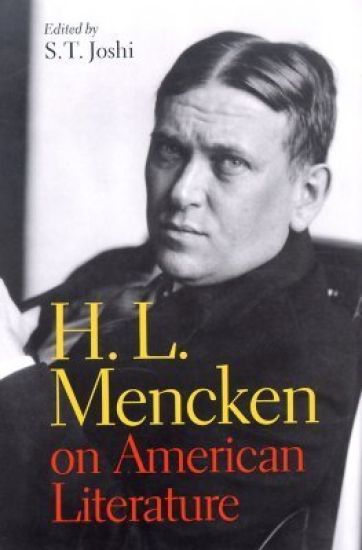
H. L. Mencken was one of the leading literary, social, and cultural critics of the 1910s, '20s, and '30s. However, very few of his literary reviews have been reprinted in any form prior to their appearance in this volume. H. L. Mencken on American Literature presents a comprehensive selection of Mencken's reviews of the leading American writers of his time. Manifestly interested in establishing a canon of American literature, he took great pains to vaunt writers such as Theodore Dreiser, Sherwood Anderson, Willa Cather, F. Scott Fitzgerald, Sinclair Lewis, and James Branch Cabell as the most accomplished authors of the day. At the same time, he found deficiencies in the work of such highly regarded figures as Edith Wharton, W. D. Howells, and Ambrose Bierce, placing them only in the second rank of American writers. Mencken also considered it his function to demolish the popular work of now-forgotten best-selling writers, demonstrating in his inimitably scathing manner the degree to which their catering to a mass audience rendered their work hollow and subliterary. Mencken's reviews are a vast and untapped source for his provocative analyses of the best and the worst in American literature. They are presented here in a scrupulously edited and annotated edition.
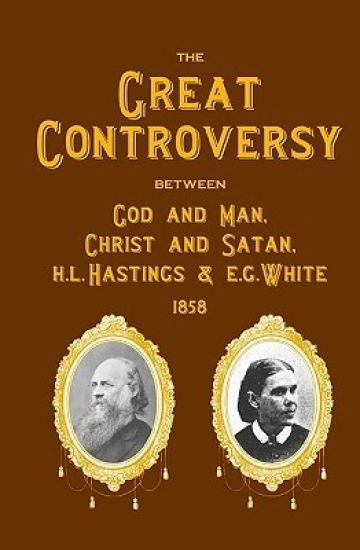
This is the book Ellen G. White has been accused of copying. H.L. Hastings' "The Great Controversy between God and Man" was published in January, 1858, and was reviewed by James White just months before he published his wife's own version of "The Great Controversy". Included is Ellen White's original 1858 version - much different than the oft-revised edition promoted today. Both books in this one volume By comparing these two Great Controversies of 1858, you can determine for yourself the extent of E.G. White's inspiration from visions, and inspiration from one of the most popular Second Advent Movement writers of her time - Horace L. Hastings.
Henry Louis "H. L." Mencken (1880 - 1956) was an American journalist, essayist, magazine editor, satirist, critic of American life and culture, and scholar of American English. Known as the "Sage of Baltimore", he is regarded as one of the most influential American writers and prose stylists of the first half of the twentieth century. Many of his books remain in print. Mencken is known for writing The American Language, a multi-volume study of how the English language is spoken in the United States, and for his satirical reporting on the Scopes trial, which he dubbed the "Monkey Trial". He commented widely on the social scene, literature, music, prominent politicians and contemporary movements. In this book: The Antichrist (translator) In Defense of Women The American Language A Book of Prefaces A Book of Burlesques Damn , A Book of Calumny
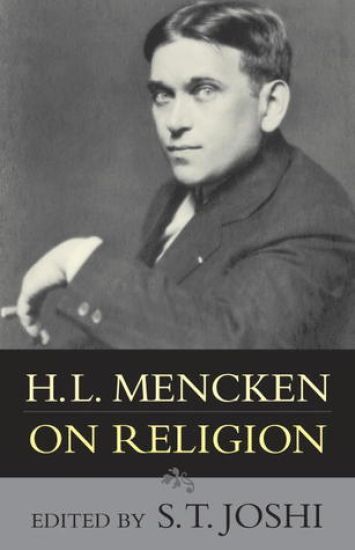
No one ever argued more forcefully or with such acerbic wit against the foolish aspects of religion as H. L. Mencken (1880-1956). As a journalist, he gained national prominence through his newspaper columns describing the now-famous 1925 Scopes trial, which pitted Fundamentalists against a public school teacher who dared to teach evolution. But both before and after the Scopes trial, Mencken spent much of his career as a columnist and book reviewer lampooning the ignorant piety of gullible Americans. S. T. Joshi has brought together and organized many of Mencken's writings on religion in this provocative and entertaining collection. The articles here presented demonstrate that Mencken canvassed the entire range of religious phenomena of his time, from evangelists Billy Sunday and Aime Semple McPherson, to Christian Scientists, and theosophists and spiritualists. On a more serious note are his discussions of the philosophy of Friedrich Nietzsche and the scientific worldview as a rival to religious belief. Also included are poignant autobiographical accounts of Mencken's own upbringing and his core beliefs on religion, ethics, and politics. If anything was sacred to Mencken, it was the right to speak one's mind freely, and many of his attacks are directed against those true believers who he felt tried to foist their beliefs on others to stifle independent thinking. For everyone who values freethought and sharp intelligence, this collection of articles by America's premier iconoclast is a must.