Kirjojen hintavertailu. Mukana 11 244 527 kirjaa ja 12 kauppaa.

Kirjahaku

Etsi kirjoja tekijän nimen, kirjan nimen tai ISBN:n perusteella.

1000 tulosta hakusanalla H. Roger Grant

The Louisville, Cincinnati & Charleston Rail Road

The Louisville, Cincinnati & Charleston Rail Road

H. Roger Grant

Indiana University Press
2014
sidottu
Among the grand antebellum plans to build railroads to interconnect the vast American republic, perhaps none was more ambitious than the Louisville, Cincinnati & Charleston. The route was intended to link the cotton-producing South and the grain and livestock growers of the Old Northwest with traders and markets in the East, creating economic opportunities along its 700-mile length. But then came the Panic of 1837, and the project came to a halt. H. Roger Grant tells the incredible story of this singular example of "railroad fever" and the remarkable visionaries whose hopes for connecting North and South would require more than half a century—and one Civil War—to reach fruition.
Railroaders Without Borders

Railroaders Without Borders

H. Roger Grant

Indiana University Press
2015
sidottu
For over 25 years, the creatively led Railroad Development Corporation (RDC) has rejuvenated a series of down-and-out and even defunct railroads. Launched in 1987 by Henry Posner III, this investment and management company has demonstrated that it is possible both to have a conscience and to earn a profit in today's railroad industry. With ventures on four continents, RDC has created an admirable record of long-term commitments, respect for local cultures, and protection of the public interest. H. Roger Grant presents a firsthand look at this unique business operation and its triumphs and disappointments.
Railroads and the American People

Railroads and the American People

H. Roger Grant

Indiana University Press
2017
pokkari
In this social history of the impact of railroads on American life, H. Roger Grant concentrates on the railroad's "golden age," 1830-1930. To capture the essence of the nation's railroad experience, Grant explores four fundamental topics—trains and travel, train stations, railroads and community life, and the legacy of railroading in America—illustrating each topic with carefully chosen period illustrations. Grant recalls the lasting memories left by train travel, both of luxurious Pullman cars and the grit and grind of coal-powered locals. He discusses the important role railroads played for towns and cities across America, not only for the access they provided to distant places and distant markets but also for the depots that were a focus of community life. Finally, Grant reviews the lasting heritage of the railroads as it has been preserved in word, stone, paint, and memory. Railroads and the American People is a sparkling paean to American railroading by one of its finest historians.
John W. Barriger III

John W. Barriger III

H. Roger Grant

Indiana University Press
2018
sidottu
In John W. Barriger III: Railroad Legend, historian H. Roger Grant details the fascinating life and impact of a transportation tycoon and "doctor of sick railroads." After graduating from the Massachusetts Institute of Technology, John W. Barriger III (1899–1976) started his career on the Pennsylvania Railroad as a rodman, shop hand, and then assistant yardmaster. His enthusiasm, tenacity, and lifelong passion for the industry propelled him professionally, culminating in leadership roles at Monon Railroad, Pittsburgh and Lake Erie Railroad, Missouri-Kansas-Texas Railroad and the Boston and Maine Railroad. His legendary capability to save railroad corporations in peril earned him the nickname "doctor of sick railroads," and his impact was also felt far from the train tracks, as he successfully guided New Deal relief efforts for the Railroad Division of the Reconstruction Finance Corporation during the Depression and served in the Office of Defense Transportation during World War II. Featuring numerous personal photographs and interviews, John W. Barriger III is an intimate account of a railroad magnate and his role in transforming the transportation industry.
Transportation and the American People

Transportation and the American People

H. Roger Grant

Indiana University Press
2019
sidottu
Transportation is the unsung hero in America's story. Stagecoaches, waterways, canals, railways, busses, and airplanes revolutionized much more than just the way people got around; they transformed the economic, political, and social aspects of everyday life. In Transportation and the American People, renowned historian H. Roger Grant tells the story of American transportation from its slow, uncomfortable, and often dangerous beginnings to the speed and comfort of travel today. Early advances like stagecoaches and canals allowed traders, business, and industry to expand across the nation, setting the stage for modern developments like transcontinental railways and busses that would forever reshape the continent. Grant provides a compelling and thoroughly researched narrative of the social history of travel, shining a light on the role of transportation in shaping the country and on the people who helped build it.
A Mighty Fine Road

A Mighty Fine Road

H. Roger Grant

Indiana University Press
2020
sidottu
The Chicago, Rock Island & Pacific Railroad's history is one of big booms and bigger busts. When it became the first railroad to reach and then cross the Mississippi River in 1856, it emerged as a leading American railroad company. But after aggressive expansion and a subsequent change in management, the company struggled and eventually declared bankruptcy in 1915. What followed was a cycle of resurrections and bankruptcies; a grueling, ten-year, ultimately unsuccessful battle to merge with the Union Pacific; and the Rock Island's final liquidation in 1981. But today, long after its glory days and eventual demise, the "Mighty Fine Road" has left behind a living legacy of major and feeder lines throughout the country. In his latest work, railroad historian H. Roger Grant offers an accessible, gorgeously illustrated, and comprehensive history of this iconic American railroad.
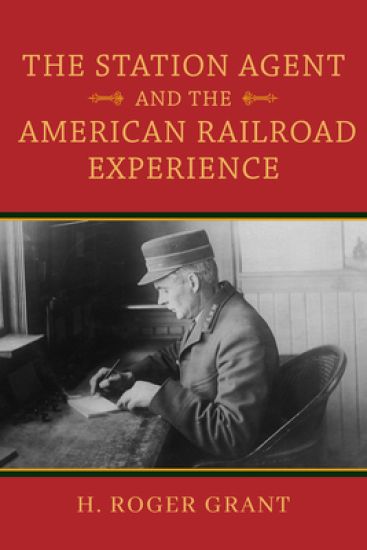
The Station Agent and the American Railroad Experience

The Station Agent and the American Railroad Experience

H. Roger Grant

INDIANA UNIVERSITY PRESS
2023
sidottu
Before the widespread popularity of automobiles, buses, and trucks, freight and passenger trains bound the nation together. The Station Agent and the American Railroad Experience explores the role of local frontline workers that kept the country's vast rail network running. Virtually every community with a railroad connection had a depot and an agent. These men and occasionally women became the official representatives of their companies and were highly respected. They met the public when they sold tickets, planned travel itineraries, and reported freight and express shipments. Additionally, their first-hand knowledge of Morse code made them the most informed in town. But as times changed, so did the role of, and the need for, the station agent. Beautifully illustrated with dozens of vintage photographs, The Station Agent and the American Railroad Experience, brings back to life the day-to-day experience of the station agent and captures the evolution of railroad operations as technology advanced.
Sunset Cluster

Sunset Cluster

H. Roger Grant

INDIANA UNIVERSITY PRESS
2023
sidottu
Discover the Sunset Cluster—railroads that were doomed to fail? The first two decades of the 20th century were the twilight of the Railroad Age. Major routes had long been established, and local service became the focus of new construction. Beginning in 1907, a cluster of five shortline railroads were established in otherwise unconnected parts of Iowa. They, however, would short lived. The five Iowa 'sunset cluster' railroads might appear to deserve eternal obscurity, being at best minor footnotes to American railroad history. After all, their total mileage barely exceeded 100 miles. Their average life span, moreover, covered about five years, and the Des Moines & Red Oak Railway (DM&RO) never turned a wheel. Yet, these Iowa shortlines had an immediate positive impact to their service area, but disappointingly they became victims of modal competition and the Good Roads Movement. Using contemporary newspapers, government reports, and other little-known sources, renowned railway historian H. Roger Grant offers a fascinating look at these shortline railroads. Sunset Cluster explores the almost desperate desire by communities to benefit from steel rails before the regional railroad map finally imploded and the challenges faced by latter-day shortline builders.
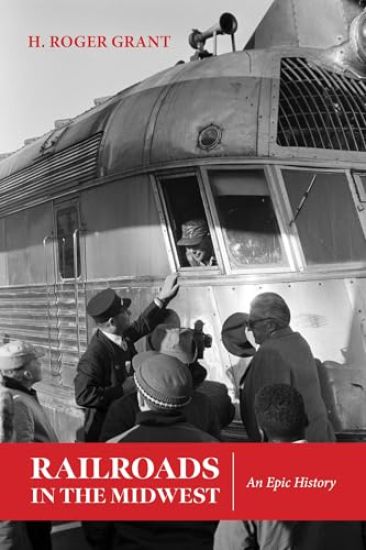
Railroads in the Midwest

Railroads in the Midwest

H. Roger Grant

INDIANA UNIVERSITY PRESS
2025
sidottu
Discover how railroad companies in America's heartland developed a monumental network that spanned nearly 70,000 route miles. Over a century, a wide array of carriers ranging from short lines to trunk roads spread through the Midwest and represented over 35% of the country's rail mileage in the 1920s. Railroads in the Midwest is a portrait of two premier rail hub rivals, Chicago and St. Louis, and of Iowa and Ohio, which boasted the highest line densities. Before World War I, Iowa railroad officials bragged that the Hawkeye State had a depot and agent located no farther than thirteen miles from any point within its borders. In Railroads in the Midwest: An Epic History, renowned historian H. Roger Grant draws on fifty years of research into America's celebrated railroad history to examine what effect railroads had in the heartland and what has happened to them since the early twentieth century.
Railroads in the Midwest

Railroads in the Midwest

H. Roger Grant

INDIANA UNIVERSITY PRESS
2025
pokkari
Discover how railroad companies in America's heartland developed a monumental network that spanned nearly 70,000 route miles. Over a century, a wide array of carriers ranging from short lines to trunk roads spread through the Midwest and represented over 35% of the country's rail mileage in the 1920s. Railroads in the Midwest is a portrait of two premier rail hub rivals, Chicago and St. Louis, and of Iowa and Ohio, which boasted the highest line densities. Before World War I, Iowa railroad officials bragged that the Hawkeye State had a depot and agent located no farther than thirteen miles from any point within its borders. In Railroads in the Midwest: An Epic History, renowned historian H. Roger Grant draws on fifty years of research into America's celebrated railroad history to examine what effect railroads had in the heartland and what has happened to them since the early twentieth century.
Visionary Railroader

Visionary Railroader

H. Roger Grant

Indiana University Press
2008
sidottu
Visionary Railroader chronicles the life of a key figure in the history of rail travel in the United States. As president of the Baltimore & Ohio Railroad, Jervis Langdon Jr. had the opportunity to put progressive concepts into practice. In 1964, Langdon took charge of the Rock Island, and by the time he left in 1970, he had spearheaded major improvements for this struggling carrier. The same year, he became lead trustee for the bankrupt Penn Central and three years later assumed the presidency. From his role in passing the Regional Rail Reorganization Act of 1973 to his work on creating the quasi-public Conrail, Visionary Railroader examines the impact of Langdon's active life with clear text, unique representations of media of the day, and select family photos.
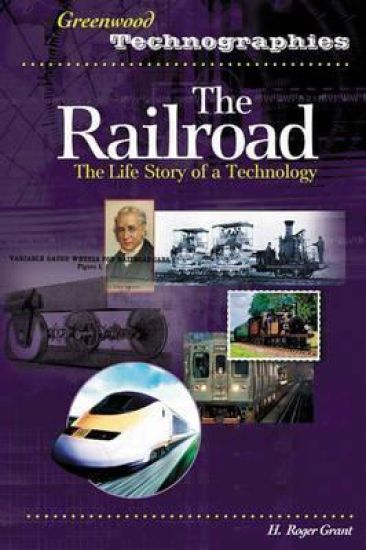
The Railroad

The Railroad

H. Roger Grant

Greenwood Press
2005
sidottu
Railroads altered the landscape of the United States. Within a few decades of the invention of the locomotive, railways stretched from coast to coast, enabling people and goods to travel far greater distances than ever before, completely altering our concept of time and space. And while railroads may seem like an old technology, they continue to be an essential means of transporting both good and people, and new technologies are making the railroads an increasingly relevant resource for the 21st century. This volume in the Greenwood Technographies series tells the life story of all aspects of railroad technology—everything from the structure of the track to communications to what powers the locomotive.The Railroad: The Life Story of a Technology gives students and railroad enthusiasts plenty of information on the development of this popular technology: ; Chronicles the early years of the railroad, from early wooden tramways in Massachusetts, to the famous Tom Thumb ; Discusses the important technological failures, such as the narrow-gauge craze of the late nineteenth century with track widths as small as two feet. ; Covers all aspects of railroad technology — everything from the structure of the track to communications to what powers the locomotive. ; Links the technology to broader social developments, such as the decline of the railroad in the mid-20th century to outmoded governmental and labor restrictions, and the current rise of railroad technology as a result of new managerial techniques.The volume includes a timeline of important dates in railroad history, a glossary of important terms, and a selected bibliography of works appropriate for further research.
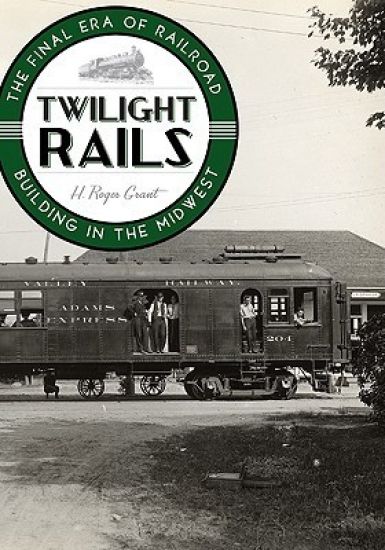
Twilight Rails

Twilight Rails

H. Roger Grant

University of Minnesota Press
2010
sidottu
By the start of the twentieth century railroads crisscrossed the nation, yet there were still those who believed that the railroad network in the United States was far from complete. Residents of small towns lacking rail access lobbied hard for steam and electric roads to serve their communities, and investors eagerly started new ventures that would fill the gaps in the railway map. While some of these roads enjoyed a degree of success, most of them were financial flops even before the rise of the highway system made them obsolete. In Twilight Rails, H. Roger Grant—one of the leading railroad historians working today—documents the stories of eight Midwestern carriers that appeared at the end of the railroad building craze. When historians have reflected on these “twilight” carriers, they have suggested that they were relevant only as examples of unwise business ventures. Grant finds that even the weakest railroads were important to the communities they served; the arrival of the railroad was cause for great celebration as residents were finally connected to the outside world. A railroad’s construction pumped money into local economies, farmers and manufacturers gained access to better markets, and the excitement generated by a new line often increased land values and inspired expansion of local businesses. Even the least financially successful carriers, Grant argues, managed to significantly improve their local economies. This thorough and highly accessible history provides a fascinating look at the motivations, accomplishments, and failures of the twilight carriers, granting a new breath of life to this neglected aspect of American railway history.
Ohio on the Move

Ohio on the Move

H. Roger Grant

Ohio University Press
2003
sidottu
Few American states can match the rich and diverse transportation heritage of Ohio. Every major form of public conveyance eventually served the Buckeye state. From the "Canal Age" to the "Interurban Era," Ohio emerged as a national leader. The state's central location, abundant natural resources, impressive wealth, shrewd business leadership, and episodes of good fortune explain the dynamic nature of its transport past. Ohio on the Move is the first systematic scholarly account of the transportation history of Ohio. To date, little has appeared on several subjects discussed here, including intercity bus and truck operations and commercial aviation. The more familiar topics of river and lake transport, canals, steam railroads, electric interurbans, and mass transit are extensively explored in the Ohio context. In this inaugural volume of Ohio University Press's Ohio Bicentennial Series, Professor Grant demonstrates the truth of the slogan that Ohio is "the heart of it all" - not solely by location but also in the impressive network of transportation arteries that have linked the state, whether natural waterways and air space or various artificial land-travel routes.
Ohio on the Move

Ohio on the Move

H. Roger Grant

Ohio University Press
2003
pokkari
Few American states can match the rich and diverse transportation heritage of Ohio. Every major form of public conveyance eventually served the Buckeye state. From the "Canal Age" to the "Interurban Era," Ohio emerged as a national leader. The state's central location, abundant natural resources, impressive wealth, shrewd business leadership, and episodes of good fortune explain the dynamic nature of its transport past. Ohio on the Move is the first systematic scholarly account of the transportation history of Ohio. To date, little has appeared on several subjects discussed here, including intercity bus and truck operations and commercial aviation. The more familiar topics of river and lake transport, canals, steam railroads, electric interurbans, and mass transit are extensively explored in the Ohio context. In this inaugural volume of Ohio University Press's Ohio Bicentennial Series, Professor Grant demonstrates the truth of the slogan that Ohio is "the heart of it all" - not solely by location but also in the impressive network of transportation arteries that have linked the state, whether natural waterways and air space or various artificial land-travel routes.
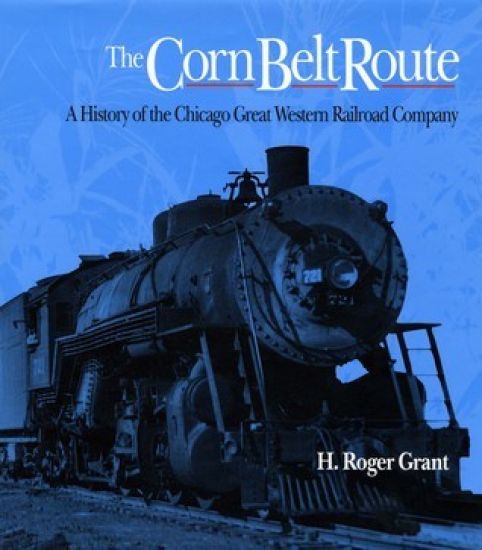
The Corn Belt Route

The Corn Belt Route

H. Roger Grant

Northern Illinois University Press
1984
sidottu
The Chicago Great Western Railroad was a spunky midwestern carrier that contributed mightily to the transportation industry. The 1,500-mile CGW, built by the iconoclastic and ambitious A. B. Stickney, proved to be exceptionally innovative as it developed new ways to compete with larger railroads. Pitted against tough, determined competitors, the CGW during its eighty-five years made innovations that changed the history of American transportation. Among the pioneering activities for which the Great Western is remembered are the early use of internal combustion equipment, the hauling of truck trailers atop flatcars ("piggy-backs"), and the use of extremely long freight trains. Indeed, much of the railroad's past supports the notion that smaller, less-established carriers like the CGW frequently stimulated changes in industry thinking and practices. In spite of its innovations, the path of the Great Western, sometimes called the "Great Weedy," did not always run smoothly. In the 1930s, John W. Barriger III quipped, "The Chicago Great Western is a mountain railroad in a prairie country serving a traffic vacuum." Such a negative assessment was not uncommon for this Granger pike, which in fact climbed some steep grades and owned a long tunnel. And while the road did not operate in a "traffic vacuum," its competitors were well entrenched and robust. By 1903, the CGW served the strategic gateways of Chicago, Kansas City, Minneapolis-St. Paul, St. Joseph, and Omaha. Between Chicago and the Twin Cities alone, the company competed with six other roads. When the Chicago & North Western acquired the Great Western in 1968, one of America's most imaginative railroads disappeared. The Corn Belt Route is the first scholarly treatment of the Chicago Great Western Railroad, a company that has long intrigued the railfan, whether collector, modeler, photographer, or historian. Richly illustrated, this book tells the lively story of one of the great small railroads that once served the Midwest.
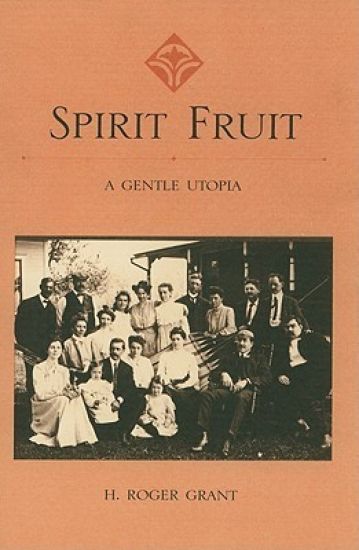
Spirit Fruit

Spirit Fruit

H. Roger Grant

Northern Illinois University Press
1988
sidottu
The dream of an ideal social order has inspired the formation of experimental communities in America since colonial times. One of the most successful of these was the Spirit Fruit Society, founded in the late 1890s by Jacob Beilhart. In 1901, after purchasing a small farm outside Lisbon, Ohio, the Spirit Fruit society settled into a peaceful and industrious, if morally unorthodox, way of life that won the bemused affection of their neighbors. Unfortunately, the society experienced throughout its existence hostility from journalists and, despite the agricultural and domestic skills possessed by its members, financial hardship. These factors, among others, precipitated moves to Illinois in 1904 and to California in 1914.
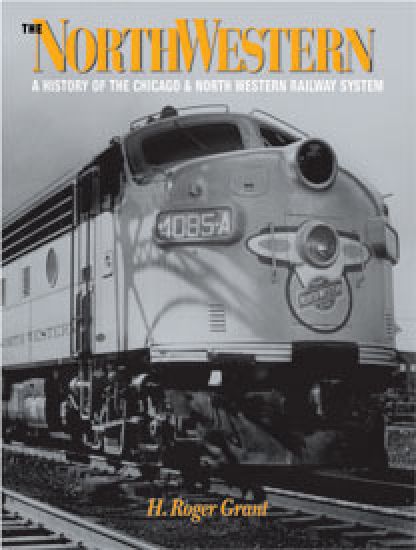
The North Western

The North Western

H. Roger Grant

Northern Illinois University Press
1996
sidottu
Leading railroad historian H. Roger Grant tells the story of the Chicago & North Western Railway from 1848, when the Galena & Chicago Union Railroad ran the first train west from Chicago, to the Union Pacific takeover in 1995. With a lively narrative and 173 illustrations, including historical photographs and maps, he reveals the inner workings of a railroad that once spanned nine states and has long intrigued enthusiasts.
"Follow the Flag"

"Follow the Flag"

H. Roger Grant

Northern Illinois University Press
2004
sidottu
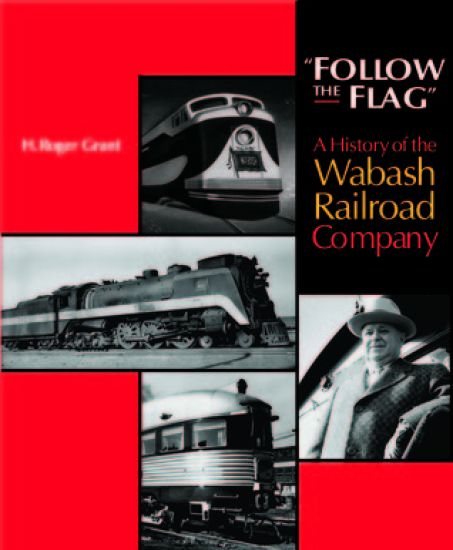
"Follow the Flag" offers the first authoritative history of the Wabash Railroad Company, a once vital interregional carrier. The corporate saga of the Wabash involved the efforts of strong-willed and creative leaders, but this book provides more than traditional business history. Noted transportation historian H. Roger Grant captures the human side of the Wabash, ranging from the medical doctors who created an effective hospital department to the worker-sponsored social events. And Grant has not ignored the impact the Wabash had on businesses and communities in the "Heart of America." Like most major American carriers, the Wabash grew out of an assortment of small firms, including the first railroad to operate in Illinois, the Northern Cross. Thanks in part to the genius of financier Jay Gould, by the early 1880s what was then known as the Wabash, St. Louis & Pacific Railway reached the principal gateways of Chicago, Des Moines, Detroit, Kansas City, and St. Louis. In the 1890s, the Wabash gained access to Buffalo and direct connections to Boston and New York City. One extension, spearheaded by Gould's eldest son, George, fizzled. In 1904 entry into Pittsburgh caused financial turmoil, ultimately throwing the Wabash into receivership. A subsequent reorganization allowed the Wabash to become an important carrier during the go-go years of the 1920s and permitted the company to take control of a strategic "bridge" property, the Ann Arbor Railroad. The Great Depression forced the company into another receivership, but an effective reorganization during the early days of World War II gave rise to a generally robust road. Its famed Blue Bird streamliner, introduced in 1950 between Chicago and St. Louis, became a widely recognized symbol of the "New Wabash." When "merger madness" swept the railroad industry in the 1960s, the Wabash, along with the Nickel Plate Road, joined the prosperous Norfolk & Western Railway, a merger that worked well for all three carriers. Immortalized in the popular folk song "Wabash Cannonball," the midwestern railroad has left important legacies. Today, forty years after becoming a "fallen flag" carrier, key components of the former Wabash remain busy rail arteries and terminals, attesting to its historic value to American transportation.
Rails Through the Wiregrass

Rails Through the Wiregrass

H. Roger Grant

Northern Illinois University Press
2006
sidottu
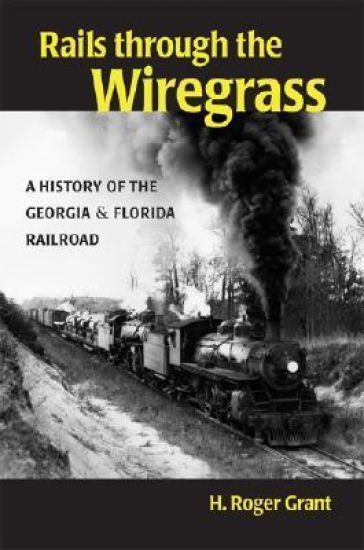
The Georgia & Florida Railroad began with bright promise, but like many other enterprises in the early twentieth-century South, it experienced hard times. The story begins in 1906, when—responding to a perceived need for better connections to northern markets—a group of entrepreneurs led by prominent Virginia banker John Skelton Williams began to cobble together logging short lines to create more than 350 miles of railroad connecting Augusta, Georgia, with Madison, Florida. At first the G&F triggered growth in its region as several new towns sprang up or expanded along its lines. By 1915, however, the economic dislocations caused by World War I threw the G&F into receivership, and a few years later the G&F came close to dismemberment. Fortunately, shippers and investors rallied to the railroad's cause, and business conditions improved. In 1926 the road was reorganized and, under pressure to "expand or die," built to Greenwood, South Carolina. The Great Depression forced the G&F into bankruptcy, and after its record-length receivership, it was acquired by the Southern Railway in 1963. When the Southern Railway dissolved the corporation and abandoned much of the former trackage, the G&F became the "Gone & Forgotten." Yet in its 57-year lifespan the G&F did much to bring about agricultural diversification and relative prosperity in the wiregrass region of southern Georgia and northern Florida. Offering insights on social and economic conditions in the South from the late nineteenth century to the mid-twentieth century, Grant's study of this obscure yet noteworthy railroad will appeal to those interested in transportation, business, railroad, and Southern regional history.