Kirjojen hintavertailu. Mukana 11 699 587 kirjaa ja 12 kauppaa.

Kirjahaku

Etsi kirjoja tekijän nimen, kirjan nimen tai ISBN:n perusteella.

173 tulosta hakusanalla Hajo Fritschi

Mission Globukalypse

Mission Globukalypse

Hajo Fritschi

Books on Demand
2019
pokkari
Seit es die Hom opathie gibt, wird ber sie gestritten. ber 200 Jahre ist die Auseinandersetzung um die Globuli schon alt. Seit einigen Jahren hat sie sich zu einem wahren Glaubenskrieg entwickelt, der inzwischen mit allen Mitteln gef hrt wird. Eskaliert ist der Streit, seit sich die Hom opathiekritiker zu einer eigenen Organisation zusammengeschlossen und zur "Globukalypse" aufgerufen haben, der vollst ndigen und endg ltigen Entfernung der Hom opathie aus der Medizin. Die berzeugung der Kritiker: Eine Medizin ohne Humbug ist eine bessere Medizin. Dieses Buch stellt kritische Fragen - an die Hom opathen, vor allem aber auch an deren Kritiker. Was sind ihre Argumente? Wie schl ssig sind diese? Welche Motive stecken hinter der "Globukalypse" und wer sind ihre Protagonisten? Neben Antworten liefert das Buch aber auch konkrete L sungsvorschl ge, wie der Streit entsch rft und ein Dialog angesto en werden kann - so man zu einem solchen bereit ist.

Angst vor Globuli?

Angst vor Globuli?

Hajo Fritschi

Books on Demand
2017
pokkari
Haben Sie auch schon einmal hom opathische K gelchen gelutscht? Ja? Dann haben Sie es scheinbar unbeschadet berstanden, sonst w rden Sie diese Zeilen nicht lesen k nnen. Denn Globuli sind gef hrlich, mitunter sogar lebensgef hrlich Das sagen zumindest wichtige Leute aus der sogenannten "Skeptikerbewegung" Nachrichtentechniker, Turbinenmechaniker, Mathematiker, Politologen, Kabarettisten - und eine Ex- rztin, die mal mit Globuli heilen konnte, das aber nun nicht mehr macht, weil sie eine Heilung, die nicht auf naturwissenschaftlicher Basis stattfindet, schlicht als Betrug betrachtet. Hom opathie, so der Grundtenor der selbsternannten "Skeptiker", ist ein b ser Schwindel, eine Abzocke und Verschw rungstheorie. Wer Hom opathie betreibt, vers ndigt sich an der medizinischen Ethik. Punkt. Diskussion beendet. Die Leute der "Skeptikerbewegung" f hren seit einiger Zeit einen Guerillakrieg gegen die Hom opathie. Das sagen nicht die Hom opathen, das sagen sie selbst. Schon zum x-ten Mal, denn Hom opathie gibt es schon seit 200 Jahren und niemandem ist es bisher gelungen, diese Medizin mit ihren scheinbar irrwitzigen Theorien und den extrem verd nnten Mittelchen den Garaus zu machen. Interessant ist es, die anti-hom opathischen Verbrauchersch tzer mal etwas n her unter die Lupe zu nehmen. Wie denken sie, an was glauben sie, welche Ziele verfolgen sie? Herausgekommen ist dabei ein satirischer Einblick in eine fundamentalistische Szene, die Medizin und Gesellschaft von allem befreien will, was einer streng naturwissenschaftlichen Weltanschauung widerspricht.
Warum mag Meister Eckart keine Globuli?

Warum mag Meister Eckart keine Globuli?

Hajo Fritschi

Books on Demand
2017
pokkari
Wenn es um die Gesundheit geht, ist Eckart von Hirschhausen zu einer Instanz geworden und allgegenw rtig. Mit viel Sachverstand und Humor deckt er die Schw chen des medizinischen Systems auf und bringt die Menschen zum Nachdenken. Dabei legt er die Finger in so manche Wunde von Schul- wie Alternativmedizin und pl diert daf r, das Beste aus beiden Welten zu nutzen. Beim Thema Hom opathie und Globuli hat Eckart von Hirschhausen jedoch eine klare Meinung: Diese brauche niemand, denn die hom opathischen Erfolge lie en sich auch durch gen gend Zuwendung und Zeit erzielen. Das sei inzwischen wissenschaftlich definitiv bewiesen. Hier wird die Geschichte von einem erz hlt, der diese Meinung nicht teilt. Eines Tages macht er sich mit vielen Fragen im Gep ck auf den Weg in den Wald, wo der weise Meister Eckart in einer H tte bei den Hirschen haust. Ihm will er seine Zweifel darlegen. Es wird eine Begegnung der monologischen Art ... Eine Erz hlung voll subtiler Ironie.
Environments of Intelligence

Environments of Intelligence

Hajo Greif

Routledge
2019
nidottu
What is the role of the environment, and of the information it provides, in cognition? More specifically, may there be a role for certain artefacts to play in this context? These are questions that motivate "4E" theories of cognition (as being embodied, embedded, extended, enactive). In his take on that family of views, Hajo Greif first defends and refines a concept of information as primarily natural, environmentally embedded in character, which had been eclipsed by information-processing views of cognition. He continues with an inquiry into the cognitive bearing of some artefacts that are sometimes referred to as 'intelligent environments'. Without necessarily having much to do with Artificial Intelligence, such artefacts may ultimately modify our informational environments.With respect to human cognition, the most notable effect of digital computers is not that they might be able, or become able, to think but that they alter the way we perceive, think and act.The Open Access version of this book, available at http://www.tandfebooks.com/doi/view/10.4324/9781315401867, has been made available under a Creative Commons CC-BY licence
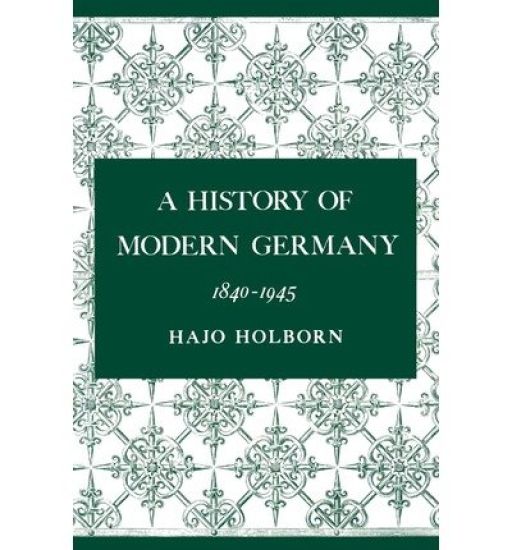
History of Modern Germany

History of Modern Germany

Hajo Holborn

Princeton University Press
1982
pokkari
This is a major reassessment of the last five centuries of German history, from the Reformation to the end of World War II. The first volume deals with that age of German history which had the widest effect on the rise of modern Western civilization. Against the background of medieval culture, the author shows the origins of Luther's religion and the growth of various Protestant churches, as well as the subsequent restoration of the Roman Catholic Church. The history of the religious movements of the Reformation and the Counter Reformation is closely co-ordinated with the great transformation simultaneously taking place in the social, economic, and intellectual institutions of Europe. Included are detailed discussions of the effects of the Black Death, the rise of the cities, Luther's social ethics, The Thirty Years' War, and the Peace of Westphalia in 1648. The second volume covers the two centuries from the crucial aftermath of the Thirty Years' War to the eve of the revolution of 1848-49.Dealing with the growth of absolutism, the author traces the founding of the Hapsburg empire and the rise of Bradenburg-Prussia, culminating in the conflict between Maria Theresa and Frederick the Great. Professor Holborn explores the impact of the French Revolution on Germany, its part in the collapse of the Holy Roman Empire, and the subsequent reorganization of the German states. In his section on the Congress of Vienna, he shows the struggle between the conservatism of Metternich and the incipient liberal and national movement. Students of German history will appreciate the attention given religious, intellectual, and social developments, colorfully presented in chapters on Baroque civilization and the age of Kant, Goethe, and Beethoven. The concluding volume develops the theme of power into what Gordon A. Craig calls a "masterly account of the dramatic, tragic and often shameful history of Germany in the most recent age" (New York Times Book Review).It deals with the period of nationalism and imperialism, from the abortive attempt of popular forces to found a liberal national state and Bismarck's German unification through the Prussian military monarchy to the expansionist programs of the age of William II and Hitler's world conquest.
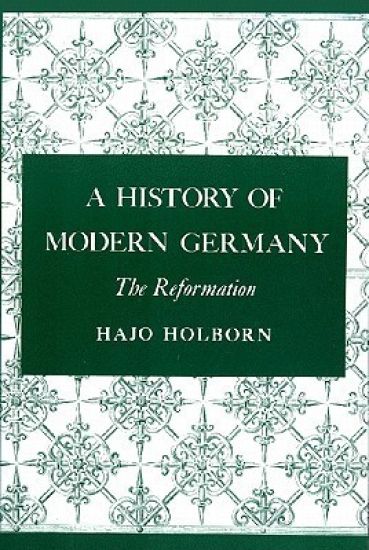
A History of Modern Germany, Volume 1

A History of Modern Germany, Volume 1

Hajo Holborn

Princeton University Press
1982
pokkari
This first volume of a major reassessment of the last five centuries of German history deals with that age of German history which had the widest effect on the rise of modern Western civilization. Against the background of medieval culture, the author shows the origins of Luther's religion and the growth of various Protestant churches, as well as the subsequent restoration of the Roman Catholic Church. The history of the religious movements of the Reformation and the Counter Reformation is closely co-ordinated with the great transformation simultaneously taking place in the social, economic, and intellectual institutions of Europe. Included are detailed discussions of the effects of the Black Death, the rise of the cities, Luther's social ethics, The Thirty Years' War, and the Peace of Westphalia in 1648.
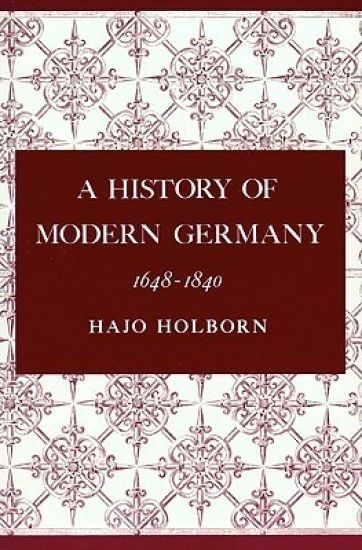
A History of Modern Germany, Volume 2

A History of Modern Germany, Volume 2

Hajo Holborn

Princeton University Press
1982
pokkari
This second volume of a three-volume reassessment of the last five centuries of German history covers the two centuries from the crucial aftermath of the thirty years' war to the eve of the revolution of 1848-49. Dealing with the growth of absolutism, the author traces the founding of the Hapsburg empire and the rise of Bradenburg-Prussia, culminating in the conflict between Maria Theresa and Frederick the Great. Professor Holborn explores the impact of the French Revolution on Germany, its part in the collapse of the Holy Roman Empire, and the subsequent reorganization of the German states. In his section on the Congress of Vienna, he shows the struggle between the conservatism of Metternich and the incipient liberal and national movement. Students of German history will appreciate the attention given religious, intellectual, and social developments, colorfully presented in chapters on Baroque civilization and the age of Kant, Goethe, and Beethoven.
A History of Modern Germany, Volume 3

A History of Modern Germany, Volume 3

Hajo Holborn

Princeton University Press
1982
pokkari
This concluding volume of a three-volume reassessment of the last five centuries of German history develops the theme of power into what Gordon A. Craig calls a "masterly account of the dramatic, tragic and often shameful history of Germany in the most recent age" (New York Times Book Review). It deals with the period of nationalism and imperialism, from the abortive attempt of popular forces to found a liberal national state and Bismarck's German unification through the Prussian military monarchy to the expansionist programs of the age of William II and Hitler's world conquest.
Environments of Intelligence

Environments of Intelligence

Hajo Greif

Routledge
2017
sidottu
What is the role of the environment, and of the information it provides, in cognition? More specifically, may there be a role for certain artefacts to play in this context? These are questions that motivate "4E" theories of cognition (as being embodied, embedded, extended, enactive). In his take on that family of views, Hajo Greif first defends and refines a concept of information as primarily natural, environmentally embedded in character, which had been eclipsed by information-processing views of cognition. He continues with an inquiry into the cognitive bearing of some artefacts that are sometimes referred to as 'intelligent environments'. Without necessarily having much to do with Artificial Intelligence, such artefacts may ultimately modify our informational environments.With respect to human cognition, the most notable effect of digital computers is not that they might be able, or become able, to think but that they alter the way we perceive, think and act.The Open Access version of this book, available at http://www.tandfebooks.com/doi/view/10.4324/9781315401867, has been made available under a Creative Commons CC-BY licence