

Kirjahaku
Etsi kirjoja tekijän nimen, kirjan nimen tai ISBN:n perusteella.
1000 tulosta hakusanalla Hall Sherilyn

In this overview of the origins and development of black societies in southern Africa, Martin Hall reconstructs the region's past by throughly examining both the archaeological and the historical records. Beginning with the gradual southward movement of the earliest farmers nearly two thousand years ago, Hall tracks the emergence of precolonial states such as Mapungubwe and Great Zimbabwe. Farmers, Kings, and Traders concludes with the devastating effects of colonialism. Through a close reading of the accounts of early travelers, colonialists, archaeologists, and historians, Hall places in context the often contradictory histories that have been written of this region. The result is an illuminating look at how ideas about the past have themselves changed over time.



On a school trip to the Hall of the Bulls in France, Simon and Dan find themselves face to face with real cave men. This exciting prehistoric adventure story has been written by Tom Bradman. Collins Big Cat Progress books are specifically designed for children at Key Stage 2 who have a Key Stage 1 reading level, giving them age-appropriate texts that they can read, building their confidence and fostering positive attitudes towards reading.Text type: An adventure storyCurriculum links:
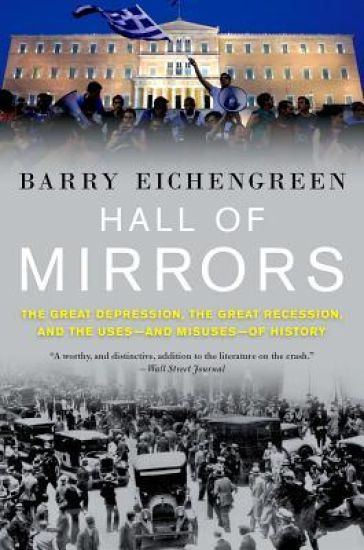
The two great financial crises of the past century are the Great Depression of the 1930s and the Great Recession, which began in 2008. Both occurred against the backdrop of sharp credit booms, dubious banking practices, and a fragile and unstable global financial system. When markets went into cardiac arrest in 2008, policymakers invoked the lessons of the Great Depression in attempting to avert the worst. While their response prevented a financial collapse and catastrophic depression like that of the 1930s, unemployment in the U.S. and Europe still rose to excruciating high levels. Pain and suffering were widespread. The question, given this, is why didn't policymakers do better? Hall of Mirrors, Barry Eichengreen's monumental twinned history of the two crises, provides the farthest-reaching answer to this question to date. Alternating back and forth between the two crises and between North America and Europe, Eichengreen shows how fear of another Depression following the collapse of Lehman Brothers shaped policy responses on both continents, with both positive and negative results. Since bank failures were a prominent feature of the Great Depression, policymakers moved quickly to strengthen troubled banks. But because derivatives markets were not important in the 1930s, they missed problems in the so-called shadow banking system. Having done too little to support spending in the 1930s, governments also ramped up public spending this time around. But the response was indiscriminate and quickly came back to haunt overly indebted governments, particularly in Southern Europe. Moreover, because politicians overpromised, and because their measures failed to stave off a major recession, a backlash quickly developed against activist governments and central banks. Policymakers then prematurely succumbed to the temptation to return to normal policies before normal conditions had returned. The result has been a grindingly slow recovery in the United States and endless recession in Europe. Hall of Mirrors is both a major work of economic history and an essential exploration of how we avoided making only some of the same mistakes twice. It shows not just how the "lessons" of Great Depression history continue to shape society's response to contemporary economic problems, but also how the experience of the Great Recession will permanently change how we think about the Great Depression.

The Great Depression and the Great Recession are the two great economic crises of the past hundred years. While there are accounts of both episodes, no one has yet attempted a sustained comparative analysis. In Hall of Mirrors, Barry Eichengreen draws on his unparalleled expertise for a brilliantly conceived dual-track account of the two crises and their consequences. Rather than telling the stories of the two crises in sequence, instead he weaves them together. He describes the two bubble-fuelled build-ups, then the onset of crisis, the subsequent financial and economic and collapse, the policy response, and finally the recovery. A theme of Eichengreen's narrative is that while the policy response to the Great Recession was importantly shaped by perceptions of the Great Depression -- contemporary policymakers did in fact learn lessons from the Depression that enabled them, this time, to prevent the worst -- they could have done better. Their failure to do so reflected a tendency to take the lessons of the Depression too literally, leading to an inability to recognize important respects in which circumstances, and specifically the structure of financial markets, had changed -- precisely in response to the policies put in place due to the Depression. In addition, success was the mother of failure: the success of the policy response took the wind out of reformers' sails. It diminished support for the kind of far-reaching social and financial reforms adopted in the 1930s. It allowed policy makers and society to prematurely indulge their desire for a return to normal policies before a normal economy had been restored. To be sure, this more recent crisis was better managed than the earlier one, which resulted in widespread social distress and, in the worst case, the rise of fascism. But a wiser collective response after 2008 would have staved off the painfully slow growth that subsequently plagued the United States and Europe.

The quarter century that followed the end of the Second World War was marked by intense social and economic transformation: the changing face of postwar capitalism, a revolution in communications technology, the rise of youth culture, and the pronounced ascent of individual freedom all contributed to a dramatic push to remake, and thus improve, society. This push was especially felt within education, the primary vehicle for modernizing the postwar world from the ground up.Hall-Dennis and the Road to Utopia explores this moment of renewal through a powerful and influential education reform project: 1968's Living and Learning: The Report of the Provincial Committee on Aims and Objectives of Education in the Schools of Ontario. The Hall-Dennis report, as it became known, urged Ontarians to accept a new vision of education in which students were no longer organized in classes, their progress no longer measured by grades, and their experience no longer characterized by the painful acquisition of subjects, but rather by a joyous and open-ended process of learning. This new, democratic system of education was associated with the highest ideals of postwar progress, liberalism, and humanism, yet its recommendations were paradoxically both profoundly radical and fundamentally conservative. Its avant-garde research strategies and controversial "post-literate" curricular reforms were balanced by a pedagogical approach designed to mould students into obedient citizens and productive economic actors.As Canadians once again find themselves asking fundamental questions about the aims and objectives of education under radically changing circumstances, Josh Cole revisits Hall-Dennis to show how the committee and its report represent a significant moment in Canadian cultural and political history, a prescient document in the history of education, and a revealing expression of the fragmentary circumstances of global modernity in the second half of the twentieth century.

The quarter century that followed the end of the Second World War was marked by intense social and economic transformation: the changing face of postwar capitalism, a revolution in communications technology, the rise of youth culture, and the pronounced ascent of individual freedom all contributed to a dramatic push to remake, and thus improve, society. This push was especially felt within education, the primary vehicle for modernizing the postwar world from the ground up.Hall-Dennis and the Road to Utopia explores this moment of renewal through a powerful and influential education reform project: 1968's Living and Learning: The Report of the Provincial Committee on Aims and Objectives of Education in the Schools of Ontario. The Hall-Dennis report, as it became known, urged Ontarians to accept a new vision of education in which students were no longer organized in classes, their progress no longer measured by grades, and their experience no longer characterized by the painful acquisition of subjects, but rather by a joyous and open-ended process of learning. This new, democratic system of education was associated with the highest ideals of postwar progress, liberalism, and humanism, yet its recommendations were paradoxically both profoundly radical and fundamentally conservative. Its avant-garde research strategies and controversial "post-literate" curricular reforms were balanced by a pedagogical approach designed to mould students into obedient citizens and productive economic actors.As Canadians once again find themselves asking fundamental questions about the aims and objectives of education under radically changing circumstances, Josh Cole revisits Hall-Dennis to show how the committee and its report represent a significant moment in Canadian cultural and political history, a prescient document in the history of education, and a revealing expression of the fragmentary circumstances of global modernity in the second half of the twentieth century.

The first comprehensive overview of hall of fame museums and exhibits, this work traces the history, examines and compares the facilities, exhibits, and operations, and describes 274 halls of fame in over 100 fields in the United States and 10 other countries. The information is based on recently compiled surveys. More than half of the museums and exhibits are in the area of sports, but others range from aviation and space to cockroaches. Of interest to high school, college, university, and public libraries for their popular culture/travel reference shelves. A great source for vacations, each entry provides the address, telephone number, hours, and admission fees as well as content, operations, and more.The hall of fame movement began in Europe several centuries ago with memorials to national heroes and other illustrious persons. But it was not until the 20th century that the contemporary hall of fame movement honoring outstanding achievers in particular fields received its impetus and attained its greatest success in the United States. Other countries covered in the book include Australia, Canada, France, Germany, Great Britain, Israel, Japan, Mexico, New Zealand, and Singapore. Not all halls of fame are in museums. Other places include civic centers, sports arenas, government buildings, universities, and racetracks.

The first collection of plays from one of Britain's finest young writers Spoonface Steinberg, Lee Hall's extraordinary, award-winning play about faith, love and the meaning of life was first broadcast on Radio Four in 1997 to unprecedented acclaim. It "contains a good deal more truth than a thousand lectures on the nature of existence" (Guardian). Cooking with Elvis is an Ortonesque black comedy about the family of a famous Elvis impersonator who is now tied to a wheelchair. "Disgracefully entertaining" (Daily Telegraph); "So sharp it could cut itself as it piles on the humour" (Guardian). Bollocks! is inspired by Ernst Toller's masterpiece Hinkemann. Re-located to Northern Ireland it is an examination of the impotence of lives ruined by war. Also included here are six previously unpublished radio and stage plays that prove Hall's talent as our pre-eminent contemporary writer of black comedy.

A collection of major play adaptations by the author of Billy Elliott MR PUNTILA: "Brecht's Puntila is the Jekyll and Hyde of the class war. When he's plastered this Finnish landowner drips with sugary human kindness; once sober again, he's a tyrannical bastard...Lee Hall mixes in-your-face contemporary slang with endearing jokes...It's not often that you can write 'Bertolt Brecht' and 'knockabout fun' in the same sentence" - Paul Taylor, Independent MOTHER COURAGE: For Mother Courage, war is strictly business - a chance to trade in boots and brandy. She's determined to profit from the thirty years war, while protecting her family from the bloodshed that surrounds them. This is an updated, playable translation. THE GOOD HOPE: A voyage of the Good Hope is a journey on which the life of an entire community depends. A storm rages, the women and children wait ashore, the boat follows the Greenland catch...A SERVANT TO TWO MASTERS: "is wildly and inventively farcical. More surprisingly still, it also contrives to find passages of deep feeling amid the comic mayhem...the tremendously promising Lee Hall, who has come up with a superb new version of the play that brilliantly combines hilarity and darkness". Daily Telegraph


If you enjoyed the movie Sixth Sense you will enjoy Hall of Echoes. This book will keep you, the reader on the edge of your seat until the very end. Emalee may not be the only prisoner of the halls.Emalee Lieon a young Psychiatrist at Sox Research Hospital for the Mentally Insane has found herself in quite a mess. After treating siblings Robert and Ana Morrison it becomes apparent that Emalee's budding career maybe placed on hold. Emalee soon realizes that Ana is not getting better; in fact she has become worst as her fear of the "Others" grows. Emalee is drawn to Ana and is desperately trying to find a way to free her from Robert's terrifying hold. Ana's only chance of ever being free from Robert is convincing Dr. Lieon that she is well. Much like Ana, Emalee is holding on to a dark secret that could change her life forever. If the visits from the others are as real as the abuse Ana receives from Robert, Emalee may lose more than just her career. Will Emalee be able to save Ana in time or will Robert and the "Others" keep them both inside of Sox's for good?
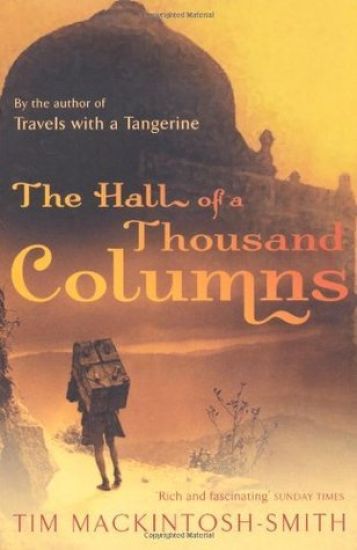
All the best armchair travellers are sceptics. Those of the fourteenth century were no exception: for them, there were lies, damned lies, and Ibn Battutah's India.Born in 1304, Ibn Battutah left his native Tangier as a young scholar of law; over the course of the thirty years that followed he visited most of the known world between Morocco and China. Here Tim Mackintosh-Smith retraces one leg of the Moroccan's journey -- the dizzy ladders and terrifying snakes of his Indian career as a judge and a hermit, courtier and prisoner, ambassador and castaway. From the plains of Hindustan to the plateaux of the Deccan and the lost ports of Malabar, the author reveals an India far off the beaten path of Taj and Raj.Ibn Battutah left India on a snake, stripped to his underpants by pirates; but he took away a treasure of tales as rich as any in the history of travel. Back home they said the treasure was a fake. Mackintosh-Smith proves the sceptics wrong. India is a jewel in the turban of the Prince of Travellers. Here it is, glittering, grotesque but genuine, a fitting ornament for his 700th birthday.
This book not only tabulates the hallmarks that enable the identification of silver items but also traces the history of English silver, describing some famous makers and provides hints on spotting fakes.' There is a helpful chapter on Sheffield plate.

This is the second edition of a very popular 1991 book describing the physics and technology of semiconductor electronic devices exploiting the Hall effect. These are magnetic field sensitive devices such as Hall elements, magnetoresistors, and magnetotransistors. Hall effect devices are commonly used as magnetic field sensors and as means for characterizing semiconductors. The book provides a clear analysis of the relationship between the basic physical phenomena in solids, the appropriate materials characteristics, and the characteristics of Hall effect devices. Particular emphasis is placed on important developments inspired and made possible by recent advances in microelectronics. A special feature of the book is its broad scope. The book provides physical basics of Hall effect devices, clear guidelines for the design of practical Hall elements, detailed descriptions of the best interface electronic circuits, examples of the most successful industrial products in the field, and interesting examples of their applications.
Without sensors most electronic applications would not exist—sensors perform a vital function, namely providing an interface to the real world. Hall effect sensors, based on a magnetic phenomena, are one of the most commonly used sensing technologies today. In the 1970s it became possible to build Hall effect sensors on integrated circuits with onboard signal processing circuitry, vastly reducing the cost and enabling widespread practical use. One of the first major applications was in computer keyboards, replacing mechanical contacts. Hundreds of millions of these devices are now manufactured each year for use in a great variety of applications, including automobiles, computers, industrial control systems, cell phones, and many others. The importance of these sensors, however, contrasts with the limited information available. Many recent advances in miniaturization, smart sensor configurations, and networkable sensor technology have led to design changes and a need for reliable information. Most of the technical information on Hall effect sensors is supplied by sensor manufacturers and is slanted toward a particular product line. System design and control engineers need an independent, readable source of practical design information and technical details that is not product- or manufacturer-specific and that shows how Hall effect sensors work, how to interface to them, and how to apply them in a variety of uses. This book covers:• the physics behind Hall effect sensors• Hall effect transducers• transducer interfacing• integrated Hall effect sensors and how to interface to them• sensing techniques using Hall effect sensors• application-specific sensor ICs• relevant development and design toolsThis second edition is expanded and updated to reflect the latest advances in Hall effect devices and applications! Information about various sensor technologies is scarce, scattered and hard to locate. Most of it is either too theoretical for working engineers, or is manufacturer literature that can’t be entirely trusted. Engineers and engineering managers need a comprehensive, up-to-date, and accurate reference to use when scoping out their designs incorporating Hall effect sensors.