Kirjojen hintavertailu. Mukana 11 530 390 kirjaa ja 12 kauppaa.

Kirjahaku

Etsi kirjoja tekijän nimen, kirjan nimen tai ISBN:n perusteella.

1000 tulosta hakusanalla Hamlin Garland; Alice Barber Stephens

A Son of the Middle Border (1917). NOVEL BY: Hamlin Garland (World's Classics): with illustrations By: Alice Barber Stephens (July 1, 1858 - July 13,
'A Son of the Middle Border' (1917) is the odyssey of a farm boy who - informed by the full brute force of a homesteaders' life on the vast unbroken prairie - would become a preeminent American writer of the early twentieth century.Pulitzer Prize-winner Hamlin Garland's captivating autobiography recounts his journey from a rural childhood to the study of literature and the sciences in Boston, his vital connections with such inspirations as William Dean Howell, and eventually his reclaimed sense of identity as a writer of the Midwest's beautiful yet hard land. This definitive book placed Garland among such regionalist writers as Willa Cather, Sherwood Anderson, and Theodore Dreiser. ... Hannibal Hamlin Garland (September 14, 1860 - March 4, 1940) was an American novelist, poet, essayist, and short story writer, Georgist, and parapsychology skeptic/researcher. He is best known for his fiction involving hard-working Midwestern farmers.Hannibal Hamlin Garland was born on a farm near West Salem, Wisconsin, on September 14, 1860, the second of four children of Richard Garland of Maine and Charlotte Isabelle McClintock.The boy was named after Hannibal Hamlin, the candidate for vice-president under Abraham Lincoln.He lived on various Midwestern farms throughout his young life, but settled in Boston, Massachusetts, in 1884 to pursue a career in writing.He read diligently in the Boston Public Library.There he became enamored with the ideas of Henry George, and his Single Tax Movement.George's ideas came to influence a number of his works, such as Main-Travelled Roads (1891), Prairie Folks (1892), and his novel Jason Edwards (1892). Main-Travelled Roads was his first major success. It was a collection of short stories inspired by his days on the farm. He serialized a biography of Ulysses S. Grant in McClure's Magazine before publishing it as a book in 1898. The same year, Garland traveled to the Yukon to witness the Klondike Gold Rush, which inspired The Trail of the Gold Seekers (1899). He lived on a farm between Osage, and St. Ansgar, Iowa for quite some time. Many of his writings are based on this era of his life.In Illinois, Garland married Zulime Taft, the sister of sculptor Lorado Taft, and began working as a teacher and a lecturer. A prolific writer, Garland continued to publish novels, short fiction, and essays. In 1917, he published his autobiography, A Son of the Middle Border. The book's success prompted a sequel, A Daughter of the Middle Border, for which Garland won the 1922 Pulitzer Prize for Biography. After two more volumes, Garland began a second series of memoirs based on his diary. Garland naturally became quite well known during his lifetime and had many friends in literary circles.He was made a member of the American Academy of Arts and Letters in 1918.After moving to Hollywood, California, in 1929, he devoted his remaining years to investigating psychic phenomena, an enthusiasm he first undertook in 1891. In his final book, The Mystery of the Buried Crosses (1939), he tried to defend such phenomena and prove the legitimacy of psychic mediums........ Alice Barber Stephens (July 1, 1858 - July 13, 1932) was an American painter and engraver, best remembered for her illustrations.She was born on a farm in Salem, New Jersey, and attended local schools. Her Quaker family moved to Philadelphia, Pennsylvania, and at age 15 she became a student at the Philadelphia School of Design for Women (now Moore College of Art). She entered the Pennsylvania Academy of the Fine Arts in 1876, where she studied under Thomas Eakins. She later studied at the Drexel Institute under Howard Pyle, and in Paris at the Acad mie Julian and the Acad mie Colarossi. She exhibited at the Paris Salon in 1887...
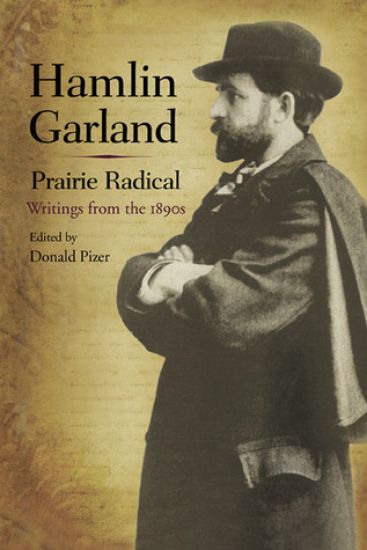
Hamlin Garland, Prairie Radical

Hamlin Garland, Prairie Radical

Hamlin Garland

University of Illinois Press
2010
sidottu
"I am a reformer--a radical--a promoter of Democracy. . . .”--Hamlin Garland to Horace Traubel, 13 January 1892 As a self-proclaimed native "son of the middle border" states of Wisconsin, Nebraska, Iowa, Minnesota, and South Dakota, Hamlin Garland wrote short stories, novels, and essays about the harsh realities of farm life. At a time when rural romanticism was in literary vogue, he described conditions for midwestern farmers as they really were and promoted a wide variety of reforms to improve their lives, including women's rights legislation and single-tax reform.The volume reprints much of Garland's radical fiction and nonfiction from between 1887 and 1894, almost all previously uncollected, including four of his most outspoken stories depicting farm conditions of the time. Fueled by moral outrage and a cry for justice shaped by his own family's hardships in Wisconsin, Iowa, and South Dakota, the radical writing of his early career is filled with compassion and fury. Seeking to reinvigorate an appreciation and understanding of Garland's centrality in the rise of a post–Civil War radical spirit in American expression, this collection assembles the most vibrant and representative examples of his radical 1890s writings.
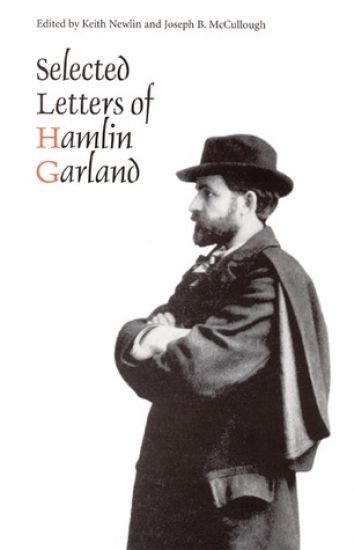
Selected Letters of Hamlin Garland

Selected Letters of Hamlin Garland

Hamlin Garland

University of Nebraska Press
1998
sidottu
Hamlin Garland, a Pulitzer Prize-winner and author of more than forty books, was a central figure in American literary life for half a century. He was intimately involved with many of the major literary, social, and artistic movements in American culture, and his extensive correspondence with the intellectual leaders of American culture was almost unparalleled in scope. This volume brings together a rich, representative sample of Garland's letters. They are addressed to an impressive roster of individuals: Samuel Clemens, William Dean Howells, Walt Whitman, Zona Gale, Theodore Roosevelt, Van Wyck Brooks, Howard Mumford Jones, Brander Matthews, Stephen Crane, George Washington Cable, and many others. The letters touch on an equally broad range of subjects, from the U.S. government's reprehensible treatment of Native Americans to environmental issues to the major literary figures and controversies of Garland's day.Frank, opinionated, and wide-ranging, Garland's letters provide a valuable and entertaining portrait of American cultural and intellectual life in the years between 1890 and 1940.
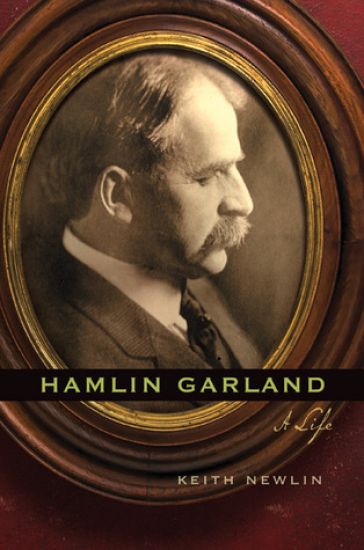
Hamlin Garland

Hamlin Garland

Keith Newlin

University of Nebraska Press
2008
sidottu
In recognition of his achievements in literature, Hamlin Garland (1860–1940) received four honorary doctorates and a Pulitzer Prize. Keith Newlin traces the rise of this prairie farm boy with a half-formed ambition to write who then skyrocketed into international prominence before he was forty. His life is a story of ironic contradictions: the radical whose early achievement thrust him to the forefront of literary innovation but whose evolutionary aesthetic principles could not themselves adapt to changing conditions; the self-styled "veritist" whose credo demanded that he verify every fact but whose credulity led him to spend a lifetime seeking to confirm the existence of spirits. His need for recognition caused him to cultivate rewarding friendships with the leaders of literary culture, yet even when he attained that recognition, it was never enough, and his self-doubt caused him fits of black despair. The first and only other biography of Hamlin Garland was published more than forty years ago; since then, letters, manuscripts, and family memoirs have surfaced to provide, along with changing literary scholarship, a more evaluative and critical interpretation of Garland's life and times. Hamlin Garland: A Life is an exploration of Garland's contributions to American literary culture and places his work within the artistic context of its time.
Hamlin Garland

Hamlin Garland

Jean Holloway

University of Texas Press
1960
nidottu
Hamlin Garland’s Main-Travelled Roads is recognized as one of the early landmarks of American literary realism. But Garland’s shift in mid-career from the harsh verisimilitude of Prairie Folks and Prairie Songs to a romanticizing of the Far West, and from ardent espousal of the principles of “veritism” to violent denunciations of naturalism, is a paradox which has long puzzled literary historians. In tracing the evolution of Garland’s work, the various reactions of his stories under the influence of editorial comment and of contemporary critical reaction, Jean Holloway suggests that the Garland apostasy was an illusion produced by his very intellectual immobility amidst the swirling currents of American thought. His extensive correspondence with Gilder of the Century, Alden of Harper’s Monthly, McClure of McClure’s, and Bok of the Ladies’ Home Journal is adduced in support of the thesis that the writer’s choices of subject and of treatment were psychologically forced rather than conditioned primarily by literary theory. As a subject for biography, however, Garland has an appeal far beyond the scope of his literary influence. The friendships of this gregarious peripatetic with the famous began with Howells, Twain, Whitman, and Stephen Crane, stretched down the years to include such younger men as Bret Harte and Carl Van Doren, and crossed the seas to embrace such British literary lions as Barrie, Shaw, and Kipling. Garland’s fervent espousal of “causes”-the Single Tax Movement, psychic experimentation, Indian rights-brought him into close contact with other prominent men-Henry George, Theodore Roosevelt, and William Jennings Bryan. These public figures form the incidental characters in Garland’s spate of autobiographical works. Yet it is the central figure of his own story which has become permanently identified with the “Middle Border,” that region “between the land of the hunter and the harvester” which Augustus Thomas defined as “wherever Hamlin Garland is.” In A Son of the Middle Border Garland nostalgically recreated his boyhood on the frontier and, regardless of the detractions of literary critics, preserved for posterity an important segment of American social history.