

Kirjahaku
Etsi kirjoja tekijän nimen, kirjan nimen tai ISBN:n perusteella.
1000 tulosta hakusanalla Hannah Arendt

Although Hannah Arendt is considered one of the major contributors to social and political thought in the twentieth century, this is the first general anthology of her writings. This volume includes selections from her major works, including The Origins of Totalitarianism, Between Past and Future, Men in Dark Times, The Jew as Pariah, and The Human Condition, as well as many shorter writings and letters. Sections include extracts from her work on fascism, Marxism, and totalitarianism; her treatment of work and labour; her writings on politics and ethics; and a section on truth and the role of the intellectual.

Very Short Introductions: Brilliant, Sharp, Inspiring Hannah Arendt (1906-1975) was one of the major intellectual figures of the twentieth century. Born in Konigsberg to secular Jewish parents, she was a student of the two major exponents of Existenz philosophy in Germany, Karl Jaspers and Martin Heidegger. Arendt escaped Nazi Germany in 1933, traveling first to Paris and then in 1940 to the United States, where she gained citizenship in 1951. As director of the Jewish Cultural Reconstruction she oversaw the collection and presentation of over 1.5 million articles of Judaica and Hebraica that had been hidden from or looted by the Nazis. This Very Short Introduction explores the philosophical ideas and political theories belonging to one of the most important thinkers of the twentieth century. As a survivor of the Holocaust, Arendt's life informed her work exploring the meaning and construction of power, evil, totalitarianism, and direct democracy. Through insightful readings of Arendt's best-known works, from The Origins of Totalitarianism (1951) to The Life of the Mind (1978), Dana Villa traces the importance of Arendt's ideas for today's reader. In so doing, Villa explains how Arendt gained world-wide fame with the publication of Origins, and went on to have a distinguished career as a political theorist and public intellectual. A sometimes controversial figure, Arendt is now recognised as one of the most important political thinkers of the twentieth century and her works have become an acknowledged part of the Western canon of political theory and philosophy. ABOUT THE SERIES: The Very Short Introductions series from Oxford University Press contains hundreds of titles in almost every subject area. These pocket-sized books are the perfect way to get ahead in a new subject quickly. Our expert authors combine facts, analysis, perspective, new ideas, and enthusiasm to make interesting and challenging topics highly readable.
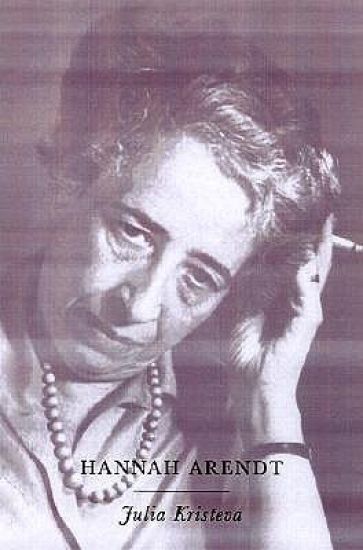
Twenty-five years after her death, we are still coming to terms with the controversial figure of Hannah Arendt. Interlacing the life and work of this seminal twentieth-century philosopher, Julia Kristeva provides us with an elegant, sophisticated biography brimming with historical and philosophical insight. Centering on the theme of female genius, Hannah Arendt emphasizes three features of the philosopher's work. First, by exploring Arendt's critique of Saint Augustine and her biographical essay on Rahel Varnhagen, Kristeva accentuates Arendt's commitment to recounting lives and narration. Second, Kristeva reflects on Arendt's perspective on Judaism, anti-Semitism, and the "banality of evil." Finally, the biography assesses Arendt's intellectual journey, placing her enthusiasm for observing both social phenomena and political events in the context of her personal life. Drawing on fragments of Arendt's most intimate correspondence with her longtime lover Martin Heidegger and her husband Heinrich Blucher, excerpts from her mother's "Unser Kind" (a diary tracking Hannah's formative years), and passages from Arendt's philosophical writings, Kristeva presents a luminous story. With a thorough thematic index and bibliographical references, Hannah Arendt is a major breakthrough in the understanding of an essential thinker.

Twenty-five years after her death, we are still coming to terms with the controversial figure of Hannah Arendt. Interlacing the life and work of this seminal twentieth-century philosopher, Julia Kristeva provides us with an elegant, sophisticated biography brimming with historical and philosophical insight. Centering on the theme of female genius, Hannah Arendt emphasizes three features of the philosopher's work. First, by exploring Arendt's critique of Saint Augustine and her biographical essay on Rahel Varnhagen, Kristeva accentuates Arendt's commitment to recounting lives and narration. Second, Kristeva reflects on Arendt's perspective on Judaism, anti-Semitism, and the "banality of evil." Finally, the biography assesses Arendt's intellectual journey, placing her enthusiasm for observing both social phenomena and political events in the context of her personal life. Drawing on fragments of Arendt's most intimate correspondence with her longtime lover Martin Heidegger and her husband Heinrich Blucher, excerpts from her mother's "Unser Kind" (a diary tracking Hannah's formative years), and passages from Arendt's philosophical writings, Kristeva presents a luminous story. With a thorough thematic index and bibliographical references, Hannah Arendt is a major breakthrough in the understanding of an essential thinker.

This highly acclaimed, prize-winning biography of one of the foremost political philosophers of the twentieth century is here reissued in a trade paperback edition for a new generation of readers. In a new preface the author offers an account of writings by and about Arendt that have appeared since the book’s 1982 publication, providing a reassessment of her subject’s life and achievement. Praise for the earlier edition:“Both a personal and an intellectual biography . . . It represents biography at its best.”—Peter Berger, front page, The New York Times Book Review “A story of surprising drama . . . . At last, we can see Arendt whole.”—Jim Miller, Newsweek “Indispensable to anyone interested in the life, the thought, or . . . the example of Hannah Arendt.”—Mark Feeney, Boston Globe“An adventure story that moves from pre-Nazi Germany to fame in the United States, and . . . a study of the influences that shaped a sharp political awareness.”—Richmond (Va.) Times-DispatchCover drawing by David Schorr

Hannah Arendt is one of the great outsiders of twentieth-century political philosophy. After reporting on the trial of Nazi war criminal Adolf Eichmann, Arendt embarked on a series of reflections about how to make judgments and exercise responsibility without recourse to existing law, especially when existing law is judged as immoral. This book uses Hannah Arendt’s text Eichmann in Jerusalem to examine major themes in legal theory, including the nature of law, legal authority, the duty of citizens, the nexus between morality and law and political action.

Hannah Arendt's work offers a powerful critical engagement with the cultural and philosophical crises of mid-twentieth-century Europe. Her idea of the banality of evil, made famous after her report on the trial of the Nazi war criminal, Adolf Eichmann, remains controversial to this day.In the face of 9/11 and the 'war on terror', Arendt's work on the politics of freedom and the rights of man in a democratic state are especially relevant. Her impassioned plea for the creation of a public sphere through free, critical thinking and dialogue provides a significant resource for contemporary thought. Covering her key ideas from The Origins of Totalitarianism and The Human Condition as well as some of her less well-known texts, and focussing in detail on Arendt's idea of storytelling, this guide brings Arendt's work into the twenty-first century while helping students to understand its urgent relevance for the contemporary world.

Hannah Arendt's work offers a powerful critical engagement with the cultural and philosophical crises of mid-twentieth-century Europe. Her idea of the banality of evil, made famous after her report on the trial of the Nazi war criminal, Adolf Eichmann, remains controversial to this day.In the face of 9/11 and the 'war on terror', Arendt's work on the politics of freedom and the rights of man in a democratic state are especially relevant. Her impassioned plea for the creation of a public sphere through free, critical thinking and dialogue provides a significant resource for contemporary thought. Covering her key ideas from The Origins of Totalitarianism and The Human Condition as well as some of her less well-known texts, and focussing in detail on Arendt's idea of storytelling, this guide brings Arendt's work into the twenty-first century while helping students to understand its urgent relevance for the contemporary world.

Hannah Arendt is one of the most original and controversial political thinkers of the twentieth century. Margaret Canovan argues that much of the published work on Arendt has been flawed by serious misunderstandings, arising from a failure to see her work in its proper context. This reinterpretation will surely strengthen Arendt’s status as one of the most significant political thinkers of the twentieth century.
Hannah Arendt is one of the most famous political theorists of the twentieth century, yet in the social sciences her work has rarely been given the attention it deserves. This careful and comprehensive study introduces Arendt to a wider audience. Finn Bowring shows how Arendt's writings have engaged with and influenced prominent figures in the sociological canon, and how her ideas may shed light on some of the most pressing social and political problems of today. He explores her critique of Marx, her relationship to Weber, the influence of her work on Habermas and the parallels and discrepancies between her and Foucault. This is a clearly written and scholarly text which surveys the leading debates over Arendt's work, including discussions of totalitarianism, the public sphere and the nature of political responsibility. This book will bring new perspectives to students and lecturers in sociology and politics.
Hannah Arendt is one of the most famous political theorists of the twentieth century, yet in the social sciences her work has rarely been given the attention it deserves. This careful and comprehensive study introduces Arendt to a wider audience. Finn Bowring shows how Arendt's writings have engaged with and influenced prominent figures in the sociological canon, and how her ideas may shed light on some of the most pressing social and political problems of today. He explores her critique of Marx, her relationship to Weber, the influence of her work on Habermas and the parallels and discrepancies between her and Foucault. This is a clearly written and scholarly text which surveys the leading debates over Arendt's work, including discussions of totalitarianism, the public sphere and the nature of political responsibility. This book will bring new perspectives to students and lecturers in sociology and politics.

The new study provides a fresh and timely reassessment of the political philosophy of Hannah Arendt. While analysing the central themes of Arendt's work, Phillip Hansen also shows that her work makes a significant contribution to contemporary debates. Specifically, Hansen argues that Arendt provides a powerful account of what it means to think and act politically. This account can establish the grounds for a contemporary citizen rationality in the face of threat to a genuine politics. Amoung other issues, Hansen discusses Arendt's conception of history and historical action; her account of politics and of the distinction between public and private; her analysis of totalitarianism as the most ominous form of 'false ' politics; and her treatment of revolution. The book is a balanced and opportune reappraisal of Arendt's contributions to social and political theory. It will be welcomed by students and scholars in politics, sociology and philosophy.

Hannah Arendt
Ashgate Publishing Limited
2008
sidottu
Hannah Arendt was one of the most original and influential social and political theorists of the 20th century. This volume brings together the most important English-language essays of the past 30 years on Arendt's unique and lasting contributions to social and political philosophy.

In this volume, based on the series of Alexander Lectures she delivered at the University of Toronto, Julia Kristeva explores the philosophical aspects of Hannah Arendt's work: her understanding of such concepts as language, self, body, political space, and life. Kristeva's aim is to clarify contradictions in Arendt's thought as well as correct misapprehensions about her political and philosophical views. The first two chapters describe how Arendt followed an original conception of human narrative, such that life, action, and even thought, are only human when they can be narrated and thus shared with other persons who, through the evocation of memory, complete the story and make history into a condensed sign, into a revelation of the 'who.' The third chapter concentrates on Arendt's work in relation to her twentieth-century contemporaries, especially Isak Dinesen, Brecht, Kafka, and Nathalie Sarraute. In the last two chapters, on the body and the Kantian concept of judgment, Kristeva offers a subtle critical exploration of Arendt's ignoring of the world of the unconscious opened up by psychoanalysis, an exploration that, paradoxically, reveals the political force of Arendt's acceptance of herself as woman and Jew. Kristeva's account of Arendt's 'philosophy of narrative' is clear, coherent, forceful, and often impassioned. Much has been written in North America about Arendt's political work, but little about her more philosophical endeavours. Hannah Arendt: Life Is a Narrative makes a compelling case that Arendt may be the twentieth century's only true political philosopher.
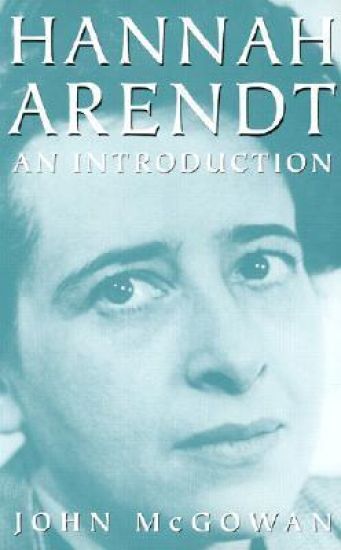
An informative and lively book about one of the foremost political thinkers of our time.Hannah Arendt was one of this century’s leading political theorists and most controversial public intellectuals. Her work challenges received opinions about politics and cherished conceptions of modernity. Firmly locating Arendt’s ideas in the context of our times, John McGowan here offers a clear, concise overview of Arendt’s work and its continuing importance. The book is organized around three central Arendtian themes: the unfolding of identity through political action, the modern assault on a richly pluralistic world, and the effort to comprehend evil. Arendt was both a commentator on the events of her time (from totalitarianism and the Holocaust to the Vietnam War) and a sophisticated political theorist. McGowan lucidly explains the theoretical and philosophical convictions that stood behind her various-and often controversial-interventions in contemporary affairs. He explores the new ways of thinking that Arendt’s work opens up regarding current issues such as human rights, identity politics, and participatory democracy. A concluding chapter connects Arendt’s thought to contemporary social theory and today’s political debates. Briskly written, McGowan’s book serves Arendt’s complex thought well while also rendering it accessible, demonstrating the unity of Arendt’s career and the continuing relevance of her concerns. Readers new to Arendt as well as those intimately familiar with her work will be intrigued and enlightened by this comprehensive and authoritative introduction.


This book presents an original understanding of Arendt in the context of comparative political theory. The author discusses Arendt’s acute and perceptive view of violence as well as practical applications of her thought in a comparative context.The book examines Hannah Arendt’s ideas about politics and violence provoked by the horrors of totalitarianism. It applies the rich potential of Arendt’s insights to the wider cultural context and discourse of nonviolence. Through case studies of India and Iran, it presents a new way of reading Arendt’s understanding and critique of violence beyond the simple analysis of her work on power and violence.An original, nuanced and meaningful guide to Hannah Arendt, the book will be essential reading for students and scholars in politics, philosophy and peace and conflict studies.

This book presents an original understanding of Arendt in the context of comparative political theory. The author discusses Arendt’s acute and perceptive view of violence as well as practical applications of her thought in a comparative context.The book examines Hannah Arendt’s ideas about politics and violence provoked by the horrors of totalitarianism. It applies the rich potential of Arendt’s insights to the wider cultural context and discourse of nonviolence. Through case studies of India and Iran, it presents a new way of reading Arendt’s understanding and critique of violence beyond the simple analysis of her work on power and violence.An original, nuanced and meaningful guide to Hannah Arendt, the book will be essential reading for students and scholars in politics, philosophy and peace and conflict studies.

Hannah Arendt is one of the great outsiders of twentieth-century political philosophy. After reporting on the trial of Nazi war criminal Adolf Eichmann, Arendt embarked on a series of reflections about how to make judgments and exercise responsibility without recourse to existing law, especially when existing law is judged as immoral. This book uses Hannah Arendt’s text Eichmann in Jerusalem to examine major themes in legal theory, including the nature of law, legal authority, the duty of citizens, the nexus between morality and law and political action.