Models of Political Economy will introduce students to the basic methodology of political economics. It covers all core theories as well as new developments including:decision theorygame theorymechanism designgames of asymmetric information.Hannu Nurmi's text will prove to be invaluable to all students who wish to understand this increasingly technical field.
Models of Political Economy will introduce students to the basic methodology of political economics. It covers all core theories as well as new developments including:decision theorygame theorymechanism designgames of asymmetric information.Hannu Nurmi's text will prove to be invaluable to all students who wish to understand this increasingly technical field.
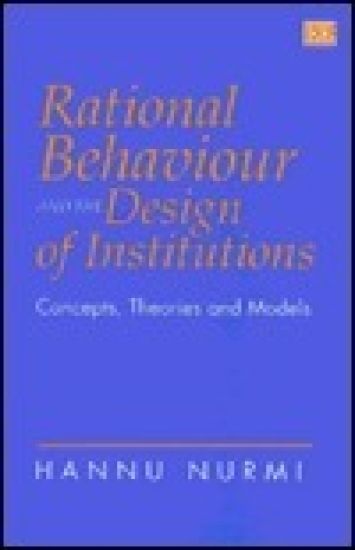
The structures of the world's national and international, political and economic institutions have largely resulted from intuitive and ad hoc organization with reforms taking place on a costly trial-and-error basis. This book offers a comprehensive evaluation of the tools which can be used for a more rational and formal approach to institutional design.As new institutions and, indeed, new national governments are being formed and developed all the time, there is a considerable need for formal models that can facilitate their design. This book offers conceptual approaches and theories that shed new light on how various social and political institutions can emerge as the outcome of goal-directed rational behaviour. The author provides tools for evaluating existing institutions and for setting up new ones, demonstrating the applicability of decision and game theoretic tools, social choice theory and mechanism design to the construction of political and economic institutions. Using these approaches he particularly discusses the practical implications for the design of institutions in the European Union.This important book will be welcomed by students and scholars interested in government and political science, rational choice theory, methodology in the social sciences, and the microeconomics of rational behaviour.
We live in an uncertain world, is a truism most of us hear more often than we would like. What one usually means to say by this is that we do not know what will happen in the future. Since changes, even major ones, have occurred in the past, it is possible that they will occur again in the future. In politics institutions are ways of coping with continuity and change. In democratic systems the electoral institutions provide ways of peaceful adjustment to changes in popular opinions. This book is about uncertainty as it pertains to electoral institutions. We shall deal with the ways in which analytic models are capable of taking into account voter uncertainty, ignorance and incompetence. We shall also discuss how uncertainty pertains to electoral outcomes. Given voter opinions, there is often a wide variation in the possible electoral outcomes. This could be called procedure-dependence of outcomes. Its existence shows that uncertainty is not something that can characterize only future events. It can pertain to past ones as well. This work is part of the Democracy and Constitution Project of Center for Business and Policy Studies (SNS). The idea of writing a book on the performance of voting procedures under uncertain cir cumstances came up in my correspondence with Dr. Per Molander of SNS a few years ago.
Voting paradoxes are unpleasant surprises encountered in voting. Typically they suggest that something is wrong with the way in dividual opinions are being expressed or processed in voting. The outcomes are bizarre, unfair or otherwise implausible, given the expressed opinions of voters. Voting paradoxes have an important role in the history of social choice theory. The founding fathers of the theory, Marquis de Condorcet and Jean-Charles de Borda, were keenly aware of some of them. Indeed, much of the work of these and other forerunners of the modern social choice theory dealt with ways of avoiding paradoxes related to voting. One of the early paradoxes, viz. that bearing the name of Condorcet, has subsequently gained such a prominent place in the literature that it is sometimes called the paradox of voting. One of the aims of the present work is to show that Condorcet's is but one of many paradoxes of voting. Some of these are pretty closely interrelated making it meaningful to classify them. This is the second main aim of this book. The third objective is to suggest ways of dealing with paradoxes. Since voting is and has always been an essential instrument of democratic rule, it is of some in terest to find out how voting paradoxes are being dealt with by past and present methods of voting. Of even greater interest is to find ways of minimizing the probability of occurrence of various paradoxes. By their very nature some paradoxes are unavoidable.
Voting paradoxes are unpleasant surprises encountered in voting. Typically they suggest that something is wrong with the way in dividual opinions are being expressed or processed in voting. The outcomes are bizarre, unfair or otherwise implausible, given the expressed opinions of voters. Voting paradoxes have an important role in the history of social choice theory. The founding fathers of the theory, Marquis de Condorcet and Jean-Charles de Borda, were keenly aware of some of them. Indeed, much of the work of these and other forerunners of the modern social choice theory dealt with ways of avoiding paradoxes related to voting. One of the early paradoxes, viz. that bearing the name of Condorcet, has subsequently gained such a prominent place in the literature that it is sometimes called the paradox of voting. One of the aims of the present work is to show that Condorcet's is but one of many paradoxes of voting. Some of these are pretty closely interrelated making it meaningful to classify them. This is the second main aim of this book. The third objective is to suggest ways of dealing with paradoxes. Since voting is and has always been an essential instrument of democratic rule, it is of some in terest to find out how voting paradoxes are being dealt with by past and present methods of voting. Of even greater interest is to find ways of minimizing the probability of occurrence of various paradoxes. By their very nature some paradoxes are unavoidable.
We live in an uncertain world, is a truism most of us hear more often than we would like. What one usually means to say by this is that we do not know what will happen in the future. Since changes, even major ones, have occurred in the past, it is possible that they will occur again in the future. In politics institutions are ways of coping with continuity and change. In democratic systems the electoral institutions provide ways of peaceful adjustment to changes in popular opinions. This book is about uncertainty as it pertains to electoral institutions. We shall deal with the ways in which analytic models are capable of taking into account voter uncertainty, ignorance and incompetence. We shall also discuss how uncertainty pertains to electoral outcomes. Given voter opinions, there is often a wide variation in the possible electoral outcomes. This could be called procedure-dependence of outcomes. Its existence shows that uncertainty is not something that can characterize only future events. It can pertain to past ones as well. This work is part of the Democracy and Constitution Project of Center for Business and Policy Studies (SNS). The idea of writing a book on the performance of voting procedures under uncertain cir cumstances came up in my correspondence with Dr. Per Molander of SNS a few years ago.
In many contexts of everyday life we find ourselves faced with the problem of reconciling the views of several persons. These problems are usually solved by resorting to some opinion aggre gating procedure, like voting. Very often the problem is thought of as being solved after the decision to take a vote has been made and the ballots have been counted. Most official decision making bodies have formally instituted procedures of voting but in informal groups such procedures are typically chosen in casu. Curiously enough people do not seem to pay much attention to which particular procedure is being resorted to as long as some kind of voting takes place. As we shall see shortly the procedure being used often makes a great difference to the voting outcomes. Thus, the Question arises as to which voting procedure is best. This book is devoted to a discussion of this problem in the light of various criteria of optimality. We shall deal with a number of procedures that have been proposed foruse or are actually in use in voting contexts. The aim of this book is to give an evaluation of the virtues and shortcomings of these procedures. On the basis of this evaluation the reader will hopefully be able to determine which procedure is optimal for the decision setting that he or she has in mind.
In many contexts of everyday life we find ourselves faced with the problem of reconciling the views of several persons. These problems are usually solved by resorting to some opinion aggre gating procedure, like voting. Very often the problem is thought of as being solved after the decision to take a vote has been made and the ballots have been counted. Most official decision making bodies have formally instituted procedures of voting but in informal groups such procedures are typically chosen in casu. Curiously enough people do not seem to pay much attention to which particular procedure is being resorted to as long as some kind of voting takes place. As we shall see shortly the procedure being used often makes a great difference to the voting outcomes. Thus, the Question arises as to which voting procedure is best. This book is devoted to a discussion of this problem in the light of various criteria of optimality. We shall deal with a number of procedures that have been proposed foruse or are actually in use in voting contexts. The aim of this book is to give an evaluation of the virtues and shortcomings of these procedures. On the basis of this evaluation the reader will hopefully be able to determine which procedure is optimal for the decision setting that he or she has in mind.
This book deals with 20 voting procedures used or proposed for use in elections resulting in the choice of a single winner. These procedures are evaluated in terms of their ability to avoid five important paradoxes in a restricted domain, viz., when a Condorcet winner exists and is elected in the initial profile. Together with the two companion volumes by the same authors, published by Springer in 2017 and 2018, this book aims at giving a comprehensive overview of the most important advantages and disadvantages of voting procedures thereby assisting decision makers in the choice of a voting procedure that would best suit their purposes.
This book deals with the choice of methods to be applied in the decision processes within organizations. It discusses the use of voting procedures for group decision in business organizations, focusing on decision-making contexts. Within this book the reader explores the relevant part of the decision-making process consisting of choosing the voting procedures and recognizing the drawbacks of that procedure. This book includes a unique feature of providing a framework for choosing the voting procedure that is the most appropriate for a particular business decision process. The book is useful for a broad researcher audience dealing with the group decision making processes within business organizations and for practitioners and students working in the group decision and negotiation field.
This book deals with the choice of methods to be applied in the decision processes within organizations. It discusses the use of voting procedures for group decision in business organizations, focusing on decision-making contexts. Within this book the reader explores the relevant part of the decision-making process consisting of choosing the voting procedures and recognizing the drawbacks of that procedure. This book includes a unique feature of providing a framework for choosing the voting procedure that is the most appropriate for a particular business decision process. The book is useful for a broad researcher audience dealing with the group decision making processes within business organizations and for practitioners and students working in the group decision and negotiation field.
This book provides an evaluation of 18 voting procedures in terms of the most important monotonicity-related criteria in fixed and variable electorates. All voting procedures studied aim at electing one out of several candidates given the voters' preferences over the candidates. In addition to (strict) monotonicity failures, the vulnerability of the procedures to variation of the no-show paradoxes is discussed. All vulnerabilities are exemplified and explained. The occurrence of the no-show paradoxes is related to the presence or absence of a Condorcet winner. The primary readership of this book are scholars and students in the area of social choice.
This book deals with 18 voting procedures used or proposed for use in elections resulting in the choice of a single winner. These procedures are evaluated in terms of their ability to avoid paradoxical outcomes. Together with a companion volume by the same authors, Monotonicity Failures Afflicting Procedures for Electing a Single Candidate, published by Springer in 2017, this book aims at giving a comprehensive overview of the most important advantages and disadvantages of procedures thereby assisting decision makers in the choice of a voting procedure that would best suit their purposes.
J. Alfred Tanner, Mika Waltari, Henry Parland, Karin Alm, Liisa Heikkerö, Jyri Schreck, Jussi Kylätasku, Eira Stenberg, Ville Hytönen, Olli-Matti Ronimus, Pekka Kejonen, Matti Pirinen, Anselm Hollo, Teemu Manninen, Tapani Kinnunen, Jarkko Laine, Satu Manninen, Markku Paasonen, Pekka Lounela, Markku Into, Arto Melleri, Hannu Nurmio, Hannu Salama, Jyrki Pellinen, Kari Aronpuro, Kari J. Kettula, Kari Hotakainen, Juhani Ahvenjärvi, Veikko Pietilä, Pekka Piirto, Tarmo Manelius, Leksa Vossi, Matti Rossi, Henrik Alcenius
Elokuvaa käsittelevä kaunokirjallisuus on lähes yhtä vanhaa kuin elokuva itsekin. Elokuva-aiheisia runoja alkoi kuitenkin toden teolla ilmestyä vasta toisen maailmansodan jälkeen, samaan aikaan kun uudenlainen, kriittinen ja teoreettinen elokuva-aiheinen kirjoittelu alkoi muutenkin lisääntyä. Tähän teokseen on koottu elokuvaan liittyviä suomalaisia runoja vuosikymmenten varrelta, Henry Parlandista Juhani Ahvenjärveen ja Tuomari Nurmioon. Mukana on niin elokuvan katsomiseen liittyviä yleisiä runoja kuin yksittäistä elokuvaa tai näyttelijää käsitteleviä runojakin. Kokoelman anti on kiinnostava yhtä lailla elokuvan kuin runoudenkin ystävälle. Teoksessa on Juri Nummelin asiantunteva johdantoartikkeli.
Kirjan tarkoituksena on antaa käyttökelpoisia neuvoja toimitusjohtajana toimiville ja sellaiseksi aikoville. Siinä käydään läpi toimitusjohtajan urapolun yleisimmät vaiheet, kuten tehtävään kasvaminen, hakeminen ja valituksi tuleminen, tärkeät kuukaudet ennen ja jälkeen aloituksen, yhtiön johtamisen ja siihen liittyvien asioiden ja ihmissuhteiden solmukohdissa luoviminen, oman itsen kehittäminen ja lopulta myös tehtävän jättäminenTeos on tarkoitettu tarjoamaan inspiroivia ajatuksia ja ideoita erilaisiin tilanteisiin niin hyvinä kuin haastavina aikoina. Siihen on haastateltu monia yritysjohtajia ja elinkeinoelämän vaikuttajia, joilla on pitkä kokemus johtamisesta niin yksityisellä kuin julkisella sektorilla. Kirjan haastattelut täydentävät teoksen käytännönläheistä teoriaosuutta. Kirjasta on hyötyä kaikille, jotka haluavat kasvattaa ymmärrystään toimitusjohtajan roolista niin arjen työssä kuin vastuunkannon hetkinäkin.
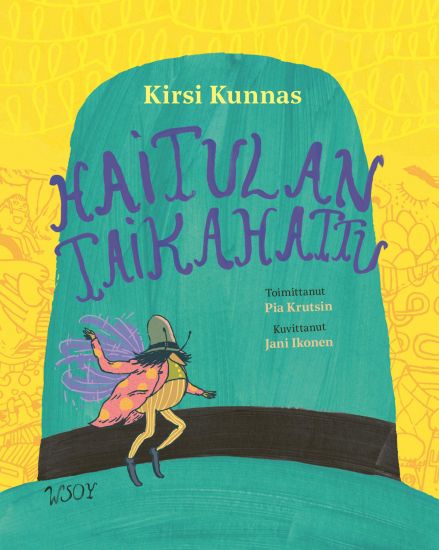
On aika juhlia runoa!Vuonna 2024 juhlitaan rakastetun runoilija Kirsi Kunnaksen syntymän satavuotisjuhlaa.Moninkertaisesti tuttuon yksinkertainen juttu:Olipa kerran.Juhlavuoden kunniaksi runoilija ja sanataidekasvattaja Pia Krutsin on valinnut 32 Kirsi Kunnaksen runoa, jotka kutkuttavat lapsen mielikuvitusta ja tempaavat runojen taikamaailmaan. Kunnaksen runojen kanssa vuoropuheluun on kutsuttu kahdeksan nykykirjailijaa: Hannu Hirvonen, Niillas Holmberg, Pia Krutsin, Aura Nurmi, Laura Ruohonen, Annika Sandelin, Tuukka Sandström ja Johanna Venho. Kukin heistä hyppää mukaan runoseikkailuun uudella, antologiaa varten kirjoitetulla runollaan.Kirjan kuvittaa runoratsukuiskaaja ja palkittu kuvittaja Jani Ikonen.Haitulan lumoavasta taikahatusta löytyy lapsilukijalle myös sanataidetehtäviä, jotka innostavat kirjoittamaan runoja itse. Näin lukijasta voi tulla tekijä. Osana juhlavuotta kirja jaetaan kaikille ensimmäisen kouluvuotensa aloittaville syksyllä 2024.Juhlavuoden ohjelmaa koordinoi Kulttuurikeskus PiiPoo ja sen pääyhteistyökumppanit ovat WSOY, YLE:n lastenohjelmat ja Tampereen Työväen Teatteri.Runoilija, kirjailija ja akateemikko Kirsi Kunnaksen (1924-2021) ensimmäinen runokokoelma Villiomenapuu ilmestyi vuonna 1947. Ensimmäinen lapsille suunnattu kirja oli 1956 ilmestynyt Tiitiäisen satupuu, josta on otettu yli 50 painosta.Pia Krutsin (s. 1979) on runoilija, sanataidekasvattaja ja lastenkulttuurituottaja. Hänen esikoisteoksensa Kaupunki Kukaties oli Lasten- ja nuorten Finlandia -palkintoehdokkaana vuonna 2021.Jani Ikonen (s. 1978) on kuvittaja ja graafinen suunnittelija, joka on saanut kuvituksestaan Pohjoismaiden neuvoston lasten- ja nuortenkirjapalkinnon. Ikonen kuvitti Kaupunki Kukaties -kirjan.