
Kirjahaku
Etsi kirjoja tekijän nimen, kirjan nimen tai ISBN:n perusteella.
1000 tulosta hakusanalla Hans-Werner Loy


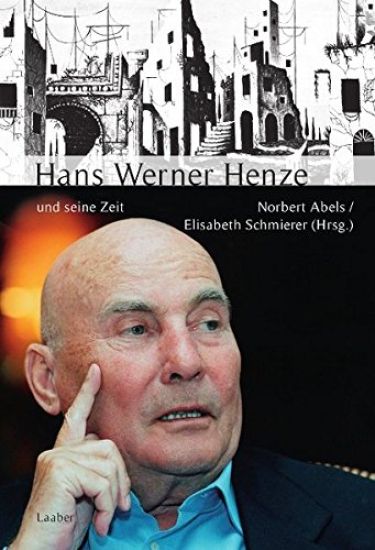
Hans Werner Henze und seine Zeit
Laaber Verlag
2012
sidottu

Hans Werner Richter gehoert zu den wichtigsten Figuren des literarischen Lebens der zweiten Halfte des 20. Jahrhunderts in Deutschland. Er sicherte sich diesen Platz durch seine Arbeit in der beruhmten Gruppe 47. Oft vergessen oder nur marginal wahrgenommen wird dagegen, dass er sich auch als freier Schriftsteller betatigte. Das Ziel dieser Arbeit ist, dieses Defizit auszugleichen und zugleich Interesse an Hans Werner Richters Prosawerk zu wecken. Seine neun Romane werden hinsichtlich ihrer thematischen und formalen Spezifik analysiert und interpretiert. Da die Erfahrungen und Erlebnisse aus der Zeit der NS-Diktatur Hans Werner Richters Engagement nach 1945 pragten, wird danach gefragt, inwiefern dies auch in seinen Romanen Ausdruck findet. Der Blick auf die Biografie Richters, die in dieser Arbeit ausfuhrlich rekonstruiert wird, zeigt das besondere Wechselverhaltnis zwischen historischer Wirklichkeit und deren Literarisierung. Hans Werner Richter tendiert in seinen Romanen zu einer Art Selbstrechtfertigung und sieht sich teilweise als Opfer geschichtlicher Prozesse. Zentral sind somit ebenfalls die Fragen nach der sozialen und politischen Determiniertheit des Individuums sowie den Grenzen seiner Freiheit.
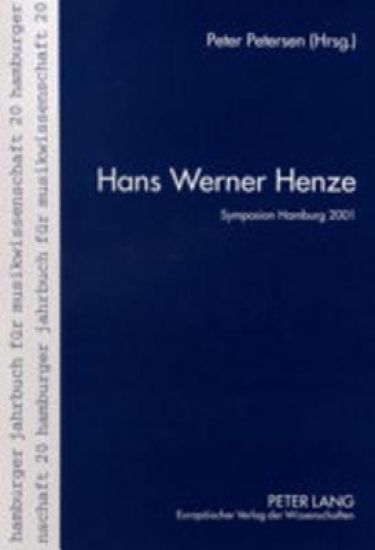
Hans Werner Henze
Peter Lang AG
2003
nidottu
Hans Werner Henze ist heute als einer der bedeutendsten lebenden Komponisten anerkannt. Sein 75. Geburtstag am 1. Juli 2001 wurde uberall in der Welt gefeiert. Die Musikwissenschaft hat sich dem Schaffen Henzes seit langem in Einzelstudien gewidmet, nie jedoch sein Werk zum alleinigen Gegenstand eines wissenschaftlichen Kongresses gemacht. Mit Unterstutzung der Deutschen Forschungsgemeinschaft und des Norddeutschen Rundfunks wurde deshalb im Juni 2001 ein Symposion einberufen, das Musikwissenschaftlerinnen und Musikwissenschaftler aus den U.S.A., OEsterreich, der Schweiz und Deutschland zusammenfuhren sollte.

Das zweite Violinkonzert von Hans Werner Henze. Ein Systemsprenger
Sophie Emilie Beha
GRIN Verlag
2023
nidottu

Die Speicherung von Strom als Herausforderung für die Energiewende. Eine kritische Analyse der Aussagen von Hans-Werner Sinn
Niklas Völcker
GRIN Verlag
2020
nidottu

"Undine" in den Werken von E.T.A. Hoffmann, Albert Lortzing und Hans Werner Henze
Lisa Otto
GRIN Verlag
2016
pokkari
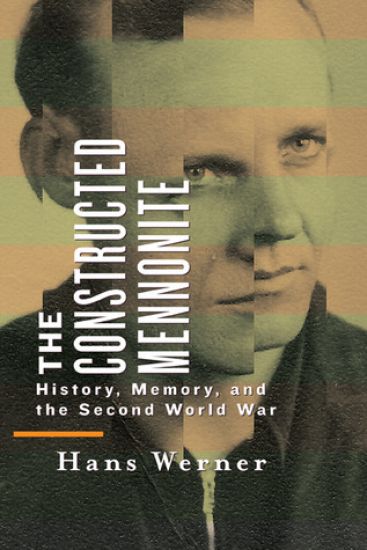
John Werner was a storyteller. A Mennonite immigrant in southern Manitoba, he captivated his audiences with tales of adventure and perseverance. With every telling he constructed and reconstructed the memories of his life. John Werner was a survivor. Born in the Soviet Union just after the Bolshevik Revolution, he was named Hans and grew up in a German-speaking Mennonite community in Siberia.As a young man in Stalinist Russia, he became Ivan and fought as a Red Army soldier in the Second World War. Captured by Germans, he was resettled in occupied Poland where he became Johann, was naturalized and drafted into Hitler's German army where he served until captured and placed in an American POW camp. He was eventually released and then immigrated to Canada where he became John. The Constructed Mennonite is a unique account of a life shaped by Stalinism, Nazism, migration, famine, and war. It investigates the tenuous spaces where individual experiences inform and become public history; it studies the ways in which memory shapes identity, and reveals how context and audience shape autobiographical narratives.
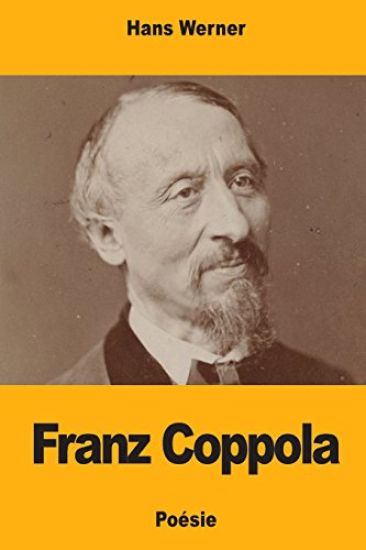
Musique italienne et musique allemande, C'est une question qui ne finit jamais; L'un proclame l'orchestre et l'autre le gourmande; Celui-ci n'a de go t que pour les grands effets, Les modulations, les clairons et leur bande; Celui-l veut un air sentimental et frais. Vous aimez Bellini, je suppose, madame ? Et certes, volontiers, je conviens avec vous Que c'est un enchanteur dont la voix porte l'ame, Un maestro divin, et que, si j' tais femme, Ce cygne l giaque, harmonieux et doux, Je le pr f rerais Mozart comme tous...
This book offers a critical assessment of the history of the euro, its crisis, and the rescue measures taken by the European Central Bank and the community of states. The euro induced huge capital flows from the northern to the southern countries of the Eurozone that triggered an inflationary credit bubble in the latter, deprived them of their competitiveness, and made them vulnerable to the financial crisis that spilled over from the US in 2007 and 2008. As private capital shied away from the southern countries, the ECB helped out by providing credit from the local money-printing presses. The ECB became heavily exposed to investment risks in the process, and subsequently had to be bailed out by intergovernmental rescue operations that provided replacement credit for the ECB credit, which itself had replaced the dwindling private credit. The interventions stretched the legal strictures stipulated by the Maastricht Treaty which, in the absence of a European federal state, had granted the ECB a very limited mandate. These interventions created a path dependency that effectively made parliaments vicarious agents of the ECB's Governing Council. This book describes what the author considers to be a dangerous political process that undermines both the market economy and democracy, without solving southern Europe's competitiveness problem. It argues that the Eurozone has to rethink its rules of conduct by limiting the role of the ECB, exiting the regime of soft budget constraints and writing off public and bank debt to help the crisis countries breathe again. At the same time, the Eurosystem should become more flexible by offering its members the option of exiting and re-entering the euro - something between the dollar and the Bretton Woods system - until it eventually turns into a federation with a strong political power centre and a uniform currency like the dollar.
This book offers a critical assessment of the history of the euro, its crisis, and the rescue measures taken by the European Central Bank and the community of states. The euro induced huge capital flows from the northern to the southern countries of the Eurozone that triggered an inflationary credit bubble in the latter, deprived them of their competitiveness, and made them vulnerable to the financial crisis that spilled over from the US in 2007 and 2008. As private capital shied away from the southern countries, the ECB helped out by providing credit from the local money-printing presses. The ECB became heavily exposed to investment risks in the process, and subsequently had to be bailed out by intergovernmental rescue operations that provided replacement credit for the ECB credit, which itself had replaced the dwindling private credit. The interventions stretched the legal structures stipulated by the Maastricht Treaty which, in the absence of a European federal state, had granted the ECB a very limited mandate. These interventions created a path dependency that effectively made parliaments vicarious agents of the ECB's Governing Council. This book describes what the author considers to be a dangerous political process that undermines both the market economy and democracy, without solving southern Europe's competitiveness problem. It argues that the Eurozone has to rethink its rules of conduct by limiting the role of the ECB, exiting the regime of soft budget constraints and writing off public and bank debt to help the crisis countries breathe again. At the same time, the Eurosystem should become more flexible by offering its members the option of exiting and re-entering the euro - something between the dollar and the Bretton Woods system - until it eventually turns into a federation with a strong political power centre and a uniform currency like the dollar.
In Casino Capitalism Hans-Werner Sinn examines the causes of the banking crisis, points out the flaws in the economic rescue packages, and presents a master plan for the reform of financial markets. Sinn argues that the crisis came about because limited liability induced both Wall Street and Main Street to gamble with real estate properties. He meticulously describes the process of lending to American homeowners and criticizes both the process of securitizing and selling mortgage claims to the world, as well as the poor job rating agencies did in providing transparency. He argues that the American Dream has ended because the world now realizes that this dream was built on loans that are never likely to be repaid. Sinn also asserts that the banking crisis has not yet been resolved, because the necessary write-offs of toxic assets have largely been swept under the carpet. Comparing actual worldwide write-offs with those estimated by the IMF estimates, he concludes that substantial parts, if not most, of the true losses have yet to be revealed and that the banking systems of many countries are on the brink of insolvency. In view of this, he directs sharp criticism at the various economic rescue packages, arguing that the plans assume that banks have a liquidity problem while, in fact, they suffer from a solvency crisis. Sinn points out that the conflict between the goals of rescuing banks in the short term and inducing more prudent behaviour in the long term requires the government to help the banks, but not their shareholders, by becoming a temporary co-owner. In addition, he calls for higher equity requirements, a worldwide return to more cautious accounting methods, a ban on extremely speculative short selling, and strict regulations on conduits, hedge funds and credit default swaps. This authoritative account provides an invaluable overview for academics, students, policymakers, politicians, and all those with an interest in the unprecedented 2008 banking crisis.
A leading economist develops a supply-side approach to fighting climate change that encourages resource owners to leave more of their fossil carbon underground.The Earth is getting warmer. Yet, as Hans-Werner Sinn points out in this provocative book, the dominant policy approach-which aims to curb consumption of fossil energy-has been ineffective. Despite policy makers' efforts to promote alternative energy, impose emission controls on cars, and enforce tough energy-efficiency standards for buildings, the relentlessly rising curve of CO2 output does not show the slightest downward turn. Some proposed solutions are downright harmful: cultivating crops to make biofuels not only contributes to global warming but also uses resources that should be devoted to feeding the world's hungry. In The Green Paradox, Sinn proposes a new, more pragmatic approach based not on regulating the demand for fossil fuels but on controlling the supply.The owners of carbon resources, Sinn explains, are pre-empting future regulation by accelerating the production of fossil energy while they can. This is the "Green Paradox": expected future reduction in carbon consumption has the effect of accelerating climate change. Sinn suggests a supply-side solution: inducing the owners of carbon resources to leave more of their wealth underground. He proposes the swift introduction of a "Super-Kyoto" system-gathering all consumer countries into a cartel by means of a worldwide, coordinated cap-and-trade system supported by the levying of source taxes on capital income-to spoil the resource owners' appetite for financial assets.Only if we can shift our focus from local demand to worldwide supply policies for reducing carbon emissions, Sinn argues, will we have a chance of staving off climate disaster.
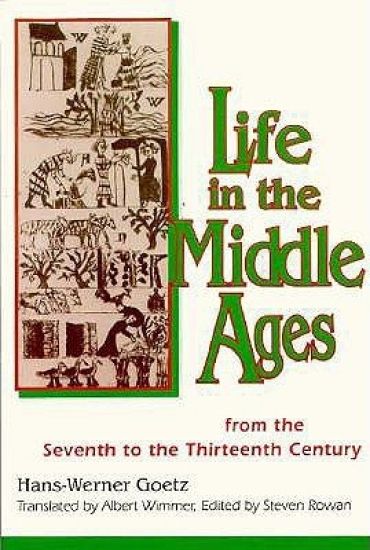
Historian Hans-Werner Goetz presents here the first comprehensive depiction of life in the earlier Middle Ages that focuses on everyday history. According to Goetz it is nearly impossible to write a history of everyday life during the earlier Middle Ages since the written sources of that age had entirely different purposes, never describing everyday life for its own sake. However, by drawing on chronicles, legal documents, and fiction, Goetz is able to produce a lively picture of this era, illuminating everyday life as it was conditioned by institutional, physical, and social environments. Life in the Middle Ages addresses many of the current concerns of medieval historians in one single volume. After a brief introduction to the general conditions of medieval life, Goetz examines the family, illustrating the family's fundamental importance as an ideal building block for other forms of society. The book explores monasticism and the monastery, which during the early and the high Middle Ages affected not only religious but also social, political, economic, and spiritual life. Goetz examines peasant life within the seigneurial system, focusing on the social and existential forms of the medieval manorial system. He also examines the life of the ruling class, concentrating on the sociopolitical level of princes and kings and the "courtly life." Finally, Goetz evokes the beginning of urban life in the early medieval and high medieval town. Throughout the book, Goetz uses fascinating vignettes to illustrate the lives of simple people who may not have influenced world history but were nevertheless an integral part of it. Written for a broad audience, Life in the Middle Ages will interest students, scholars, and indeed all general readers interested in both history and the Middle Ages.
This revealing book examines different types of network industries such as railways, telecommunications and new media, and investigates their economics with an accent on history makes it stand apart from others in the area. Hans Göttinger's accessible writing style and knowledgeable research makes this book recommended reading for all those interested in industrial, innovation and micro policy economics.