

Kirjahaku
Etsi kirjoja tekijän nimen, kirjan nimen tai ISBN:n perusteella.
1000 tulosta hakusanalla Harald Stutte

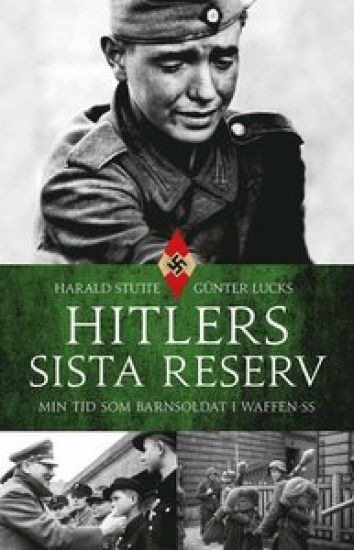
Hitlers sista reserv : min tid som barnsoldat i Waffen-SS
Harald Stutte; Günter Lucks
Lind Co
2019
sidottu
"en välskriven bok som engagerar läsaren från första till sista sidan." Militär HistoriaNazisternas sista reserv bestod vid krigsslutet delvis av barn. Ett av dem var Günter Lucks från Hamburg, född 1928. I slutet av 1944 skickades han till Wehrmachts grundutbildning i Böhmen. Tre månader senare, våren 1945, rekryterades han av Waffen-SS och kom till fronten vid Wien. Lucks stred och dödade med SS-divisionen Hitlerjugend, och hamnade i rysk fångenskap. En odyssé genom ett flertal läger i Baltikum och Ryssland började. Först fem år senare kom han tillbaka till Hamburg, för alltid präglad av kriget och fångenskapen. HARALD STUTTE är historiker, författare och politisk redaktör på Hamburger Morgenpost. GÜNTER LUCKS var barnsoldat i Waffen-SS. När Bundeswehr bildades fick han en inbjudan att bli officer, men vägrade. Tillsammans har de tidigare utkommit med boken Hitlers bortglömda barnarmé (Lind & Co, 2018). "Texten berörde mig. Jag hoppas att kommande generationer med hjälp av sådana beskrivningar får möjlighet att lära av erfarenheterna från tidigare generationer." Günter Grass



Das Stuttgarter Neue Schloss hat die ihm zukommende Stellung in der Kunstgeschichte noch nicht gefunden. Hierzu einen Beitrag zu leisten wurde die vorliegende Darstellung unternommen. Denn je fter ich ihm begegnete und je mehr ich mich in Folge mit ihm besch ftigte, desto deutlicher wurde mir in ihm ein H hepunkt der Architekturgeschichte erkennbar, der aus der Reihe vergleichbarer Schlossbauten in Qualit t und Anspruch heraus ragt. Die Einsicht in die architektonische Sprache dieses Komplexes ist nicht das Ergebnis einer konzentrierten, einmaligen Bearbeitung gewesen, sondern ist aus einer Folge vieler Einzelbeobachtungen mehr und mehr als zun chst nur vage Vermutung erwachsen. Dabei kamen mehrere unerwartete Entdeckungen zusammen, die sich gegenseitig best tigten und in dem Ganzen erst die ihm innewohnende Konsequenz sichtbar werden lie en.

Wissenschaftler und Stottertherapeuten stellen gemeinsam die aktuellen und gesicherten Erkenntnisse zu Redeflussstoerungen (Stottern und Poltern) vor. Sie zeigen, dass Stottern in hohem Masse erblich ist, mit strukturellen und funktionellen Hirnveranderungen einhergeht und ein neurologisches Stoerungsbild darstellt. Sie raumen auf mit der Vorstellung, dass Stottern durch fruhkindliche Erfahrungen hervorgerufen wird: Eltern eines stotternden Kindes haben in der sprachlichen Erziehung nichts falsch gemacht. Die Autoren benennen Therapien, die Stottern beseitigen oder zumindest mindern koennen, und Therapien, die popular sein moegen, aber nicht wirken. Das Buch ist ein hilfreicher Ratgeber fur Betroffene, ein umfangreiches Nachschlagewerk fur Stottertherapeuten und eine massgebliche Leitlinie fur AErzte.

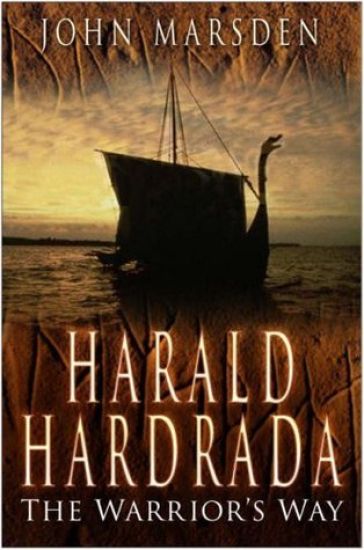
One of the greatest medieval warriors Harald Sigurdsson, nicknamed Hardrada (Harold the Ruthless or hard ruler) fell in battle in an attempt to snatch the crown of England. The spectacular and heroic career which ended at Stamford Bridge in Yorkshire on 25 September 1066 had taken Harald from Norway to Russia and Constantinople and saw him gain a kingdom by force and determination rather than right or inheritance. He was one of the most feared rulers in Europe and was first and foremost a professional soldier, who acquired great wealth by plunder and showed no mercy to those he conquered. 'Harald Hardrada: The Warrior's Way' reconstructs a military career spanning three and a half decades and involving encounters with an extraordinary range of allies and enemies in sea-fights and land battles, sieges and viking raids across a variety of theatres of war. John Marsden's superbly researched and powerfully written account takes us from the lands of the Norsemen to Byzantium and the Crusades and makes clear how England moved decisively from three hundred years of exposure to the Scandinavian orbit to a stronger identification with continental Europe following the Norman invasion.



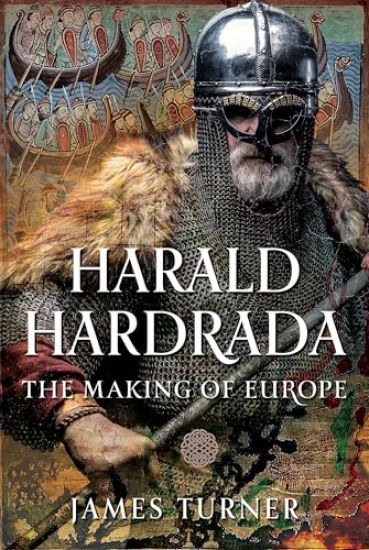
A wounded and teenaged Harald Hardrada fled Norway in 1030 following the death of his half-brother King Olaf II at the Battle of Stiklestad. He would return home decades later as a battle-hardened mercenary commander, weighted down with plunder acquired from wars fought across the Mediterranean. Harald’s transition from exiled semi-royal to a famed adventurer and warrior saw him weave a circuitous route from the steppes and trading post of Kievan Rus to the shining palaces of Constantinople and the ancient war-torn cities of Sicily. As a commander of the Byzantine Empires legendary Varangian Guard Harald travelled extensively before leveraging his hard-won wealth, experience and political connections in a ruthless play for the throne of Norway. The world of eleventh-century Europe was neither self-contained nor compartmentalized, benefiting as it did from long-established routes of commerce and communication. Hardrada’s journeys and his interactions with the many overlapping cultures and political entities that he encountered further illuminate this essential interconnectivity. The eleventh century was a particularly formative one in the history of Europe that saw the emergence of a crop of pugnacious new kingdoms and setting of the foundations upon which the Europe to come would be built atop. As eleventh-century Europe roiled and struggled to find a new equilibrium in response to the cultural, political and demographic changes being wrought upon it, incredible opportunities were open to those adventurers bold enough to take advantage of this era of uncertainty. Returning to Norway after his long exile Harald’s ambitions stretched far beyond the Norwegian throne to encompass the recreation of the North Sea Empire of Cnut the Great, his family’s greatest foe. Harald has often been called, with no small amount of admiration or respect, the Last Viking. Yet this title underestimates the depths of Harald’s achievements and the profound effect he had on the form and internal coherency of the Kingdom of Norway. Part biography, part medieval travelogue, this book extends its critical and incisive examination of Harald’s career to the many European and Mediterranean polities he travelled and fought through during his long exile. By placing Harald within his proper historical context, he is firmly detached from his role as a mere runner up in 1066’s struggle for the Kingdom of England and revealed to be one of the great rulers and state builders of the age.

From the authors of the best selling series ‘Viking Ventures’ comes the epic story of Harald Fairhair. The boy who inherited a war and built a kingdom. When King Halvdan the Black dies in 860, he is succeeded by his ten-year-old son, Harald. Immediately, rival kings and jarls unite to take advantage of the weakened state of the new king’s realm, and Harald’s army of 300 men is outnumbered three to one. The boy-king must step out from his father’s shadow and earn the respect of his men. After years of battle, Harald falls in love with Gyda, the daughter of King Eirik of Horthaland. The maiden rejects him and declares she will not give herself to any man unless he is the king of all of Norway. Harald accepts her challenge and vows that he will not cut or comb his hair until he has conquered and united Norway under his rule. At the great naval battle at Hafrsfjord, Harald faces an alliance of rival kings - rallied by Gyda’s father. Fairhair is the story of the boy who set out to be the first king of Norway. In Fairhair you will meet characters known from the Viking Ventures trilogy (Viking, Outlaw & Free), such as Ulv, Bjarn, Ragnvald, Julia and Geir Galne. In addition, a whole new cast of both real historical people and fictional characters will make their marks on this thrilling story. Fairhair is fast-paced Viking fiction in the spirit of the Viking Blood and Blade saga by Peter Gibbons, The Last Kingdom by Bernard Cornwell, The Norsemen Saga by James L. Nelson, and Odin's Game by Tim Hodkinson.

Rise and Fall of the Hahnenkamms: "I'll be damned A bigamist to boot " was all Apfelbaum could say as he struck his desk with his right fist. Sattler suffered momentary Maulsperre lockjaw]. Recovering from the initial shock, he smiled at Amalia Dorothea and got out of his chair. He extended his right hand . . .The Betrayal: Yes, she had been betrayed and robbed, but the thieves had not broken into her home. She, herself, had admitted the thieves into her home . . .Mission Hills Misery: "You go look. It's giving me the willies," she summoned Harry. He pushed the door open and gasped. "Holy shit Come and see " Harry couldn't figure out how it had happened, but Diefenblicker's massive body was lying on the floor, wedged between the bathtub and the vanity . . .A Question of Balance: Of course, I should have remembered the old inertia trick. A body in motion stays in motion. As soon as I tried stopping my bike by putting my feet on the ground, I took a flying leap over the handlebars and landed on my knees in a puddle of mud. I was so embarrassed I felt neither pain nor the blood trickling from my scraped knees. Like a good fifty-three-year-old kid, I got back on the bike as soon as the snickering group had passed by . . .Second Chance: She gently rubbed her nose against his and he reciprocated. As the young male moved further away from Karola's vantage point, little Miss Cottontail followed him only too willingly. Karola's eyes brimmed with tears. She lifted her glass in the direction of the two lovers. "Here's to your second chance."A Memorable Christmas: "Why do you look so unhappy? Didn't the presents we selected give you any joy whatsoever?" his mother asked softly. "We thought you would be more mature and would appreciate these items of which you truly have much need. I know what you are looking for, but it shouldn't be the only thing to make you enjoy this special Christmas. Why don't you look at your gifts more carefully? Perhaps the Christ child's messenger was a slight bit devious."Questioning God's Infallibility: "Out of the clear blue, Mary startled me into reality by posing her fateful question: 'Have you ever considered answering an ad in the lonely heart's column in our local paper'"
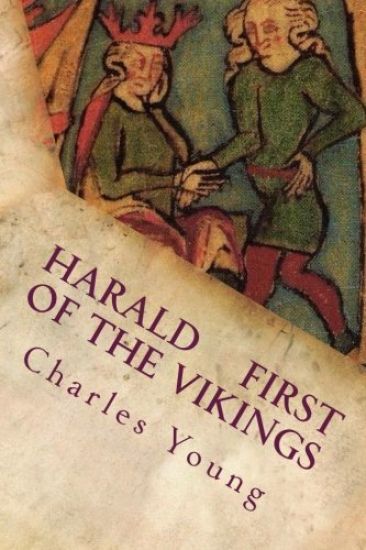
The early tales of Harald Fairhair, King of the Vikings. Published in 1911, these stories come from Viking sagas and other source documents and tell of the raiding, sea roving, exploration and ruling a vast Viking civilization.

Harald Szeemann - Selected Writings
Harald Szeemann; Doris Chon; Glenn Phillips; Pietro Rigolo; Jonathan Blower; Elizabeth Tucker
Getty Publications
2018
nidottu
Born in Bern, Switzerland in 1933, Harald Szeemann was a crucial force in identifying, exhibiting, and writing about the important new movements in postwar contemporary art. This collection of seventy-four texts from the curator's vast body of written work-which includes essays, lectures, studio notes, reviews, interviews, correspondence, and transcripts-introduces the depth of his method, insight, and inclusive artistic interests. The pieces have been translated from German and French and collected in an informed, authoritative edition, making this the first time Szeemann's work is accessible in English. The first two sections of this volume republish Szeemann's anthologies "Museum der Obsessionen" (1981) and "Individuelle Mythologien" (1985). The final part assembles important writing from 1986 until his death in 2005 to represent the later years of his career and round out a record of his contribution to and dialogue with later twentieth century art and artists. The book's publication coincides with the opening of the Getty Research Institute's exhibition Harald Szeemann: Museum of Obsessions, as well as a satellite show that recreates on Szeemann's "Grandfather exhibition" at the Institute of Contempoary Art, Los Angeles.
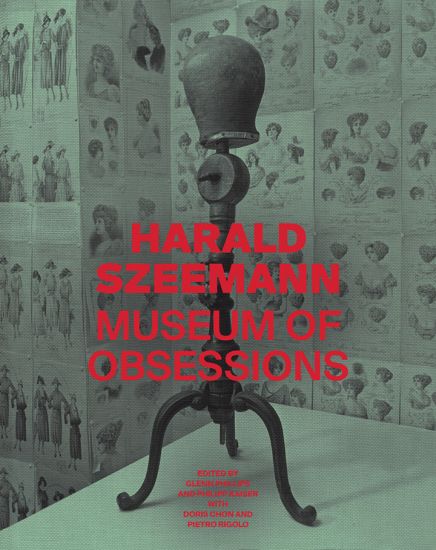
Harald Szeemann - Museum of Obsessions
Glenn Phillips; Philipp Kaiser; Doris Chon; Pietro Rigolo
Getty Publications
2018
sidottu
Harald Szeemann is associated with some of the most important artistic developments of the postwar era. A passionate advocate of avant-garde movements like conceptualism and post minimalism, he collaborated with artists such as Joseph Beuys, Bruce Nauman, Richard Serra, and Cy Twombly, developing new ways of presenting art that reflected his sweeping vision of contemporary culture. Szeemann once stated that his goal as an exhibition maker was to create a "Museum of Obsessions." This richly illustrated volume is a virtual collection catalogue for that imaginary institution, tracing the evolution of his curatorial method through the materials he collected and produced while researching and organising his exhibitions, including letters, drawings, personal datebooks, installation plans, artists' books, posters, photographs, and handwritten notes. This book documents all phases of Szeemann's career, from his early stint as director of the Kunsthalle Bern, where he organized the seminal Live in Your Head: When Attitudes Become Form (1969); to documenta 5 (1972) and the intensely personal exhibition he staged in his own apartment using the belongings of his hairdresser grandfather (1974); to his reinvention as a freelance curator who realised projects on wide-ranging themes until his death in 2005. The book contains essays exploring Szeemann's curatorial approach as well as interviews with collaborators. Its more than 350 illustrations include previously unpublished installation photographs and exhibition documents as well as many other materials from the curator's archive.