Kirjojen hintavertailu. Mukana 12 442 695 kirjaa ja 12 kauppaa.

Kirjahaku

Etsi kirjoja tekijän nimen, kirjan nimen tai ISBN:n perusteella.

1000 tulosta hakusanalla Harold G Koenig; Sybil Smith

Parish Nursing

Parish Nursing

Harold G Koenig; Sybil Smith

Routledge Member of the Taylor and Francis Group
2003
sidottu
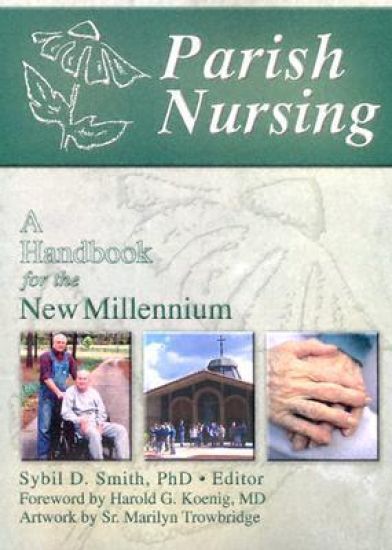
Make parish nursing an alternative to shrinking healthcare resources! Because of shrinking healthcare resources, both human and monetary, parish nurses in the future will be called upon to deal with rising numbers of elderly and the end-of-life issues that accompany aging. Parish Nursing: A Handbook for the New Millennium is a guide to designing programs that can complement a congregation's ministry priorities for senior adults, identifying strengths to reinforce and weaknesses to avoid. Stories from the fields of service capture the sweat equity and history of the re-emergence of nursing in churches. Parish Nursing: A Handbook for the New Millennium is a practical planning guide for parish nurses and congregational committee members with limited experience in program development. Suitable for use with multiple faith traditions, the book demonstrates how to take responsibility for health ministries without leaning on direction from local hospitals. Parish Nursing presents multiple practice models, intervention strategies, and methods of program evaluation responsive to boundaries and traditions of various communities of faith. Parish Nursing includes: conceptual frameworks program design options outlines from field-tested training modules program evaluation options and challenges and much more!In 2001, there were 35 million people over the age of 65 living in the United Statesa number that’s expected to double in the next 10 years. The American Academy of Family Physicians estimates that nearly 20 percent of family doctors are no longer accepting new Medicare patients. Parish Nursing: A Handbook for the New Millennium is an essential resource for nurses, pastors, and church leaders starting a parish nurse ministry to deal with the growing number of forgotten elderly persons.
Parish Nursing

Parish Nursing

Harold G Koenig; Sybil Smith

Routledge Member of the Taylor and Francis Group
2003
nidottu
Make parish nursing an alternative to shrinking healthcare resources! Because of shrinking healthcare resources, both human and monetary, parish nurses in the future will be called upon to deal with rising numbers of elderly and the end-of-life issues that accompany aging. Parish Nursing: A Handbook for the New Millennium is a guide to designing programs that can complement a congregation's ministry priorities for senior adults, identifying strengths to reinforce and weaknesses to avoid. Stories from the fields of service capture the sweat equity and history of the re-emergence of nursing in churches. Parish Nursing: A Handbook for the New Millennium is a practical planning guide for parish nurses and congregational committee members with limited experience in program development. Suitable for use with multiple faith traditions, the book demonstrates how to take responsibility for health ministries without leaning on direction from local hospitals. Parish Nursing presents multiple practice models, intervention strategies, and methods of program evaluation responsive to boundaries and traditions of various communities of faith. Parish Nursing includes: conceptual frameworks program design options outlines from field-tested training modules program evaluation options and challenges and much more!In 2001, there were 35 million people over the age of 65 living in the United Statesa number that’s expected to double in the next 10 years. The American Academy of Family Physicians estimates that nearly 20 percent of family doctors are no longer accepting new Medicare patients. Parish Nursing: A Handbook for the New Millennium is an essential resource for nurses, pastors, and church leaders starting a parish nurse ministry to deal with the growing number of forgotten elderly persons.
A Gospel for the Mature Years

A Gospel for the Mature Years

Harold G Koenig

Routledge Member of the Taylor and Francis Group
1997
sidottu
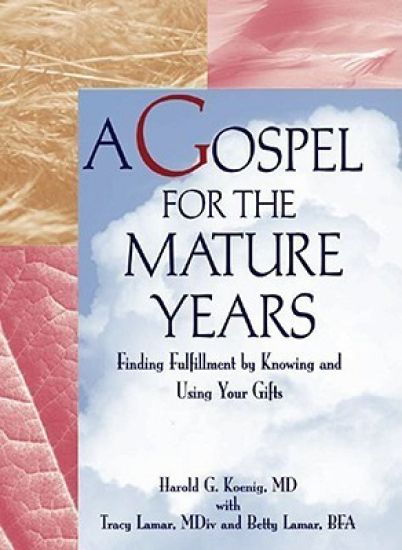
There’s good news for middle-aged and older adults who wish to grow emotionally and spiritually and experience satisfaction and joy in their mature years regardless of circumstance, health, or age. A Gospel for the Mature Years shows you how to achieve joy and fulfillment by developing a deep, personal, intimate relationship with God, recognizing your God-given gifts, and using your abilities in service to others. Our later years are not meant to be a time for idleness and withdrawal from life. Rather, this is an exciting, meaningful, and action-packed time when we should grab hold of life and live it fully, advancing God’s kingdom in our families, communities, and nation.Meant both for individual reading and for use in churches as a workbook for small discussion groups, A Gospel for the Mature Years is arranged to facilitate use in classes running on a calendar quarter of 13 Sundays. Questions for discussion at the end of each chapter have been designed to encourage individual preparation for participation in the group. Specific topics you learn about include:emotional growth and spiritual development achievement of well-being and fulfillment achieving Christian maturity preventing depression counseling and caregiving using one’s gifts and talents overcoming barriers to loving and serving others avoiding burnout and exhaustion when loving and serving others These are increasingly difficult times, requiring that God’s people work together by utilizing their talents for the benefit of others. The authors make clear that the call to service does not end with retirement. We can use this inspirational book to identify our gifts and learn how to best use them in service to God and others. A Gospel for the Mature Years will help us produce a society of people with vision--a vision of hope that life can have meaning and purpose regardless of circumstance, and of faith that every person has been given a gift that will enable them to make a difference in this world and make it a better place for their children and grandchildren.
Is Religion Good for Your Health?

Is Religion Good for Your Health?

Harold G Koenig

Routledge Member of the Taylor and Francis Group
1997
sidottu
Is Religion Good for Your Health? takes you deep into the heart of the ageless debate on the importance of religion and faith to physical and mental health. On the one hand, you will learn about important research findings from cross-sectional, longitudinal, and intervention studies that have demonstrated positive effects of religious belief on both mental and physical health. On the other hand, you will learn how the vast clinical experiences of leading health experts suggest that religion can have negative effects on health. Integral to the book’s exploration of the relationship between health and religion are the trends that have occurred in society over the last century. You will learn about significant demographic changes, changes in health and health care, and shifts in values, attitudes, and religious conviction, all of which have direct implications for health care providers, the clergy, the “baby boomers,” and older adults. From Author Harold Koenig, a leading expert on religion and health who has frequently been interviewed by major broadcasting networks such as ABC, National Public Radio, the British Broadcasting Corporation, NBC, CBS, and “Ivanhoe Broadcast News,” you will also learn about:pathological uses of religion the need for cooperation and collaboration between health and religious professionals studies on the relationship of religious beliefs and practice to physical conditions such as blood pressure, heart disease, stroke, and cancer links between religious behavior and depression, anxiety, and drug use the waning of religion’s influence in America first-hand accounts from patients who have faced painful and/or life-threatening illnessAs Is Religion Good for Your Health? analyzes the pathological aspects of religion, you will begin to understand how religious beliefs have the capacity to strongly influence people’s lives and their health, whether positively or negatively. Health care providers, public policy experts, religious professionals, medical researchers, and medical students will find the book’s overview of the issues at stake, particularly the implications for our public health care system, crucial to the advancement of health care practice into the next century.
A Gospel for the Mature Years

A Gospel for the Mature Years

Harold G Koenig

Routledge Member of the Taylor and Francis Group
1997
nidottu
There’s good news for middle-aged and older adults who wish to grow emotionally and spiritually and experience satisfaction and joy in their mature years regardless of circumstance, health, or age. A Gospel for the Mature Years shows you how to achieve joy and fulfillment by developing a deep, personal, intimate relationship with God, recognizing your God-given gifts, and using your abilities in service to others. Our later years are not meant to be a time for idleness and withdrawal from life. Rather, this is an exciting, meaningful, and action-packed time when we should grab hold of life and live it fully, advancing God’s kingdom in our families, communities, and nation.Meant both for individual reading and for use in churches as a workbook for small discussion groups, A Gospel for the Mature Years is arranged to facilitate use in classes running on a calendar quarter of 13 Sundays. Questions for discussion at the end of each chapter have been designed to encourage individual preparation for participation in the group. Specific topics you learn about include:emotional growth and spiritual development achievement of well-being and fulfillment achieving Christian maturity preventing depression counseling and caregiving using one’s gifts and talents overcoming barriers to loving and serving others avoiding burnout and exhaustion when loving and serving others These are increasingly difficult times, requiring that God’s people work together by utilizing their talents for the benefit of others. The authors make clear that the call to service does not end with retirement. We can use this inspirational book to identify our gifts and learn how to best use them in service to God and others. A Gospel for the Mature Years will help us produce a society of people with vision--a vision of hope that life can have meaning and purpose regardless of circumstance, and of faith that every person has been given a gift that will enable them to make a difference in this world and make it a better place for their children and grandchildren.
Is Religion Good for Your Health?

Is Religion Good for Your Health?

Harold G Koenig

Routledge Member of the Taylor and Francis Group
1997
nidottu
Is Religion Good for Your Health? takes you deep into the heart of the ageless debate on the importance of religion and faith to physical and mental health. On the one hand, you will learn about important research findings from cross-sectional, longitudinal, and intervention studies that have demonstrated positive effects of religious belief on both mental and physical health. On the other hand, you will learn how the vast clinical experiences of leading health experts suggest that religion can have negative effects on health. Integral to the book’s exploration of the relationship between health and religion are the trends that have occurred in society over the last century. You will learn about significant demographic changes, changes in health and health care, and shifts in values, attitudes, and religious conviction, all of which have direct implications for health care providers, the clergy, the “baby boomers,” and older adults. From Author Harold Koenig, a leading expert on religion and health who has frequently been interviewed by major broadcasting networks such as ABC, National Public Radio, the British Broadcasting Corporation, NBC, CBS, and “Ivanhoe Broadcast News,” you will also learn about:pathological uses of religion the need for cooperation and collaboration between health and religious professionals studies on the relationship of religious beliefs and practice to physical conditions such as blood pressure, heart disease, stroke, and cancer links between religious behavior and depression, anxiety, and drug use the waning of religion’s influence in America first-hand accounts from patients who have faced painful and/or life-threatening illnessAs Is Religion Good for Your Health? analyzes the pathological aspects of religion, you will begin to understand how religious beliefs have the capacity to strongly influence people’s lives and their health, whether positively or negatively. Health care providers, public policy experts, religious professionals, medical researchers, and medical students will find the book’s overview of the issues at stake, particularly the implications for our public health care system, crucial to the advancement of health care practice into the next century.
Chronic Pain

Chronic Pain

Harold G Koenig

Routledge Member of the Taylor and Francis Group
2003
sidottu
Help your clients achieve victory over chronic pain and lead more fulfilling lives!This insightful and informative book will help you deliver better pain management services to the people you care for. Incorporating biomedical, surgical, psychological, social, and spiritual perspectives, it provides vital, up-to-date information about how to reduce physical pain and explores techniques for improving people’s ability to cope with it. Helpful tables provide easy access to information on medications for pain and managing side effects.Chronic Pain: Biomedical and Spiritual Approaches is filled with resources for the person in pain and for the health or religious professionals working to help them. It gives you very specific suggestions on how to manage chronic pain, including detailed information about medications, alternative therapies, psychological treatments, and spiritual strategies for pain management. The book is completed by two thoughtful appendixes: one examining pain medications and ways to manage their side effects and the other providing scriptural passages that can comfort those in pain.In addition to his experiences treating patients with chronic pain, the author suffers from chronic pain and disability himself. In this very personal book, he explores ways to help people coping with: low back pain fibromyalgia rheumatologic pain headaches the pain of multiple sclerosis other types of chronic unrelenting painChronic Pain: Biomedical and Spiritual Approaches can help people in pain and their families by showing them how to lead satisfying, joy-filled lives--whether their pain goes away or not. It is an essential reference book for everyone who works with pain sufferers as well as patients and their families!
Chronic Pain

Chronic Pain

Harold G Koenig

Routledge Member of the Taylor and Francis Group
2002
nidottu
Help your clients achieve victory over chronic pain and lead more fulfilling lives!This insightful and informative book will help you deliver better pain management services to the people you care for. Incorporating biomedical, surgical, psychological, social, and spiritual perspectives, it provides vital, up-to-date information about how to reduce physical pain and explores techniques for improving people’s ability to cope with it. Helpful tables provide easy access to information on medications for pain and managing side effects.Chronic Pain: Biomedical and Spiritual Approaches is filled with resources for the person in pain and for the health or religious professionals working to help them. It gives you very specific suggestions on how to manage chronic pain, including detailed information about medications, alternative therapies, psychological treatments, and spiritual strategies for pain management. The book is completed by two thoughtful appendixes: one examining pain medications and ways to manage their side effects and the other providing scriptural passages that can comfort those in pain.In addition to his experiences treating patients with chronic pain, the author suffers from chronic pain and disability himself. In this very personal book, he explores ways to help people coping with: low back pain fibromyalgia rheumatologic pain headaches the pain of multiple sclerosis other types of chronic unrelenting painChronic Pain: Biomedical and Spiritual Approaches can help people in pain and their families by showing them how to lead satisfying, joy-filled lives--whether their pain goes away or not. It is an essential reference book for everyone who works with pain sufferers as well as patients and their families!
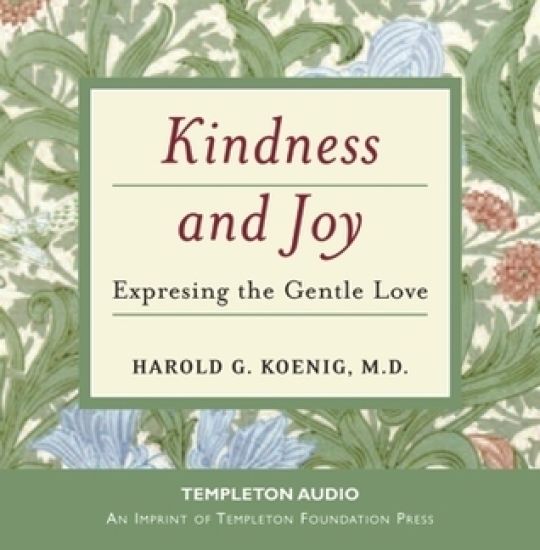
Kindness and Joy

Kindness and Joy

Harold G Koenig

Templeton Foundation Press,U.S.
2006
pokkari
This book includes guidance as well as information and inspiration. There are practical recommendations on how to perform acts of kindness in personal lives and at work, toward friends, colleagues, and family members-even with one's enemies. Suggestions are also offered on ways to encourage others to be kind so they, too, can experience the joy that results.
Kindness and Joy

Kindness and Joy

Harold G Koenig

Templeton Foundation Press,U.S.
2006
cd
This book includes guidance as well as information and inspiration. There are practical recommendations on how to perform acts of kindness in personal lives and at work, toward friends, colleagues, and family members-even with one's enemies. Suggestions are also offered on ways to encourage others to be kind so they, too, can experience the joy that results.
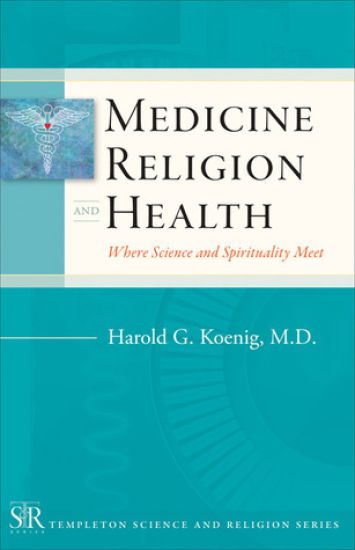
Medicine, Religion, and Health

Medicine, Religion, and Health

Harold G Koenig

Templeton Foundation Press,U.S.
2008
pokkari
Medicine, Religion, and Health: Where Science and Spirituality Meet will be the first title published in the new Templeton Science and Religion Series, in which scientists from a wide range of fields distill their experience and knowledge into brief tours of their respective specialties. In this, the series' maiden volume, Dr. Harold G. Koenig, provides an overview of the relationship between health care and religion that manages to be comprehensive yet concise, factual yet inspirational, and technical yet easily accessible to nonspecialists and general readers. Focusing on the scientific basis for integrating spirituality into medicine, Koenig carefully summarizes major trends, controversies, and the latest research from various disciplines and provides plausible and compelling theoretical explanations for what has thus far emerged in this relatively young field of study. Medicine, Religion, and Health begins by defining the principal terms and then moves on to a brief history of religion's role in medicine before delving into the current state of research. Koenig devotes several chapters to exploring the outcomes of specific studies in fields such as mental health, cardiovascular disease, and mortality. The book concludes with a review of the clinical applications derived from the research. Koenig also supplies several detailed appendices to aid readers of all levels looking for further information. Medicine, Religion, and Health will shed new light on critical contemporary issues. They will whet readers' appetites for more information on this fascinating, complex, and controversial area of research, clinical activity, and widespread discussion. It will find a welcome home on the bookshelves of students, researchers, clinicians, and other health professionals in a variety of disciplines.
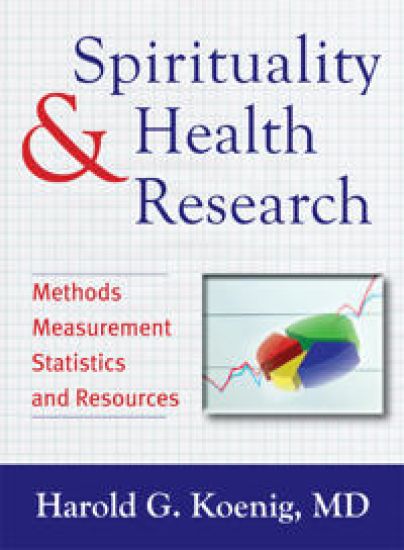
Spirituality and Health Research

Spirituality and Health Research

Harold G Koenig

TEMPLETON FOUNDATION PRESS,U.S.
2011
pokkari
In Spirituality and Health Research: Methods, Measurement, Statistics, and Resources, Dr. Harold G. Koenig leads a comprehensive overview of this complex subject. Dr. Koenig is one of the world’s leading authorities on the relationship between spirituality and health, and a leading researcher on the topic. As such, he is distinctively qualified to author such a book. This unique source of information on how to conduct research on religion, spirituality, and health includes practical information that goes well beyond what is typically taught in most undergraduate, graduate, or even post-doctoral level courses. This volume reviews what research has been done, discusses the strengths and limitations of that research, provides a research agenda for the future that describes the most important studies that need to be done to advance the field, and describes how to actually conduct that research (design, statistical analysis, and publication of results). It also covers practical matters such as how to write fundable grants to support the research, where to find sources of funding support for research in this area, and what can be done even if the researcher has little or no funding support. The information gathered together here, which has been reviewed for accuracy and comprehensiveness by research design and statistical experts, has been acquired during a span of over twenty-five years that Dr. Koenig spent conducting research, reviewing others’ research, reviewing research grants, and interacting with mainstream biomedical researchers both within and outside the field of spirituality and health. The material is presented in an easy to read and readily accessible form that will benefit researchers at almost any level of training and experience.
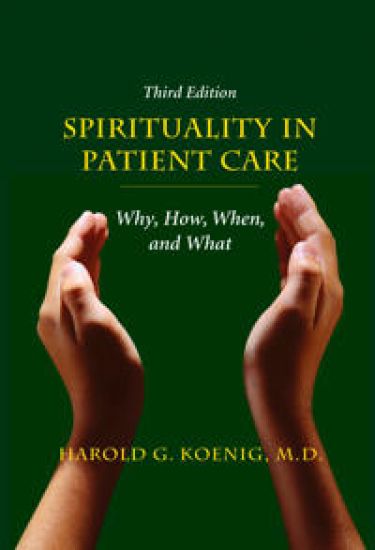
Spirituality in Patient Care

Spirituality in Patient Care

Harold G Koenig

TEMPLETON FOUNDATION PRESS,U.S.
2013
pokkari
Praise for the previous edition:“I highly recommend this book as reading for all physicians and would certainly recommend it for any course on medical ethics and/or required reading for any medical student.”-Journal of the National Medical Association Since the publication of the first edition of Spirituality in Patient Care in 2002, the book has earned a reputation as the authoritative introduction to the subject for health professionals interested in identifying and addressing the spiritual needs of patients. The body of research on religion, spirituality, and health continues to grow at a dramatic rate, creating an urgent need for a new edition of this landmark work. In this, the third edition, Harold G. Koenig, M.D., updates every chapter by incorporating the newest research and introducing sensible ways of translating that research into caring for patients. Like previous editions, this new one addresses the whys, hows, whens, and whats of patient-centered integration of spirituality into patient care so that health professionals, including physicians in primary care and the medical and surgical specialties, can utilize this information in clinical practice. Whole chapters are also included offering profession-specific information for nurses, clergy, mental health professionals, social workers, and occupational and physical therapists. Other chapters address topics like culturally and spiritually sensitive care for each major religious group, potential limitations or barriers to application, and even what may happen when research on spirituality and health is misapplied. Throughout these chapters, readers will find new case histories and clinical examples on how to integrate spirituality into patient care depending on their particular circumstances. A ten-session model course curriculum on spirituality and health care for medical students and residents is also provided, with suggestions on how to adapt it for nursing, social work, physical and occupational therapy, and mental health training programs. For more than ten years Spirituality in Patient Care has offered sound guidance to anyone wishing to do more than simply treat their patients’ physical symptoms. Treating the whole patient often requires becoming something more than just a skilled technician. With this new edition, Dr. Koenig once again shows the way for any health professional seeking to bridge this gap and help patientsregain their lives by finding hope, meaning, and healing.
Faith and Mental Health

Faith and Mental Health

Harold G Koenig

Templeton Foundation Press,U.S.
2005
nidottu
Dr. Harold Koenig opens a window on mental health, providing an unprecedented source of practical information about the relationship between religion and mental health. He examines how Christianity and other world religions deliver mental health services today, and he makes recommendations, based on research, expertise, and experience, for new programs to meet local needs. Meticulously researched and documented, Faith and Mental Health includes Research on the relationship between religion and positive emotions, psychiatric illnesses, and severe and persistent mental disordersWays in which religion has influenced mental health historically, and how now and in the future it can be involved with mental healthA comprehensive description and categorization of Christian and non-Christian faith-based organizations that provide mental health resourcesResources for religious professionals and faith communities on how to design effective programs Presenting a combination of the history and current research of mental health and religion along with a thorough examination of faith-based organizations operating in the field, this book is a one-of-a-kind resource for the healthcare community; its valuable research and insights will benefit medical and religious professionals, and anyone concerned with the future of mental health care.
In the Wake of Disaster

In the Wake of Disaster

Harold G Koenig

Templeton Foundation Press,U.S.
2006
pokkari
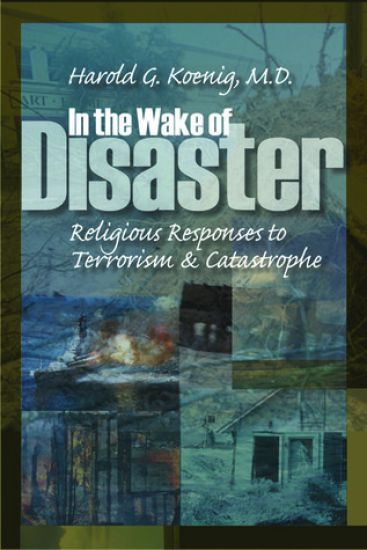
In a timely book with a powerful and persuasive message, Dr. Harold G. Koenig addresses federal, state, and local government policy leaders, urging them to more fully integrate religious organizations into the formal disaster response system, and he then provides recommendations on how this can effectively be done. Koenig also advocates faith communities and organizations to learn more about the role they can play in responding to disasters and terrorism. The chaotic aftermath of Hurricane Katrina made extraordinarily clear the gaps in the United States' disaster policies. At the same time, the contributions of organized faith communities were highlights amidst the bungled federal, state, and local responses. One example is the New York Times, September 9, 2005, headline: "A New Meaning for 'Organized Religion': It Helps the Needy Quickly." But as faith-based organizations look for ways to help, there are few, if any, guidelines for them. This book provides information on the psychological, social, and spiritual responses to trauma. It addresses how the emergency response system works, and the role that religious communities can play in disaster response and recovery in terms of providing emotional and spiritual care for victims. It advocates integrating mental health into emergency response systems directed at those affected by hurricanes, floods, earthquakes, and terrorism. "The aim is to help victims of disaster to better cope with the stresses they face, as well as help direct care workers (firefighters, police, health care providers, etc.) to deal better emotionally with the trauma to which they are exposed so they can remain effective and functional on the job," explains Dr. Koenig, whose research on the healing power of faith has been published worldwide. Increasing the resiliency of our communities in the face of disaster is crucial. Religious communities have tremendous potential to contribute to this. Here are guidelines on how to do that more effectively, alongside data on how to facilitate the integration of these contributions with the formal disaster-response system.
Adventures in Senior Living

Adventures in Senior Living

Harold G Koenig; J Lawrence Driskill

Routledge Member of the Taylor and Francis Group
1997
nidottu
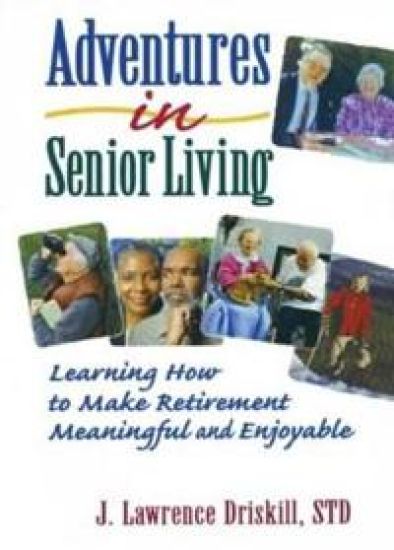
If retirement is approaching or you've recently retired, Adventures in Senior Living can help you prepare for the opportunities, needs, problems, and challenges that retirement often brings. Through 31 lively and interesting interviews, you learn how other people have found positive and rewarding ways to make their retirement years meaningful and enjoyable. Opening windows into their own lives, these inspiring retirees share with you a wide range of retirement ideas that pertain to volunteer work, travel, selecting your living arrangements, and getting involved in your community.Retirement doesn't have to bring feelings of boredom or restlessness. Adventures in Senior Living shows you that your retirement years can be your most fulfilling, productive, and fun years. You'll have more time to work in that garden you love, make quilts with your friends, spend time with your loved ones, and get exercise. But, possibly even more important than that, you'll have the ability to participate in your community on an entirely new level and to make a difference in other people's lives as well as your own. The life-loving, generous people who come together in this wonderful book are sure to inspire you as they speak about their accomplishments that include:recording books on tape for blind people conducting missionary work at home and abroad brightening the lives of patients in nursing homes and hospitals teaching Sunday school caring for a spouse with Alzheimer's delivering meals on wheels to shut-in people establishing a battered women's shelter rescuing prostitutes from the streetThis book presents retirees, teachers of courses in aging and retirement, activity directors at retirement and nursing homes, family members, and health and mental health care providers with many stories of extraordinary volunteerism, service, and kindness, but it also talks about the needs of retirees and their daily, more personal experiences. To this end, Adventures in Senior Living discusses the importance of continuing study, discussion, meditation, prayer, and fitness in the lives of seniors.
Dying, Grieving, Faith, and Family

Dying, Grieving, Faith, and Family

Harold G Koenig; George W Bowman

Routledge Member of the Taylor and Francis Group
1997
sidottu
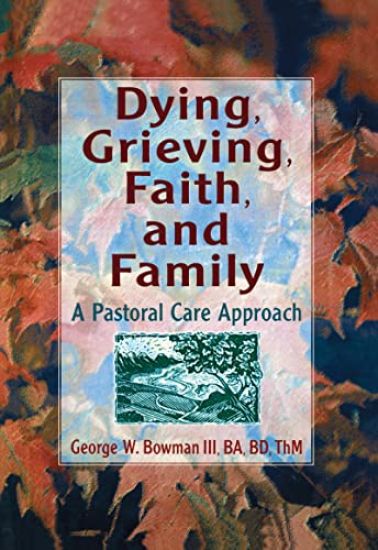
Dying, Grieving, Faith, and Family: A Pastoral Care Approach enables grief counselors, pastors, hospice specialists, hospital chaplains, mental health practitioners, educators, and seminary students to bring an understanding of faith development, family systems, and gender and ethnic differences into their professional practice as they work with dying and grieving persons. No other book covers all these themes. Not only a great resource for practical guidance, this book is also meant to be provocative, suggestive, and stimulating to professionals and educators charged with working with and teaching about dying and grieving persons.With 50 years of providing pastoral care to dying and grieving persons and 30 years as a pastoral educator, George Bowman understands the nature and concerns of dying and grieving persons. In Dying, Grieving, Faith, and Family he answers the questions you should be asking yourself--including:How does faith development affect relationships of the dying person and family and friends? How does faith development affect grief management by the survivors? How does the family systems approach help the pastor or counselor work with dying persons and their survivors? What gender and ethnic issues are important to remember in helping to minister and serve persons in crises of dying and grieving?The value of Dying, Grieving, Faith, and Family lies in its approach to dying and grieving from the perspectives of faith development, family systems theory, gender, and ethnicity. Bowman’s unique work proposes that personal development and faith development influence the way one deals with the crises of dying and grief work.
Dying, Grieving, Faith, and Family

Dying, Grieving, Faith, and Family

Harold G Koenig; George W Bowman

Routledge Member of the Taylor and Francis Group
1997
nidottu
Dying, Grieving, Faith, and Family: A Pastoral Care Approach enables grief counselors, pastors, hospice specialists, hospital chaplains, mental health practitioners, educators, and seminary students to bring an understanding of faith development, family systems, and gender and ethnic differences into their professional practice as they work with dying and grieving persons. No other book covers all these themes. Not only a great resource for practical guidance, this book is also meant to be provocative, suggestive, and stimulating to professionals and educators charged with working with and teaching about dying and grieving persons.With 50 years of providing pastoral care to dying and grieving persons and 30 years as a pastoral educator, George Bowman understands the nature and concerns of dying and grieving persons. In Dying, Grieving, Faith, and Family he answers the questions you should be asking yourself--including:How does faith development affect relationships of the dying person and family and friends? How does faith development affect grief management by the survivors? How does the family systems approach help the pastor or counselor work with dying persons and their survivors? What gender and ethnic issues are important to remember in helping to minister and serve persons in crises of dying and grieving?The value of Dying, Grieving, Faith, and Family lies in its approach to dying and grieving from the perspectives of faith development, family systems theory, gender, and ethnicity. Bowman’s unique work proposes that personal development and faith development influence the way one deals with the crises of dying and grief work.
The Pastoral Care of Depression

The Pastoral Care of Depression

Harold G Koenig; Binford W Gilbert

Routledge Member of the Taylor and Francis Group
1997
sidottu
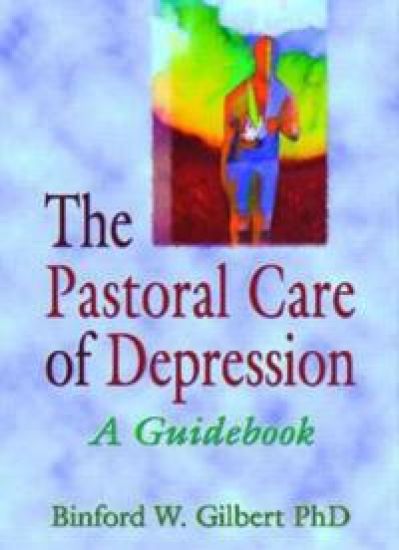
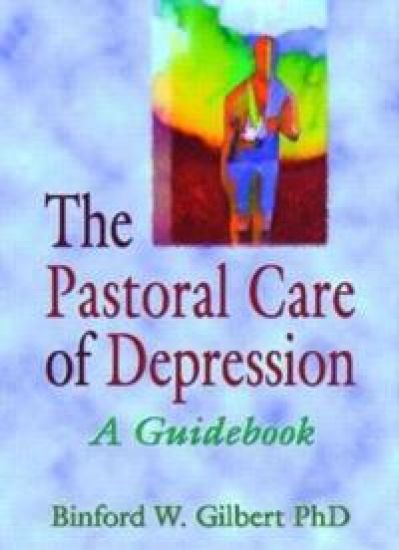
What is depression, and what are its many and varied types? Who becomes depressed, and how can it be recognized? How can depression be measured, and what are its suicidal potentialities? What are the therapeutic interventions the pastor can use in helping people who are undergoing the pain of depression? The Pastoral Care of Depression: A Guidebook answers these questions and many more. With a focus on the pastor as an instrument of healing in cooperation with families, physicians, and other mental health professionals, this book will help you understand some of the current research and procedures used in helping people suffering from depression. As the frontline mental health workers in many communities, pastors need confidence, competence, and skill in handling people with emotional problems. As Author Binford W. Gilbert explains, “Depression is among the most treatable of major illnesses. It enters the realm of the spiritual and demands the best of the pastoral leader to guide, assist, and enhance the struggle for peace and soundness of mind and body.” The Pastoral Care of Depression helps caregivers by overcoming the simplistic myths about depressive disorders and probing the real issues. This book covers:a thorough description of clinical depression predisposing factors that may lead to depression the need for a multidisciplinary approach, and the role of the pastor on the treatment team the importance of church and family involvement diagnosis--the ability to distinguish between normal grief, ordinary blues, situational depression, and clinical depression ministers’own emotional, physical, mental, and relational health the pastor’s privileged role that gives him/her unique abilities and opportunitiesA valuable resource for pastors, chaplains, counselors, psychiatrists, psychologists, physicians, family members, and teachers of pastoral care, The Pastoral Care of Depression is meant to inspire action-oriented counseling; to establish cooperative relationships between ministers, families, and the medical community; to carry out responsible and innovative creative therapeutic interventions; and to treat the whole human being.
The Pastoral Care of Depression

The Pastoral Care of Depression

Harold G Koenig; Binford W Gilbert

Routledge Member of the Taylor and Francis Group
1997
nidottu
What is depression, and what are its many and varied types? Who becomes depressed, and how can it be recognized? How can depression be measured, and what are its suicidal potentialities? What are the therapeutic interventions the pastor can use in helping people who are undergoing the pain of depression? The Pastoral Care of Depression: A Guidebook answers these questions and many more. With a focus on the pastor as an instrument of healing in cooperation with families, physicians, and other mental health professionals, this book will help you understand some of the current research and procedures used in helping people suffering from depression. As the frontline mental health workers in many communities, pastors need confidence, competence, and skill in handling people with emotional problems. As Author Binford W. Gilbert explains, “Depression is among the most treatable of major illnesses. It enters the realm of the spiritual and demands the best of the pastoral leader to guide, assist, and enhance the struggle for peace and soundness of mind and body.” The Pastoral Care of Depression helps caregivers by overcoming the simplistic myths about depressive disorders and probing the real issues. This book covers:a thorough description of clinical depression predisposing factors that may lead to depression the need for a multidisciplinary approach, and the role of the pastor on the treatment team the importance of church and family involvement diagnosis--the ability to distinguish between normal grief, ordinary blues, situational depression, and clinical depression ministers’own emotional, physical, mental, and relational health the pastor’s privileged role that gives him/her unique abilities and opportunitiesA valuable resource for pastors, chaplains, counselors, psychiatrists, psychologists, physicians, family members, and teachers of pastoral care, The Pastoral Care of Depression is meant to inspire action-oriented counseling; to establish cooperative relationships between ministers, families, and the medical community; to carry out responsible and innovative creative therapeutic interventions; and to treat the whole human being.