Kirjojen hintavertailu. Mukana 11 244 527 kirjaa ja 12 kauppaa.

Kirjahaku

Etsi kirjoja tekijän nimen, kirjan nimen tai ISBN:n perusteella.

1000 tulosta hakusanalla Harold J. Meyer

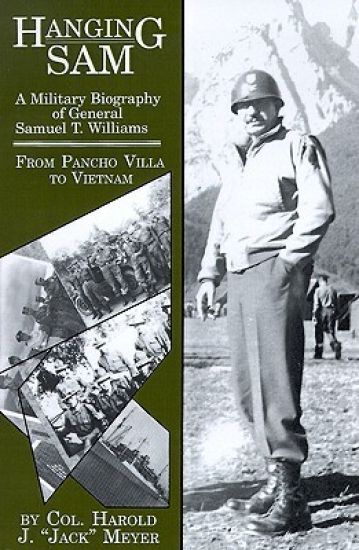
Hanging Sam

Hanging Sam

Harold J. Meyer

Texas A M University Press
2000
nidottu
Hanging Sam chronicles the life of Lt. General Samuel T. "Hanging Sam" Williams, who, after being relieved of his duties as Assistant Division Commander of the 90th Infantry Division and demoted from the rank of brigadier general following the 1944 Normany invasion, persevered to recover not only his lost star but two additional ones as well, an accomplishment unmatched in modern U. S. Army history. Following enlistment in the Texas Militia in 1916 to fight Pancho Villa along the U.S.-Mexican border, Williams served in both World Wars, the Korean War (where he commanded the 25th Infantry Dividion), and Vietnam (where from 1955 to 1960 he was Chief of the U. S. Military Assistance and Advisory Group). Wounded twice in battle, Williams was decorated with every medal for valor the Army awards, except the Medal of Honor.
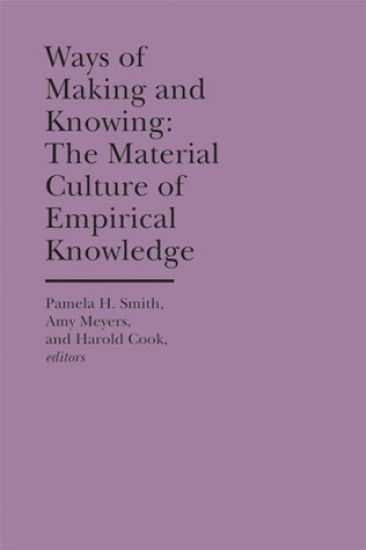
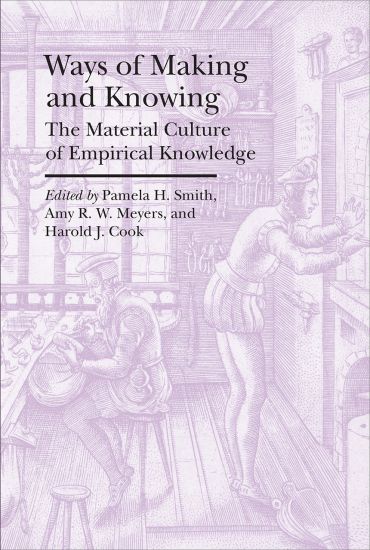
Ways of Making and Knowing

Ways of Making and Knowing

Smith Pamela H.; Meyers Amy; Cook Harold J.

The University of Michigan Press
2014
sidottu
"Making" and "knowing" have generally been viewed as belonging to different types and orders of knowledge. "Craft" and "making" have been associated with how-to information, oriented to a particular situation or product, often informal and tacit, while "knowing" has been related to theoretical, propositional, and abstract knowledge including natural science. Although craftspeople and artists have worked with natural materials and sometimes have been viewed as experts in the behaviour of matter, the notion that making art can constitute a means of knowing nature is a novel one. Ways of Making and Knowing explores the circumstances under which making constituted knowing, and, more specifically, it examines the relationship between making objects and knowing nature in Europe from about 1450 to 1850. With contributions from historians of science, medicine, art, and material culture, this volume shows that the histories of science and art are not simply histories of concepts or styles, or at least not that alone, but histories of the making and using of objects to understand the world.
Ways of Making and Knowing – The Material Culture of Empirical Knowledge

Ways of Making and Knowing – The Material Culture of Empirical Knowledge

Pamela H. Smith; Amy R.w. Meyers; Harold J. Cook

Bard Graduate Center, Exhibitions Department
2017
nidottu
Although craftspeople and artists often work with natural materials, the notion that making art can constitute a means of knowing nature is a novel one. This book, with contributions from historians of science, medicine, art, and material culture, shows that the histories of science and art are not simply histories of concepts or styles, but histories of the making and using of objects to understand the world. An examination of material practices makes it clear that the methods of the artisan represent a process of knowledge making that involves extensive experimentation and observation that parallel similar processes in the sciences. Ways of Making and Knowing offers a comprehensive and interdisciplinary history of the ways in which human beings have sought out, discovered, and preserved their own knowledge of the world around them; it has only been through material and human interaction with (and manipulation of) nature that we have come to understand it.
Studies in the Problem of Sovereignty (Works of Harold J. Laski)
An influential study of political power, originally published in 1917. Laski's theoretical ideas are elaborated through examples drawn from political and religious movements, such as the Catholic Revival and the creation of the German Empire. He concludes that the state is not a supreme entity; it is one association among many that must compete for the people's loyalty and obedience.
Authority in the Modern State (Works of Harold J. Laski)
As a sequel to Studies in the Problem of Sovereignty, this volume, originally published in 1919, expands Laski’s pluralist doctrine of the state, (using France as its reference) but covers rather broader ground, since its main object is to insist that the problem of sovereignty is only a special case of the problem of authority. The result is a positive, constructive analysis of politics and the theory of the state which examines the division and organisation of power, the limitations of power and the significance of freedom, the political theory of Bonald, the revival of traditionalism and the role of the Church and the Civil Service.
The Foundations of Sovereignty (Works of Harold J. Laski)
This influential study, originally published in 1921, develops aspects of Laski's theory of the state, ideas he introduced in his first important publication, Authority in the Modern State (1919). According to Laski, the state is not a supreme entity; it is one association among many that must compete for the people's loyalty and obedience.
A Grammar of Politics (Works of Harold J. Laski)
Laski’s magnum opus, this volume outlines the history and functions of state institutions which (in the author’s view) are desirable for the effective functioning of a democracy. Topics discussed include: The necessity of government; state and society; rights and power; liberty and equality; property as a theory of industrial organisation; the nature of nationalism; law as a source of authority; the functions of international organisations.
Communism (Works of Harold J. Laski)

Communism (Works of Harold J. Laski)

Harold J. Laski

Routledge
2014
sidottu
This volume bases a clear and unbiased account of Communist philosophy on the Marxian Materialist Concept of History and Marxian Theory of Value. The spear-head of Marxism is its doctrine of class-struggle and from this Laski sets out on in his exposition of the Communist attitude.Although first published in 1927, the intervening years have in no way detracted from the intrinsic value of this enlightening study, regarded by many as the essential textbook for the understanding of this subject.
The Rise of European Liberalism (Works of Harold J. Laski)
A valuable piece of intellectual history, readable in its own terms, this volume, beginning with the Renaissance and the Reformation, traces the growth of Liberal doctrine until the advent of the French Revolution. It shows the relation of Liberalism to the new economic system, and the impact of this upon science, philosophy and literature. The book explains how the same causes which produced the Liberal spirit also produced the reasons for the growth of Socialism.
Programme for Victory (Works of Harold J. Laski)

Programme for Victory (Works of Harold J. Laski)

Harold J. Laski; Harold Nicolson; Herbert Read; W. M. Macmillan; Ellen Wilkinson; G. D. H. Cole

Routledge
2014
sidottu
Written two years after the commencement of the Second World War, the chapters in this book succinctly put forward the case for reorganizing the foundations of the social order, by rejecting capitalism and historical equilibrium, both in Europe and further afield in the British Empire, in favour of building a Socialist civilization.
Communist Manifesto (Works of Harold J. Laski)
To mark the centenary of its first publication in 1848, the Labour Party issued this important special edition of the Communist Manifesto. In his (then) new historical introduction, Harold Laski discussed the authors of the Manifesto, their background and the development of their ideas. He outlined the history of the CommunistLeague, the struggles of the different sects and the emergence of Marx as a leader mandated to produce a programme. After surveying the genesis of the Manifesto, Laski discusses its contribution to world thought.
The American Democracy (Works of Harold J. Laski)
This is Laski’s most important book after A Grammar of Politics. It discusses, on a grand scale, every aspect of American public life. Laski surveys American traditions and the American spirit, political institutions, the entire educational, religious, economic and social scene, America as a world power, and Americanism as a principle of civilisation. Laski’s unsurpassed knowledge of American constitutional, social and cultural history is set in the perspective of his deep study of comparative constitutional history and political theory. He was one of very few people to see U.S. politics from the inside, as a result of his friendships with Roosevelt, Brandeis and Oliver Wendell Holmes.
Reflections on the Revolution of our Time (Works of Harold J. Laski)
This is Laski’s most important book after A Grammar of Politics. It discusses, on a grand scale, every aspect of American public life. Laski surveys American traditions and the American spirit, political institutions, the entire educational, religious, economic and social scene, America as a world power, and Americanism as a principle of civilisation. Laski’s unsurpassed knowledge of American constitutional, social and cultural history is set in the perspective of his deep study of comparative constitutional history and political theory. He was one of very few people to see U.S. politics from the inside, as a result of his friendships with Roosevelt, Brandeis and Oliver Wendell Holmes.
Reflections on the Constitution (Works of Harold J. Laski)
This work remains of interest to anyone concerned with Britain’s political institutions and how they might be reformed. Laski was strongly in favour of utilising Britain’s capacity for decisive government to drive through great social reforms. He was still confident that there was a majority will for such change and quite unable to imagine the kind of centralisation that was later to take place in the UK. If Laski is still important it is more for his pluralist views which counsel against such developments, but these lectures are still of interest in showing how a radical reformer could accept and defend established institutions like the House of Commons.