Kirjojen hintavertailu. Mukana 11 244 527 kirjaa ja 12 kauppaa.

Kirjahaku

Etsi kirjoja tekijän nimen, kirjan nimen tai ISBN:n perusteella.

1000 tulosta hakusanalla Harold Kaplan

Henry Adams and the American Naturalist Tradition
The naturalist tradition in American fiction was a product of the tremendous changes wrought in late nineteenth-century America by the development of science and technology and by the intellectual upheavals associated with the ideas of Darwin, Marx, Nietzsche, and Freud. This book is an account of naturalism, perhaps the strongest and most influential intellectual tradition or, as Harold Kaplan would argue, mythology to affect modern American literature and culture.Kaplan approaches the naturalist writers through a study of Henry Adams. He sees in Adams the paradigmatic intelligence of his time a prophetic mind, though not a seminal one and a man absorbed with the twin notions of power and order. Adams's major work illustrates the joining of a literary imagination and moral temperament with an almost obsessive response to the science, economic life, and politics of his world. Adams's work exemplifies what Kaplan calls the myth of metapolitics a view of human struggle and fate profoundly dominated by naturalist concepts of power.Kaplan then turns to the fascination that power in its various manifestations material, moral, social, political held for writers such as Dreiser, Norris, Crane, and others. Their dramatic plots, characters, and allegorical images are examined in detail. In wider reference, this book should concern those who are interested in problems of modern ethics and politics in the effort to harmonize concepts of value with images of power and natural order.
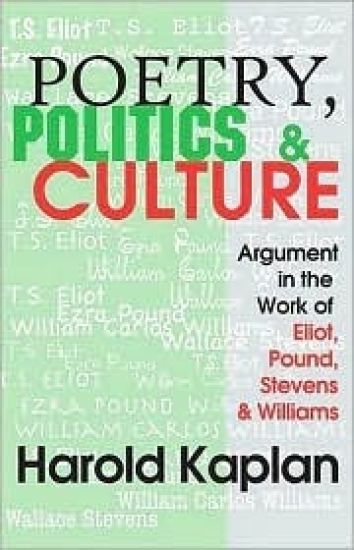
Poetry, Politics, and Culture

Poetry, Politics, and Culture

Harold Kaplan

Routledge
2017
sidottu
A salient feature of modern poetics is its direct connection with cultural history and politics. Among the great American poets of the twentieth century, Wallace Stevens and William Carlos Williams offer a significant contrast with T. S. Eliot and Ezra Pound. Where the latter advocated a theocentric or reactionary response to the cultural crises of modernity, the former affirmed an essentially humanist and democratic social and aesthetic ethos. In Poetry, Politics, and Culture, Harold Kaplan offers a penetrating comparative study of these representative and distinctively influential poets.All four poets wrote in an atmosphere of cultural crisis following World War I, caught as they were between outmoded belief systems and various forms of artistic and political nihilism. While each believed in poetry as a source of cultural values and beliefs, they nevertheless experienced loss of confidence in their own vocation in a world characterized by scientific, rationalist thinking and the mundane struggle for survival. For each, therefore, the poetic imagination was a means of restoring order, or building a new civilization out of chaos. In trying to define a revitalized culture, the four exemplified the perennial quarrel between Europe and America.
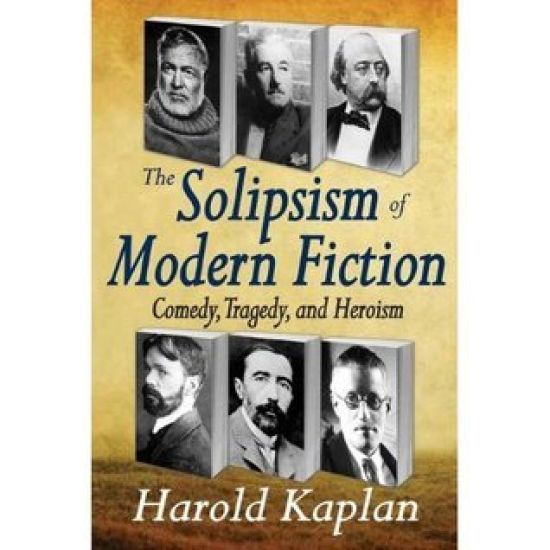
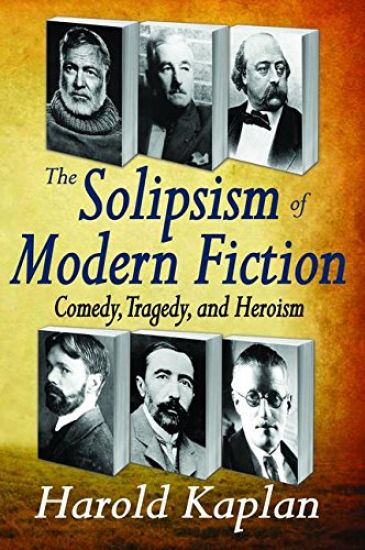
The Solipsism of Modern Fiction

The Solipsism of Modern Fiction

Harold Kaplan

Routledge
2017
sidottu
In The Solipsism of Modern Fiction, Harold Kaplan deals with the problem of action and its adequate motive in the modern novel. In the nineteenth and twentieth centuries modern scientific knowledge abandoned the human-centered view of the universe and thus the fictional modes that had been rooted in religion or myth. The result for fiction was a radical skepticism on the part of the protagonist who now appeared as a reflective, self-critical, passive figure lacking the dynamism of the epic hero or religious seeker.One response to the scientific worldview was the naturalism of Zola and his followers in which the action of characters is determined by social or biological forces. Kaplan, however, focuses his study on such novelists as Flaubert, Joyce, Conrad, Faulkner, Lawrence, and Hemingway who dramatized the isolated individual consciousness in contention with the world and with the ambiguity of their own motivations.The Solipsism of Modern Fiction deals with several related topics that grow from one source, the crisis of knowledge in modern intellectual history. The effects of solipsism and of moral passivity, the split consciousness that divides action and understanding, the perspectives of primitive naturalism and stoic naturalism, the variations of the comic mood, and the example of tragedy, are all themes that are dramatized in Kaplan's readings of Madame Bovary, Light in August, Ulysses, Lord Jim, and other exemplary modern novels that associate themselves with the problem of self-criticism, knowing, and acting. Written by one of the outstanding literary scholars of our time, this book will inspire new generations of readers and writers.
Poetry, Politics, and Culture

Poetry, Politics, and Culture

Harold Kaplan

AldineTransaction
2007
nidottu
A salient feature of modern poetics is its direct connection with cultural history and politics. Among the great American poets of the twentieth century, Wallace Stevens and William Carlos Williams offer a significant contrast with T. S. Eliot and Ezra Pound. Where the latter advocated a theocentric or reactionary response to the cultural crises of modernity, the former affirmed an essentially humanist and democratic social and aesthetic ethos. In Poetry, Politics, and Culture, Harold Kaplan offers a penetrating comparative study of these representative and distinctively influential poets.All four poets wrote in an atmosphere of cultural crisis following World War I, caught as they were between outmoded belief systems and various forms of artistic and political nihilism. While each believed in poetry as a source of cultural values and beliefs, they nevertheless experienced loss of confidence in their own vocation in a world characterized by scientific, rationalist thinking and the mundane struggle for survival. For each, therefore, the poetic imagination was a means of restoring order, or building a new civilization out of chaos. In trying to define a revitalized culture, the four exemplified the perennial quarrel between Europe and America.
The Solipsism of Modern Fiction

The Solipsism of Modern Fiction

Harold Kaplan

AldineTransaction
2010
nidottu
In The Solipsism of Modern Fiction, Harold Kaplan deals with the problem of action and its adequate motive in the modern novel. In the nineteenth and twentieth centuries modern scientific knowledge abandoned the human-centered view of the universe and thus the fictional modes that had been rooted in religion or myth. The result for fiction was a radical skepticism on the part of the protagonist who now appeared as a reflective, self-critical, passive figure lacking the dynamism of the epic hero or religious seeker.One response to the scientific worldview was the naturalism of Zola and his followers in which the action of characters is determined by social or biological forces. Kaplan, however, focuses his study on such novelists as Flaubert, Joyce, Conrad, Faulkner, Lawrence, and Hemingway who dramatized the isolated individual consciousness in contention with the world and with the ambiguity of their own motivations.The Solipsism of Modern Fiction deals with several related topics that grow from one source, the crisis of knowledge in modern intellectual history. The effects of solipsism and of moral passivity, the split consciousness that divides action and understanding, the perspectives of primitive naturalism and stoic naturalism, the variations of the comic mood, and the example of tragedy, are all themes that are dramatized in Kaplan's readings of Madame Bovary, Light in August, Ulysses, Lord Jim, and other exemplary modern novels that associate themselves with the problem of self-criticism, knowing, and acting. Written by one of the outstanding literary scholars of our time, this book will inspire new generations of readers and writers.
Henry Adams and the American Naturalist Tradition
The naturalist tradition in American fiction was a product of the tremendous changes wrought in late nineteenth-century America by the development of science and technology and by the intellectual upheavals associated with the ideas of Darwin, Marx, Nietzsche, and Freud. This book is an account of naturalism, perhaps the strongest and most influential intellectual tradition or, as Harold Kaplan would argue, mythology to affect modern American literature and culture.Kaplan approaches the naturalist writers through a study of Henry Adams. He sees in Adams the paradigmatic intelligence of his time a prophetic mind, though not a seminal one and a man absorbed with the twin notions of power and order. Adams's major work illustrates the joining of a literary imagination and moral temperament with an almost obsessive response to the science, economic life, and politics of his world. Adams's work exemplifies what Kaplan calls the myth of metapolitics a view of human struggle and fate profoundly dominated by naturalist concepts of power.Kaplan then turns to the fascination that power in its various manifestations material, moral, social, political held for writers such as Dreiser, Norris, Crane, and others. Their dramatic plots, characters, and allegorical images are examined in detail. In wider reference, this book should concern those who are interested in problems of modern ethics and politics in the effort to harmonize concepts of value with images of power and natural order.
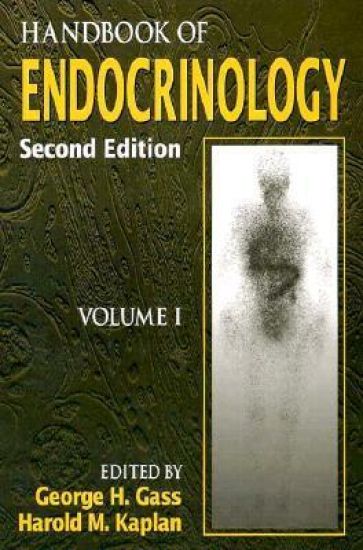
Handbook of Endocrinology, Second Edition, Volume I

Handbook of Endocrinology, Second Edition, Volume I

George H. Gass; Harold M. Kaplan

CRC Press Inc
1996
sidottu
Stay on top of the rapid changes sweeping endocrinology today with the latest information on important selected topics in The Handbook of Endocrinology. This extensive two-volume text provides an impressive breadth and depth of coverage difficult to find in other sources. After a broad survey of the functions of major endocrine glands, the book launches into detailed reviews of both established and hot, new research areas. Selected topics include:
Research Advances in Alcohol and Drug Problems

Research Advances in Alcohol and Drug Problems

Yedy Israel; Frederick B. Glaser; Harold Kalant; Robert E. Popham; Wolfgang Schmidt; Reginald G. Smart

Springer-Verlag New York Inc.
2013
nidottu
Over the last decade the world has experienced a growing interest in problems associated with the nonmedical use of drugs. This interest has corresponded to a real growth in the extent, diversity, and social impact of the use of alcohol and drugs in many societies. As a result, the amount of research and writing on the subject of drug problems has greatly increased, and it has become very difficult for one individual to keep up with all the relevant literature. There is thus an acute need in the field for critical reviews that assess current developments, and the present series is intended to fill this need. The series is not to be an "annual review" in the usual sense. The aim is not to cover all the work reported during the preceding year in relation to a fixed selection of topics. Rather, it is to present each year evaluative papers on topics in which enough recent progress has been made to alter the general scope in a particular area. Owing to the multidisciplinary nature of problems of drug use and dependence, the papers published in each volume will be drawn from several disciplines. However, some volumes may be devoted to one partic­ ular problem, with individual reviews and papers examining various aspects of it. The composition of the editorial board and the international advisory board reflects these objectives. The editors are members of the senior scientific staff of the Addiction Research Foundation of Ontario.
Harold

Harold

Holbrook Hal

Farrar, Straus Giroux Inc
2013
nidottu
In Harold, the beloved actor Hal Holbrook presents an affecting memoir about his struggle to discover his true self, even as he learned to transform himself onstage. Abandoned by his mother and father when he was two, Holbrook and his two sisters commenced separate journeys of survival. Raised by his powerful grandfather, who died when Holbrook was twelve, Holbrook spent his childhood at boarding schools, visiting his father in an insane asylum and hoping his mother would suddenly surface in Hollywood. As World War II engulfed Europe, Holbrook began acting almost by accident. Through war, marriage, and the work of honing his craft, his fear of insanity and his fearlessness in the face of risk were channelled into discovering that the riskiest path of all-success as an actor-would be his birthright. The climb up that forbidding mountain was a lonely one. And how he achieved it - the cost to his wife and children and to his own conscience - is the dark side of the fame he would eventually earn by portraying the man his career would forever be most closely associated with: Mark Twain.