Kirjahaku
Etsi kirjoja tekijän nimen, kirjan nimen tai ISBN:n perusteella.
1000 tulosta hakusanalla Harry C Bentley


Harry C. Trentman and Aubrey Milner, Co-Partners, Petitioners, V. City and County of Denver, Colorado, a Municipal Corporation, Et Al. U.S. Supreme Court Transcript of Record with Supporting Pleadings
Barkley L Clanahan; John C Banks
Gale, U.S. Supreme Court Records
2011
pokkari

A Hero of Villers-Bretonneux: Harry C. Goodsir (1891-1918): World War I Centennial
Michael T. Tracy
Createspace Independent Publishing Platform
2016
nidottu
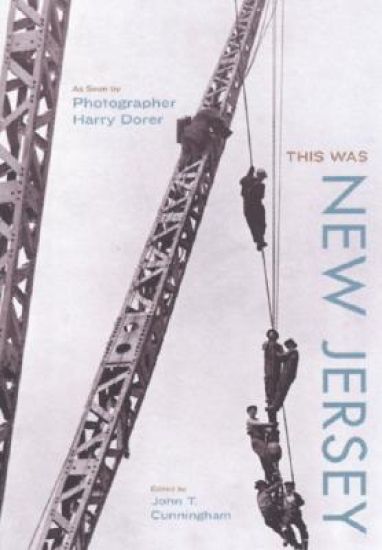
This Was New Jersey As Seen by Photographer Harry C. Dorer
Rutgers University Press
2007
sidottu
Harry C. Dorer roamed New Jersey for four decades from 1920 until 1954 with his boxy Speed Graphic camera, capturing for a weekly newspaper the images of what is now a vanished landscape. From the state's cities and villages to its rural areas to the then-mysterious Pine Barrens and the fishing fleets at the Jersey Shore, Dorer amassed hundreds of images that revealed the region's rapidly changing countryside, customs, and social dynamics. Distinguished for his journalistic eye, Dorer did not search out "pretty" subjects. His photographs of Pine Barrens residents are both gritty and charming—honest depictions of quiet people living in poverty. His scenes of rural northern New Jersey are equally blunt, bearing stark witness to the rudimentary living conditions in the days before good roads and electricity came to counties such as Sussex and Warren. His photographs of the state's Ku Klux Klan presence and the tragedy of the passenger ship Morro Castle are raw history. Dorer, however, did have an eye for reader appeal and a sense of beauty as well. His cloud effects are stunning, turning ordinary scenes into landscape portraits. Likewise, his photographs of children, ranging from poor kids in Newark taking an illegal dip in the Wars of America fountain to the children of the Pine Barrens lined up by the family car, are compassionate and delightful. Bringing together more than 300 of Dorer's photographs, this stunning collection is no ordinary look at New Jersey's past. Dorer's always incisive eye provides a visual record of the state's history that is unsettling, shocking, enchanting, and endearing. Above all, his photographs are a vivid reminder of how much the state haschanged.

The Ethics of Romantic Relationships in the Workplace. The Case of Boeing CEO Harry C. Stonecipher
Anonymous
GRIN Verlag
2023
nidottu

Haggard Harry and the Fisher King
Harry C. Bowyer; Js Moore
Createspace Independent Publishing Platform
2013
nidottu

Trial of Harry Crawford Black for the Killing of Col. W.W. McKaig, Jr.
Harry C. Black
Hansebooks
2018
nidottu
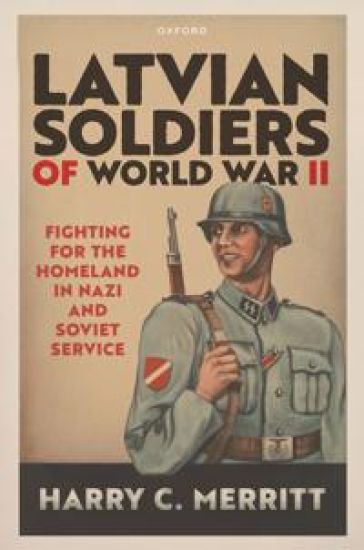
An estimated 200,000 Latvian soldiers—ten percent of the total prewar population of Latvia— served on the Eastern Front during the Second World War. Since the Republic of Latvia had been occupied and annexed by the Soviet Union in 1940, then occupied by Nazi Germany in 1941, these soldiers did not serve in in the Latvian Army. Instead, they served in Soviet and German uniform, primarily in Latvian national formations in the Soviet Union’s Red Army (in its final form, the 130th Latvian Rifle Corps) and Nazi Germany’s Waffen SS (ultimately, the VI SS Army Corps (Latvian), more colloquially known as the Latvian Legion). After the war, parallel political movements led by front-line veterans emerged: a network of anti-communist Cold War Latvian activists in the West and a National Communist political faction that pushed the boundaries of the post-Stalin thaw in 1950s Soviet Latvia. Latvian Soldiers of World War II: Fighting for the Homeland in Nazi and Soviet Service traces the origins, wartime experience, and legacies of soldiers from Latvia who fought in national formations on both sides of the Eastern Front. Through the lenses of social, cultural, and political history, this book analyzes military records and government documents drawn from archives across four countries to uncover how these national formations were created in negotiations between the occupying powers and Latvian advocates. Utilizing first-person primary sources (“ego-documents”)-including wartime interviews, diaries, letters, memoirs, and oral histories-this book reveals how Latvian soldiers adapted to their new ideological settings and incubated Latvian nationalist ideas while serving in the armies of occupying powers. These soldiers distinguished themselves in combat on both sides, with the Latvian Legion becoming the most decorated non-Germanic unit of the Waffen-SS and the Latvian Rifle Corps emerging as a highly decorated Red Army formation, one division of which earned the designation of an elite Guards unit. Veterans of each side then became key political actors in postwar Soviet Latvia and the Latvian diaspora in the West respectively. After the war, the victorious Latvian Riflemen gradually became marginalized-first in Soviet Latvia, then in independent Latvia-while the defeated Waffen-SS Latvian Legionnaires successfully integrated into Cold War-era Western democracies and developed durable institutions and narratives in exile that were later imported into post-Soviet Latvia. In the memory wars that followed World War II, wartime victors became the losers of history and the “lost cause” of the defeated side triumphed, yielding ongoing tensions both within Latvia and between Latvia and other countries, most notably Russia.
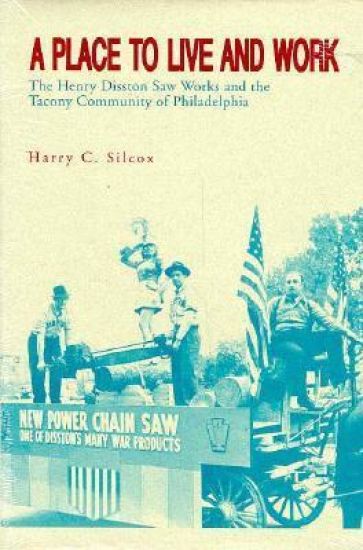
A rich history of the unique relationship between life and work in an American factory town from 1840 to 1984, A Place to Live and Work tells the remarkable story of Henry Disston's saw manufacturing company and the factory town he built. The book provides a rare view of the rise of one of America's largest and most powerful family-owned businesses, from its modest beginnings in 1840 to the 1940s, when Disston products were known worldwide, to the sale and demise of the company in the postwar years. Henry Disston, however, not only built a factory; he also shaped Tacony, the town in northeastern Philadelphia where the workers lived. The book describes the company's interdependence with the community and profiles the lifestyle that grew out of Disston's paternalistic blueprint for Tacony.Using original letter books, shop committee meeting notes, photographs, and a wealth of other documents, Harry Silcox reveals Disston's highly sophisticated distribution and marketing system as well as a management system that, unlike the one advocated by Frederick Winslow Taylor, responded to the concerns of workers and foremen. Through two world wars, the Depression, and the rise of unions, Disston's innovative business practices enabled the company to remain active and strong even when factories across the nation were failing. This study raises important questions about the demise of the factory system and its impact on urban communities and family life. The Disston company provides one example of how people could work and live together successfully within the larger framework of the factory system.

A rich history of the unique relationship between life and work in an American factory town from 1840 to 1984, A Place to Live and Work tells the remarkable story of Henry Disston's saw manufacturing company and the factory town he built. The book provides a rare view of the rise of one of America's largest and most powerful family-owned businesses, from its modest beginnings in 1840 to the 1940s, when Disston products were known worldwide, to the sale and demise of the company in the postwar years. Henry Disston, however, not only built a factory; he also shaped Tacony, the town in northeastern Philadelphia where the workers lived. The book describes the company's interdependence with the community and profiles the lifestyle that grew out of Disston's paternalistic blueprint for Tacony.Using original letter books, shop committee meeting notes, photographs, and a wealth of other documents, Harry Silcox reveals Disston's highly sophisticated distribution and marketing system as well as a management system that, unlike the one advocated by Frederick Winslow Taylor, responded to the concerns of workers and foremen. Through two world wars, the Depression, and the rise of unions, Disston's innovative business practices enabled the company to remain active and strong even when factories across the nation were failing. This study raises important questions about the demise of the factory system and its impact on urban communities and family life. The Disston company provides one example of how people could work and live together successfully within the larger framework of the factory system.
Self-deception occurs because we often see the world the way we would like it to be, rather than the way it is. Our brains so long for things the way we want them, we might not even be aware we are fooling ourselves, explains author Harry Triandis, a widely known Professor Emeritus of Psychology. Across cultures and around the world, self-deception is a phenomenon that has subtle and profound effects on everyday life, explains Triandis, also former president of the International Association of Cross-Cultural Psychology. In this work, he not only explains how and why self-deceptions occur in three areas - politics, religion, and terrorism - but also how to recognize and reduce the frequency of fooling ourselves. Insights here include consideration of personal and societal self-deceptions, as well as extensive understanding of how politics, ideologies, and religions can frame reality for each of us in such a way that it is, in our minds, warped so the stage is well-set for self-deception. This text will be of special interest to general readers drawn to politics and religion, as well as scholars of psychology, anthropology, and sociology.

An examination of the differences between collectivists (those who view themselves primarily as part of a whole, and who are motivated by the norms and duties imposed by the collective entity) and individualists (those who are motivated by their own preferences and needs).

Instructions, clear diagrams for creating sailboat, penguin, whale, butterfly, flapping bird, more. Includes supply of authentic origami paper in 12 bright colors.

'Mass terms' like water, rice and traffic, have proved very difficult to accommodate in any theory of meaning since, unlike count nouns such as house or dog, they cannot be treated as denoting sets of individuals. In this study, motivated by the need to design a computer program for understanding natural language utterances containing mass terms, Harry Bunt provides a thorough analysis of the problem and offers an original and detailed solution. An extension of classical set theory, Ensemble Theory, is defined. This provides the formal basis of a framework for the analysis of natural language meaning which Dr Bunt calls two-level model-theoretic semantics. The validity of the framework is convincingly demonstrated by the detailed analysis of a fragment of English including sentences with quantified and modified mass terms. This significant advance in our understanding of the formal syntactic and semantic properties of mass terms will be of interest not only to linguists and logicians, but also to all those concerned with the processing of natural language.


The Freezing-Point, Boiling-Point And Conductivity Methods
Harry C. Jones
Kessinger Pub
2007
pokkari

The Theory of Electrolytic Dissociation and Some of Its Applications
Harry C. Jones
Kessinger Pub
2007
pokkari

The Theory Of Electrolytic Dissociation And Some Of Its Applications
Harry C. Jones
Kessinger Pub
2007
sidottu