

Kirjahaku
Etsi kirjoja tekijän nimen, kirjan nimen tai ISBN:n perusteella.
1000 tulosta hakusanalla Harry G Poyner

Supervised by Maurice Dobb, Harry Johnson was particularly impressed by the breadth and the ideas of Joseph Schumpeter, which greatly influenced his writings in later years. Johnson made many contributions to the development of Heckscher-Ohlin theory and also helped to found the monetary approach to the balance of payments. He wrote many surveys of monetary economics that helped to clarify the issues in question.
![Notes on the Early Stalcop Family in Delaware / [by Harry G. Staulcup]](/covers/9781014240859.jpg)
Notes on the Early Stalcop Family in Delaware / [by Harry G. Staulcup]
Harry G. Staulcup
Hassell Street Press
2021
nidottu
![Notes on the Early Stalcop Family in Delaware / [by Harry G. Staulcup]](/covers/9781019362822.jpg)
Notes on the Early Stalcop Family in Delaware / [by Harry G. Staulcup]
Harry G. Staulcup
Hassell Street Press
2023
sidottu
In this meticulously researched genealogy, Harry G. Staulcup traces the history of one of America's oldest and most prominent families. Beginning with the arrival of the first Stalcop in Colonial Delaware, Staulcup follows the family through its many branches and connections, documenting their achievements, struggles, and relationships over more than three centuries. The result is a fascinating and invaluable resource for anyone interested in American history, genealogy, or social dynamics.This work has been selected by scholars as being culturally important, and is part of the knowledge base of civilization as we know it.This work is in the "public domain in the United States of America, and possibly other nations. Within the United States, you may freely copy and distribute this work, as no entity (individual or corporate) has a copyright on the body of the work.Scholars believe, and we concur, that this work is important enough to be preserved, reproduced, and made generally available to the public. We appreciate your support of the preservation process, and thank you for being an important part of keeping this knowledge alive and relevant.
Harry G. Johnson was best known for his work on monetary theory and international economics, but he was also very active in the theory of distribution, trade strategy and development economics. These 4 books, originally published between 1967 and 1971 explore: The relationship between nationalism and economic development Trade policy to promote development The use of geometrical tools in international trade theory Issues surrounding multi-lateral free trade.




"Bullshit" nach Harry G. Frankfurt und "Gerede" nach Heidegger. Versuch einer Annäherung der beiden Theorien
Patrick Schmitt
Grin Publishing
2015
pokkari

Der Begriff der Person - Die Willensstruktur als hinreichendes Personenmerkmal bei Harry G. Frankfurt
Edgar Hegner
Grin Publishing
2009
pokkari

The Lincoln Memorial Way Through Indiana: Report of Commission Appointed by Governor Harry G. Leslie to Designate Historic Lincoln Route; copy 1
Indiana Lincoln Memorial Way Commiss; Arthur F. 1872- Hall
Hassell Street Press
2021
nidottu

The Lincoln Memorial Way Through Indiana: Report of Commission Appointed by Governor Harry G. Leslie to Designate Historic Lincoln Route; copy 2
Indiana Lincoln Memorial Way Commiss; Arthur F. 1872- Hall
Hassell Street Press
2021
nidottu

The Lincoln Memorial Way Through Indiana. Report of Commission Appointed by Governor Harry G. Leslie to Designate Historic Lincoln Route ..
Indiana Lincoln Memorial Highway Com; Arthur F. 1872- Hall
Hassell Street Press
2021
nidottu

Jargon und Bullshit. Ein Vergleich zwischen Theodor W. Adorno und Harry G. Frankfurt
Omar Ibrahim
GRIN Verlag
2020
nidottu
This is a new kind of textbook in microeconomic theory. In place of the usual concentration on partial equilibrium analysis and discussion of a standard series of topics, the authors seek to introduce the student from the start to the general equilibrium approach to microeconomics, in the form of the two-sector model. This model is then applied to a variety of subjects in different special fields of economic analysis: welfare economics, international trade, public finance and income distribution. This book represents a very different approach to the teaching of micro-economic theory than normally followed, and one that will be of greater long-run value to the serious student of economics. In place of the usual textbook development of the subject as traditionally conceived through topics of increasing complexity and analytical difficulty, using partial equilibrium techniques of analysis, the book concentrates on the exposition and application of a more logically integrated set of tools that have been found of greater use in the analysis of problems arising not only in traditional micro-economics but also in a number of fields of economics that have customarily been hived off into separate specialized advanced courses. General Equilibrium Analysis starts with the description of the two-sector model and how these two sectors are built based on the individual micro-units in which they made up of and how they fit into the concept of the circular flow of income. Subsequent chapters deal with the evaluation of changes in factor endowment, demand preferences and technical progress by means of the model; and the theory of government, which includes both the theory of government expenditure, or public goods, and the theory of government tax and/or subsidy programmes-changes in budgetary scale, tax substitution and expenditure substitution. The model is then extended to an open economy-the so-called "two by two by two"--to consider both the normative effect of international trade and the possible determinants of international trade, with special attention being given to the relationship between commodity trade and factor mobility. Lastly this model is opened into a dynamic model of growth with its emphasis on requirements for the economy to maximize consumption per head on its long-run equilibrium growth path, and the effect of international trade on the growth path itself.
These essays, which make the science of economics intelligible to a general audience, are grouped into six areas: the relevance of economics; the "Keynesian revolution"; economics and the university; economics and contemporary problems; world inflation, money, trade, growth, and investment; and economics and the environment.
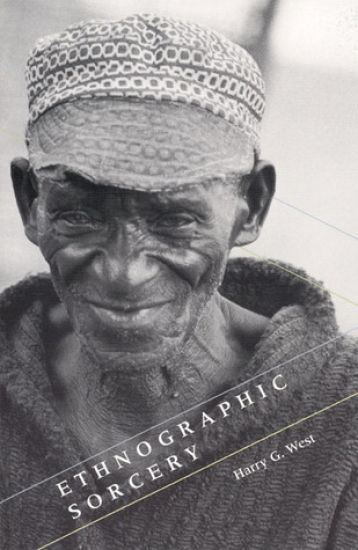
According to the people of the Mueda plateau in northern Mozambique, sorcerers remake the world by asserting the authority of their own imaginative visions of it. While conducting research among these Muedans, anthropologist Harry G. West made a revealing discovery - for many of them, West's efforts to elaborate an ethnographic vision of their world was itself a form of sorcery. In "Ethnographic Sorcery", West explores the fascinating issues provoked by this equation. A key theme of West's research into sorcery is that one sorcerer's claims can be challenged or reversed by other sorcerers. After West's attempt to construct a metaphorical interpretation of Muedan assertions that the lions prowling their villages are fabricated by sorcerers is disputed by his Muedan research collaborators, West realizes that ethnography and sorcery indeed have much in common. Rather than abandoning ethnography, West draws inspiration from this connection, arguing that anthropologists, along with the people they study, can scarcely avoid interpreting the world they inhabit, and that we are all, inescapably, ethnographic sorcerers.
On the Mueda plateau in northern Mozambique, sorcerers are said to feed on their victims, sometimes "making" lions or transforming into lions to literally devour their flesh. When the ruling FRELIMO party subscribed to socialism, it condemned sorcery beliefs and counter-sorcery practices as false consciousness, but since undertaking neoliberal reform, the party - still in power after three electoral cycles - has "tolerated tradition," leaving villagers to interpret and engage with events in the idiom of sorcery. Now, when the lions prowl plateau villages, suspected sorcerers are often lynched. In this historical ethnography of sorcery, Harry G. West draws on a decade of fieldwork and combines the perspectives of anthropology and political science to reveal how Muedans expect responsible authorities to monitor the invisible realm of sorcery and to overturn or, as Muedans call it, "kupilikula" sorcerers' destructive attacks by practicing a constructive form of counter-sorcery themselves. "Kupilikula" argues that, where neoliberal policies have fostered social division rather than security and prosperity, Muedans have, in fact, used sorcery discourse to assess and sometimes overturn reforms, advancing alternative visions of a world transformed.
On the Mueda plateau in northern Mozambique, sorcerers are said to feed on their victims, sometimes "making" lions or transforming into lions to literally devour their flesh. When the ruling FRELIMO party subscribed to socialism, it condemned sorcery beliefs and counter-sorcery practices as false consciousness, but since undertaking neoliberal reform, the party - still in power after three electoral cycles - has "tolerated tradition," leaving villagers to interpret and engage with events in the idiom of sorcery. Now, when the lions prowl plateau villages, suspected sorcerers are often lynched. In this historical ethnography of sorcery, Harry G. West draws on a decade of fieldwork and combines the perspectives of anthropology and political science to reveal how Muedans expect responsible authorities to monitor the invisible realm of sorcery and to overturn or, as Muedans call it, "kupilikula" sorcerers' destructive attacks by practicing a constructive form of counter-sorcery themselves. "Kupilikula" argues that, where neoliberal policies have fostered social division rather than security and prosperity, Muedans have, in fact, used sorcery discourse to assess and sometimes overturn reforms, advancing alternative visions of a world transformed.

The Taxation of Corporations in Massachusetts
Harry G. Friedman
Columbia University Press
2020
sidottu