Kirjojen hintavertailu. Mukana 11 342 296 kirjaa ja 12 kauppaa.

Kirjahaku

Etsi kirjoja tekijän nimen, kirjan nimen tai ISBN:n perusteella.

1000 tulosta hakusanalla Harry J. Foxwell Phd

Creating Good Data

Creating Good Data

Harry J. Foxwell

APress
2020
nidottu
Create good data from the start, rather than fixing it after it is collected. By following the guidelines in this book, you will be able to conduct more effective analyses and produce timely presentations of research data.Data analysts are often presented with datasets for exploration and study that are poorly designed, leading to difficulties in interpretation and to delays in producing meaningful results. Much data analytics training focuses on how to clean and transform datasets before serious analyses can even be started. Inappropriate or confusing representations, unit of measurement choices, coding errors, missing values, outliers, etc., can be avoided by using good dataset design and by understanding how data types determine the kinds of analyses which can be performed. This book discusses the principles and best practices of dataset creation, and covers basic data types and their related appropriate statistics and visualizations. A key focus of the book is why certain data types are chosen for representing concepts and measurements, in contrast to the typical discussions of how to analyze a specific data type once it has been selected. What You Will Learn Be aware of the principles of creating and collecting dataKnow the basic data types and representationsSelect data types, anticipating analysis goalsUnderstand dataset structures and practices for analyzing and sharingBe guided by examples and use cases (good and bad)Use cleaning tools and methods to create good data Who This Book Is For Researchers who design studies and collect data and subsequently conduct and report the results of their analyses can use the best practices in this book to produce better descriptions and interpretations of their work. In addition, data analysts who explore and explain data of other researchers will be able to create better datasets.
Fred Colantonio to  Harry J. Joyce

Fred Colantonio to Harry J. Joyce

Frederick Colantonio

Lulu.com
2019
nidottu
Colantonio has created a book composed of his interviews, impressions and recollections with professional ballplayers, managers, media people, an author, business owners and regular folks. He found not everyone is willing to give even the slightest information about themselves for personal reasons and for reasons dictated by the management they work for. With others he found them to be co-operative and warm.Once again he shares his personal interactions with people who have lorded their positions over him and others. Colantonio has been scrupulous in his dealings with people and has expected the same consideration in return. It has not always been the case. Throughout his life, he has always sought out the truth and demanded justice.His insights in the realm of personal relationships has been from a unique perspective due to bias from relatives and co-workers. He shares these moments with the reader bluntly and earnestly.
A Local Guide to Ashburton and Its Neighbourhood. by H. J. B. L. [i.E. Harry J. B. Lee.]

A Local Guide to Ashburton and Its Neighbourhood. by H. J. B. L. [i.E. Harry J. B. Lee.]

Harry James Barton Lee

British Library, Historical Print Editions
2011
pokkari
Title: A local guide to Ashburton and its neighbourhood. By H. J. B. L. i.e. Harry J. B. Lee.]Publisher: British Library, Historical Print EditionsThe British Library is the national library of the United Kingdom. It is one of the world's largest research libraries holding over 150 million items in all known languages and formats: books, journals, newspapers, sound recordings, patents, maps, stamps, prints and much more. Its collections include around 14 million books, along with substantial additional collections of manuscripts and historical items dating back as far as 300 BC.The HISTORY OF TRAVEL collection includes books from the British Library digitised by Microsoft. This collection contains personal narratives, travel guides and documentary accounts by Victorian travelers, male and female. Also included are pamphlets, travel guides, and personal narratives of trips to and around the Americas, the Indies, Europe, Africa and the Middle East. ++++The below data was compiled from various identification fields in the bibliographic record of this title. This data is provided as an additional tool in helping to insure edition identification: ++++ British Library Lee, Harry James Barton; 1896]. pp. 16.; 19 cm. 010347.f.1.(3.)
Mr. Penney: The Life of J. C. Penney in Story Form

Mr. Penney: The Life of J. C. Penney in Story Form

Harry J. Albus; Macy Schwartz

Literary Licensing, LLC
2011
sidottu
""Mr. Penney: The Life of J.C. Penney in Story Form"" is a biography written by Harry J. Albus that tells the story of James Cash Penney, the founder of the J.C. Penney department store chain. The book follows Penney's life from his childhood in Missouri to his early career as a clerk and his eventual success as a businessman. The author uses a narrative style to bring Penney's story to life, describing his struggles and triumphs in detail. The book also explores Penney's personal life, including his family relationships and his philanthropic efforts. Overall, ""Mr. Penney"" is a fascinating look at the life of a retail pioneer and a testament to the power of hard work and determination.This scarce antiquarian book is a facsimile reprint of the old original and may contain some imperfections such as library marks and notations. Because we believe this work is culturally important, we have made it available as part of our commitment for protecting, preserving, and promoting the world's literature in affordable, high quality, modern editions, that are true to their original work.
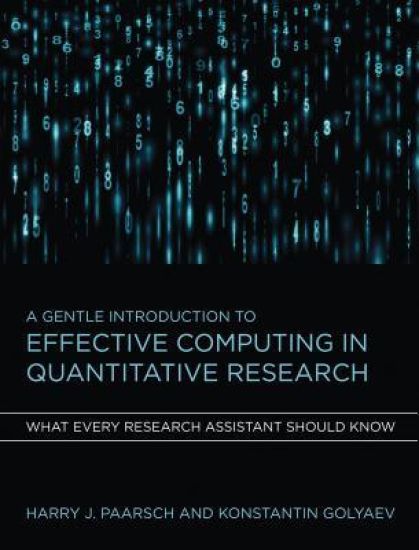
A Gentle Introduction to Effective Computing in Quantitative Research
A practical guide to using modern software effectively in quantitative research in the social and natural sciences.This book offers a practical guide to the computational methods at the heart of most modern quantitative research. It will be essential reading for research assistants needing hands-on experience; students entering PhD programs in business, economics, and other social or natural sciences; and those seeking quantitative jobs in industry. No background in computer science is assumed; a learner need only have a computer with access to the Internet. Using the example as its principal pedagogical device, the book offers tried-and-true prototypes that illustrate many important computational tasks required in quantitative research. The best way to use the book is to read it at the computer keyboard and learn by doing.The book begins by introducing basic skills: how to use the operating system, how to organize data, and how to complete simple programming tasks. For its demonstrations, the book uses a UNIX-based operating system and a set of free software tools: the scripting language Python for programming tasks; the database management system SQLite; and the freely available R for statistical computing and graphics. The book goes on to describe particular tasks: analyzing data, implementing commonly used numerical and simulation methods, and creating extensions to Python to reduce cycle time. Finally, the book describes the use of LaTeX, a document markup language and preparation system.
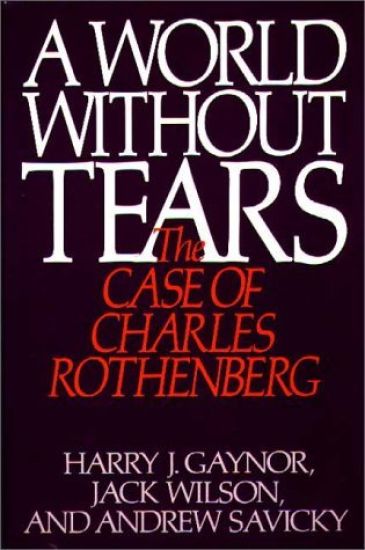
A World Without Tears

A World Without Tears

Harry J. Gaynor; Jack Wilson; Andrew Savicky

Praeger Publishers Inc
1990
sidottu
On March 4, 1983, Charles Rothenberg deliberately set fire to the bed where his six-year-old son, David, lay sleeping. Although David did not die, burns covered 90 percent of his body and left him severely disfigured. Rothenberg admitted his guilt and spent seven years in prison. This book is the troubled life story and in-depth study of Charles Rothenberg through over 140 letters, personal interviews, and his own writings. It is told by Harry J. Gaynor, a recognized authority on child abuse by burning and President of the National Burn Victim Foundation; the Rev. Dr. Jack Wilson, a minister and counselor; and Dr. Andrew Savicky, a psychologist. The authors reach beyond the bizarre facts of this story and enter the mind and emotions of Rothenberg to gain some understanding of what led to this crime. They attempt to employ that understanding to protect children from abuse.
Formal Ethics

Formal Ethics

Harry J. Gensler

Routledge
1996
nidottu
Formal Ethics is the study of formal ethical principles. The most important of these, perhaps even the most important principle of life, is the golden rule: "Treat others as you want to be treated". Although the golden rule enjoys support amongst different cultures and religions in the world, philosophers tend to neglect it. Formal Ethics gives the rule the attention it deserves. Modelled on formal logic, Formal Ethics was inspired by the ethical theories of Kant and Hare. It shows that the basic formal principles of ethics, like the golden rule, are very similar to principles of logic, and gives a firm basis for our ethical thinking. As an introduction to moral rationality, Formal Ethics also considers non-formal elements, and is applied to areas of practical concern such as racism and moral education
Ethics and the Golden Rule

Ethics and the Golden Rule

Harry J Gensler

Routledge
2013
sidottu
It is commonly accepted that the golden rule—most often formulated as "do unto others as you would have them do unto you"—is a unifying element between many diverse religious traditions, both Eastern and Western. Its influence also extends beyond such traditions, since many non-religious individuals hold up the golden rule as central to their lives.Yet, while it is extraordinarily important and widespread, the golden rule is often dismissed by scholars as a vague proverb that quickly leads to absurdities when one attempts to formulate it in clear terms. In this book, Harry J. Gensler defends the golden rule and addresses all of the major philosophic objections, pointing out several common misunderstanding and misapplications. Gensler first discusses golden-rule reasoning and how to avoid the main pitfalls. He then relates the golden rule to world religions and history, and to areas like moral education, egoism, evolution, society, racism, business, and medicine. The book ends with a discussion of theoretical issues (like whether all morality reduces to the golden rule, which the author argues against). Ethics and the Golden Rule offers two introductory chapters, the first is simpler and the second more technical; a reader may start with either or both. One can then read any combination of further chapters, in any order, depending on one’s interests; but Chapters 13 and 14 are technical and assume one has read Chapter 2. This is "a golden-rule book for everyone," accessible to a wide readership.
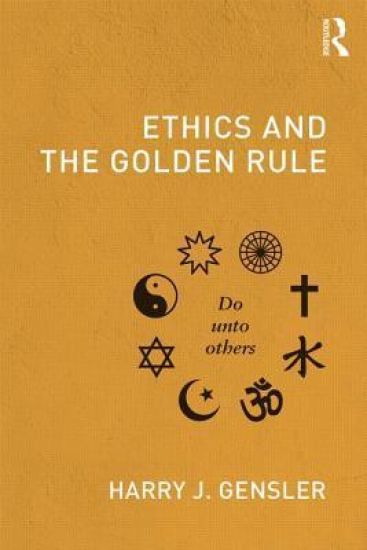
Ethics and the Golden Rule

Ethics and the Golden Rule

Harry J Gensler

Routledge
2013
nidottu
It is commonly accepted that the golden rule—most often formulated as "do unto others as you would have them do unto you"—is a unifying element between many diverse religious traditions, both Eastern and Western. Its influence also extends beyond such traditions, since many non-religious individuals hold up the golden rule as central to their lives.Yet, while it is extraordinarily important and widespread, the golden rule is often dismissed by scholars as a vague proverb that quickly leads to absurdities when one attempts to formulate it in clear terms. In this book, Harry J. Gensler defends the golden rule and addresses all of the major philosophic objections, pointing out several common misunderstanding and misapplications. Gensler first discusses golden-rule reasoning and how to avoid the main pitfalls. He then relates the golden rule to world religions and history, and to areas like moral education, egoism, evolution, society, racism, business, and medicine. The book ends with a discussion of theoretical issues (like whether all morality reduces to the golden rule, which the author argues against). Ethics and the Golden Rule offers two introductory chapters, the first is simpler and the second more technical; a reader may start with either or both. One can then read any combination of further chapters, in any order, depending on one’s interests; but Chapters 13 and 14 are technical and assume one has read Chapter 2. This is "a golden-rule book for everyone," accessible to a wide readership.
Fungal Biology

Fungal Biology

Harry J. Hudson

Cambridge University Press
1991
pokkari
First published by Cambridge University Press in 1991, this book introduces fungi to readers from an ecological viewpoint, emphasising the ecological diversity and extreme versatility of the fungi. The introductory chapter covers fungal structure, growth and reproduction. The remaining chapters consider the fungi in their ecological roles, for example as decomposers of leaves, inhabitants of aquatic environments and as mutualistic symbionts in mycorrhiza and with insects. The intention is to treat fungi in terms of their adaptations to the ecosystems that they occupy. Although fungi as soil inhabitants are not included, much of their ecological significance is considered elsewhere, for example in the chapters on fungi as decomposers of leaves and wood. Examples given are worldwide, including from tropical countries, and the book is well illustrated with many original illustrations drawn from living material.
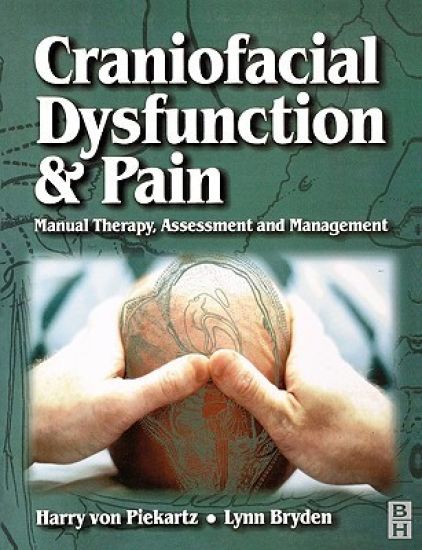
Craniofacial Dysfunction and Pain

Craniofacial Dysfunction and Pain

Harry J. M. von Piekartz; Lynn Bryden

Butterworth-Heinemann Ltd
2000
nidottu
Further management strategies including clinimetry, cranio-cervical posture and 'psychological' management of chronic facial pain are described and discussed in relation to their integration in daily practice. Difficult clinical problems such as cervical headache, chronic ear pain in children, KISS syndrome, facial paralysis, tinnitus, craniomandibular dysfunction amongst others are described and discussed. A clinical reasoning approach to problem solving is emphasized throughout. This book is recommended for those interested in manual assessment and management of the craniofacial region including clinicians, physiotherapists, dentists, orthodontics, ENT-specialists, neurologists, maxillofacial surgeons, chiropractors and osteopaths. Foreword by Professor Mariano Racobado, Santiago, Chile. Contributors: HAJ Oudhof: Skull Growth in relation to mechanical stimulation Dr H Biedermann: Features of cranial tissue as a basis for clinical pattern recognition on management Dr med H Biederman: Primary and secondary cranial asymmetry in Kiss-children R Spermon-Marijne: Manual Therapy of the craniofacial region as therapeutic Dr J R Spermon: approach in children with long term ear disease P Westerhuis: Cervicogenic headache: a clinician's perspective and Cervicogenic Headache, physical examination and management David Butler: Experience of pain and the craniofacial region D Fitzgerald and Lynn Bryden: The influence of posture and alteration of function upon the cranio-cervical and craniofacial region M Jones: Clinical reasoning. A basis for examination and treatment in the cranial region F Winters: Pain management by patients with chronic craniofacial pain G Aufdemkampe: The relevance of clinimetrie by patients with cranial facial pain * Prestigious text with expert international contributors including acclaimed anatomists and cranial morphologists * Highly practical text with a page of text facing a page of high quality black and white photographs * Geoff Maitland has endorsed this text