Kirjojen hintavertailu. Mukana 11 244 527 kirjaa ja 12 kauppaa.

Kirjahaku

Etsi kirjoja tekijän nimen, kirjan nimen tai ISBN:n perusteella.

1000 tulosta hakusanalla Harun German

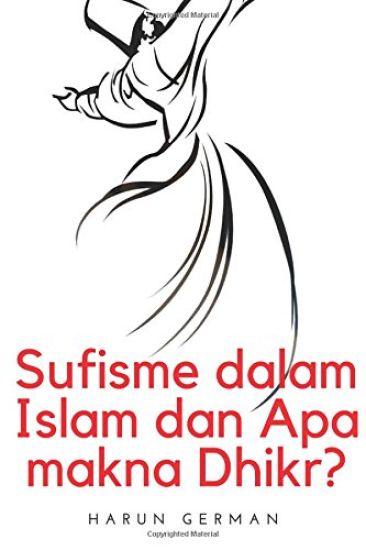
Sufisme Dalam Islam Dan APA Makna Dhikr?

Sufisme Dalam Islam Dan APA Makna Dhikr?

Harun German

Createspace Independent Publishing Platform
2017
nidottu
Apa itu Sufisme? Annemarie Schimmel menggambarkan kerumitan dalam mentakrifkan Sufisme melalui perkataan berikut: "Mereka yang ingin menulis mengenai Sufisme akan mengalami pengalaman yang sama seperti mereka yang buta dalam cerita Rumi (M III 1259-68), yang menyentuh seekor gajah dan seterusnya menggambarkannya mengikut bahagian badan yang telah disentuh oleh tangan mereka (...), tetapi tiada sesiapa yang boleh membayangkan bagaimana rupa binatang itu kelihatan secara keseluruhannya."
The Power of Intention - The Niyya in Islam

The Power of Intention - The Niyya in Islam

Harun German

Createspace Independent Publishing Platform
2017
pokkari
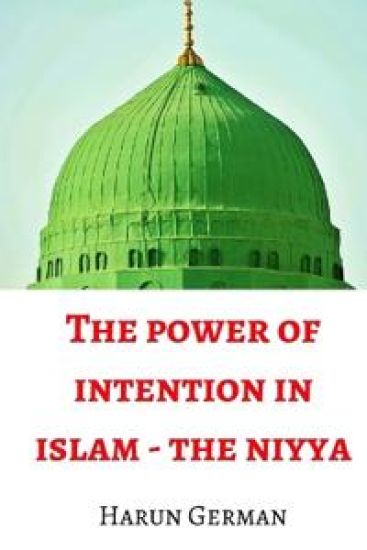
The reason for writing about "The Power of Intention in Islam - The Niyya" is my critical reflection on the social spirit: "Why does our German society primarily emphasize the material end result of a work?" Despite material progress and our focus on material perfectionism, we are generally unhappy as industrially-developed people. Why is this? I try to find an answer and a solution for this.
Harun Farocki

Harun Farocki

Nora M. Alter

Columbia University Press
2024
sidottu
Harun Farocki was one of the world’s most celebrated experimental filmmakers at the time of his death in 2014. In a career spanning over fifty years, the German artist produced more than one hundred works, including political cinema, nonfiction film and video, and art installations, which have been exhibited globally. After his early politically engaged films in Super 8 and 16 mm, Farocki spent many years making independent films and commissions for German public television. In the last phase of his career, he transitioned to creating digital and multichannel installations. He also collaborated with the director Christian Petzold on a dozen films. In addition to his prolific media-making career, Farocki was an incisive critic and editor.This groundbreaking book is an incisive and comprehensive analysis of Farocki’s oeuvre, shedding new light on his media experimentation and writings across platforms and venues. Nora M. Alter examines how Farocki’s work investigates film and media images: their history, nature, manipulation, changing function, and strategic use. Focusing on interconnected ideas surrounding labor, critique, and war, she shows how his politically committed art is informed by pedagogical strategies that drive viewers to perceive how the media world they inhabit functions. Alter also argues that Farocki’s career provides a lens on the history of avant-garde and experimental filmmaking amid shifts in materials and exhibition platforms. Tracing the transformations of Farocki’s artistic practice and thought, this book offers new insight into the body of work of one of the most significant media makers of the late twentieth century.
Harun Farocki

Harun Farocki

Nora M. Alter

Columbia University Press
2024
pokkari
Harun Farocki was one of the world’s most celebrated experimental filmmakers at the time of his death in 2014. In a career spanning over fifty years, the German artist produced more than one hundred works, including political cinema, nonfiction film and video, and art installations, which have been exhibited globally. After his early politically engaged films in Super 8 and 16 mm, Farocki spent many years making independent films and commissions for German public television. In the last phase of his career, he transitioned to creating digital and multichannel installations. He also collaborated with the director Christian Petzold on a dozen films. In addition to his prolific media-making career, Farocki was an incisive critic and editor.This groundbreaking book is an incisive and comprehensive analysis of Farocki’s oeuvre, shedding new light on his media experimentation and writings across platforms and venues. Nora M. Alter examines how Farocki’s work investigates film and media images: their history, nature, manipulation, changing function, and strategic use. Focusing on interconnected ideas surrounding labor, critique, and war, she shows how his politically committed art is informed by pedagogical strategies that drive viewers to perceive how the media world they inhabit functions. Alter also argues that Farocki’s career provides a lens on the history of avant-garde and experimental filmmaking amid shifts in materials and exhibition platforms. Tracing the transformations of Farocki’s artistic practice and thought, this book offers new insight into the body of work of one of the most significant media makers of the late twentieth century.
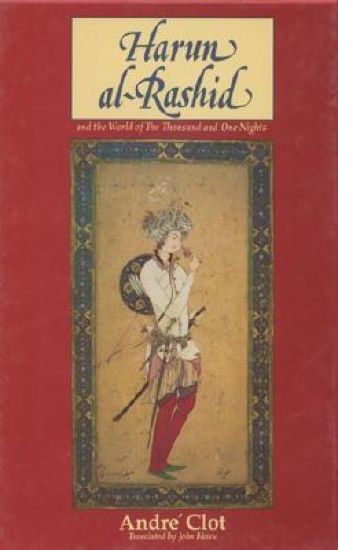
Harun al-Rashid & The World Of 1001 Nights
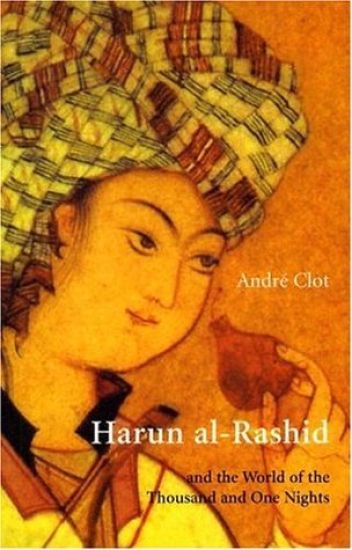
Harun al-Rashid, the legendary caliph portrayed in The Thousand and One Nights, was the son of a Yemenite slave who cleared Harun's path to power, very probably by poisoning her eldest son. Harun reigned for a quarter of a century, his empire spreading over south-west Asia and into north Africa. He waged war on the Byzantine Empire, and dealt ruthlessly with the religious and social insurrections which threatened his kingdom, executing almost the entire Barmakid family when they threatened to become too powerful. As well as being a ruthless soldier and politician Harun was also a great patron of the arts, and highly esteemed by Charlemagne. He turned Baghdad into a brilliant centre of culture and learning, which witnessed unprecedented economic development, its merchants and navigators carrying the caliph's renown to the farthest corners of the known world. Surrounded by his wives, concubines, musicians and learned men in his palace in Baghdad, 'Harun the Good' remains a potent symbol of the fabled Orient. In this remarkable account Andre Clot explores the man behind the legend, revealing his development as a ruler of an empire that was shaken to the core by religious and social revolt.
Harun al-Rashid and the World of The Thousand and One Nights
A symbol of the fabled Orient, Harun al Rashid, the caliph portrayed in The Thousand and One Nights, where we see him living grandly his palace in Baghdad, surrounded by his wives, his concubines, musicians, and learned men, is not merely a figure of legend. He was the son of a Yemenite slave who cleared his path to power, very probably by poisoning the reigning caliph, her older son. Harun reigned for a quarter-century, and was the most famous caliph of the Abbasid dynasty. Through Arab chronicles, the author corrects our vision of Harun the Good', and gives a remarkable account of his development as a ruler. Though in Western countries he is remembered for the presents he sent to Charlemagne–notably the famous elephant, Abul Abbas–he was first and foremost a successful soldier who made war on the Byzantines. His empire was shaken by religious and social insurrections, and he did not shrink from annihilating the Barmecides, a powerful family whose wealth and influence he finally found unbearable. As a patron of pets and intellectuals, Harun contributed greatly to the cultural supremacy of Baghdad, whose merchants and navigators spread the name of the caliph throughout the world.
Harun al-Rashid: The Life and Legacy of the Abbasid Caliph during the Islamic Golden Age
*Includes pictures*Includes medieval accounts*Includes online resources and a bibliography for further readingLike many historical figures, Harun al-Rashid's biography has become part reality and part myth. A real individual and the fourth caliph of the Abbasid Caliphate, Harun al-Rashid is best known to many individuals because of his role in famous literature like One Thousand and One Nights, not necessarily because of his policy decisions. This is unusual because Harun al-Rashid was perhaps the most influential of the Abbasid caliphs due to his role in bringing economic prosperity, destroying one of the most powerful Islamic families of the 9th century CE, and ending the Abbasid Dynasty for good.The reputation of Harun al-Rashid is a controversial one over 1,000 years later. Although historians are often loathe to admit it, they understand that history, like other social and cultural subjects, is subject to the opinions and influences of the society in which it was written, and for centuries, numerous cultures in the Western world (primarily Europe, Australasia, North America, and sometimes Latin and South America) insisted that Islamic societies could not possess the intellectual progress and discourse Western society attributed to itself. According to Amira Bennison, "It was a commonplace of the European imperial age that the Islamic world was intellectually backward and that Muslims not only could not have produced the Enlightenment and Industrial Evolution but also required European tutelage." In short, European intellectuals believed Muslims, due to their religious, cultural, and ethnic backgrounds, lacked the capacity to be progressive - as determined by European standards - and were thus intellectually and culturally backwards.This interpretation of Islamic culture and society transcended intellectual barriers and seeped into the history and literature produced by scholars of the Western world, and in time, Harun al-Rashid became the figure through which the Western world applied its ideas of Arabian culture, Islam, and the power of the caliphates. The difficulty for historians and modern audiences, then, is trying to determine what about Harun al-Rashid is fact and what is fiction, produced over time by biased sources or legends. By the 21st century, much of the historical information about him has been distorted by folk tales and the exaggerations of medieval historians of all religions and walks of life. Even with numerous pop culture appearances, the actual history of the Abbasid caliph is difficult to determine because of the wealth of misinformation throughout Eastern and Western media alike. When Harun al-Rashid died in the early 9th century, the Abbasid Caliphate fell into civil war. Harun al-Rashid had chosen his son al-Amin to be the new caliph, but his other son, al-Ma'mun, had similar ambitions. Al-Ma'mun would receive the support of some of the noble families and make a claim for the throne, and after a two-year siege of the capital in Baghdad, al-Amin perished and al-Ma'mun took the throne in 813. He ruled for the following 20 years in relative peace though he was forced to put down local rebellions spurred by the Byzantines. Al-Ma'mun, to repay his allies, would create an autonomous Khorasan region in northeast Persia filled with Persian noble families. While scholars can still debate his legacy, none can argue that while Harun al-Rashid did not politically advance the Abbasid Caliphate and may actually be blamed for its eventual destruction, his emphasis on arts and culture brought the caliphate into the Islamic Golden Age and created the romanticized image of the Arab ruler in folk tales throughout Eastern and Western cultures.
Harun al-Rashid: The Life and Legacy of the Abbasid Caliph during the Islamic Golden Age
*Includes pictures*Includes medieval accounts*Includes online resources and a bibliography for further readingLike many historical figures, Harun al-Rashid's biography has become part reality and part myth. A real individual and the fourth caliph of the Abbasid Caliphate, Harun al-Rashid is best known to many individuals because of his role in famous literature like One Thousand and One Nights, not necessarily because of his policy decisions. This is unusual because Harun al-Rashid was perhaps the most influential of the Abbasid caliphs due to his role in bringing economic prosperity, destroying one of the most powerful Islamic families of the 9th century CE, and ending the Abbasid Dynasty for good.The reputation of Harun al-Rashid is a controversial one over 1,000 years later. Although historians are often loathe to admit it, they understand that history, like other social and cultural subjects, is subject to the opinions and influences of the society in which it was written, and for centuries, numerous cultures in the Western world (primarily Europe, Australasia, North America, and sometimes Latin and South America) insisted that Islamic societies could not possess the intellectual progress and discourse Western society attributed to itself. According to Amira Bennison, "It was a commonplace of the European imperial age that the Islamic world was intellectually backward and that Muslims not only could not have produced the Enlightenment and Industrial Evolution but also required European tutelage." In short, European intellectuals believed Muslims, due to their religious, cultural, and ethnic backgrounds, lacked the capacity to be progressive - as determined by European standards - and were thus intellectually and culturally backwards.This interpretation of Islamic culture and society transcended intellectual barriers and seeped into the history and literature produced by scholars of the Western world, and in time, Harun al-Rashid became the figure through which the Western world applied its ideas of Arabian culture, Islam, and the power of the caliphates. The difficulty for historians and modern audiences, then, is trying to determine what about Harun al-Rashid is fact and what is fiction, produced over time by biased sources or legends. By the 21st century, much of the historical information about him has been distorted by folk tales and the exaggerations of medieval historians of all religions and walks of life. Even with numerous pop culture appearances, the actual history of the Abbasid caliph is difficult to determine because of the wealth of misinformation throughout Eastern and Western media alike. When Harun al-Rashid died in the early 9th century, the Abbasid Caliphate fell into civil war. Harun al-Rashid had chosen his son al-Amin to be the new caliph, but his other son, al-Ma'mun, had similar ambitions. Al-Ma'mun would receive the support of some of the noble families and make a claim for the throne, and after a two-year siege of the capital in Baghdad, al-Amin perished and al-Ma'mun took the throne in 813. He ruled for the following 20 years in relative peace though he was forced to put down local rebellions spurred by the Byzantines. Al-Ma'mun, to repay his allies, would create an autonomous Khorasan region in northeast Persia filled with Persian noble families. While scholars can still debate his legacy, none can argue that while Harun al-Rashid did not politically advance the Abbasid Caliphate and may actually be blamed for its eventual destruction, his emphasis on arts and culture brought the caliphate into the Islamic Golden Age and created the romanticized image of the Arab ruler in folk tales throughout Eastern and Western cultures.
Harun og historienes hav

Harun og historienes hav

Salman Rushdie

Aschehoug
2013
pokkari
Rasjid Kalifa er en navngjeten forteller som lever et lykkelig liv sammen med sønnen Harun og konen Soraya. Men så en dag går alt galt. Soraya drar sin vei med naboen, og Rasjid mister talegavene sine og kan ikke lenger fortelle historier! Harun vil hjelpe faren, og sammen legger de ut på en spennende reise der de møter den sprø bussjåføren Men, en skravlete, bortført prinsesse og mange andre. Og Harun må utføre et farefullt oppdrag ...Denne humoristiske fabelen handler om kjærligheten mellom far og sønn, om kampen mellom gode og onde makter - og ikke minst om fantasiens og fortellingens kraft. "Den er spennende som et eventyr fra 'Tusen og en natt', bare mer innholdsrik og tankevekkende."Jan Ystad, Dagbladet"... et eventyr som kan glede voksne og barn (...) For den tenksomme er det mangt å finne under overflaten."Eiliv Eide, Bergens Tidende
Zu Harun Farockis 'Arbeiter verlassen die Fabrik'
Studienarbeit aus dem Jahr 2008 im Fachbereich Medien / Kommunikation - Film und Fernsehen, Note: 1,7, Universit t der K nste Berlin (Gestaltung: Gesellschafts- und Wirtschaftskommunikation), Veranstaltung: Filmvermittelnde Filme, Sprache: Deutsch, Abstract: Harun Farocki geh rt zu den produktiven Regisseuren und Filmemacher des Neuen Deutschen Films. Er war einer der ersten Studenten der Deutschen Film- und Fernsehakademie Berlin (DFFB) und aktiver Teilnehmer an der 1968er Bewegung. Au erdem war er Redakteur der "Filmkritik," hat als Schauspieler und Produzent gearbeitet und f r verschiedene Zeitschriften und B cher geschrieben, sowie f r den H rfunk. 30 Jahren seines sch pferischen Lebens hat Farocki aktiv der Kunst gewidmet. Dabei war das Filmemachen eines seiner Lieblingsmedien. Seine Karriere als Autorenfilmer entwickelte sich von den politischen Agitationsfilmen w hrend seiner Studienzeit (Ende der 60er Jahre) bis hin zu komplexen Essayfilmen und Dokumentationen in den 80er und 90er Jahren des 20 Jahrhunderts. Dazu kommen zahlreiche Experimental- und Kurzfilme, sowie einige Found Footage Filme - eine Technik des Filmeproduzierens, die damals noch neu war. In dieser Hausarbeit werde ich Harun Farockis Found Footage Film Arbeiter verlassen die Fabrik (1995) vorstellen und ihn mit einem weiteren Found Footage Film aus dem Seminarangebot kurz vergleichen. Dabei geht es um die Phoenix Tapes von Matthias M ller und Christoph Girardet (1999), die ungef hr zur gleichen Zeit wie Arbeiter verlassen die Fabrik entstanden sind.