
Kirjahaku
Etsi kirjoja tekijän nimen, kirjan nimen tai ISBN:n perusteella.
1000 tulosta hakusanalla Harun Yahya
Hazrat Mahdi (pbuh) in the Qur'an, the Torah, the Psalms and the Gospel - Color
Harun Yahya
Blurb
2025
sidottu
Hazrat Mahdi (pbuh) in the Qur'an, the Torah, the Psalms and the Gospel
Harun Yahya
Blurb
2024
pokkari
Book: Pleasant Words From the Gospel Written by: Yahya harun

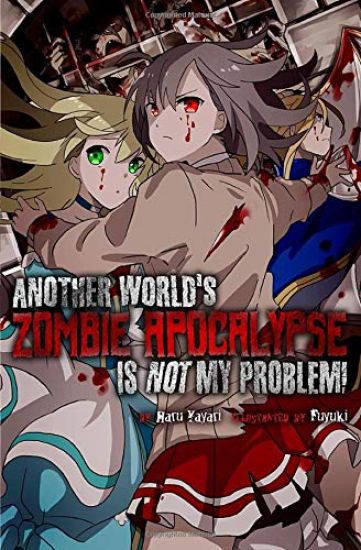
Just when I thought navigating high school was bad enough, I woke up to a rotting, post-apocalyptic world I thought that the poisonous swamp surrounding my small island would have protected me from all the drama, but what did I see staggering my way? A nasty, putrid zombie With nothing left to lose, I shoved it away To my surprise, it turned into a living, breathing, not-so-dead human So, I have the power to purify zombies. And now I'm expected to save this undead world from the zombie apocalypse? Great. This is so NOT my problem
Reduction of Sulphur Content of Heavy Crude Oil using Oxidative Desulp
Sayudi Yahaya Haruna; Umar Zaki Faruk; Muhammad Liman Gidado
Lap Lambert Academic Publishing
2018
nidottu
Riduzione del contenuto di zolfo del petrolio grezzo pesante mediante desolforazione ossidativa
Sayudi Yahaya Haruna; Umar Zaki Faruk; Muhammad Liman Gidado
Edizioni Sapienza
2022
pokkari
Réduction de la teneur en soufre du pétrole brut lourd par désulfuration oxydative
Sayudi Yahaya Haruna; Umar Zaki Faruk; Muhammad Liman Gidado
Editions Notre Savoir
2022
pokkari
Reducción del contenido de azufre del petróleo crudo pesado mediante desulfuración oxidativa
Sayudi Yahaya Haruna; Umar Zaki Faruk; Muhammad Liman Gidado
Ediciones Nuestro Conocimiento
2022
nidottu
Verringerung des Schwefelgehalts von Schweröl durch oxidative Entschwefelung
Sayudi Yahaya Haruna; Umar Zaki Faruk; Muhammad Liman Gidado
Verlag Unser Wissen
2022
pokkari

Redução do Teor de Enxofre do Petróleo Bruto Pesado com Dessulpador Oxidante
Sayudi Yahaya Haruna; Umar Zaki Faruk; Muhammad Liman Gidado
Edicoes Nosso Conhecimento
2022
pokkari
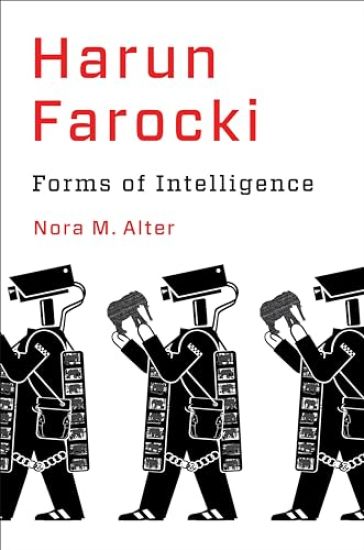
Harun Farocki was one of the world’s most celebrated experimental filmmakers at the time of his death in 2014. In a career spanning over fifty years, the German artist produced more than one hundred works, including political cinema, nonfiction film and video, and art installations, which have been exhibited globally. After his early politically engaged films in Super 8 and 16 mm, Farocki spent many years making independent films and commissions for German public television. In the last phase of his career, he transitioned to creating digital and multichannel installations. He also collaborated with the director Christian Petzold on a dozen films. In addition to his prolific media-making career, Farocki was an incisive critic and editor.This groundbreaking book is an incisive and comprehensive analysis of Farocki’s oeuvre, shedding new light on his media experimentation and writings across platforms and venues. Nora M. Alter examines how Farocki’s work investigates film and media images: their history, nature, manipulation, changing function, and strategic use. Focusing on interconnected ideas surrounding labor, critique, and war, she shows how his politically committed art is informed by pedagogical strategies that drive viewers to perceive how the media world they inhabit functions. Alter also argues that Farocki’s career provides a lens on the history of avant-garde and experimental filmmaking amid shifts in materials and exhibition platforms. Tracing the transformations of Farocki’s artistic practice and thought, this book offers new insight into the body of work of one of the most significant media makers of the late twentieth century.