

Kirjahaku
Etsi kirjoja tekijän nimen, kirjan nimen tai ISBN:n perusteella.
1000 tulosta hakusanalla Harvey E. Bross
In 1949 more than 35,000 Jews lived in Libya, but close to ninety percent had left before Libya attained its independence in 1952. Jewish Life in Muslim Libya combines historical and anthropological perspectives in depicting the changing relations between Muslims and Jews in Libya from the early nineteenth century up to the middle of the twentieth century. Harvey E. Goldberg shows that the cultural and religious worlds of the Jewish and Muslim communities in Libya were deeply intertwined in daily life and largely remained so despite political and social changes under successive Ottoman and Italian rule. He documents the intricate symbolic linkages of Jews and Muslims in different periods and in a variety of settings. His accounts of traditional Jewish weddings, of mock fights between Jewish teams that took place in early nineteenth-century Tripoli, and of the profession of street peddling demonstrate that, despite age-old images of Jews as outsiders or infidels, Jews were also an essential and familiar part of the local Islamic society. Goldberg's narrative continues through the British Military Administration in Libya, a period which saw growing Libyan nationalism and, in 1945, three days of riots in which more than 130 Jews were killed. Goldberg reflects on how these events both expressed and exacerbated a rupture in the social fabric linking Muslims and Jews, setting the scene for the mass emigration of Libyan Jews from their homeland.
However diverse their situations, Jews draw on common traditions and texts when they mark life's momentous events and rites of passage. Looking at classic rites of passage along with emerging life-milestone practices, this text reflects the culture and religious diversity within Judaism.

English Public Finance, from the Revolution of 1688; With Chapters on the Bank of England
Harvey E Fisk
Trieste Publishing
2018
nidottu

C.S. Lewis has influenced countless Christians in their preaching and evangelical witness from the pulpit today, and he is the most quoted Christian across several Protestant denominations, known for his wit, insight, and perspectives on Christian issues from life to deathand beyond. In Lessons from C. S. Lewis, author and professor Harvey E. Solganick presents C. S. Lewis from an evangelical perspective concerning his stand on philosophical and ethical issues relevant to evangelical Christians today. First providing a compelling history of Lewiss youth and spiritual maturation, Dr. Solganick also considers some of the unexplored tenets of C. S. Lewiss literary, philosophical, and theological legacy, focusing especially on the implications of Lewiss work for evangelism and discipleship. How did this one man influence so many readers of all ages and backgrounds, from the most highly educated to the common layperson? How did this man, his life, and his writings help atheists, agnostics, humanists, reluctant converts, mystics, and anti-Christians to seek Christ? Explore in Lessons from C. S. Lewis an answer, and perhaps be surprised by joy and inspired by Lewis to find your soul, be saved, evangelize others, and grow in Christian discipleship.

The story of a Marine sniper sent out to Charlie Ridge to locate the 419th NVA Battalion. Along the way he rescues a German Shepard named Rommel. A story of survival; of war; of a Marine scout sniper and his faithful companion.

Idol Thoughts is the story of a Marine recon patrol in 1966 Laos, and the Green Beret Major who rescues them from the NVA. Accompanied by a Khemoi Nuong tribe of warriors, Major Stokes commands a remote radio listening station in the borderlands between Laos and North Vietnam. This is a war story for those who love war stories; a tale of heroism and betrayal, love, and the mystery of the Sunshine Buddha.
The kingdom of heaven is at hand, which means you should be rejoicing-but only if you'll be among those to survive the End of Days. Harvey E. One-Wolf presents an in-depth study of God's Word, seeking to explain why and when the end of days will occur in this detailed study. By examining the life of Isaac Newton, who sought knowledge and truth from the originator of the universe through the Holy Scriptures, he answers questions such as: -How soon will the End of Days be? -What will we see leading up to it? -Has the day of wrath already started? -What can individuals do to ensure they are among God's chosen? Newton-as well as other great thinkers whose ideas are highlighted in this book-believed the universe was designed by a perfect intelligence, rather than being haphazard and arbitrarily contrived, as many finite thinkers believe today. As every day passes, we move closer to the day of Satan's authority and the end of the world. Learn the pathways that lead to the living waters of everlasting life with A Visionary's Vision.

William Jennings Bryan: A Concise But Complete Story of His Life and Services
Harvey E. Newbranch
Createspace Independent Publishing Platform
2016
nidottu
Originally published in 1900. William Jennings Bryan was an American orator and politician from Nebraska, and a dominant force in the populist wing of the Democratic Party, standing three times as the Party's nominee for President of the United States. -Wikipedia

William Jennings Bryan A Concise but Complete Story of his Life and Services
Harvey E. Newbranch
Createspace Independent Publishing Platform
2018
nidottu
This collection of literature attempts to compile many of the classic works that have stood the test of time and offer them at a reduced, affordable price, in an attractive volume so that everyone can enjoy them.
The writing is an anthological history of aerial photographic reconnaissance and imagery interpretation in the U. S. Marine Corps in the Twentieth Century. This anthology covers the birth of photographic interpretation in the U.S. Marine Corps, the training evolution of imagery analysts from their cartographic roots, the transition from propeller driven aircraft to high performance reconnaissance jet aircraft, the evolution from hard copy photography to digital softcopy imagery, advancements in sensor technologies and remote sensing, and the emergence of the Marine Corps first Unmanned Aerial Vehicles.
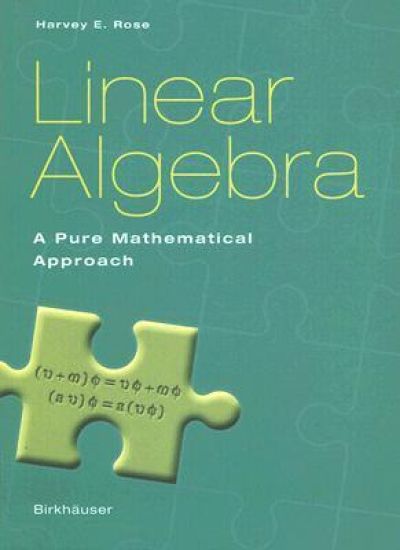
In algebra, an entity is called linear if it can be expressed in terms of addition, and multiplication by a scalar; a linear expression is a sum of scalar multiples of the entities under consideration. Also, an operation is called linear if it preserves addition, and multiplication by a scalar. For example, if A and Bare 2 x 2 real matrices, v is a (row) vector in the real plane, and c is a real number, then v(A + B) = vA + vB and (cv)A = c(vA), that is, the process of applying a matrix to a vector is linear. Linear Algebra is the study of properties and systems which preserve these two operations, and the following pages present the basic theory and results of this important branch of pure mathematics. There are many books on linear algebra in the bookshops and libraries of the world, so why write another? A number of excellent texts were written about fifty years ago (see the bibliography); in the intervening period the 'style' of math ematical presentation has changed. Also, some of the more modern texts have concentrated on applications both inside and outside mathematics. There is noth ing wrong with this approach; these books serve a very useful purpose. But linear algebra contains some fine pure mathematics and so a modern text taking the pure mathematician's viewpoint was thought to be worthwhile.
Anthropology and Hebrew Bible Studies: Modes of Interchange and Interpretation
Harvey E. Goldberg
BRILL
2018
nidottu
Interchange between anthropology and biblical scholarship began because of perceived similarities between “simpler” societies and practices appearing in the Hebrew Bible. After some disengagement when anthropologists turned mainly to ethnographic fieldwork, new cross-disciplinary possibilities opened up when structuralism emerged in anthropology. Ritual and mythology were major topics receiving attention, and some biblical scholars partially adopted structuralist methods. In addition, anthropological research extended to complex societies and also had an impact upon historical studies. Modes of interpretation developed that reflected holistic perspectives along with a sensibility to ethnographic detail. This essay illustrates these trends in regard to rituals and to notions of purity in the Hebrew Bible, as well as to the place of literacy in Israelite society and culture. After discussing these themes, three examples of structuralist-inspired analysis are presented which in different ways take into account historical and literacy-based facets of the Bible.

The Knapp Method Of Growing Cotton
William Benjamin Mercier; Harvey E. Savely
Kessinger Pub
2008
pokkari

Daddy, Please Teach Me to Read
Ed D. Harvey E. Shrum
Createspace Independent Publishing Platform
2015
nidottu

Elongation Treatment of Low Back Pain
George Henry Hassard; Charles Lambert Redd; Harvey E. Billig Jr
Literary Licensing, LLC
2013
nidottu
Two brothers are thrust into a reality that makes them yearn for their years of deployment overseas. There were no news tickers or conspiracy theories to soften the sudden reality; the two soldiers witnessed the beginning of the end firsthand. Where would you go? Who would you save? This is the account of a small group of strangers who become family in order to somehow carry on against impossible odds.Finally, there's a zombie book that doesn't have to rely on shock value and gore to elicit an emotional response. Between bouts of laughter and of tears, "And the Blood Ran Black" will have you forgetting to breathe while it unapologetically grabs you by the eyeballs.
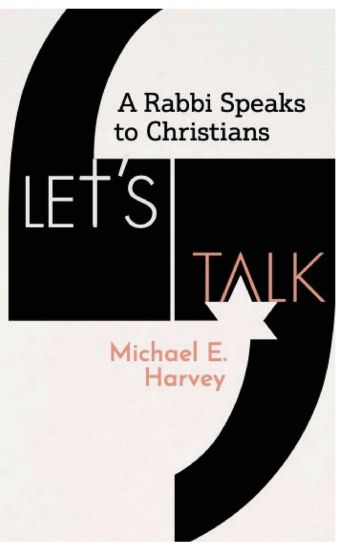
Let's Talk is designed for Christian clergy and lay people to expand their knowledge about the Jewish aspects and roots of their faith. The book addresses misconceptions, unintentional antisemitism in liturgy or interpretation, beautiful comparisons, and helps readers understand the difference between the historical Jesus and modern-day Judaism.Let's Talk A Rabbi Speaks to Christians is a handbook for Christian clergy, church leaders, and lay people who wish to expand their knowledge about the Jewish aspects and roots of their faith. Easy to read and use as a reference guide, the chapters outline misconceptions, unintentional antisemitism in liturgy or interpretation, and beautiful comparisons, and helps readers understand the difference between the historical Jesus and modern-day Judaism.The author hopes this book can help readers in three specific ways. The first is simply to learn from the content in order to shape one's own journey toward scholarship and interfaith education. In this way, the book can serve as a jumping-off point for new discoveries, new philosophical views on old topics, and a hunger for new material. Second, the book can be used as a teaching guide for adult education sessions of any size. Sections can be turned into worksheets or curricula, and then taught. Book clubs can read and process the material, chapter by chapter, and bring their questions and comments to a discussion setting. And third, this volume can be consulted as a handy reference guide when a question, a situation, or a conflict arises, to find a solution.The volume seeks to diminish conflict between Jews and Christians as it opens interfaith dialog and eases tensions from mistakes in the past.
