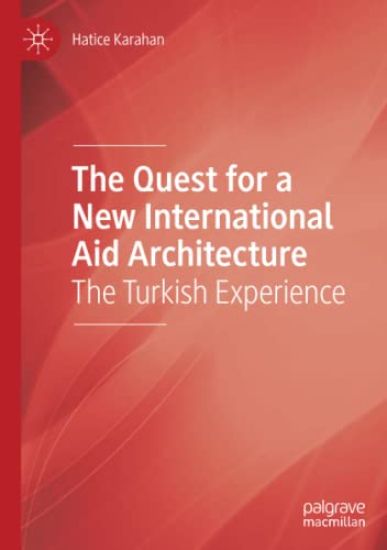
This book examines Turkey’s success within international development cooperation and how this could create a framework for a new international aid architecture. Turkey has become a world leader in humanitarian assistance and shared an extraordinary burden in official development assistance (ODA). Its achievements are used to highlight the global failure to meet aid commitments and the increasingly permanent humanitarian problems seen in certain regions. A particular focus is given to Turkey’s diplomatic and humanitarian actions, its contribution to regional stability and development, and creating a holistic aid perspective. The book aims to provide the reader with an understanding of Turkey’s significant value-added contribution to the international aid architecture, gives an outline for international cooperation, and contributes to ongoing discussions within development economics, political science, and international relations.
This book examines Turkey’s success within international development cooperation and how this could create a framework for a new international aid architecture. Turkey has become a world leader in humanitarian assistance and shared an extraordinary burden in official development assistance (ODA). Its achievements are used to highlight the global failure to meet aid commitments and the increasingly permanent humanitarian problems seen in certain regions. A particular focus is given to Turkey’s diplomatic and humanitarian actions, its contribution to regional stability and development, and creating a holistic aid perspective. The book aims to provide the reader with an understanding of Turkey’s significant value-added contribution to the international aid architecture, gives an outline for international cooperation, and contributes to ongoing discussions within development economics, political science, and international relations.
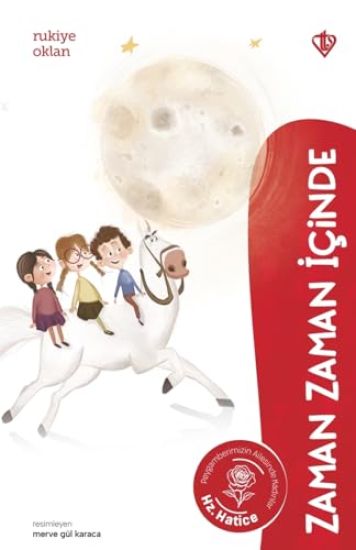
�������� T rk e (≈ 2500 bytes) Bu eser, Hz. Hatice'nin hayatını ocuklara y nelik edebi bir anlatımla ele alır. Kitapta olaylar, kronolojik bir biyografi şeklinde değil; hik ye temelli b l mler aracılığıyla aktarılır. B ylece okuyucu, tarihsel bir kişiliği soyut bilgiler yerine yaşanmışlıklar zerinden tanır. Hz. Hatice'nin kararlılığı, merhameti ve sorumluluk bilinci; ocukların anlayabileceği sade bir dil ve sembolik anlatımlarla işlenmiştir. Kitap, değer eğitimi a ısından g l bir i erik sunar ve ocukların empati kurma, d ş nme ve anlamlandırma becerilerini destekler. Eğitici olmasının yanında edebi niteliği de n planda olan bu alışma, din ve ahlaki i erikli ocuk kitapları arasında nitelikli bir rnek teşkil eder.�������� English (≈ 2500 bytes) This book presents the life of Lady Khadijah through a literary and child-centered narrative approach. Instead of a strict chronological biography, the story unfolds through thematic episodes that allow young readers to connect with the character on a personal level. The narrative highlights moral strength, compassion, responsibility, and steadfastness-values conveyed naturally through storytelling rather than didactic instruction. This method enables children to internalize ethical lessons while enjoying an engaging reading experience. With its careful balance of historical respect and imaginative storytelling, the book serves as a valuable resource for parents, educators, and libraries seeking meaningful children's literature grounded in cultural and spiritual heritage. Table of Content (İ indekiler) S rpriz Yolculuk Hatice Olmak Bir Tepeden Bir Tepeye Zaman Zaman İ inde Macera arpabilir
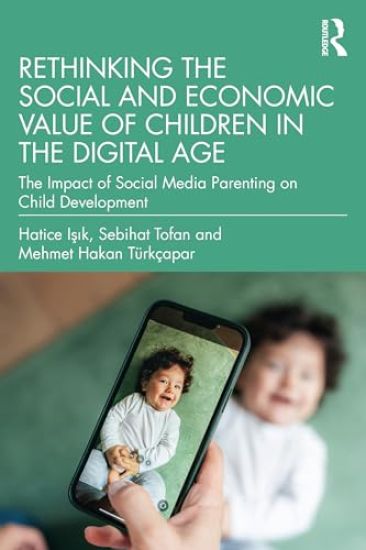
In a world shaped by likes, followers, and algorithms, what does it mean to be a child and what does it mean to raise one? This book explores how the meaning and value of children have shifted in the digital era, where visibility often replaces intimacy, and childhood unfolds not just at home but also on screens. Drawing on developmental psychology, sociology, and media studies, it examines how everyday parenting has merged with content creation. It also explores how children, who were once valued primarily for their emotional closeness, are now increasingly seen as sources of social capital and digital assets.From kidfluencers to sharenting, from digital play to parenting anxiety, this book unpacks how modern technologies and cultural norms have redefined what it means to raise a child. Building on Çigdem Kagitçibasi’s influential Value of Children model, the book reveals a striking paradox. In the past, societies gradually shifted from valuing children for their economic contributions to appreciating them for their psychological and emotional significance. However, in today’s digital world, social and economic value have returned to the forefront, now shaped by screens, platforms, and performative visibility.Rather than offering prescriptive advice, the book invites deeper reflection. What happens when childhood becomes a brand? What are the consequences when love is shared not just in private but for public engagement? With clear language and real-life examples, this book offers a thought-provoking guide for parents, educators, and researchers as they try to understand and respond to the ethical, emotional, and developmental challenges of growing up online.
In a world shaped by likes, followers, and algorithms, what does it mean to be a child and what does it mean to raise one? This book explores how the meaning and value of children have shifted in the digital era, where visibility often replaces intimacy, and childhood unfolds not just at home but also on screens. Drawing on developmental psychology, sociology, and media studies, it examines how everyday parenting has merged with content creation. It also explores how children, who were once valued primarily for their emotional closeness, are now increasingly seen as sources of social capital and digital assets.From kidfluencers to sharenting, from digital play to parenting anxiety, this book unpacks how modern technologies and cultural norms have redefined what it means to raise a child. Building on Çigdem Kagitçibasi’s influential Value of Children model, the book reveals a striking paradox. In the past, societies gradually shifted from valuing children for their economic contributions to appreciating them for their psychological and emotional significance. However, in today’s digital world, social and economic value have returned to the forefront, now shaped by screens, platforms, and performative visibility.Rather than offering prescriptive advice, the book invites deeper reflection. What happens when childhood becomes a brand? What are the consequences when love is shared not just in private but for public engagement? With clear language and real-life examples, this book offers a thought-provoking guide for parents, educators, and researchers as they try to understand and respond to the ethical, emotional, and developmental challenges of growing up online.
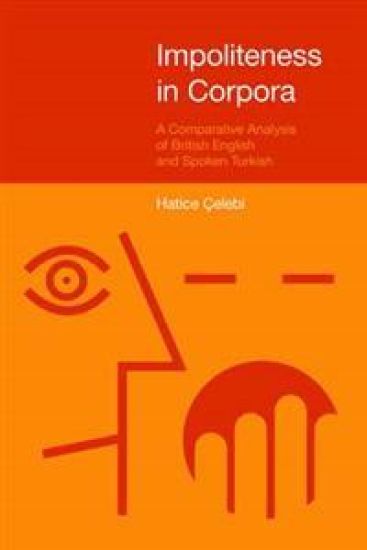
This book aims at devising a methodological framework to analyse impoliteness in corpora. In doing so, it tackles the issue of the methodology of extracting and analysing impoliteness in general corpora in both British English and Turkish. The focus of the extraction and analysis is on informal conversation as a genre in spoken interaction. The data have been retrieved from two different corpora, the British National Corpus (BNC) XML edition and the Spoken Turkish Corpus (STC) (Ruhi et al., 2010) , which is currently under construction as a project sponsored by TUBYTAK (Scientific and Technological Research Council of Turkey) 108K283; and ODTU (Middle East Technical University) BAP-05-03-2011-001. The book lays out a well-defined methodology to the extraction of impoliteness from everyday spoken interaction, which is to minimize the degree of subjectivity in extracting the impoliteness and prevent the epistemological fallacies at the analysis level. The methodological discussion has been developed around the issues related to investigating impoliteness in a corpus driven linguistics approach.In line with this approach to investigating language use, the book illustrates that a corpus approach to impoliteness is exploratory and data-driven.
""Suphe yok ki, Yunus da elcilerden biriydi. Hani o efendisinden kacan bir kole gibi agzina kadar dolu bir gemiyle kacmisti. Bunun ardindan kurra cekilmis ve hayati kayip denize atilmisti. Derken o derin bir pismanlikla kivranir bir haldeyken iri bir balik tarafindan yakalanmisti."" (Kur'an-Saffat suresi, 139/14) Bu kitap, gecirmis oldugum agir bir depresyon doneminde icime attigim korku, ofke, yalnizlik, terk edilmislik ve degersizlik gibi duygulari disa vurma ihtiyacini elimin altinda bulundurdugum ajandaya yazarak gidermeye calistigim gunluklerin derlenerek bir araya getirilmesiyle meydana gelmistir. Bu yazmalar bazen birkac satir, bazen uzun bir ic dokme seklinde kendini gosteriyordu. Yazdikca neler hissettigimi, neler dusundugumu daha net gorebiliyordum. Bu saglikli dusunebilen bir insan icin cok sey ifade etmese de, bunalimdaki bir insan icin iyilesmeye giden yolda ilk adimdir kendini tanimak, duygu ve dusuncelerini ifade edebilmek, sorun'un kaynagina inmek adina.
Welcome to the Career Study and Handwriting practice companion to When I Grow Up.. I Want to Work Outside. This workbook gives you a chance to explore each of 12 outside careers while you practice your print handwriting skills. To make it even more fun, there are some links to a few videos for each of the careers within.
The new theory of Jacobi forms over totally real number fields introduced in this monograph is expected to give further insight into the arithmetic theory of Hilbert modular forms, its L-series, and into elliptic curves over number fields. This work is inspired by the classical theory of Jacobi forms over the rational numbers, which is an indispensable tool in the arithmetic theory of elliptic modular forms, elliptic curves, and in many other disciplines in mathematics and physics. Jacobi forms can be viewed as vector valued modular forms which take values in so-called Weil representations. Accordingly, the first two chapters develop the theory of finite quadratic modules and associated Weil representations over number fields. This part might also be interesting for those who are merely interested in the representation theory of Hilbert modular groups. One of the main applications is the complete classification of Jacobi forms of singular weight over an arbitrary totally real number field.