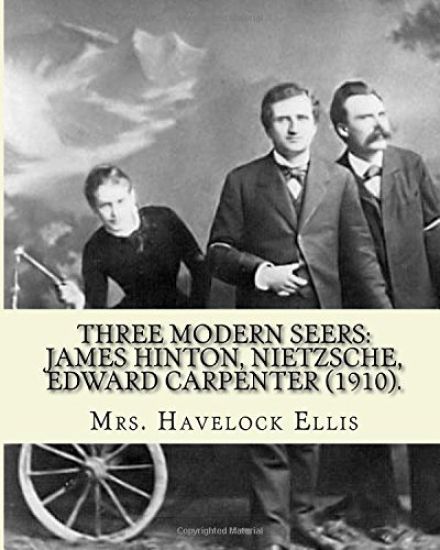
Edith Mary Oldham Ellis (n e Lees; 1861, Manchester - 1916, Paddington, London) was an English writer and women's rights activist. She was married to the early sexologist Havelock Ellis. Biography: Her mother died when she was young and she was sent to a Manchester convent in 1873. She joined the Fellowship of the New Life and met Havelock Ellis in 1887 at a meeting.The couple married in November 1891. From the beginning, their marriage was unconventional; she was openly lesbian and at the end of the honeymoon he went back to his bachelor rooms. She had several affairs with women, which her husband was aware of.Their open marriage was the central subject in Havelock Ellis's autobiography, My Life (1939).Her first novel, Seaweed: A Cornish Idyll, was published in 1898. 3] During this period Edith began a relationship with Lily, an artist from Ireland who lived in St. Ives. Edith was devastated when Lily died from Bright's disease in June 1903. 4] Ellis had a nervous breakdown in March 1916 and died of diabetes that September. James Hinton: a Sketch, her biography of surgeon James Hinton was published posthumously in 1918.. Works: Seaweed: A Cornish Idyll (1898) My Cornish Neighbours (1906) Kit's Woman (U.S. title: Steve's Woman) (1907) The Subjection of Kezia (1908) Attainment (1909) Three Modern Seers (1910) The Imperishable Wing (1911) The Lover's Calendar: An Anthology (ed) (1912) Love-Acre (1914) Love in Danger (1915) James Hinton: A Sketch (1918) The New Horizon in Love and Life (1921)..........
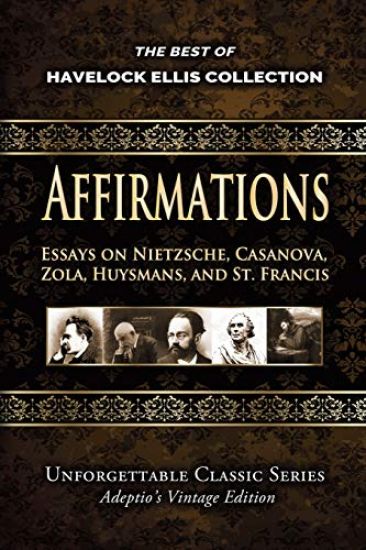
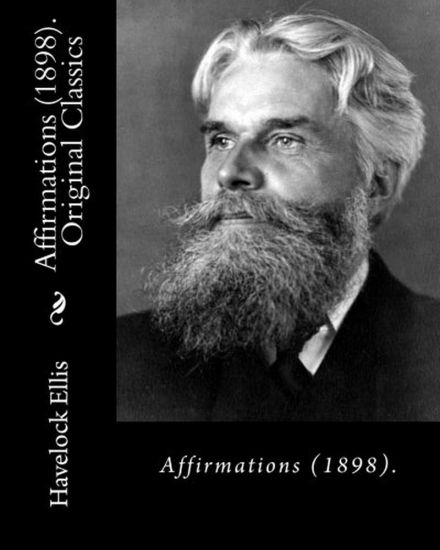
This is a new edition of "Affirmations," originally published in 1915 by Houghton Mifflin, of New York. Part of Adeptio's "The Best of Havelock Ellis Collection," from the "Unforgettable Classic Series," this is not a facsimile reprint. Obvious typographical errors have been carefully corrected and the entire text has been reset and redesigned by Adeptio Editions to enhance readability, while respecting the original edition. "The final value of any book is not in the beliefs which it may give us or take away from us, but in its power to reveal to us our own selves. If I can stimulate any one in the search for his own affirmations, he and I may well rest content. Only with the help of such affirmations can we find a staff to comfort us through the valley of life." This paragraph from the preface to "Affirmations" is an epitome of the entire work. It sums up the philosophy of Havelock Ellis-individualism, in the highest sense of the word. "Affirmations" was first published in 1898, and it is now reprinted, without any changes-except for another remarkable preface. Like Bernard Shaw, Havelock Ellis often gives us the meat of his work in a preface. Mr. Ellis admits that he has deliberately failed to bring his book up-to-date. "We are concerned here," he says, "with an attempt to pierce to the core of numerous vital questions, using certain intensely vital instruments to aid us in that task. What became of those instruments at last happens not to matter at all. Dates have their interest. But what are biographical dictionaries for?" The book consists of five studies-of Nietzsche, Zola, Huysmans, Casanova, and St. Francis of Assisi. Discussing each of these men in his usual brilliant manner, Havelock Ellis gives us five passionate sermons on individualism. But these sermons are most unsermon-like. They are merely outpourings of the author's ideas, as suggested by five great individualists. There is nothing preachy or sweetly sentimental about the studies. They are frank, unconventional, penetrating essays-rich in eloquence and spiritual vigor. In Nietzsche, Mr. Ellis finds that "love of life which accepts reality without too much theorizing about it." Nietzsche, we are told, shunned Plato, for Plato was "the coward who fled from the real unto the unreal." Nietzsche believed in pain, because it throws us back on our own naked personalities, face to face with reality. Mr. Ellis describes Nietzsche's ideal man: "the brave, laconic, self-contained man; not lusting after self-expression, hating fanticism, shunning notoriety and knowing how to smile." From Nietzsche, then, Mr. Ellis draws these affirmations: Be hard, be self-reliant, be unafraid, and be original. And so Mr. Ellis takes up the others-Casanova, Zola, Huysmans, and St. Francis. From each of them he draws substantially the same affirmations as Nietzsche inspired. But in each someone feature is predominant. In Casanova, it is the fearlessness and fullness of life; in Zola it is the reality and thoroughness of life; in Huysmans it is the beauty of life as perceived through the senses; and, finally, in St. Francis of Assisi it is the hardihood and joyful suffering of life. His concluding words are: "Our feet cling to the earth, and it is well that we should be able to grip it closely and nakedly. But the earth beneath us is not all nature; there are instincts which lead elsewhere, and it is part of the art of living to use naturally all those instincts. And for us, as for him who wrote "De Imitatione Christi" there are still two wings whereby we may raise ourselves above the earth, simplicity and purity." (Columbia Daily Spectator, Volume LIX, Number 30, 1 November 1915.) Among some of Havelock's great books, Affirmations is also considered one of his masterpieces and helped establish his reputation throughout the world.
This is a new edition of "Little Essays of Love and Virtue," originally published in 1922 by George H. Doran Company, of New York. Part of Adeptio's Unforgettable Classic Series, this is not a facsimile reprint. Obvious typographical errors have been carefully corrected and the entire text has been reset and redesigned by Adeptio Editions to enhance readability, while respecting the original edition. In "Little Essays of Love and Virtue," Havelock Ellis set forth certain fundamental principles, together with their practical application to the life of the early twentieth century. Many principles are stated, some technically; others were therein implied but only to be read between the lines. Here, the author expressed them in simple language and with some rich detail. The book touches on important topics such as Children and Parents, The Meaning of Purity, The Objects of Marriage, Husbands and Wives, The Love-Rights of Women, The Play-Function of Sex, and The Individual and the Race. "Little Essays of Love and Virtue" is aimed primarily at young people, youths and girls at the period of adolescence "who were in the author's thoughts in all the studies he wrote of sex because he was of that age when he first vaguely planned them." "Little Essays of Love and Virtue," is considered one of Havelock's masterpieces and helped establish Havelock's reputation throughout the world. About the Author: Havelock Ellis was a social activist, a physician and a psychologist, whose best-known works concern sexuality and criminology. Among his over forty books, in 1890 he published "The Criminal," a remarkable work on criminal anthropology. In the same year, he published "The New Spirit," a collection of literary essays on Diderot, Heine, Whitman, Ibsen, and Tolstoy, and Ellis's attempt to synthesize science and religious mysticism. In 1898 he wrote "Affirmations," which contains essays on Nietzsche, Casanova, Zola, Huysmans, and St. Francis. In 1897, he published "Sexual Inversion," the first medical text in English about homosexuality, which he had co-authored with John Addington Symonds in an earlier edition, and which became a part of Ellis's six-volume "Studies in the Psychology of Sex." In 1922, he published "Little Essays of Love and Virtue," which aimed primarily at young people, youths and girls at the period of adolescence, who were in the author's thoughts in all the studies he wrote of sex because he was of that age when he first vaguely planned them. These titles are part of our "Unforgettable Classic Series: The Best of Havelock Ellis Collection." Born in Surrey, England, in 1859, Havelock Ellis was considered by the overwhelming majority of critics as the best translator of "Germinal," mile Zola s masterpiece. Ellis was associated with the Decadent movement and with the "Lutetian Society," a secret literary society, through which authors and translators like himself were able to provide British readers with translations of works which were often antagonistic to the Victorian ideals of morality-such as some of mile Zola's controversial novels-aiming at expanding the cultural horizons of the few lucky readers who had access to them. Havelock Ellis died in Suffolk, England, in 1939.
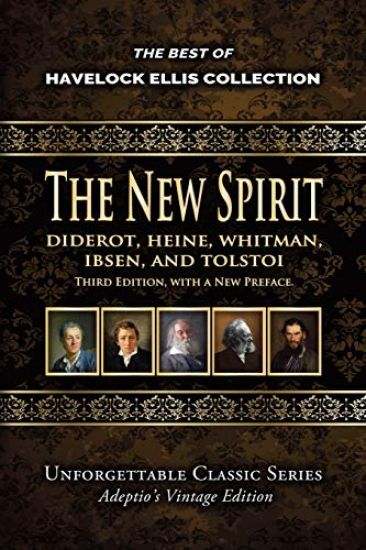
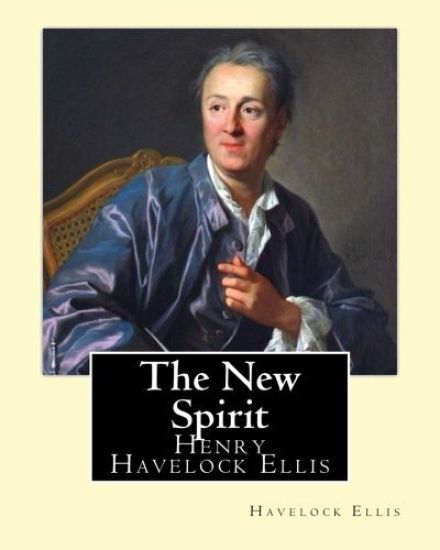
This is a new edition of "The New Spirit," originally published in 1892 by Walter Scott, Ltd., of London. Part of Adeptio's "The Best of Havelock Ellis Collection," from the "Unforgettable Classic Series," this is not a facsimile reprint. Obvious typographical errors have been carefully corrected and the entire text has been reset and redesigned by Adeptio Editions to enhance readability, while respecting the original edition. "The New Spirit" was Havelock Ellis' first book, a collection of literary essays on Diderot, Heine, Whitman, Ibsen, and Tolstoi, originally published in 1890. The book explores "the new spirit" that has come into the world. Showing deep understanding of his times, Ellis discusses the sciences of anthropology, sociology, and political science; the increasing importance of women-which he believed to be the most significant movement of his time-the approaching disappearance of war, and art and religion as a means to seek rest. This is the original third edition. "The New Spirit" is considered one of Havelock's masterpieces and helped establish Havelock's reputation throughout the world. About the Author: Havelock Ellis was a social activist, a physician and a psychologist, whose best-known works concern sexuality and criminology. Among his over forty books, in 1890 he published "The Criminal," a remarkable work on criminal anthropology. In the same year, he published "The New Spirit," a collection of literary essays on Diderot, Heine, Whitman, Ibsen, and Tolstoy, and Ellis's attempt to synthesize science and religious mysticism. In 1898 he wrote "Affirmations," which contains essays on Nietzsche, Casanova, Zola, Huysmans, and St. Francis. In 1897, he published "Sexual Inversion," the first medical text in English about homosexuality, which he had co-authored with John Addington Symonds in an earlier edition, and which became a part of Ellis's six-volume "Studies in the Psychology of Sex." In 1922, he published "Little Essays of Love and Virtue," which aimed primarily at young people, youths and girls at the period of adolescence, who were in the author's thoughts in all the studies he wrote of sex because he was of that age when he first vaguely planned them. These titles are part of our "Unforgettable Classic Series: The Best of Havelock Ellis Collection." Born in Surrey, England, in 1859, Havelock Ellis was considered by the overwhelming majority of critics as the best translator of "Germinal," mile Zola s masterpiece. Ellis was associated with the Decadent movement and with the "Lutetian Society," a secret literary society, through which authors and translators like himself were able to provide British readers with translations of works which were often antagonistic to the Victorian ideals of morality-such as some of mile Zola's controversial novels-aiming at expanding the cultural horizons of the few lucky readers who had access to them. Havelock Ellis died in Suffolk, England, in 1939.
This is a new edition of "Sexual Inversion," originally published in 1915 by F. A. Davis Company, Publishers, of Philadelphia. Part of Adeptio's "The Best of Havelock Ellis Collection," from the "Unforgettable Classic Series," this is not a facsimile reprint. Obvious typographical errors have been carefully corrected and the entire text has been reset and redesigned by Adeptio Editions to enhance readability, while respecting the original edition. "Sexual Inversion" was the first English medical textbook on the topic of homosexuality. The book became a part of Ellis's six-volume "Studies in the Psychology of Sex." Havelock Ellis and John Addington Symonds agreed to collaborate on a new study that would combine Symonds's historical analysis on homosexuality with Ellis's experience with medical and scientific theory. Symonds died in 1893 before the book was concluded. "Sexual Inversion" was first published in German in 1896 (Leipzig, by Georg H. Wigand's Verlag) entitled "Das Kontr re Geschlechtsgef hl," under Havelock Ellis and John Addington Symonds. Ellis further revised the text and edited several of Symonds's contributions, with almost every page being rewritten or enlarged. This is the third edition. "Sexual Inversion" is considered one of Havelock's masterpieces and helped establish Havelock's reputation throughout the world. About the Author: Havelock Ellis was a social activist, a physician and a psychologist, whose best-known works concern sexuality and criminology. Among his over forty books, in 1890 he published "The Criminal," a remarkable work on criminal anthropology. In the same year, he published "The New Spirit," a collection of literary essays on Diderot, Heine, Whitman, Ibsen, and Tolstoy, and Ellis's attempt to synthesize science and religious mysticism. In 1898 he wrote "Affirmations," which contains essays on Nietzsche, Casanova, Zola, Huysmans, and St. Francis. In 1897, he published "Sexual Inversion," the first medical text in English about homosexuality, which he had co-authored with John Addington Symonds in an earlier edition, and which became a part of Ellis's six-volume "Studies in the Psychology of Sex." In 1922, he published "Little Essays of Love and Virtue," which aimed primarily at young people, youths and girls at the period of adolescence, who were in the author's thoughts in all the studies he wrote of sex because he was of that age when he first vaguely planned them. These titles are part of our "Unforgettable Classic Series: The Best of Havelock Ellis Collection." Born in Surrey, England, in 1859, Havelock Ellis was considered by the overwhelming majority of critics as the best translator of "Germinal," mile Zola s masterpiece. Ellis was associated with the Decadent movement and with the "Lutetian Society," a secret literary society, through which authors and translators like himself were able to provide British readers with translations of works which were often antagonistic to the Victorian ideals of morality-such as some of mile Zola's controversial novels-aiming at expanding the cultural horizons of the few lucky readers who had access to them. Havelock Ellis died in Suffolk, England, in 1939.
This is a new edition of "The Criminal," originally published in 1890 by Scribner & Welford, of New York. Part of Adeptio's Unforgettable Classic Series, this is not a facsimile reprint. Obvious typographical errors have been carefully corrected and the entire text has been reset and redesigned by Adeptio Editions to enhance readability, while respecting the original edition. "The Criminal" is a remarkable work on criminal anthropology-a new science which arose in Italy in the nineteenth century. Full of fascinating interest, it is one of the very first works on criminology written in English about the scientific study of the criminal. In 1902, the Westminster Review recommended the book saying that "as a handbook for legislators, jurists, and prison officials it is of paramount value." In "The Criminal," Havelock Ellis arrays his facts in order, providing plenty of data and stating his findings with accuracy when describing the physical, moral, social, emotional and religious aspects, among many others, related to what Cesare Lombroso termed the "born criminal," and what Ellis preferred to call the "instinctive criminal." "The Criminal" became one of the main sources researchers seek for information on "born" or "instinctive criminals." "The Criminal" is considered one of Havelock's masterpieces and helped establish Havelock's reputation throughout the world. About the Author: Havelock Ellis was a social activist, a physician and a psychologist, whose best-known works concern sexuality and criminology. Among his over forty books, in 1890 he published "The Criminal," a remarkable work on criminal anthropology. In the same year, he published "The New Spirit," a collection of literary essays on Diderot, Heine, Whitman, Ibsen, and Tolstoy, and Ellis's attempt to synthesize science and religious mysticism. In 1898 he wrote "Affirmations," which contains essays on Nietzsche, Casanova, Zola, Huysmans, and St. Francis. In 1897, he published "Sexual Inversion," the first medical text in English about homosexuality, which he had co-authored with John Addington Symonds in an earlier edition, and which became a part of Ellis's six-volume "Studies in the Psychology of Sex." In 1922, he published "Little Essays of Love and Virtue," which aimed primarily at young people, youths and girls at the period of adolescence, who were in the author's thoughts in all the studies he wrote of sex because he was of that age when he first vaguely planned them. These titles are part of our "Unforgettable Classic Series: The Best of Havelock Ellis Collection." Born in Surrey, England, in 1859, Havelock Ellis was considered by the overwhelming majority of critics as the best translator of "Germinal," mile Zola s masterpiece. Ellis was associated with the Decadent movement and with the "Lutetian Society," a secret literary society, through which authors and translators like himself were able to provide British readers with translations of works which were often antagonistic to the Victorian ideals of morality-such as some of mile Zola's controversial novels-aiming at expanding the cultural horizons of the few lucky readers who had access to them. Havelock Ellis died in Suffolk, England, in 1939.
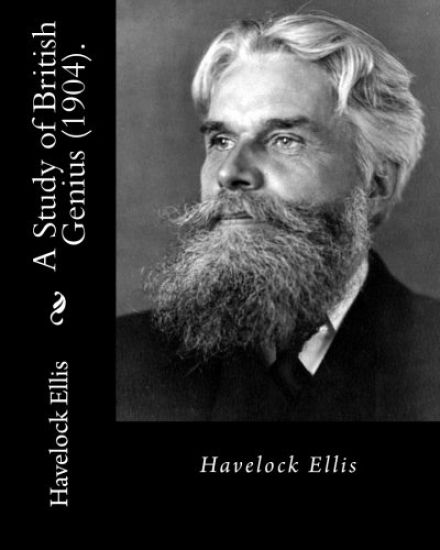
Henry Havelock Ellis, known as Havelock Ellis (2 February 1859 - 8 July 1939), was an English physician, writer, progressive intellectual and social reformer who studied human sexuality. He was co-author of the first medical textbook in English on homosexuality in 1897, and also published works on a variety of sexual practices and inclinations, as well as transgender psychology. He is credited with introducing the notions of narcissism and autoeroticism, later adopted by psychoanalysis. Like many intellectuals of his era, he supported eugenics and he served as president of the Eugenics Society. Early life and teaching career: Ellis, son of Edward Peppen Ellis and Susannah Mary Wheatley, was born in Croydon, Surrey (now part of Greater London). He had four sisters, none of whom married. His father was a sea captain, his mother the daughter of a sea captain, and many other relatives lived on or near the sea. When he was seven his father took him on one of his voyages, during which they called at Sydney, Callao and Antwerp. After his return, Ellis attended the French and German College near Wimbledon, and afterward attended a school in Mitcham. In April 1875, Ellis sailed on his father's ship for Australia; soon after his arrival in Sydney, he obtained a position as a master at a private school. After the discovery of his lack of training, he was fired and became a tutor for a family living a few miles from Carcoar. He spent a year there and then obtained a position as a master at a grammar school in Grafton. The headmaster had died and Ellis carried on the school for that year, but was unsuccessful. At the end of the year, he returned to Sydney and, after three months' training, was given charge of two government part-time elementary schools, one at Sparkes Creek, near Scone, New South Wales and the other at Junction Creek. He lived at the school house on Sparkes Creek for a year. He wrote in his autobiography, "In Australia, I gained health of body, I attained peace of soul, my life task was revealed to me, I was able to decide on a professional vocation, I became an artist in literature . . . these five points covered the whole activity of my life in the world. Some of them I should doubtless have reached without the aid of the Australian environment, scarcely all, and most of them I could never have achieved so completely if chance had not cast me into the solitude of the Liverpool Range." Medicine and psychology: Ellis returned to England in April 1879. He had decided to take up the study of sex, and felt his first step must be to qualify as a physician. He studied at St Thomas's Hospital Medical School now part of King's College London, but never had a regular medical practice. His training was aided by a small legacy and also income earned from editing works in the Mermaid Series of lesser known Elizabethan and Jacobean drama. He joined The Fellowship of the New Life in 1883, meeting other social reformers Eleanor Marx, Edward Carpenter and George Bernard Shaw.The 1897 English translation of Ellis's book Sexual Inversion, co-authored with John Addington Symonds and originally published in German in 1896, was the first English medical textbook on homosexuality. It describes the sexual relations of homosexual males, including men with boys. Ellis wrote the first objective study of homosexuality, as he did not characterise it as a disease, immoral, or a crime. The work assumes that same-sex love transcended age taboos as well as gender taboos. In 1897 a bookseller was prosecuted for stocking Ellis's book. Although the term homosexual is attributed to Ellis, citation needed] he wrote in 1897, "'Homosexual' is a barbarously hybrid word, and I claim no responsibility for it." Ellis may have developed psychological concepts of autoerotism and narcissism, both of which were later developed further by Sigmund Freud....
Henry Havelock Ellis, known as Havelock Ellis (2 February 1859 - 8 July 1939), was an English physician, writer, progressive intellectual and social reformer who studied human sexuality. He was co-author of the first medical textbook in English on homosexuality in 1897, and also published works on a variety of sexual practices and inclinations, as well as transgender psychology. He is credited with introducing the notions of narcissism and autoeroticism, later adopted by psychoanalysis. Like many intellectuals of his era, he supported eugenics and he served as president of the Eugenics Society. Early life and teaching career: Ellis, son of Edward Peppen Ellis and Susannah Mary Wheatley, was born in Croydon, Surrey (now part of Greater London). He had four sisters, none of whom married. His father was a sea captain, his mother the daughter of a sea captain, and many other relatives lived on or near the sea. When he was seven his father took him on one of his voyages, during which they called at Sydney, Callao and Antwerp. After his return, Ellis attended the French and German College near Wimbledon, and afterward attended a school in Mitcham. In April 1875, Ellis sailed on his father's ship for Australia; soon after his arrival in Sydney, he obtained a position as a master at a private school. After the discovery of his lack of training, he was fired and became a tutor for a family living a few miles from Carcoar. He spent a year there and then obtained a position as a master at a grammar school in Grafton. The headmaster had died and Ellis carried on the school for that year, but was unsuccessful. At the end of the year, he returned to Sydney and, after three months' training, was given charge of two government part-time elementary schools, one at Sparkes Creek, near Scone, New South Wales and the other at Junction Creek. He lived at the school house on Sparkes Creek for a year. He wrote in his autobiography, "In Australia, I gained health of body, I attained peace of soul, my life task was revealed to me, I was able to decide on a professional vocation, I became an artist in literature . . . these five points covered the whole activity of my life in the world. Some of them I should doubtless have reached without the aid of the Australian environment, scarcely all, and most of them I could never have achieved so completely if chance had not cast me into the solitude of the Liverpool Range." Medicine and psychology: Ellis returned to England in April 1879. He had decided to take up the study of sex, and felt his first step must be to qualify as a physician. He studied at St Thomas's Hospital Medical School now part of King's College London, but never had a regular medical practice. His training was aided by a small legacy and also income earned from editing works in the Mermaid Series of lesser known Elizabethan and Jacobean drama. He joined The Fellowship of the New Life in 1883, meeting other social reformers Eleanor Marx, Edward Carpenter and George Bernard Shaw.The 1897 English translation of Ellis's book Sexual Inversion, co-authored with John Addington Symonds and originally published in German in 1896, was the first English medical textbook on homosexuality. It describes the sexual relations of homosexual males, including men with boys. Ellis wrote the first objective study of homosexuality, as he did not characterise it as a disease, immoral, or a crime. The work assumes that same-sex love transcended age taboos as well as gender taboos. In 1897 a bookseller was prosecuted for stocking Ellis's book. Although the term homosexual is attributed to Ellis, citation needed] he wrote in 1897, "'Homosexual' is a barbarously hybrid word, and I claim no responsibility for it." Ellis may have developed psychological concepts of autoerotism and narcissism, both of which were later developed further by Sigmund Freud....
Henry Havelock Ellis, known as Havelock Ellis (2 February 1859 - 8 July 1939), was an English physician, writer, progressive intellectual and social reformer who studied human sexuality. He was co-author of the first medical textbook in English on homosexuality in 1897, and also published works on a variety of sexual practices and inclinations, as well as transgender psychology. He is credited with introducing the notions of narcissism and autoeroticism, later adopted by psychoanalysis. Like many intellectuals of his era, he supported eugenics and he served as president of the Eugenics Society. Early life and teaching career: Ellis, son of Edward Peppen Ellis and Susannah Mary Wheatley, was born in Croydon, Surrey (now part of Greater London). He had four sisters, none of whom married. His father was a sea captain, his mother the daughter of a sea captain, and many other relatives lived on or near the sea. When he was seven his father took him on one of his voyages, during which they called at Sydney, Callao and Antwerp. After his return, Ellis attended the French and German College near Wimbledon, and afterward attended a school in Mitcham. In April 1875, Ellis sailed on his father's ship for Australia; soon after his arrival in Sydney, he obtained a position as a master at a private school. After the discovery of his lack of training, he was fired and became a tutor for a family living a few miles from Carcoar. He spent a year there and then obtained a position as a master at a grammar school in Grafton. The headmaster had died and Ellis carried on the school for that year, but was unsuccessful. At the end of the year, he returned to Sydney and, after three months' training, was given charge of two government part-time elementary schools, one at Sparkes Creek, near Scone, New South Wales and the other at Junction Creek. He lived at the school house on Sparkes Creek for a year. He wrote in his autobiography, "In Australia, I gained health of body, I attained peace of soul, my life task was revealed to me, I was able to decide on a professional vocation, I became an artist in literature . . . these five points covered the whole activity of my life in the world. Some of them I should doubtless have reached without the aid of the Australian environment, scarcely all, and most of them I could never have achieved so completely if chance had not cast me into the solitude of the Liverpool Range." Medicine and psychology: Ellis returned to England in April 1879. He had decided to take up the study of sex, and felt his first step must be to qualify as a physician. He studied at St Thomas's Hospital Medical School now part of King's College London, but never had a regular medical practice. His training was aided by a small legacy and also income earned from editing works in the Mermaid Series of lesser known Elizabethan and Jacobean drama. He joined The Fellowship of the New Life in 1883, meeting other social reformers Eleanor Marx, Edward Carpenter and George Bernard Shaw.The 1897 English translation of Ellis's book Sexual Inversion, co-authored with John Addington Symonds and originally published in German in 1896, was the first English medical textbook on homosexuality. It describes the sexual relations of homosexual males, including men with boys. Ellis wrote the first objective study of homosexuality, as he did not characterise it as a disease, immoral, or a crime. The work assumes that same-sex love transcended age taboos as well as gender taboos. In 1897 a bookseller was prosecuted for stocking Ellis's book. Although the term homosexual is attributed to Ellis, citation needed] he wrote in 1897, "'Homosexual' is a barbarously hybrid word, and I claim no responsibility for it."...
Henry Havelock Ellis, known as Havelock Ellis (2 February 1859 - 8 July 1939), was an English physician, writer, progressive intellectual and social reformer who studied human sexuality. He was co-author of the first medical textbook in English on homosexuality in 1897, and also published works on a variety of sexual practices and inclinations, as well as transgender psychology. He is credited with introducing the notions of narcissism and autoeroticism, later adopted by psychoanalysis. Like many intellectuals of his era, he supported eugenics and he served as president of the Eugenics Society. Early life and teaching career: Ellis, son of Edward Peppen Ellis and Susannah Mary Wheatley, was born in Croydon, Surrey (now part of Greater London). He had four sisters, none of whom married. His father was a sea captain, his mother the daughter of a sea captain, and many other relatives lived on or near the sea. When he was seven his father took him on one of his voyages, during which they called at Sydney, Callao and Antwerp. After his return, Ellis attended the French and German College near Wimbledon, and afterward attended a school in Mitcham. In April 1875, Ellis sailed on his father's ship for Australia; soon after his arrival in Sydney, he obtained a position as a master at a private school. After the discovery of his lack of training, he was fired and became a tutor for a family living a few miles from Carcoar. He spent a year there and then obtained a position as a master at a grammar school in Grafton. The headmaster had died and Ellis carried on the school for that year, but was unsuccessful. At the end of the year, he returned to Sydney and, after three months' training, was given charge of two government part-time elementary schools, one at Sparkes Creek, near Scone, New South Wales and the other at Junction Creek. He lived at the school house on Sparkes Creek for a year. He wrote in his autobiography, "In Australia, I gained health of body, I attained peace of soul, my life task was revealed to me, I was able to decide on a professional vocation, I became an artist in literature . . . these five points covered the whole activity of my life in the world. Some of them I should doubtless have reached without the aid of the Australian environment, scarcely all, and most of them I could never have achieved so completely if chance had not cast me into the solitude of the Liverpool Range." Medicine and psychology: Ellis returned to England in April 1879. He had decided to take up the study of sex, and felt his first step must be to qualify as a physician. He studied at St Thomas's Hospital Medical School now part of King's College London, but never had a regular medical practice. His training was aided by a small legacy and also income earned from editing works in the Mermaid Series of lesser known Elizabethan and Jacobean drama. He joined The Fellowship of the New Life in 1883, meeting other social reformers Eleanor Marx, Edward Carpenter and George Bernard Shaw.The 1897 English translation of Ellis's book Sexual Inversion, co-authored with John Addington Symonds and originally published in German in 1896, was the first English medical textbook on homosexuality. It describes the sexual relations of homosexual males, including men with boys. Ellis wrote the first objective study of homosexuality, as he did not characterise it as a disease, immoral, or a crime. The work assumes that same-sex love transcended age taboos as well as gender taboos. In 1897 a bookseller was prosecuted for stocking Ellis's book. Although the term homosexual is attributed to Ellis, he wrote in 1897, "'Homosexual' is a barbarously hybrid word, and I claim no responsibility for it."....
Henry Havelock Ellis, known as Havelock Ellis (2 February 1859 - 8 July 1939), was an English physician, writer, progressive intellectual and social reformer who studied human sexuality. He was co-author of the first medical textbook in English on homosexuality in 1897, and also published works on a variety of sexual practices and inclinations, as well as transgender psychology. He is credited with introducing the notions of narcissism and autoeroticism, later adopted by psychoanalysis. Like many intellectuals of his era, he supported eugenics and he served as president of the Eugenics Society. Early life and teaching career: Ellis, son of Edward Peppen Ellis and Susannah Mary Wheatley, was born in Croydon, Surrey (now part of Greater London). He had four sisters, none of whom married. His father was a sea captain, his mother the daughter of a sea captain, and many other relatives lived on or near the sea. When he was seven his father took him on one of his voyages, during which they called at Sydney, Callao and Antwerp. After his return, Ellis attended the French and German College near Wimbledon, and afterward attended a school in Mitcham. In April 1875, Ellis sailed on his father's ship for Australia; soon after his arrival in Sydney, he obtained a position as a master at a private school. After the discovery of his lack of training, he was fired and became a tutor for a family living a few miles from Carcoar. He spent a year there and then obtained a position as a master at a grammar school in Grafton. The headmaster had died and Ellis carried on the school for that year, but was unsuccessful. At the end of the year, he returned to Sydney and, after three months' training, was given charge of two government part-time elementary schools, one at Sparkes Creek, near Scone, New South Wales and the other at Junction Creek. He lived at the school house on Sparkes Creek for a year. He wrote in his autobiography, "In Australia, I gained health of body, I attained peace of soul, my life task was revealed to me, I was able to decide on a professional vocation, I became an artist in literature . . . these five points covered the whole activity of my life in the world. Some of them I should doubtless have reached without the aid of the Australian environment, scarcely all, and most of them I could never have achieved so completely if chance had not cast me into the solitude of the Liverpool Range." Medicine and psychology: Ellis returned to England in April 1879. He had decided to take up the study of sex, and felt his first step must be to qualify as a physician. He studied at St Thomas's Hospital Medical School now part of King's College London, but never had a regular medical practice. His training was aided by a small legacy and also income earned from editing works in the Mermaid Series of lesser known Elizabethan and Jacobean drama. He joined The Fellowship of the New Life in 1883, meeting other social reformers Eleanor Marx, Edward Carpenter and George Bernard Shaw.The 1897 English translation of Ellis's book Sexual Inversion, co-authored with John Addington Symonds and originally published in German in 1896, was the first English medical textbook on homosexuality. It describes the sexual relations of homosexual males, including men with boys. Ellis wrote the first objective study of homosexuality, as he did not characterise it as a disease, immoral, or a crime. The work assumes that same-sex love transcended age taboos as well as gender taboos. In 1897 a bookseller was prosecuted for stocking Ellis's book. Although the term homosexual is attributed to Ellis, citation needed] he wrote in 1897, "'Homosexual' is a barbarously hybrid word, and I claim no responsibility for it."...........
Henry Havelock Ellis, known as Havelock Ellis (2 February 1859 - 8 July 1939), was an English physician, writer, progressive intellectual and social reformer who studied human sexuality. He was co-author of the first medical textbook in English on homosexuality in 1897, and also published works on a variety of sexual practices and inclinations, as well as transgender psychology. He is credited with introducing the notions of narcissism and autoeroticism, later adopted by psychoanalysis. Like many intellectuals of his era, he supported eugenics and he served as president of the Eugenics Society. Early life and teaching career: Ellis, son of Edward Peppen Ellis and Susannah Mary Wheatley, was born in Croydon, Surrey (now part of Greater London). He had four sisters, none of whom married. His father was a sea captain, his mother the daughter of a sea captain, and many other relatives lived on or near the sea. When he was seven his father took him on one of his voyages, during which they called at Sydney, Callao and Antwerp. After his return, Ellis attended the French and German College near Wimbledon, and afterward attended a school in Mitcham. In April 1875, Ellis sailed on his father's ship for Australia; soon after his arrival in Sydney, he obtained a position as a master at a private school. After the discovery of his lack of training, he was fired and became a tutor for a family living a few miles from Carcoar. He spent a year there and then obtained a position as a master at a grammar school in Grafton. The headmaster had died and Ellis carried on the school for that year, but was unsuccessful. At the end of the year, he returned to Sydney and, after three months' training, was given charge of two government part-time elementary schools, one at Sparkes Creek, near Scone, New South Wales and the other at Junction Creek. He lived at the school house on Sparkes Creek for a year. He wrote in his autobiography, "In Australia, I gained health of body, I attained peace of soul, my life task was revealed to me, I was able to decide on a professional vocation, I became an artist in literature . . . these five points covered the whole activity of my life in the world. Some of them I should doubtless have reached without the aid of the Australian environment, scarcely all, and most of them I could never have achieved so completely if chance had not cast me into the solitude of the Liverpool Range." Medicine and psychology: Ellis returned to England in April 1879. He had decided to take up the study of sex, and felt his first step must be to qualify as a physician. He studied at St Thomas's Hospital Medical School now part of King's College London, but never had a regular medical practice. His training was aided by a small legacy and also income earned from editing works in the Mermaid Series of lesser known Elizabethan and Jacobean drama. He joined The Fellowship of the New Life in 1883, meeting other social reformers Eleanor Marx, Edward Carpenter and George Bernard Shaw.The 1897 English translation of Ellis's book Sexual Inversion, co-authored with John Addington Symonds and originally published in German in 1896, was the first English medical textbook on homosexuality. It describes the sexual relations of homosexual males, including men with boys. Ellis wrote the first objective study of homosexuality, as he did not characterise it as a disease, immoral, or a crime. The work assumes that same-sex love transcended age taboos as well as gender taboos. In 1897 a bookseller was prosecuted for stocking Ellis's book. Although the term homosexual is attributed to Ellis, citation needed] he wrote in 1897, "'Homosexual' is a barbarously hybrid word, and I claim no responsibility for it.".............
Henry Havelock Ellis, known as Havelock Ellis (2 February 1859 - 8 July 1939), was an English physician, writer, progressive intellectual and social reformer who studied human sexuality. He was co-author of the first medical textbook in English on homosexuality in 1897, and also published works on a variety of sexual practices and inclinations, as well as transgender psychology. He is credited with introducing the notions of narcissism and autoeroticism, later adopted by psychoanalysis. Like many intellectuals of his era, he supported eugenics and he served as president of the Eugenics Society. Early life and teaching career: Ellis, son of Edward Peppen Ellis and Susannah Mary Wheatley, was born in Croydon, Surrey (now part of Greater London). He had four sisters, none of whom married. His father was a sea captain, his mother the daughter of a sea captain, and many other relatives lived on or near the sea. When he was seven his father took him on one of his voyages, during which they called at Sydney, Callao and Antwerp. After his return, Ellis attended the French and German College near Wimbledon, and afterward attended a school in Mitcham. In April 1875, Ellis sailed on his father's ship for Australia; soon after his arrival in Sydney, he obtained a position as a master at a private school. After the discovery of his lack of training, he was fired and became a tutor for a family living a few miles from Carcoar. He spent a year there and then obtained a position as a master at a grammar school in Grafton. The headmaster had died and Ellis carried on the school for that year, but was unsuccessful. At the end of the year, he returned to Sydney and, after three months' training, was given charge of two government part-time elementary schools, one at Sparkes Creek, near Scone, New South Wales and the other at Junction Creek. He lived at the school house on Sparkes Creek for a year. He wrote in his autobiography, "In Australia, I gained health of body, I attained peace of soul, my life task was revealed to me, I was able to decide on a professional vocation, I became an artist in literature . . . these five points covered the whole activity of my life in the world. Some of them I should doubtless have reached without the aid of the Australian environment, scarcely all, and most of them I could never have achieved so completely if chance had not cast me into the solitude of the Liverpool Range." Medicine and psychology: Ellis returned to England in April 1879. He had decided to take up the study of sex, and felt his first step must be to qualify as a physician. He studied at St Thomas's Hospital Medical School now part of King's College London, but never had a regular medical practice. His training was aided by a small legacy and also income earned from editing works in the Mermaid Series of lesser known Elizabethan and Jacobean drama. He joined The Fellowship of the New Life in 1883, meeting other social reformers Eleanor Marx, Edward Carpenter and George Bernard Shaw.The 1897 English translation of Ellis's book Sexual Inversion, co-authored with John Addington Symonds and originally published in German in 1896, was the first English medical textbook on homosexuality. It describes the sexual relations of homosexual males, including men with boys. Ellis wrote the first objective study of homosexuality, as he did not characterise it as a disease, immoral, or a crime. The work assumes that same-sex love transcended age taboos as well as gender taboos. In 1897 a bookseller was prosecuted for stocking Ellis's book. Although the term homosexual is attributed to Ellis, citation needed] he wrote in 1897, "'Homosexual' is a barbarously hybrid word, and I claim no responsibility for it."...
Henry Havelock Ellis, known as Havelock Ellis (2 February 1859 - 8 July 1939), was an English physician, writer, progressive intellectual and social reformer who studied human sexuality. He was co-author of the first medical textbook in English on homosexuality in 1897, and also published works on a variety of sexual practices and inclinations, as well as transgender psychology. He is credited with introducing the notions of narcissism and autoeroticism, later adopted by psychoanalysis. Like many intellectuals of his era, he supported eugenics and he served as president of the Eugenics Society. Early life and teaching career: Ellis, son of Edward Peppen Ellis and Susannah Mary Wheatley, was born in Croydon, Surrey (now part of Greater London). He had four sisters, none of whom married. His father was a sea captain, his mother the daughter of a sea captain, and many other relatives lived on or near the sea. When he was seven his father took him on one of his voyages, during which they called at Sydney, Callao and Antwerp. After his return, Ellis attended the French and German College near Wimbledon, and afterward attended a school in Mitcham. In April 1875, Ellis sailed on his father's ship for Australia; soon after his arrival in Sydney, he obtained a position as a master at a private school. After the discovery of his lack of training, he was fired and became a tutor for a family living a few miles from Carcoar. He spent a year there and then obtained a position as a master at a grammar school in Grafton. The headmaster had died and Ellis carried on the school for that year, but was unsuccessful. At the end of the year, he returned to Sydney and, after three months' training, was given charge of two government part-time elementary schools, one at Sparkes Creek, near Scone, New South Wales and the other at Junction Creek. He lived at the school house on Sparkes Creek for a year. He wrote in his autobiography, "In Australia, I gained health of body, I attained peace of soul, my life task was revealed to me, I was able to decide on a professional vocation, I became an artist in literature . . . these five points covered the whole activity of my life in the world. Some of them I should doubtless have reached without the aid of the Australian environment, scarcely all, and most of them I could never have achieved so completely if chance had not cast me into the solitude of the Liverpool Range." Medicine and psychology: Ellis returned to England in April 1879. He had decided to take up the study of sex, and felt his first step must be to qualify as a physician. He studied at St Thomas's Hospital Medical School now part of King's College London, but never had a regular medical practice. His training was aided by a small legacy and also income earned from editing works in the Mermaid Series of lesser known Elizabethan and Jacobean drama. He joined The Fellowship of the New Life in 1883, meeting other social reformers Eleanor Marx, Edward Carpenter and George Bernard Shaw.The 1897 English translation of Ellis's book Sexual Inversion, co-authored with John Addington Symonds and originally published in German in 1896, was the first English medical textbook on homosexuality. It describes the sexual relations of homosexual males, including men with boys. Ellis wrote the first objective study of homosexuality, as he did not characterise it as a disease, immoral, or a crime. The work assumes that same-sex love transcended age taboos as well as gender taboos. In 1897 a bookseller was prosecuted for stocking Ellis's book. Although the term homosexual is attributed to Ellis, citation needed] he wrote in 1897, "'Homosexual' is a barbarously hybrid word, and I claim no responsibility for it.".............