Kirjojen hintavertailu. Mukana 11 244 527 kirjaa ja 12 kauppaa.

Kirjahaku

Etsi kirjoja tekijän nimen, kirjan nimen tai ISBN:n perusteella.

1000 tulosta hakusanalla Hayes Kevin J.

Poe and the Printed Word

Poe and the Printed Word

Hayes Kevin J.

Cambridge University Press
2009
pokkari
Edgar Allan Poe continues to be a fascinating literary figure to students and scholars alike. Increasingly the focus of study pushes beyond the fright and amusement of his famous tales and seeks to locate the author within the culture of his time. In Poe and the Printed Word, Kevin Hayes explores the relationship between various facets of print culture and Poe's writings. His study provides a fuller picture of Poe's life and works by examining how the publishing opportunities of his time influenced his development as a writer. Hayes demonstrates how Poe employed different methods of publication as a showcase for his verse, criticism and fiction. Beginning with Poe's early exposure to the printed word, and ending with the ambitious magazine and book projects of his final years, this reappraisal of Poe's career provides an engaging account that is part biography, part literary history and part history of the book.
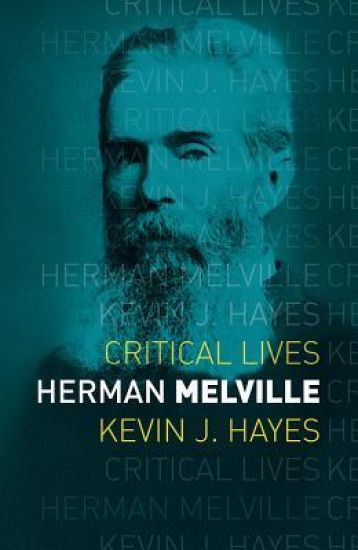
Herman Melville

Herman Melville

Hayes Kevin J.

Reaktion Books
2017
nidottu
American novelist and poet Herman Melville is considered by many to be the finest author his nation has produced. Born in New York in 1819, he achieved recognition as a leader of world literature with his daring stylistic innovations, and his masterpiece Moby-Dick continues to capture the attention of readers around the globe. This fast-paced biography surveys Melville's major works and tells the compelling story of his unpredictable professional and personal life. Kevin J. Hayes explores the revival of interest in Melville's work thirty years after his death, coinciding with the aftermath of the First World War and the rise of modernism. He examines the composition and reception of Melville's works, including his first two books, Typee and Omoo, his more ambitious works, and the short fiction, novels and poetry he wrote during the last forty years of his life. Incorporating a wealth of new information about Melville's life and the time in which he lived, Hayes offers an engaging introduction to the life of this celebrated but often misunderstood writer.
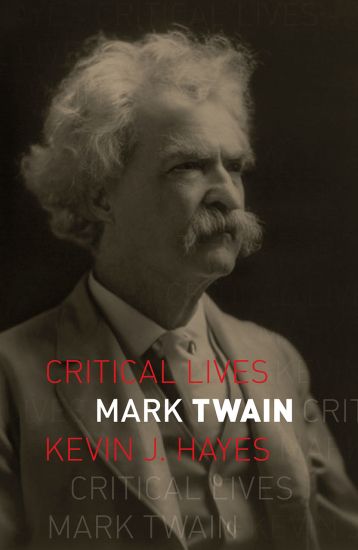
Mark Twain

Mark Twain

Hayes Kevin J.

Reaktion Books
2018
nidottu
Samuel Langhorne Clemens, born on 30 November 1835 in Monroe County, Missouri, was never one to let the facts get in the way of a good story. A natural-born storyteller, Mark Twain freely adapted the incidents of his life and the stories he heard as a youth to embellish his fiction, as well as his travel writing and autobiography. However, this presents a problem to the modern biographer: in accounts of Twain's life, how does one tell what is true and what is just a colourful yarn? In this new account of a gifted, charismatic character, Kevin J. Hayes reviews Twain's life, from his early journalism to his masterpiece Huckleberry Finn, from the travelogue Life on the Mississippi to his final work, the sprawling, episodic Mark Twain's Autobiography and the public-speaking engagements that took him around the world. Synthesizing new information and sifting through the evidence, Mark Twain is a fresh, clear-sighted account of a crucial American writer.
George Washington: A Life in Books

George Washington: A Life in Books

Kevin J. Hayes

Oxford University Press Inc
2017
sidottu
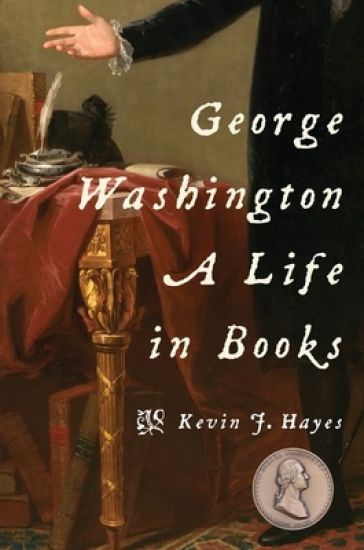
When it comes to the Founding Fathers, Thomas Jefferson, Ben Franklin, and Alexander Hamilton are generally singled out as the great minds of early America. Up until the present day, George Washington has never been taken seriously as an intellectual. Indeed, John Adams once snobbishly dismissed him as "too illiterate, unlearned, unread for his station and reputation." Yet Adams and most of the men who knew Washington were unaware of his regular devotion to reading as a program of self-improvement. Based on an exhaustive amount of research at the Library of Congress, the collections at Mount Vernon, and rare book archives scattered across the country, Kevin J. Hayes draws on juvenilia, letters, diaries, pamphlets, and the close to 1,000 books owned by Washington to reconstruct the active intellectual life that has gone largely unnoticed in conventional narratives of the first US president. Despite being a lifelong reader, Washington felt a sense of acute embarrassment about his relative lack of formal education and cultural sophistication, and in this lively literary biography, Hayes reconstructs how Washington worked tirelessly to improve his mind. Beginning with the primers, forgotten periodicals, conduct books, and classic eighteenth-century novels such as Tom Jones that shaped Washington's early life, Hayes engages with Washington's letters and journals, charting the many ways the books of his upbringing affected decisions before and during the Revolutionary War. The final section of the book covers the voluminous reading that occurred during Washington's presidency and his retirement at Mount Vernon. Throughout, Hayes also engages with Washington's writings as well as his readings, starting with The Journal of Major George Washington and going through his Farewell Address. The sheer breadth of titles under review here allow readers to glimpse Washington's views on foreign policy, economics, the law, art, slavery, marriage, and religion. Ultimately, The Books of George Washington's Life offers a startling new perspective on the mind of America's Father, uncovering the ideas that shaped his intellectual journey and, subsequently, the development of young America.
George Washington

George Washington

Kevin J. Hayes

Oxford University Press Inc
2020
nidottu
When it comes to the Founding Fathers, Thomas Jefferson, Benjamin Franklin, and Alexander Hamilton are generally considered the great minds of early America. George Washington, instead, is toasted with accolades regarding his solid common sense and strength in battle. Indeed, John Adams once snobbishly dismissed him as "too illiterate, unlearned, unread for his station and reputation." Yet Adams, as well as the majority of the men who knew Washington in his life, were unaware of his singular devotion to self-improvement. Based on a comprehensive amount of research at the Library of Congress, the collections at Mount Vernon, and rare book archives scattered across the country, Kevin J. Hayes corrects this misconception and reconstructs in vivid detail the active intellectual life that has gone largely unnoticed in conventional narratives of Washington. Despite being a lifelong reader, Washington felt an acute sense of embarrassment about his relative lack of formal education and cultural sophistication, and in this sparkling literary biography, Hayes illustrates just how tirelessly Washington worked to improve. Beginning with the primers, forgotten periodicals, conduct books, and classic eighteenth-century novels such as Tom Jones that shaped Washington's early life, Hayes studies Washington's letters and journals, charting the many ways the books of his upbringing affected decisions before and during the Revolutionary War. The final section of the book covers the voluminous reading that occurred during Washington's presidency and his retirement at Mount Vernon. Throughout, Hayes examines Washington's writing as well as his reading, from The Journal of Major George Washington through his Farewell Address. The sheer breadth of titles under review here allow readers to glimpse Washington's views on foreign policy, economics, the law, art, slavery, marriage, and religion-and how those views shaped the young nation.. Ultimately, this sharply written biography offers a fresh perspective on America's Father, uncovering the ideas that shaped his intellectual journey and, subsequently, the development of America.
The Future of the Book

The Future of the Book

Kevin J. Hayes

Oxford University Press
2022
sidottu
The Future of the Book: Images of Reading in the American Utopian Novel looks at how turn-of-the-century utopian novelists imagined what the book would be like in the ideal future. This works examines many different aspects of book culture. One chapter looks at the utopian residential library, both its contents and its personal and social functions. In the ideal future, everyone has books in their home. Another chapter discusses the public library in utopia. Many of the innovations the utopian novelists imagined correct problems that real public libraries faced in late nineteenth-century America. In utopia, everyone knows how to use the public library. A third chapter shifts the discussion of books and reading from the place of consumption to the place of production, looking at the role of the author in utopia. This chapter also attempts to answer a vexing question: Can an ideal world produce great literature? The utopian novelists said yes, but the novels they imagined in the future make their conclusions more circumspect. A parallel chapter studies what the utopian newspaper would be like. Some utopian novelists projected alternative news media, foreseeing technology that anticipated television and the internet. The final chapter examines what printed books would look like in the ideal future, looking at graphic design, universal languages, and methods to assure that the books would be printed without censorship or editorial intrusion.
The Road to Monticello

The Road to Monticello

Kevin J. Hayes

Oxford University Press Inc
2008
sidottu
The sheer variety of Jefferson's many pursuits-he was an inventor, horticulturist, statesman, architect, and philosopher, among many other things-almost mask the singularity of his genius. But there is little doubt that our third president was also one of America's greatest intellectuals. This superb new biography focuses on Jefferson's intellectual and literary life. It follows Jefferson's education from adolescence to adulthood, examines his interests, and gives new interpretations of his writings. Early writings, including A Summary View of the Rights of British America, the Declaration of Independence, and Notes on the State of Virginia are analyzed in depth. Hayes also provides substantial coverage of Jefferson's professional, social, and literary activities in Paris and his travels through Europe. He devotes a chapter to the time he served as secretary of state and his publication, The Anas, an extraordinary behind-the-scenes look at George Washington's presidency. His tenure as vice-president and president is considered in light of the ideas and relationships that were most salient for him during those crucial years. Separate chapters treat his correspondence with John Adams, the formation of the Library of Congress and his retirement library, The Life and Morals of Jesus of Nazareth, The Autobiography, and the founding of the University of Virginia. Overall, the biography offers an intimate portrait of the life of the mind that Jefferson cultivated and dreamed of one day developing to its full potential while in retirement at Monticello.
Undaunted Mind

Undaunted Mind

Kevin J. Hayes

OXFORD UNIVERSITY PRESS INC
2025
sidottu
An exploration of the mind of one of America's most beloved Founding Fathers and most brilliant minds, through the books he read and his social circles in the United States and Europe. Arguably the most intellectual, creative, cosmopolitan, and curious of the Founding Fathers, Benjamin Franklin is the only top-tier Founder not to have served as president. Despite not becoming the Chief Executive, Franklin played an active role in American politics and served the aspiring and young United States in the key European capitals. His prodigious reading and appetite for learning are epic. As he did in works about Thomas Jefferson and George Washington, Kevin J. Hayes interprets the life and mind of Franklin through what he read. Undaunted Mind tells the story of the development of Franklin's intellect, starting with the earliest books he read as a child before examining his formal schooling and his independent study after his father pulled him from school. As an apprentice in his brother's printing house, Franklin's intellectual life developed through his contact with the Couranteers, the group of his brother's friends who contributed to his newspaper, and through his attention to his brother's excellent office library. After Franklin ran away to Philadelphia, he developed a new group of friends, all of whom loved reading. In many ways, the story of Franklin's intellectual odyssey is the story of the friends he made along the way. His time in London in his late teens introduced him to several important intellectuals who encouraged him to develop his mind. After returning to Philadelphia from London, he and some friends formed the Junto, a club for mutual improvement that made reading and writing important activities. With other members of the Junto, he formed the Library Company of Philadelphia, the first subscription library in colonial America. His role as a printer put him in contact with the best eighteenth-century American writing and kept a steady flow of imported books coming from Britain. He became a scientist, assembling a great scientific library, which helped his electrical research. An educational reformer, Franklin founded the Philadelphia Academy, which would become the University of Pennsylvania. As agent for the Pennsylvania Assembly, Franklin lived in London for many years, where he befriended some of Britain's greatest minds. Different concentrations of books in his library reveal Franklin's interests in travel and exploration, warfare, and slavery. His time in Paris toward the end of his life gave Franklin another great intellectual experience, but he ultimately returned home to live the last five years of his life in Philadelphia, where he imparted his knowledge and experience to a new generation of Americans. In this gripping work, Benjamin Franklin is given a biography as rich and complex as his own intellectual life by master literary historian Kevin J. Hayes.
A Journey Through American Literature

A Journey Through American Literature

Kevin J. Hayes

Oxford University Press Inc
2012
nidottu
A vivid snapshot of America's kaleidoscopic literary tradition, A Journey Through American Literature illuminates the authors, works, and events that have shaped our cultural heritage. Kevin J. Hayes charts this history through a series of approachable thematic chapters--Narrative Voice and the Short Story, the Drama of the Everyday, the Great American Novel--that reveal the richness of our literature while providing a compelling set of footholds with which to engage it. Among the topics covered are the role of travel and the symbolism of geography, characters and the importance of voice and dialect, self-definition and the American dream, new beginnings, and the role of memory. Hayes not only discusses the main canonical genres like poetry, drama, and the novel, but also looks at travel writing, autobiography, and frame tales. Key writers like Mark Twain, Ralph Ellison, Emily Dickinson, and Harriet Jacobs are central players in the drama while dozens more create a backdrop that gives this history depth. The book also features over 20 illustrations, a bibliography, and a chronology listing the key events and work in America's literary history.
A Journey Through American Literature

A Journey Through American Literature

Kevin J. Hayes

Oxford University Press Inc
2012
sidottu
A vivid snapshot of America's kaleidoscopic literary tradition, A Journey Through American Literature illuminates the authors, works, and events that have shaped our cultural heritage. Kevin J. Hayes charts this history through a series of approachable thematic chapters--Narrative Voice and the Short Story, the Drama of the Everyday, the Great American Novel--that reveal the richness of our literature while providing a compelling set of footholds with which to engage it. Among the topics covered are the role of travel and the symbolism of geography, characters and the importance of voice and dialect, self-definition and the American dream, new beginnings, and the role of memory. Hayes not only discusses the main canonical genres like poetry, drama, and the novel, but also looks at travel writing, autobiography, and frame tales. Key writers like Mark Twain, Ralph Ellison, Emily Dickinson, and Harriet Jacobs are central players in the drama while dozens more create a backdrop that gives this history depth. The book also features over 20 illustrations, a bibliography, and a chronology listing the key events and work in America's literary history.
The Road to Monticello

The Road to Monticello

Kevin J. Hayes

Oxford University Press Inc
2012
nidottu
Thomas Jefferson was an avid book-collector, a voracious reader, and a gifted writer, a man who prided himself on his knowledge of classical and modern languages and whose marginal annotations include quotations from Euripides, Herodotus, and Milton. And yet there has never been a literary life of our most literary president. In The Road to Monticello, Kevin J. Hayes fills this important gap by offering a lively account of Jefferson's intellectual development, focusing on the books that exerted the most profound influence on his writing and thinking. Moving chronologically through Jefferson's life, Hayes reveals the full range and depth of Jefferson's literary passions, from the popular "small books" sold by traveling chapmen, such as The History of Fortunatas and The History of Tom Thumb that enthralled him as a child, to his lifelong love of Aesop's Fables and Robinson Crusoe, his engagement with Horace, Ovid, Virgil and other writers of classical antiquity, and his deep affinity with the melancholy verse of Ossian, the legendary third-century Gaelic warrior-poet. Drawing on Jefferson's letters, journals, and commonplace books, Hayes offers a wealth of new scholarship on the literary culture of colonial America, identifies previously unknown books held in Jefferson's libraries, reconstructs Jefferson's investigations of such different fields of knowledge as law, history, philosophy, and natural science and, most importantly, lays bare the ideas which informed the thinking of America's first great intellectual. "The world's leading expert on the book culture of early America, Kevin J. Hayes brings an unsurpassed knowledge and sensitivity to the story of Thomas Jefferson's life of the mind.... The Road to Monticello is intellectual biography in the grand manner." --Leo Lemay, Henry Francis du Pont Winterthur Professor, University of Delaware "In what will surely be the definitive work on the subject, Hayes presents a scrupulously researched examination of the reading habits and thinking of our third President, effectively a biography of Thomas Jefferson's intellect over the course of his life." --Library Journal
Poe and the Printed Word

Poe and the Printed Word

Kevin J. Hayes

Cambridge University Press
2000
sidottu
Edgar Allan Poe continues to be a fascinating literary figure to students and scholars alike. Increasingly the focus of study pushes beyond the fright and amusement of his famous tales and seeks to locate the author within the culture of his time. In Poe and the Printed Word, Kevin Hayes explores the relationship between various facets of print culture and Poe’s writings. His study provides a fuller picture of Poe’s life and works by examining how the publishing opportunities of his time influenced his development as a writer. Hayes demonstrates how Poe employed different methods of publication as a showcase for his verse, criticism and fiction. Beginning with Poe’s early exposure to the printed word, and ending with the ambitious magazine and book projects of his final years, this reappraisal of Poe’s career provides an engaging account that is part biography, part literary history and part history of the book.
The Cambridge Introduction to Herman Melville

The Cambridge Introduction to Herman Melville

Kevin J. Hayes

Cambridge University Press
2007
pokkari
Despite its indifferent reception when it was first published in 1851, Moby Dick is now a central work in the American literary canon. This introduction offers readings of Melville's masterpiece, but it also sets out the key themes, contexts, and critical reception of his entire oeuvre. The first chapters cover Melville's life and the historical and cultural contexts. Melville's individual works each receive full attention in the third chapter, including Typee, Moby Dick, Billy Budd and the short stories. Elsewhere in the chapter different themes in Melville are explained with reference to several works: Melville's writing process, Melville as letter writer, Melville and the past, Melville and modernity, Melville's late writings. The final chapter analyses Melville scholarship from his day to ours. Kevin J. Hayes provides comprehensive information about Melville's life and works in an accessible and engaging book that will be essential for students beginning to read this important author.
The Cambridge Introduction to Herman Melville

The Cambridge Introduction to Herman Melville

Kevin J. Hayes

Cambridge University Press
2007
sidottu
Despite its indifferent reception when it was first published in 1851, Moby Dick is now a central work in the American literary canon. This introduction offers readings of Melville's masterpiece, but it also sets out the key themes, contexts, and critical reception of his entire oeuvre. The first chapters cover Melville's life and the historical and cultural contexts. Melville's individual works each receive full attention in the third chapter, including Typee, Moby Dick, Billy Budd and the short stories. Elsewhere in the chapter different themes in Melville are explained with reference to several works: Melville's writing process, Melville as letter writer, Melville and the past, Melville and modernity, Melville's late writings. The final chapter analyses Melville scholarship from his day to ours. Kevin J. Hayes provides comprehensive information about Melville's life and works in an accessible and engaging book that will be essential for students beginning to read this important author.
An American Cycling Odyssey, 1887

An American Cycling Odyssey, 1887

Kevin J. Hayes

University of Nebraska Press
2012
pokkari
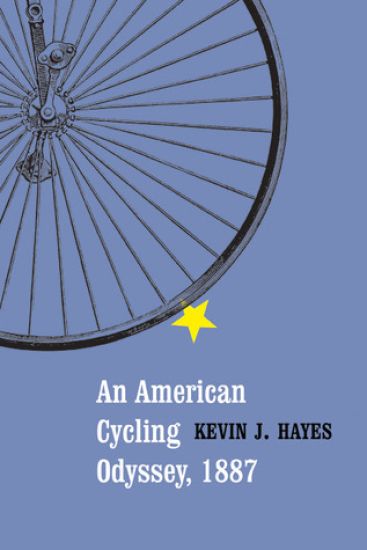
In 1887 a twenty-one-year-old newspaperman named George Nellis (1865–1948) rode a bicycle from Herkimer, New York, to San Francisco in seventy-two days, surpassing the transcontinental bicycle record by several weeks. He averaged fifty miles a day pedalling a fifty-two-inch, high-wheeled Columbia Expert "ordinary" bicycle with a tubular steel frame and hard rubber tires, and he lost twenty-three pounds in the process. He bicycled ever westward through sleepy villages, farmlands, and growing cities of the rapidly changing nation and trekked across uninhabited stretches of prairies and mountains that marked its shrinking frontier. Following his daily ten-hour rides, Nellis sat down and wrote letters about his adventures to his hometown newspapers and a national cycling magazine to finance his cross-country journey. Nellis's epic journey over dirt paths, muddy roads, and occasional railroad ties was plagued by terrible weather, frightening experiences, and odd encounters; yet it was also enriched by breathtaking natural wonders and the generous spirit of many people he met. He nearly drowned in a flash flood, was chased by a furious bull, killed a coyote that accosted him one night, fell victim to mirages in Utah's Great Salt Desert, narrowly missed a tremendous fire that wiped out half of a California town only hours after he had left, and witnessed a horrifying accident on a train track. Nellis also managed to meet the legendary baseball player A. G. Spalding in Chicago, take in professional baseball games in Detroit and Chicago, participate in several bicycle races in Omaha, attend an opera in Cheyenne, Wyoming, enjoy a circus, and eat over two dozen bananas in one sitting in Osceola, Indiana. Drawing on Nellis's letters and media coverage of the trip, Kevin J. Hayes recreates in compelling detail this amazing trip and the many ordinary and extraordinary faces of late-nineteenth-century America that were once revealed to a young bicyclist.
The Two-Wheeled World of George B. Thayer

The Two-Wheeled World of George B. Thayer

Kevin J. Hayes

University of Nebraska Press
2015
sidottu
Cyclotourism has recently risen to prominence with growing national media coverage and thousands of participants taking to America’s roadways on two wheels and under their own pedal power.But the concept is not new. More than a century ago, George B. Thayer took his own first “century,” or one-hundred-mile bicycle ride. The Two-Wheeled World of George B. Thayer brings to life the experience of late nineteenth-century cycling through the heartfelt story of this important cycling pioneer.In 1886, just two years after his first century, Thayer rode his high wheeler across the United States, traveling from his home in Connecticut to California and back. Thayer took an indirect route without any intent to set speed records, but his trip was full of adventure nonetheless. Thayer loved going downhill, his legs over the handlebars, risking life and limb atop the large wheel on often rough and muddy roads. With aplomb and humor, he dealt with the countless other hazards he encountered, including dogs, mule teams, and wild hogs. Even bad weather and poor sleeping conditions could not keep Thayer down.After his epic tour across the United States, Thayer had the urge to cycle abroad and eventually toured England, Germany, Belgium, and Canada on his bike. His later travels were in part aided by his hometown of Hartford, Connecticut, which was the epicenter of American bicycle manufacturing in the late 1890s. In addition to telling Thayer’s cycling story, Kevin J. Hayes brings to life the culture of cycling and its rise at the end of the nineteenth century, when bikes became more affordable and the nation’s riding craze took off.
The Mind of a Patriot

The Mind of a Patriot

Kevin J. Hayes

University of Virginia Press
2008
sidottu
The Mind of a Patriot presents an intellectual life of a major figure who has traditionally been seen as an anti-intellectual 'child of nature'. This was the view of Patrick Henry that William Wirt presented in his ""Life of Henry"", and it has pervaded every biography since. Hayes presents a very different view of Henry. Starting with neglected pieces of evidence - the inventory of Henry's library - Hayes' unique perspective allows him to position Henry's life within the intellectual currents of the day.After the opening chapter, which shows how Thomas Jefferson's opinions of Henry influenced Wirt's depiction of him, the author traces Henry's life through his relationship with the world of books. Individual chapters examine Henry's education; his legal career; his use of books to improve his speaking style; his relationship to the antislavery movement; his use of books as a legislator, a farmer, and a father; and, ultimately, the place of books in his life during his waning years. In a lengthy appendix, Hayes reconstructs Henry's library, presenting a detailed catalogue of its contents.