Kirjojen hintavertailu. Mukana 11 244 527 kirjaa ja 12 kauppaa.

Kirjahaku

Etsi kirjoja tekijän nimen, kirjan nimen tai ISBN:n perusteella.

232 tulosta hakusanalla Haytham Nawar

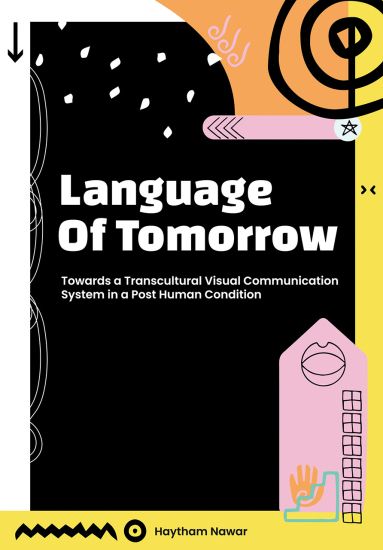
Language of Tomorrow

Language of Tomorrow

Haytham Nawar

Intellect Books
2021
sidottu
This book gives an overview of the development of the evolution of language through a philosophical lens, and is a culmination of research combining visual communication, semiotic theory, cultural studies, linguistics, artificial intelligence and new media. It discusses the future of communication – through a pictographic framework – and the possibility of developing a standardized universal pictographic communication system that fosters mutual understanding and bridges diverse cultures. The research aims to locate the direction that research and development of a universal language for the posthuman era could take through the contextualization and realization of associated practice. Highly relevant in today's discussion about globalization, language and culture, the combination of the view of design, philosophy, culture and technology makes this book unique. Postgraduate students of design, art, philosophy and researchers and academics in the fields. Scholars and students working in linguistics. Cultural studies. Theory of art and design. Artificial intelligence (AI) and art-tech.
A History of Arab Graphic Design (Arabic edition)

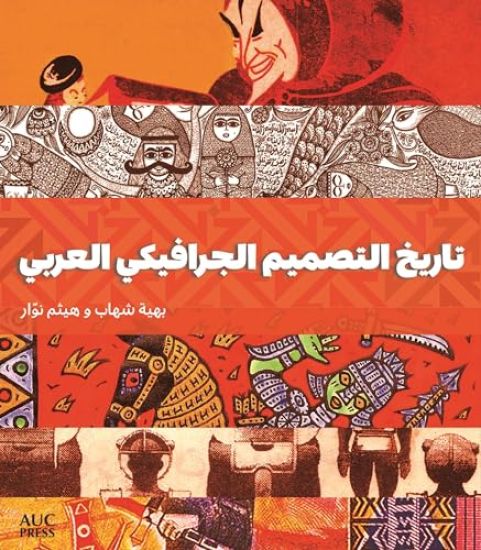
A History of Arab Graphic Design (Arabic edition)

Bahia Shehab; Haytham Nawar

AMERICAN UNIVERSITY IN CAIRO PRESS
2025
pokkari
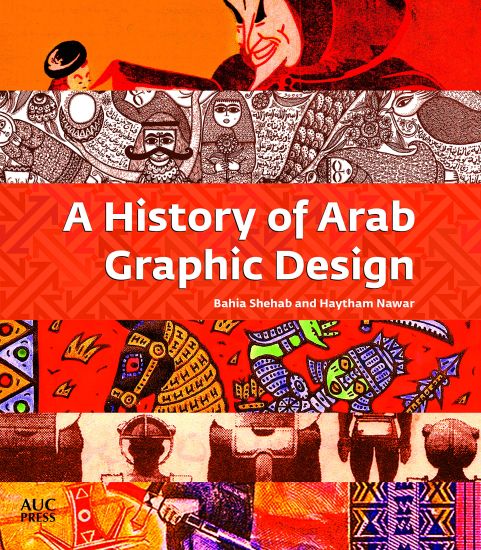
PROSE Award Winner, Art History & Criticism “Easily the best introduction to the history of modern Arab visual culture on the market today.”—The Brooklyn Rail The first-ever book-length history of Arab graphic design, now available in ArabicArab graphic design emerged in the early twentieth century out of a need to influence, and give expression to, the far-reaching economic, social, and political changes that were taking place in the Arab world at the time. But graphic design as a formally recognized genre of visual art only came into its own in the region in the twenty-first century and, to date, there has been no published study on the subject to speak of.A History of Arab Graphic Design traces the people and events that were integral to the shaping of a field of graphic design in the Arab world. Examining the work of over eighty key designers from Morocco to Iraq, and covering the period from pre-1900 to the end of the twentieth century, Bahia Shehab and Haytham Nawar chart the development of design in the region, beginning with Islamic art and Arabic calligraphy, and their impact on Arab visual culture, through to the digital revolution and the arrival of the Internet. They look at how cinema, economic prosperity, and political and cultural events gave birth to and shaped the founders of Arab graphic design.Highlighting the work of key designers and stunningly illustrated with over 600 color images, A History of Arab Graphic Design is an invaluable resource tool for graphic designers, one which, it is hoped, will place Arab visual culture and design on the map of a thriving international design discourse.
A History of Arab Graphic Design

A History of Arab Graphic Design

Bahia Shehab; Haytham Nawar

The American University in Cairo Press
2020
nidottu
Arab graphic design emerged in the early twentieth century out of a need to influence, and give expression to, the far-reaching economic, social, and political changes that were taking place in the Arab world at the time. But graphic design as a formally recognized genre of visual art only came into its own in the region in the twenty-first century and, to date, there has been no published study on the subject to speak of. A History of Arab Graphic Design traces the people and events that were integral to the shaping of a field of graphic design in the Arab world. Examining the work of over eighty key designers from Morocco to Iraq, and covering the period from pre-1900 to the end of the twentieth century, Bahia Shehab and Haytham Nawar chart the development of design in the region, beginning with Islamic art and Arabic calligraphy, and their impact on Arab visual culture, through to the digital revolution and the arrival of the Internet. They look at how cinema, economic prosperity, and political and cultural events gave birth to and shaped the founders of Arab graphic design. Highlighting the work of key designers and stunningly illustrated with 600 color images, A History of Arab Graphic Design is an invaluable resource tool for graphic designers, one which, it is hoped, will place Arab visual culture and design on the map of a thriving international design discourse.
Haytham

Haytham

Denise Parton; Denise Daisy

Createspace Independent Publishing Platform
2012
pokkari
Readers intoxicated with The Secrets of Moonshine are thirsty for more In The Secret in the Rubble, Denise Daisy takes you on a cross country trip with Bronwyn and the rogue Falcon. The second installment in The Moonshine Series delivers another page turning combination of romance and suspense, while divulging secrets and introducing some bizarre new characters along the way. Bronwyn's forbidden love for Travis continues as she finds herself face to face with the lovely Kenalycia. While running for her life, Bronwyn is accidentally transported through the portal to Eden. It is there she meets the impious one himself, Abaddon, fighting off his advances as she makes her way back to Travis. Spellbinding, and full of surprising twists and turns, this forbidden love story is well on its way to epic greatness.
Ibn al-Haytham's Geometrical Methods and the Philosophy of Mathematics
This fifth volume of A History of Arabic Sciences and Mathematics is complemented by four preceding volumes which focused on the main chapters of classical mathematics: infinitesimal geometry, theory of conics and its applications, spherical geometry, mathematical astronomy, etc.This book includes seven main works of Ibn al-Haytham (Alhazen) and of two of his predecessors, Thabit ibn Qurra and al-Sijzi: The circle, its transformations and its properties; Analysis and synthesis: the founding of analytical art; A new mathematical discipline: the Knowns; The geometrisation of place; Analysis and synthesis: examples of the geometry of triangles; Axiomatic method and invention: Thabit ibn Qurra; The idea of an Ars Inveniendi: al-Sijzi. Including extensive commentary from one of the world’s foremost authorities on the subject, this fundamental text is essential reading for historians and mathematicians at the most advanced levels of research.
Ibn al-Haytham's Theory of Conics, Geometrical Constructions and Practical Geometry
Theory of Conics, Geometrical Constructions and Practical Geometry: A History of Arabic Sciences and Mathematics Volume 3, provides a unique primary source on the history and philosophy of mathematics and science from the mediaeval Arab world. The present text is complemented by two preceding volumes of A History of Arabic Sciences and Mathematics, which focused on founding figures and commentators in the ninth and tenth centuries, and the historical and epistemological development of ‘infinitesimal mathematics’ as it became clearly articulated in the oeuvre of Ibn al-Haytham. This volume examines the increasing tendency, after the ninth century, to explain mathematical problems inherited from Greek times using the theory of conics. Roshdi Rashed argues that Ibn al-Haytham completes the transformation of this ‘area of activity,’ into a part of geometry concerned with geometrical constructions, dealing not only with the metrical properties of conic sections but with ways of drawing them and properties of their position and shape.Including extensive commentary from one of world’s foremost authorities on the subject, this book contributes a more informed and balanced understanding of the internal currents of the history of mathematics and the exact sciences in Islam, and of its adaptive interpretation and assimilation in the European context. This fundamental text will appeal to historians of ideas, epistemologists and mathematicians at the most advanced levels of research.
Ibn al-Haytham, New Astronomy and Spherical Geometry
This volume provides a unique primary source on the history and philosophy of mathematics and science from the mediaeval Arab world. The fourth volume of A History of Arabic Sciences and Mathematics is complemented by three preceding volumes which focused on infinitesimal determinations and other chapters of classical mathematics.This book includes five main works of the polymath Ibn al-Haytham (Alhazen) on astronomy, spherical geometry and trigonometry, plane trigonometry and studies of astronomical instruments on hour lines, horizontal sundials and compasses for great circles.In particular, volume four examines: the increasing tendency to mathematize the inherited astronomy from Greek sources, namely Ptolemy's Almagest; the development of celestial kinematics; new research in spherical geometry and trigonometry required by the new kinematical theory; the study on astronomical instruments and its impact on mathematical research. These new historical materials and their mathematical and historical commentaries contribute to rewriting the history of mathematical astronomy and mathematics from the 11th century on.Including extensive commentary from one of the world’s foremost authorities on the subject, this fundamental text is essential reading for historians and mathematicians at the most advanced levels of research.
Ibn al-Haytham and Analytical Mathematics
This volume provides a unique primary source on the history and philosophy of mathematics and the exact sciences in the mediaeval Arab world. The second of five comprehensive volumes, this book offers a detailed exploration of Arabic mathematics in the eleventh century as embodied in the legacy of the celebrated polymath al-Hasan ibn al-Haytham. Extensive analyses and annotations from the eminent scholar, Roshdi Rashed, support a number of key Arabic texts from Ibn al-Haytham’s treatises in infinitesimal mathematics, translated here into English for the first time. Rashed shows how Ibn al-Haytham’s works demonstrate a remarkable mathematical competence in mathematical subjects like the quadrature of the circle and of lunes, the calculation of the volumes of paraboloids, the problem of isoperimetric plane figures and solid figures with equal surface areas, along with the extraction of square and cubic roots. The present text is complemented by the first volume of A History of Arabic Sciences and Mathematics, which focused on founding figures and commentators in the ninth and tenth centuries Archimedean-Apollonian mathematical ‘School of Baghdad’. This constellation of works illustrates the historical and epistemological development of ‘infinitesimal mathematics’ as it became clearly articulated in the oeuvre of Ibn al-Haytham.Contributing to a more informed and balanced understanding of the internal currents of the history of mathematics and the exact sciences in Islam, and of its adaptive interpretation and assimilation in the European context, this fundamental text will appeal to historians of ideas, epistemologists and mathematicians at the most advanced levels of research.
Ibn al-Haytham's Geometrical Methods and the Philosophy of Mathematics
This fifth volume of A History of Arabic Sciences and Mathematics is complemented by four preceding volumes which focused on the main chapters of classical mathematics: infinitesimal geometry, theory of conics and its applications, spherical geometry, mathematical astronomy, etc.This book includes seven main works of Ibn al-Haytham (Alhazen) and of two of his predecessors, Thabit ibn Qurra and al-Sijzi: The circle, its transformations and its properties; Analysis and synthesis: the founding of analytical art; A new mathematical discipline: the Knowns; The geometrisation of place; Analysis and synthesis: examples of the geometry of triangles; Axiomatic method and invention: Thabit ibn Qurra; The idea of an Ars Inveniendi: al-Sijzi.Including extensive commentary from one of the world’s foremost authorities on the subject, this fundamental text is essential reading for historians and mathematicians at the most advanced levels of research.
Ibn al-Haytham's Theory of Conics, Geometrical Constructions and Practical Geometry
Theory of Conics, Geometrical Constructions and Practical Geometry: A History of Arabic Sciences and Mathematics Volume 3, provides a unique primary source on the history and philosophy of mathematics and science from the mediaeval Arab world. The present text is complemented by two preceding volumes of A History of Arabic Sciences and Mathematics, which focused on founding figures and commentators in the ninth and tenth centuries, and the historical and epistemological development of ‘infinitesimal mathematics’ as it became clearly articulated in the oeuvre of Ibn al-Haytham. This volume examines the increasing tendency, after the ninth century, to explain mathematical problems inherited from Greek times using the theory of conics. Roshdi Rashed argues that Ibn al-Haytham completes the transformation of this ‘area of activity,’ into a part of geometry concerned with geometrical constructions, dealing not only with the metrical properties of conic sections but with ways of drawing them and properties of their position and shape.Including extensive commentary from one of world’s foremost authorities on the subject, this book contributes a more informed and balanced understanding of the internal currents of the history of mathematics and the exact sciences in Islam, and of its adaptive interpretation and assimilation in the European context. This fundamental text will appeal to historians of ideas, epistemologists and mathematicians at the most advanced levels of research.
Ibn al-Haytham, New Astronomy and Spherical Geometry
This volume provides a unique primary source on the history and philosophy of mathematics and science from the mediaeval Arab world. The fourth volume of A History of Arabic Sciences and Mathematics is complemented by three preceding volumes which focused on infinitesimal determinations and other chapters of classical mathematics.This book includes five main works of the polymath Ibn al-Haytham (Alhazen) on astronomy, spherical geometry and trigonometry, plane trigonometry and studies of astronomical instruments on hour lines, horizontal sundials and compasses for great circles.In particular, volume four examines: the increasing tendency to mathematize the inherited astronomy from Greek sources, namely Ptolemy's Almagest; the development of celestial kinematics; new research in spherical geometry and trigonometry required by the new kinematical theory; the study on astronomical instruments and its impact on mathematical research. These new historical materials and their mathematical and historical commentaries contribute to rewriting the history of mathematical astronomy and mathematics from the 11th century on.Including extensive commentary from one of the world’s foremost authorities on the subject, this fundamental text is essential reading for historians and mathematicians at the most advanced levels of research.
Ibn al-Haytham

Ibn al-Haytham

Roshdi Rashed

TAYLOR FRANCIS LTD
2026
sidottu
Ibn al-Haytham: The Emergence of Scientific Modernity offers the first comprehensive monograph on one of the most brilliant figures of the medieval intellectual world. Spanning his groundbreaking contributions in mathematics, optics, astronomy, and natural philosophy, this book portrays Ibn al-Haytham as he was seen in his own time: a man of universal learning whose methods, sources, and intellectual reputation resonated far beyond his era. Moving beyond the familiar terrain of his Kitab al-Mana?ir (Book of Optics), it places his achievements in a much wider context, examining his lesser-studied writings on geometry, mechanics, and scientific method. Through a systematic analysis of these works, the book demonstrates how Ibn al-Haytham’s experimental rigor, mathematical formalism, and critical engagement with earlier Greek and Arabic sources foreshadowed core principles of the European Scientific Revolution. It shows how his insistence on verification through observation and reasoning forged a distinctive approach that inspired thinkers from medieval Cairo to Renaissance Europe. An essential resource for historians of science, Islamic studies scholars, and anyone interested in the intellectual foundations of modernity, this volume restores Ibn al-Haytham to his rightful place as a pioneering figure in the history of ideas and a bridge between classical learning and the birth of modern science.
Ibn al-Haytham and Analytical Mathematics
This volume provides a unique primary source on the history and philosophy of mathematics and the exact sciences in the mediaeval Arab world. The second of five comprehensive volumes, this book offers a detailed exploration of Arabic mathematics in the eleventh century as embodied in the legacy of the celebrated polymath al-Hasan ibn al-Haytham. Extensive analyses and annotations from the eminent scholar, Roshdi Rashed, support a number of key Arabic texts from Ibn al-Haytham’s treatises in infinitesimal mathematics, translated here into English for the first time. Rashed shows how Ibn al-Haytham’s works demonstrate a remarkable mathematical competence in mathematical subjects like the quadrature of the circle and of lunes, the calculation of the volumes of paraboloids, the problem of isoperimetric plane figures and solid figures with equal surface areas, along with the extraction of square and cubic roots. The present text is complemented by the first volume of A History of Arabic Sciences and Mathematics, which focused on founding figures and commentators in the ninth and tenth centuries Archimedean-Apollonian mathematical ‘School of Baghdad’. This constellation of works illustrates the historical and epistemological development of ‘infinitesimal mathematics’ as it became clearly articulated in the oeuvre of Ibn al-Haytham.Contributing to a more informed and balanced understanding of the internal currents of the history of mathematics and the exact sciences in Islam, and of its adaptive interpretation and assimilation in the European context, this fundamental text will appeal to historians of ideas, epistemologists and mathematicians at the most advanced levels of research.
Ibn al-Haytham's On the Configuration of the World
The chief argument of this book, first published in 1990, is that Ibn al-Haytham's On the Configuration of the World is a non-technical expose of basic astronomical teachings: it was written in particular for those whose main interests were in the areas of philosophy and natural science and who, accordingly, had an interest in relating the mathematical devices employed by professional astronomers to the heavenly bodies mentioned in the philosophical literature. However, the primary reason for this publication is not the advancement of this thesis, but rather the presentation of the medieval texts themselves, normally so inaccessible to scholars and students alike.
Ibn al-Haytham's On the Configuration of the World
The chief argument of this book, first published in 1990, is that Ibn al-Haytham's On the Configuration of the World is a non-technical expose of basic astronomical teachings: it was written in particular for those whose main interests were in the areas of philosophy and natural science and who, accordingly, had an interest in relating the mathematical devices employed by professional astronomers to the heavenly bodies mentioned in the philosophical literature. However, the primary reason for this publication is not the advancement of this thesis, but rather the presentation of the medieval texts themselves, normally so inaccessible to scholars and students alike.
Ibn Al-Haytham (National Geographic Kids Readers, Level 3): The Man Who Discovered How We See
Celebrated in a film featuring Omar Sharif in his final role, meet the scientist known as the "Father of Optics," Ibn al-Haytham During the golden age of science, knowledge, and invention in Muslim civilization -- also known as the "Dark Ages" in Western Europe -- this incredible scholar discovered how we see and set the stage for the methods we now know as the scientific process. Packed with beautiful and engaging photos, kids will learn all about this fascinating scientist. The level 3 text provides accessible, yet wide-ranging, information for independent readers. This book is a companion to the international educational campaign, "1001 Inventions and the World of Ibn al-Haytham," that includes interactive exhibits, workshops, live shows, and a 12-minute film starring Omar Sharif in his final film role before his death.
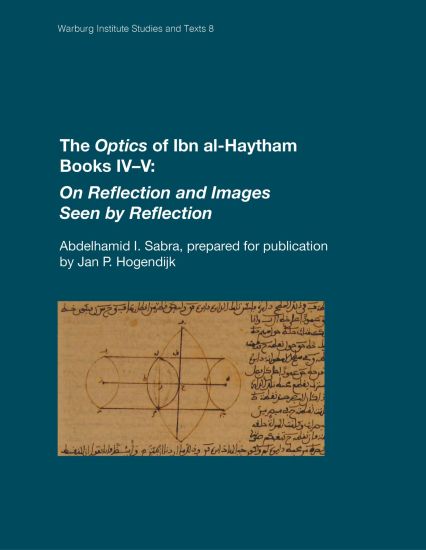
The Optics of Ibn al-Haytham Books IV–V

The Optics of Ibn al-Haytham Books IV–V

Abdelhamid I. Sabra

UNIVERSITY OF LONDON
2023
sidottu
Books four and five of a landmark seven-volume work of medieval scientific study of optics. Ibn al-Haytham was perhaps the greatest mathematician and physicist of the medieval Arabic/Islamic world. The most famous book in which he applied his scientific method is his Optics, through which he dealt with both the mathematics of rays of light and the physical aspects of the eye in seven comprehensive books. His rethinking of the entire science of optics set the scene for the whole of the subsequent development of the subject, influencing figures such as William of Ockham, Kepler, Descartes, and Christaan Huygens. The immense work of editing, translating into English, and commenting on this work was undertaken by Abdelhamid I. Sabra. This English translation of Books IV-V was completed by Sabra just before his death in 2013 with an introduction and critical analysis. It has been extensively revised by Jan Hogendijk.
A Critical Edition of Ibn al-Haytham’s On the Shape of the Eclipse

A Critical Edition of Ibn al-Haytham’s On the Shape of the Eclipse

Dominique Raynaud

Springer International Publishing AG
2016
sidottu
This book provides the first critical edition of Ibn al-Haytham’s On the Shape of the Eclipse with English translation and commentary, which records the first scientific analysis of the camera obscura. On the Shape of the Eclipse includes pioneering research on the conditions of formation of the image, in a time deemed to be committed to aniconism. It also provides an early attempt to merge the two branches of Ancient optics—the theory of light and theory of vision. What perhaps most strongly characterizes this treatise is the close interaction of a geometric analysis of light and experimental reasoning. Ibn al-Haytham conducted his experiments in a systematic way by varying all that could be changed: the shape and size of the aperture, the focal length of the camera obscura, the distance and shape of the celestial bodies. This way, he achieved a thorough understanding. This work represents a decisive step in both the history of optics and the application of the experimental method that was just as efficient in medieval Islam as today.
A Critical Edition of Ibn al-Haytham’s On the Shape of the Eclipse

A Critical Edition of Ibn al-Haytham’s On the Shape of the Eclipse

Dominique Raynaud

Springer International Publishing AG
2018
nidottu
This book provides the first critical edition of Ibn al-Haytham’s On the Shape of the Eclipse with English translation and commentary, which records the first scientific analysis of the camera obscura. On the Shape of the Eclipse includes pioneering research on the conditions of formation of the image, in a time deemed to be committed to aniconism. It also provides an early attempt to merge the two branches of Ancient optics—the theory of light and theory of vision. What perhaps most strongly characterizes this treatise is the close interaction of a geometric analysis of light and experimental reasoning. Ibn al-Haytham conducted his experiments in a systematic way by varying all that could be changed: the shape and size of the aperture, the focal length of the camera obscura, the distance and shape of the celestial bodies. This way, he achieved a thorough understanding. This work represents a decisive step in both the history of optics and the application of the experimental method that was just as efficient in medieval Islam as today.
Vascular Disease

Vascular Disease

Haytham Al-Khaffaf; Sharon Dorgan

Cambridge University Press
2005
pokkari
Caring for Patients with Vascular Disease: A Practical Approach for Medical and Nursing Staff offers a step-by-step guide to caring for patients in a variety of clinical settings. It follows a patient's path of care from management in the outpatient clinic, through to the hospital ward, theatre, recovery room and back to the follow-up outpatient clinic. A clear, concise format is used throughout the book, with reference to evidence-based interventions and the physiology underpinning them, and the use of simple line diagrams and treatment flow charts to illustrate the essential aspects of care. Edited by a vascular nurse and vascular surgeon, with contributions from a group of invited authors, the book reflects the multidisciplinary nature of patient care and will be a valuable resource for nurses, surgeons and other healthcare professionals involved in caring for this patient group.