Kirjojen hintavertailu. Mukana 11 244 527 kirjaa ja 12 kauppaa.

Kirjahaku

Etsi kirjoja tekijän nimen, kirjan nimen tai ISBN:n perusteella.

1000 tulosta hakusanalla Heike Maleschka

Sunshower Reflections

Sunshower Reflections

Heike Maleschka

Libresco Feeds Private Limited
2023
pokkari
""This is a short selection of poems from three journals, spanning from 1995-2022. Reading these poems after such a long time brings back so many memories. The poems are reflections of special times and reminders that life has its ups and downs. Sometimes I forget a lesson from the past, but I always remember how it felt.""
Genji & Heike

Genji & Heike

Stanford University Press
1994
sidottu
The Tale of Genji and The Tale of the Heike are the two major works of classical Japanese prose. The complete versions of both works are too long to be taught in one term, and this abridgement answers the need for a one-volume edition of both works suitable for use in survey courses in classical Japanese literature or world literature in translation and by the general reader daunted by the complete works. The translator has selected representative portions of the two texts with a view to shaping the abridgments into coherent, aesthetically acceptable wholes. Often called the world's earliest novel, The Tale of Genji, by Murasaki Shikibu, is a poetic evocation of aristocratic life in eleventh-century Japan, a period of brilliant cultural efflorescence. This new translation focuses on important events in the life of its main character, Genji. It traces the full length of Genji's relationship with Murasaki, the deepest and most enduring of his emotional attachments, and contains all or parts of 10 of the 41 chapters in which Genji figures, including the "Broom Tree" chapter, which provides a reprise of the themes of the book. In romanticized but essentially truthful fashion, The Tale of the Heike describes the late twelfth-century political intrigues and battlefield clashes that led to the eclipse of the Kyoto court and the establishment of a military government by the rival Minamotho (Genji) clan. Its underlying theme, the evanescence of worldly things, echoes some of the concerns of the Genji, but its language preserves many traces of oral composition, and its vigor and expansivelness contrast sharply with the pensive, elegant tone of the Genji. The selections of the Heike, about 40 percent of the owrk, are taken from the translator's complete edition, which received great acclaim: "this verison of the Heike is superb and indeed reveals to English-language readers for the first time the full scope, grandeur, and literary richness of the work."—Journal of Asian Studies For both the Genji and the Heike abridgments, the translator has provided introductions, headnote summaries, adn other supplementary maerials designed to help readers follow the sometimes confused story lines and keep the characters straight. The book also includes an appendix, a glossary, a bibliography, and two maps.
Genji & Heike

Genji & Heike

Stanford University Press
1994
pokkari
The Tale of Genji and The Tale of the Heike are the two major works of classical Japanese prose. The complete versions of both works are too long to be taught in one term, and this abridgement answers the need for a one-volume edition of both works suitable for use in survey courses in classical Japanese literature or world literature in translation and by the general reader daunted by the complete works. The translator has selected representative portions of the two texts with a view to shaping the abridgments into coherent, aesthetically acceptable wholes. Often called the world's earliest novel, The Tale of Genji, by Murasaki Shikibu, is a poetic evocation of aristocratic life in eleventh-century Japan, a period of brilliant cultural efflorescence. This new translation focuses on important events in the life of its main character, Genji. It traces the full length of Genji's relationship with Murasaki, the deepest and most enduring of his emotional attachments, and contains all or parts of 10 of the 41 chapters in which Genji figures, including the "Broom Tree" chapter, which provides a reprise of the themes of the book. In romanticized but essentially truthful fashion, The Tale of the Heike describes the late twelfth-century political intrigues and battlefield clashes that led to the eclipse of the Kyoto court and the establishment of a military government by the rival Minamotho (Genji) clan. Its underlying theme, the evanescence of worldly things, echoes some of the concerns of the Genji, but its language preserves many traces of oral composition, and its vigor and expansivelness contrast sharply with the pensive, elegant tone of the Genji. The selections of the Heike, about 40 percent of the owrk, are taken from the translator's complete edition, which received great acclaim: "this verison of the Heike is superb and indeed reveals to English-language readers for the first time the full scope, grandeur, and literary richness of the work."—Journal of Asian Studies For both the Genji and the Heike abridgments, the translator has provided introductions, headnote summaries, adn other supplementary maerials designed to help readers follow the sometimes confused story lines and keep the characters straight. The book also includes an appendix, a glossary, a bibliography, and two maps.

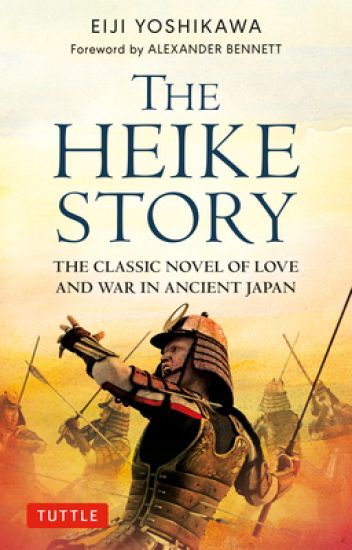
The Heike Story: The Novel of Love and War in Ancient Japan
A page-turner by Japan's most popular writer of the immediate post-war era Set in Japan's turbulent 12th century, this fast-paced novel recounts the titanic struggle between two leading Japanese clans--the Heike and the Genji--as they seek to pacify a fractured nation, ultimately turning on each other in their unbridled lust for power. Written by the great Eiji Yoshikawa, this classic work of fiction brings to life the wars, intrigues, feuds and romances surrounding the most dramatic episode in Japanese history. This new edition features a foreword and afterword by historian Alexander Bennett, who explains the backdrop of the novel and its importance as a towering work of modern fiction which sold millions of copies in Japan. Combining raw narrative power, pageantry and poetry, The Heike Story will enthrall readers interested in the drama and spectacle of ancient Japan.
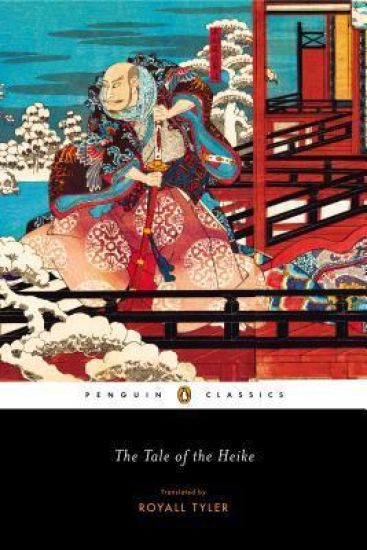
The Tale of the Heike

The Tale of the Heike

Penguin Classics
2014
pokkari
The Tale of the Heike is Japan's great martial epic: a masterpiece of world literature and the progenitor of all samurai stories. This major and groundbreaking new Penguin translation is by Royall Tyler, acclaimed translator of The Tale of Genji. First assembled from scattered oral poems in the early fourteenth century, The Tale of the Heike is Japan's Iliad - a grand-scale depiction of the wars between the Heike and Genji clans. Legendary for its magnificent and vivid set battle scenes, it is also a work filled with intimate human dramas and emotions, contemplating Buddhist themes of suffering and separation, as well as universal insights into love, loss and loyalty. The narrative moves back and forth between the two great warring clans, between aristocratic society and street life, adults and children, great crowds and introspection. No Japanese work has had a greater impact on subsequent literature, theatre, music and films, or on Japan's sense of its own past.Royall Tyler's new translation is the first to capture the way The Tale of the Heike was originally performed. It re-creates the work in its full operatic form, with speech, poetry, blank verse and song that convey its character as an oral epic in a way not seen before, fully embracing the rich and vigorous language of the original texts. Beautifully illustrated with fifty-five woodcuts from the nineteenth-century artistic master, Katsushika Hokusai, and bolstered with maps, character guides, genealogies and rich annotation, this is a landmark edition.Royall Tyler taught Japanese language and literature for many years at the Australian National University. He has a B.A. from Harvard University and a PhD from Columbia University and has taught at Harvard, Stanford and the University of Wisconsin. His translation of The Tale of Genji was acclaimed by publications such as The New York Times Book Review.
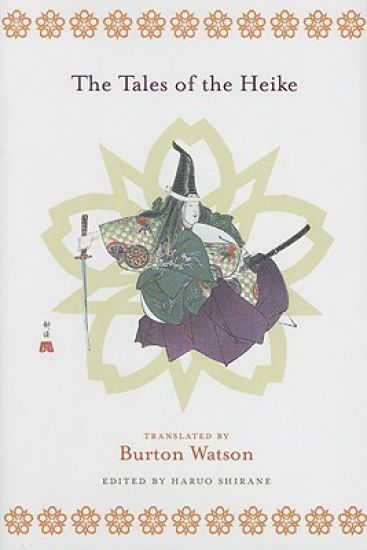
The Tales of the Heike

The Tales of the Heike

Burton Watson; Haruo Shirane

Columbia University Press
2006
sidottu
The Tales of the Heike is one of the most influential works in Japanese literature and culture, remaining even today a crucial source for fiction, drama, and popular media. Originally written in the mid-thirteenth century, it features a cast of vivid characters and chronicles the epic Genpei war, a civil conflict that marked the end of the power of the Heike and changed the course of Japanese history. The Tales of the Heike focuses on the lives of both the samurai warriors who fought for two powerful twelfth-century Japanese clans-the Heike (Taira) and the Genji (Minamoto)-and the women with whom they were intimately connected. The Tales of the Heike provides a dramatic window onto the emerging world of the medieval samurai and recounts in absorbing detail the chaos of the battlefield, the intrigue of the imperial court, and the gradual loss of a courtly tradition. The book is also highly religious and Buddhist in its orientation, taking up such issues as impermanence, karmic retribution, attachment, and renunciation, which dominated the Japanese imagination in the medieval period. In this new, abridged translation, Burton Watson offers a gripping rendering of the work's most memorable episodes. Particular to this translation are the introduction by Haruo Shirane, the woodblock illustrations, a glossary of characters, and an extended bibliography.
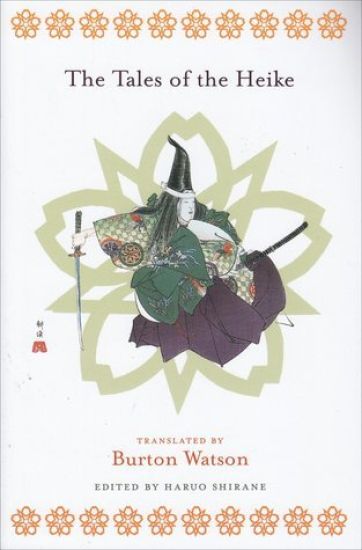
The Tales of the Heike

The Tales of the Heike

Burton Watson; Haruo Shirane

Columbia University Press
2008
pokkari
The Tales of the Heike is one of the most influential works in Japanese literature and culture, remaining even today a crucial source for fiction, drama, and popular media. Originally written in the mid-thirteenth century, it features a cast of vivid characters and chronicles the epic Genpei war, a civil conflict that marked the end of the power of the Heike and changed the course of Japanese history. The Tales of the Heike focuses on the lives of both the samurai warriors who fought for two powerful twelfth-century Japanese clans-the Heike (Taira) and the Genji (Minamoto)-and the women with whom they were intimately connected. The Tales of the Heike provides a dramatic window onto the emerging world of the medieval samurai and recounts in absorbing detail the chaos of the battlefield, the intrigue of the imperial court, and the gradual loss of a courtly tradition. The book is also highly religious and Buddhist in its orientation, taking up such issues as impermanence, karmic retribution, attachment, and renunciation, which dominated the Japanese imagination in the medieval period. In this new, abridged translation, Burton Watson offers a gripping rendering of the work's most memorable episodes. Particular to this translation are the introduction by Haruo Shirane, the woodblock illustrations, a glossary of characters, and an extended bibliography.
The Tale of the Heike

The Tale of the Heike

Stanford University Press
1990
pokkari
The Tale of the Heike is one of the masterworks of Japanese literature, ranking with The Tal of Genji in quality and prestige. This new translation is not only far more readable than earlier ones, it is also much more faithful to the content and style of the original. Intended for the general audience as well as the specialist, this edition is highly annotated.