Kirjojen hintavertailu. Mukana 11 244 527 kirjaa ja 12 kauppaa.

Kirjahaku

Etsi kirjoja tekijän nimen, kirjan nimen tai ISBN:n perusteella.

1000 tulosta hakusanalla Heiner Mühlmann

Nie wieder Frieden

Nie wieder Frieden

Heiner Mühlmann

Verlag Marcel Dolega
2025
pokkari
Was wir uns erz hlen, wird zu unserer Wirklichkeit. Heiner M hlmann fragt nach den Voraussetzungen dieser Erz hlungen und, genauer, nach den Bedingungen, unter denen sich in der Nachkriegszeit neue kulturelle Mechanismen und ein neuer Typ des gesellschaftlichen Decorums herausbilden. Mit gesellschaftlichem Decorum sind die sichtbaren und unsichtbaren Regeln eines Staates gemeint. Parallel dazu zeigt dieser Band, welchen gewaltigen Einfluss die US-amerikanische W hrung als Leitw hrung in der globalen Machtpolitik seit 1945 hat. Beides wird in M hlmanns Buch zusammengedacht. Sowohl die Leitw hrung als auch das europ ische Nachkriegsdecorum erfahren derzeit eine Erosion. W hrend die Folgen nicht absehbar sind, analysiert Heiner M hlmann die Ideen und Irrt mer, die dieser alten Ordnung zugrunde liegen. Mit einem neuen Verst ndnis ihrer Genese kann insbesondere Deutschland zu einem gesch rften Realismus zur ckfinden.
Heiner Goebbels and Curatorial Composing after Cage

Heiner Goebbels and Curatorial Composing after Cage

Ed McKeon

Cambridge University Press
2022
pokkari
This Element introduces the notion of curatorial composing to account for certain musical practices that emerged from the 1960s as the founding concepts of music as an art – instituted in the modern era – were systematically dismantled. It raises the key question of how musical value and authority might be produced without recourse to an external principle, origin, transcendental framework, or other foundation. It argues that these practices do not dismiss the issue of value or simply relativise it but shift the paradigm to a curatorial concern for composing public encounters and staging events. The Element shows that Lydia Goehr's elaboration of the work-concept provides a framework that was transformed by John Cage in his work from 0'00” (1962) onwards. The Element then introduces Heiner Goebbels' practice and focus on his role as Artistic Director of the Ruhrtriennale (2012–14), which it argues was an extension of his curatorial composing.
Heiner Müller's The Hamletmachine

Heiner Müller's The Hamletmachine

David Barnett

Routledge
2016
nidottu
"I’m good Hamlet gi’me a cause for grief"At first glance, readers of The Hamletmachine (1979) could be forgiven for wondering whether it is actually a play at all: it opens with a montage of texts that are not ascribed to a character, there is no vestige of a plot, and the whole piece lasts a total of ten pages.Yet, Heiner Müller’s play regularly features in theatres’ repertoires and is frequently staged by university theatre departments. In four short chapters, David Barnett unpicks the complexities of The Hamletmachine’s writing and frames its author as an experimental, politically committed writer who confronts the shortcomings of his age. In considering the problems Müller poses for the play’s performance, he also discusses two exemplary productions in order to show how the work can engage very different audiences.This book examines why such a compact, radically open, and yet seemingly obscure play has proved so popular.
Heiner Müller's The Hamletmachine

Heiner Müller's The Hamletmachine

David Barnett

Routledge
2017
sidottu
""I'm good Hamlet gi'me a cause for grief""At first glance, readers of The Hamletmachine (1979) could be forgiven for wondering whether it is actually a play at all: it opens with a montage of texts that are not ascribed to a character, there is no vestige of a plot, and the whole piece lasts a total of ten pages.Yet, Heiner Müller's play regularly features in theatres' repertoires and is frequently staged by university theatre departments. In four short chapters, David Barnett unpicks the complexities of The Hamletmachine's writing and frames its author as an experimental, politically committed writer who confronts the shortcomings of his age. In considering the problems Müller poses for the play's performance, he also discusses two exemplary productions in order to show how the work can engage very different audiences.This book examines why such a compact, radically open, and yet seemingly obscure play has proved so popular.
Heiner Müller and Heiner Goebbels’s Wolokolamsker Chaussee

Heiner Müller and Heiner Goebbels’s Wolokolamsker Chaussee

Philip V. Bohlman

Bloomsbury Academic USA
2022
nidottu
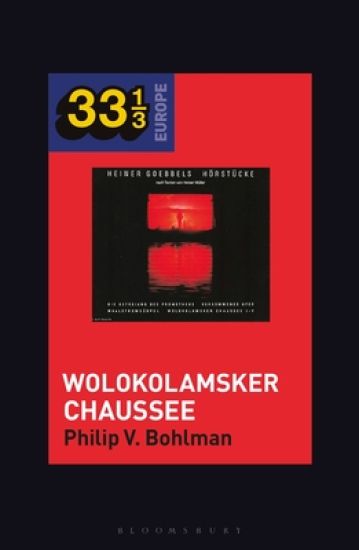
By gathering historical and musical fragments from a Europe torn apart by the Second World War and the Cold War, East German playwright Heiner Müller and West German composer Heiner Goebbels created Wolokolamsker Chaussee as a musical panorama that stretched across modern European history at a moment of international crisis. The question at the heart of the recording was prescient in the waning years of the Cold War, but it remains no less critical for the “crisis of Europe” today: Is it possible for Europe to be unified? A vast range of musical styles—from folk song to hip-hop, from the symphonic canon to heavy metal—coalesce in the five acts, which expose the wounds of European history while struggling musically to heal them. This extraordinary recording from 1989/90 not only captures the sound of a historical moment, but also powerfully enacts responses to it.33 1/3 Global, a series related to but independent from 33 1/3, takes the format of the original series of short, music-based books and brings the focus to music throughout the world. With initial volumes focusing on Japanese, Brazilian, and European music, the series will also include volumes on the popular music of Australia/Oceania, Africa, the Middle East, and more.
Heiner Müller and Heiner Goebbels’s Wolokolamsker Chaussee

Heiner Müller and Heiner Goebbels’s Wolokolamsker Chaussee

Philip V. Bohlman

Bloomsbury Academic USA
2021
sidottu
By gathering historical and musical fragments from a Europe torn apart by the Second World War and the Cold War, East German playwright Heiner Müller and West German composer Heiner Goebbels created Wolokolamsker Chaussee as a musical panorama that stretched across modern European history at a moment of international crisis. The question at the heart of the recording was prescient in the waning years of the Cold War, but it remains no less critical for the “crisis of Europe” today: Is it possible for Europe to be unified? A vast range of musical styles—from folk song to hip-hop, from the symphonic canon to heavy metal—coalesce in the five acts, which expose the wounds of European history while struggling musically to heal them. This extraordinary recording from 1989/90 not only captures the sound of a historical moment, but also powerfully enacts responses to it.33 1/3 Global, a series related to but independent from 33 1/3, takes the format of the original series of short, music-based books and brings the focus to music throughout the world. With initial volumes focusing on Japanese, Brazilian, and European music, the series will also include volumes on the popular music of Australia/Oceania, Africa, the Middle East, and more.
Heiner Mller After Shakespeare

Heiner Mller After Shakespeare

William Shakespeare

PAJ Publications,U.S.
2013
pokkari
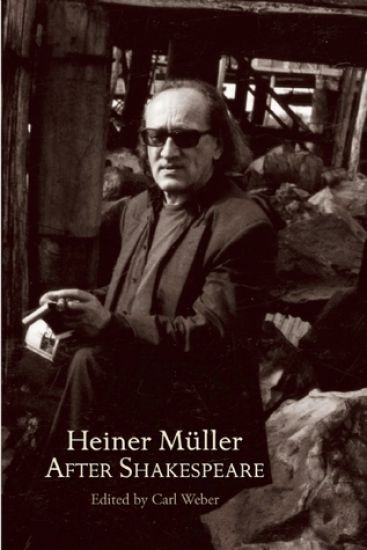
Heiner Muller After Shakespeare makes available for the first time Macbeth and Anatomy Titus Fall of Rome, the last of the Shakespeare-inspired plays of the renowned German author to be translated into English. His reflections on the importance of his chosen dramatic model are highlighted in the text of his address Shakespeare A Difference, also included in the volume. Muller (1929-1995), whose Hamletmachine is a contemporary classic, is regarded as one of the most profound visionaries of twentieth-century drama and at the time of his death was one of Europe's leading intellectual figures. His Shakespeare plays are startling in their imagery and poetry and uncompromising depiction of the violence of power and politics. Truly, they are plays for our age. Since first introducing his work to the English-speaking world in 1983 with Hamletmachine and Other Texts for the Stage, PAJ Publications has also published several other volumes by the author: Explosion of a Memory, The Battle, The Heiner Muller Reader. They include his dramatic works as well as poems, speeches, and interviews. Hamletmachine and Other Texts for the Stage is one of PAJ's best-selling titles, with over 10,000 volumes in print. The volume is translated by Carl Weber and Paul David Young. Weber has edited and translated all the Muller volumes, as well as plays by Kleist, Handke, and Kroetz. Also a director, he is professor emeritus at Stanford University. Young is the recipient of the Kennedy Center's Paul Vogel Playwriting Award. He is currently working on a film version of his play In the Summer Pavilion. "Heiner Muller was one of the greatest writers of the 20th century and will undoubtedly be among the most indispensable of the 21st, the terrors of which his plays seem to have anticipated and anatomized. As Shakespeare's dramatic poems emerged from an historical moment of a great linguistic and cultural synthesis, Muller's gorgeous, mind-bending and altering upgrades of Shakespeare mark our present crisis-moment of linguistic and cultural discombobulation, if not disintegration." - Tony Kushner, playwright "Heiner Muller's unmistakable voice--ferocious and brilliant, brutal and profoun -- burns through in pitch-perfect translations. Macbeth and Anatomy Titus Fall of Rome are the perfect Shakespearean vehicles for Muller's vision of the bloody twentieth century. These plays are not just great theatre--and they are great theatre--they are indispensable documents of European culture." - Oskar Eustis, artistic director, The Public Theater "Heiner Muller's plays, astonishing in their punch and poetry, are imbued with muscularity, richness and theatricality. His influence on the field is palpable and PAJ's publications of brilliant translations will help to ensure that Muller's wide-open vision of the theatre will proliferate. We urgently need his combination of the political, personal and aesthetic in our current culture." - Anne Bogart, artistic director, Siti Company "A new volume of Heiner Muller's coruscating, deeply damaged performance prose/ poetry arrives just in time for further chapters of the continued degradation and decline of the West. His theatre pieces take on galling new dimensions as democracies all over the world are in crisis and citizens of Arab countries pour into the streets to demand self-determination...Heiner Muller was a connoisseur of tyranny. The violence and the decay are already in the language, and thus his rendezvous with Shakespeare...After the fire, there is space for new growth in an old forest." - Peter Sellars, director
Heiner Müller's Democratic Theater

Heiner Müller's Democratic Theater

Michael Wood

Camden House Inc
2017
sidottu
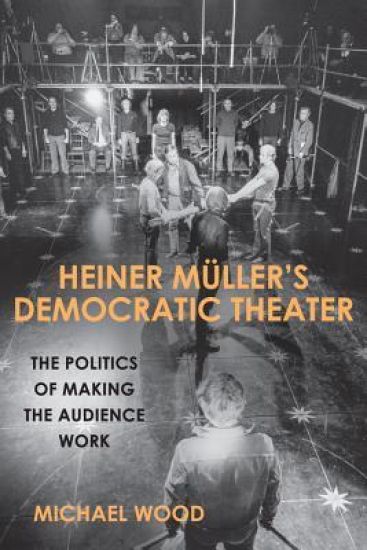
Analyzes not just Müller's texts but also the theatrical events that emerged from them, showing that from the beginning of his career Müller tried to create democracy both within and outside the theater. The East German playwright Heiner Müller (1929-1995) is one of the most influential European dramatists and theater directors since Brecht. While critical literature on Müller often discusses the politics of his works, analysis tends to stop at the level of the text, neglecting the theatrical events that emerge from it and the audiences for which it was written and performed. Situating his study within Müller's interests in democracy and audience activity,Michael Wood addresses these gaps in scholarship, making an original contribution to the understanding of Müller's work as playwright and director. In 1985, Müller spoke of the importance of a "democratic" theater: one thatconfronts theatergoers with densely contradictory material that they must interpret for themselves, reflecting the complexity of material reality and encouraging them to question their participation in political life. Wood's studyshows that Müller sought to do this in his combined 1988 production of Der Lohndrücker, Der Horatier, and Wolokolamsker Chaussee IV: Kentauren, staged at a time when questions of democracy were at the forefront of East German consciousness. It also demonstrates that from the beginning of his career Müller tried to make theater that would create a form of democracy both within and outside the theater. Michael Wood is a British Academy Postdoctoral Fellow at the University of Edinburgh, where he received his PhD in 2014.
Heiner Müllers Bildmaschine

Heiner Müllers Bildmaschine

Nils Emmerichs

Bohlau Verlag
2024
sidottu
Die kunstwissenschaftliche Perspektivierung auf Heiner Mullers Werk lasst ganzlich neue Bezugssysteme und Lesarten zu und widmet sich der Erforschung bislang wenig erschlossener Dimensionen seines Gesamtkunstwerks. Heiner Muller hat seine Affinitat zur bildenden Kunst nie verschwiegen. In seinen Theatertexten, Schriften, Gedichten und Gesprachen finden sich von Beginn an zahlreiche Verweise auf Kunstler, Kunstwerke und deren Techniken. Doch welchen Zweck verfolgt Mullers Dialog mit der bildenden Kunst? Nils Emmerichs folgt den bisher unentdeckten Bildspuren, die vom sprachmachtigsten deutschen Dramatiker nach 1945 hinterlassen wurden, um eine neue Perspektive auf den Kunstler Heiner Muller zu eroffnen.
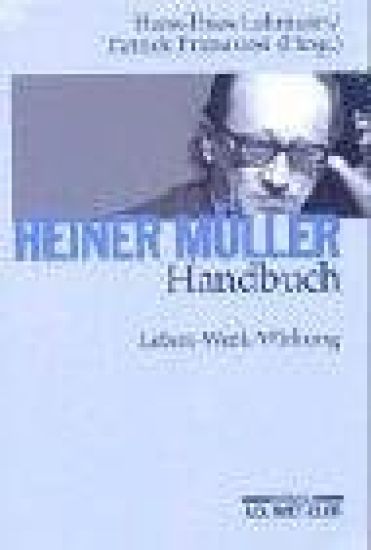
Heiner Müller-Handbuch

Heiner Müller-Handbuch

Springer-Verlag Berlin and Heidelberg GmbH Co. KG
2003
sidottu
Heiner Müller (1929-1995) gilt als der wichtigste deutsche Theaterautor seit Brecht. Der vorliegende Band gibt einen umfassenden Überblick über das Gesamtwerk. Über die Werkanalysen hinaus lassen die Autoren auch grundlegenden Aspekten, dem Verhältnis zur Tradition und den Stellungnahmen Müllers zum Zeitgeschehen, genügend Raum. Auf diese Weise kommt die Vielfalt von Müllers eigener Produktion ebenso zum Tragen wie die thematisch und motivisch übergreifenden Momente. Der Leser bekommt eine Vorstellung von Voraussetzungen und Wirkungen seines Schaffens und der Bedeutung von Müllers Positionen und Reflexionen zu politischen und ästhetischen Problemen. Eine detaillierte Bibliografie rundet den Band ab.
Heiner Mueller, Ikone West

Heiner Mueller, Ikone West

Janine Ludwig

Peter Lang AG
2009
sidottu
Heiner Muller wird vornehmlich als DDR-Autor wahrgenommen, der seinem Land bei aller Kritik verbunden blieb. Dabei ubersehen die meisten jedoch den immensen Erfolg, den er seit den 1970er Jahren im Westen, besonders in der alten Bundesrepublik, hatte. In diesem Buch wird diese Rezeptionsgeschichte detailgetreu im kulturgeschichtlichen Zusammenhang nachgezeichnet. Die Autorin belegt, wie sich Muller mit theatralen Bildern in prominente Diskurse, etwa der Dialektik der Aufklarung oder einer Dritte-Welt-Utopie, einschrieb. Auch zitieren seine Dramen politische Phanomene wie die RAF oder die Manson-Family. Es ist eine Faszinationsgeschichte, die Mullers Aufstieg in den Siebzigern mit der Neuen Linken der Bundesrepublik verbindet. Komplettiert wird das Buch durch die bisher vollstandigste Inszenierungstabelle aller Stucke Mullers, die sich als Anhang auf der beiliegenden CD befindet.
Heiner Müllers "Bildbeschreibung" und die Rollen von Bildbetrachter, Autor und Rezipient
Studienarbeit aus dem Jahr 2010 im Fachbereich Germanistik - Neuere Deutsche Literatur, Note: 1,7, Freie Universit t Berlin (Institut f r Deutsche und Niederl ndische Philologie), Veranstaltung: Heiner M ller, Sprache: Deutsch, Abstract: Heiner M llers "Bildbeschreibung" ist 1984 als Auftragsarbeit f r den "Steirischen Herbst" in Graz, einem internationalen Festival f r zeitgen ssische Kunst, in Miedenkam am Chiemsee entstanden. Die Grundlage f r den Text lieferte die Zeichnung einer ungarischen B hnenbildstudentin des ersten Semesters, Emilia Kolewa. "Der Anlass war eine Zeichnung etwas koloriert, von einer B hnenbildstudentin in Sofia. Sie hatte einen Traum gezeichnet. Sie hatte Freud nicht gelesen, so dass das eins zu eins war, ohne jede Hemmung von Symbolen." Es handelt sich um eine Tuschezeichnung mit Schraffiertechnik und Wasserfarben im Format A3. In Interviews behandelt M ller selbst den Text als einen Theatertext und bei seiner Urauff hrung in Graz wurde er als eine Bewusstseinslandschaft inszeniert. Zahlreiche weitere Auff hrungen zeigen stets eine fruchtbare und unterschiedliche Herangehens- und Umsetzungsweise des Textes. Auch in der umfangreichen Sekund rliteratur lassen sich die verschiedensten Herangehensweisen an diesen recht unbequemen Text lesen. Typische Strukturen eines Dramas, wie ein stringenter Handlungsablauf, Rollenzuweisungen und Dialogstrukturen sucht der Rezipient vergebens. Vertraute Sichtweisen, wie bei denen eines klassischen Textes, m ssen somit ebenfalls in den Hintergrund r cken. Die folgende Arbeit soll sich mit der Auseinandersetzung von Bildbetrachter, Autor und auch Rezipienten mit dem jeweils vorliegenden Medien Bild und Text besch ftigen. Der Fokus liegt dabei auf dem Konflikt zwischen direktem und innerem Sehen, einem Wechselspiel zwischen Betrachtung, Befragung und der unerm dlichen Suche nach dem Dahinter mit auch gleichzeitiger Infragestellung dessen.