Kirjojen hintavertailu. Mukana 11 244 527 kirjaa ja 12 kauppaa.

Kirjahaku

Etsi kirjoja tekijän nimen, kirjan nimen tai ISBN:n perusteella.

1000 tulosta hakusanalla Helen C Byrnes

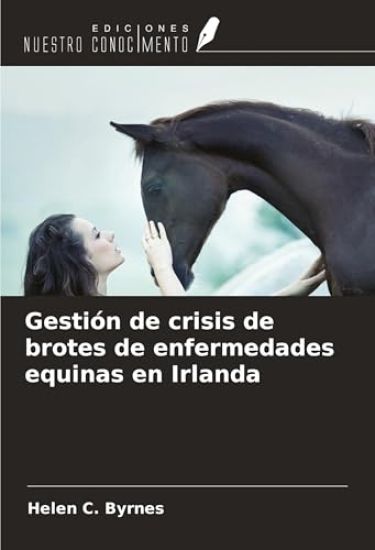
Krisenmanagement bei Ausbrüchen von Pferdekrankheiten in Irland
Am 1. Juli 2009 verk ndete das Landwirtschaftsministerium die Verordnung Nr. 504/2008. Die Verordnung schreibt vor, dass alle Equiden (Pferde, Zebras, Esel, Maultiere usw.), die vor dem 1. Juli geboren wurden, mit einem Mikrochip versehen werden m ssen. Ziel der Verordnung war es, das System zur Identifizierung von Equiden durch die Implantation eines Mikrochips unter die Haut zu verbessern. Jeder Mikrochip enth lt eine eindeutige Lebensnummer f r Equiden (UELN), die im Tierpass des Tieres eingetragen wird. Am 1. Juli 2012 trat in Irland ein neues Gesetz in Kraft, das "Horse Premises Register" (HPR), das alle Einrichtungen, in denen Equiden gehalten werden, dazu verpflichtet, sich beim Landwirtschaftsministerium zu registrieren. Der einzige Zweck dieser neuen Verordnung, die Teil des Gesetzes ber Tierkrankheiten von 1966 ist, bestand darin, die Bewegung von Equiden, die von Krankheiten betroffen sind, zu berwachen. Diese Studie untersuchte die Durchf hrbarkeit dieser Gesetze im Zusammenhang mit dem Krisenmanagement bei Ausbr chen von Pferdekrankheiten in Irland. Es wurde auch ein vorgeschlagener Rahmen geschaffen, um Besitzer und Pfleger bei Ausbr chen von Pferdekrankheiten zu unterst tzen.
Gestion de crise des épidémies de maladies équines en Irlande
Le 1er juillet 2009, le minist re de l'Agriculture a annonc le r glement n 504/2008. Ce r glement pr voit que tous les quid s (cheval, z bre, ne, mule, etc.) n s avant le 1er juillet doivent tre munis d'une puce lectronique. L'objectif de ce r glement est d'am liorer le syst me d'identification des quid s par l'implantation d'une puce sous la peau. Chaque puce contient un num ro unique de vie quine (UELN) et ce num ro est enregistr sur le passeport d livr l'animal. Le 1er juillet 2012, l'Irlande a vu l'introduction d'une nouvelle loi, The Horse Premises Register (HPR), qui est entr e en vigueur et qui fait de l'enregistrement aupr s du minist re de l'agriculture une obligation l gale pour tous les tablissements h bergeant des quid s. Cette nouvelle r glementation, qui s'inscrit dans le cadre de la loi de 1966 sur les maladies animales, a pour seul objectif de contr ler les mouvements d' quid s atteints de maladies. Cette recherche a tudi la faisabilit de ces lois dans le cadre de la gestion de crise des pid mies de maladies quines en Irlande. Une proposition de cadre a galement t cr e pour aider les propri taires et les soignants lors de l'apparition de foyers de maladies quines.
Gestione della crisi dei focolai di malattie equine in Irlanda
Il 1 luglio 2009 il Dipartimento dell'Agricoltura ha annunciato il regolamento n. 504/2008. Il regolamento prevedeva che tutti gli equidi (cavallo, zebra, asino, mulo, ecc.) nati prima del 1 luglio fossero dotati di microchip. L'obiettivo del regolamento era quello di migliorare il sistema di identificazione degli equidi attraverso l'impianto di un micro-chip sotto la pelle. Ogni microchip contiene un numero unico di vita dell'equide (UELN) che viene registrato sul passaporto rilasciato all'animale. Il 1 luglio 2012 l'Irlanda ha visto l'introduzione di una nuova legge, l'Horse Premises Register (HPR), che ha reso obbligatoria la registrazione presso il Ministero dell'Agricoltura per tutti i locali che ospitano equidi. L'unico scopo di questa nuova normativa, parte del Diseases of Animals Act del 1966, era quello di monitorare il movimento degli equidi affetti da malattie. Questa ricerca ha analizzato la fattibilit di queste leggi in relazione alla gestione della crisi dei focolai di malattie equine in Irlanda. stato inoltre proposto un quadro di riferimento per aiutare i proprietari e gli assistenti quando si verificano focolai di malattie equine.
Zarzadzanie kryzysowe ogniskami chorób koni w Irlandii

Zarzadzanie kryzysowe ogniskami chorób koni w Irlandii

Helen C Byrnes

Wydawnictwo Nasza Wiedza
2025
pokkari
1 lipca 2009 roku Departament Rolnictwa oglosil rozporządzenie nr 504/2008. Rozporządzenie wymagalo, aby wszystkie zwierzęta z rodziny koniowatych (konie, zebry, osly, muly itp.) urodzone przed 1 lipca byly oznakowane mikroczipem. Celem rozporządzenia bylo usprawnienie systemu identyfikacji koniowatych poprzez wszczepienie mikrochipu pod sk rę. Każdy mikroczip zawiera unikalny numer życia koniowatego (UELN), kt ry jest zapisywany w paszporcie wydawanym zwierzęciu. W dniu 1 lipca 2012 r. w Irlandii weszlo w życie nowe prawo, The Horse Premises Register (HPR), wprowadzające wym g rejestracji w Departamencie Rolnictwa dla wszystkich obiekt w, w kt rych znajdują się zwierzęta koniowate. Jedynym celem tego nowego rozporządzenia, będącego częścią ustawy o chorobach zwierząt z 1966 r., bylo monitorowanie przemieszczania się koniowatych dotkniętych chorobami. W ramach niniejszego badania zbadano wykonalnośc tych przepis w w odniesieniu do zarządzania kryzysowego ogniskami chor b koni w Irlandii. Stworzono r wnież proponowane ramy, aby pom c wlaścicielom i opiekunom w przypadku wystąpienia ognisk chor b koni.
Gestão de crises de surtos de doenças de equídeos na Irlanda
Em 1 de julho de 2009, o Minist rio da Agricultura anunciou o Regulamento n. 504/2008. O regulamento exigia que todos os equ deos (cavalo, zebra, burro, mula, etc.) nascidos antes de 1 de julho fossem microchipados. O objetivo do regulamento era melhorar o sistema de identifica o dos equ deos atrav s da implanta o de um microchip sob a pele. Cada microchip cont m um n mero nico de vida equina (UELN) e este n mero registado no passaporte emitido para o animal. Em 1 de julho de 2012, a Irlanda viu entrar em vigor uma nova lei, o Registo de Instala es para Cavalos (HPR), tornando assim um requisito legal que todas as instala es que contenham equ deos se registem no Departamento de Agricultura. O nico objetivo deste novo regulamento, que faz parte do Diseases of Animals Act de 1966, era controlar a circula o de equ deos afectados por doen as. Esta investiga o investigou a viabilidade destas leis em rela o gest o de crises de surtos de doen as dos equ deos na Irlanda. Foi tamb m criado um quadro proposto para ajudar a apoiar os propriet rios e os prestadores de cuidados quando ocorrem surtos de doen as dos equ deos.
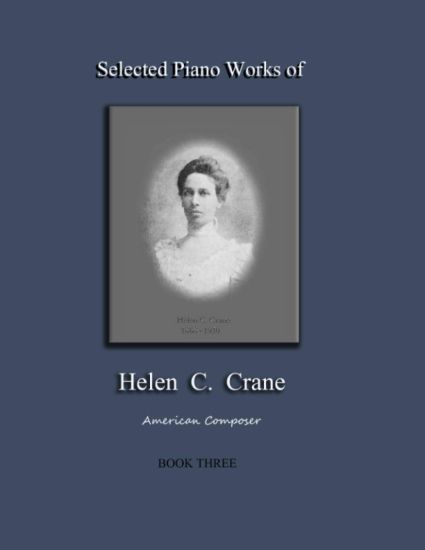
Selected Piano Works of Helen C. Crane - Book Three: American composer
Recently re-discovered composer Helen C. Crane (1868-1930) makes her 21st century debut with this collection of her piano works. A talented student of music, Ms. Crane was chosen to study composition in the 1890s with Philipp Scharwenka, pianist, composer and then director of the Klindworth-Scharwenka Conservatory in Berlin, Germany. This third book in the series includes her Intermezzo op.38, no.1, Four Character Pieces, op.6, also Sc nes Champ tres (6) op. 31 and September Days op. 62 (3).
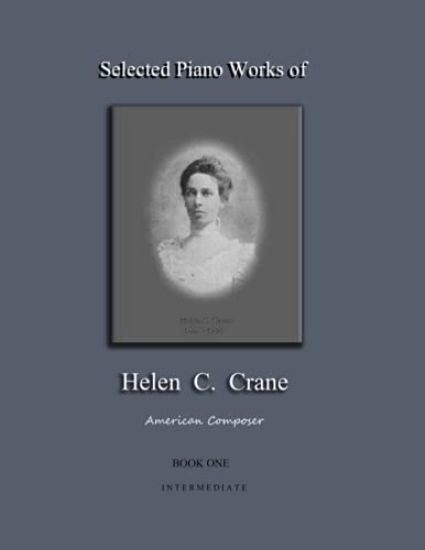
Selected Piano Works of Helen C. Crane - Book One - Intermediate
Recently re-discovered composer Helen C. Crane (1868-1930) makes her 21st century debut with this collection of her piano works. A talented student of music, Ms. Crane was chosen to study composition in the 1890s with Philipp Scharwenka, pianist, composer and then director of the Klindworth-Scharwenka Conservatory in Berlin, Germany. Here she studied alongside later notables like Otto Klemperer who was one of her contemporaries. With the completion of studies her budding career was met with numerous accolades and acceptance into the various German & Austrian publishing houses: among these Breitkopf & Hertel, Gustav Vetter, and Ries & Erler. On one of her trips home to the States (April of 1900) she premiered several of her pieces at Mendellsohn Hall in NYC and herself conducted an American premier of her orchestral tone-poem "The Last Tournament", based upon the same named chapter of Alfred Lord Tennyson's "The Idylls Of The King" Her career was marked with well-met premiers in Germany and Austria and she was honored to have her music performed by the Berlin Philharmonic at the St. Louis Exposition in 1904. Her career appeared quite vibrant until the First World War brought it all to a close. She returned to the United States in 1917 where in spite of the horrific turn of events she once again was the recipient of an award: this time American. Federated Music Clubs awarded her first prize for her composition "Elegy for Cello". In the last decade of her life (1923) indicative of her success and her abiding appreciation to German-Austrian audiences, she was gifted an "all-Helen Crane" concert at the Mozarteum in Salzberg, with Dr. Bernhard Paumgartner conducting. She passed in November of 1930 at her home in Scarsdale, NY. She accomplished a great deal in her four-decade career, her music encompassing 74 numbered works: music for piano, violin, cello, string quartets, tone-poems for orchestra, art songs, works for choir as well as for orchestra and chorus and two symphonies. Her piano music gives a unique insight into her marvelous talent and reveals a heretofore unheard American strain: the unique marriage of Helen Crane's American taste and sensibilities and her German conservatory training. It is apparent upon playing and/or listening to her music that here was fertile ground for the blossoming of all manner of future American music styles, from music for the cinema to jazz.
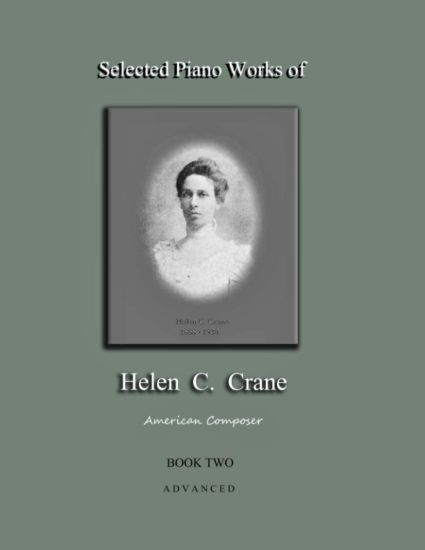
Selected Piano Works of Helen C. Crane - Book Two - Advanced: American composer
Recently re-discovered composer Helen C. Crane (1868-1930) makes her 21st century debut with this collection of her piano works. A talented student of music, Ms. Crane was chosen to study composition in the 1890s with Philipp Scharwenka, pianist, composer and then director of the Klindworth-Scharwenka Conservatory in Berlin, Germany. Here she studied alongside later notables like Otto Klemperer who was one of her contemporaries. With the completion of studies her budding career was met with numerous accolades and acceptance into the various German & Austrian publishing houses: among these Breitkopf & Hertel, Gustav Vetter, and Ries & Erler. On one of her trips home to the States (April of 1900) she premiered several of her pieces at Mendellsohn Hall in NYC and herself conducted an American premier of her orchestral tone-poem "The Last Tournament", based upon the same named chapter of Alfred Lord Tennyson's "The Idylls Of The King" Her career was marked with well-met premiers in Germany and Austria and she was honored to have her music performed by the Berlin Philharmonic at the St. Louis Exposition in 1904. Her career appeared quite vibrant until the First World War brought it all to a close. She returned to the United States in 1917 where in spite of the horrific turn of events she once again was the recipient of an award: this time American. Federated Music Clubs awarded her first prize for her composition "Elegy for Cello". In the last decade of her life (1923) indicative of her success and her abiding appreciation to German-Austrian audiences, she was gifted an "all-Helen Crane" concert at the Mozarteum in Salzberg, with Dr. Bernhard Paumgartner conducting. She passed in November of 1930 at her home in Scarsdale, NY. She accomplished a great deal in her four-decade career, her music encompassing 71 numbered works: music for piano, violin, cello, string quartets, tone-poems for orchestra, art songs, works for choir as well as for orchestra and chorus and two symphonies. Her piano music gives a unique insight into her marvelous talent and reveals a heretofore unheard American strain: the unique marriage of Helen Crane's American taste and sensibilities and her German conservatory training. It is apparent upon playing and/or listening to her music that here was fertile ground for the blossoming of all manner of future American music styles, from music for the cinema to jazz and unique styles of George Gershwin and perhaps Irving Berlin.
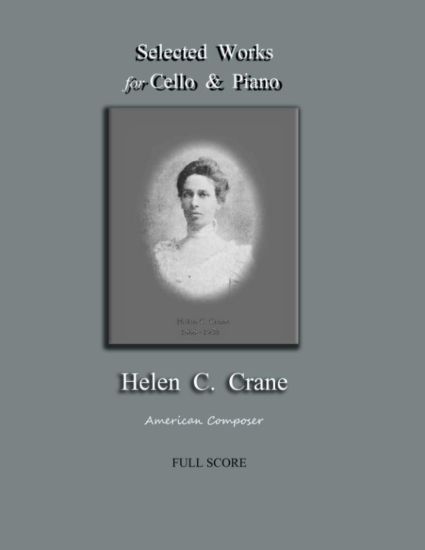
Selected Works for Cello & Piano - Helen C. Crane - Full Score: American composer
A taste of recently re-discovered American composer, Helen Crane's music for Violin with Piano Accompaniment Experience the many moods and unique characteristics of her music. (1868 - 1930). Ms. Crane was a New York native who studied composition under Philip Scharwenka at the Klindworth-Scharwenka Conservatory in Berlin. With the completion of her studies she was accepted for publication by numerous publishing houses: Breitkopf & Hertel, Gustav Vetter, Ries & Erler. In this release of her music such notable pieces as her "Morgenstandchen" op.16, a carefree morning serenade in 6/8 with a lovely arpeggiated central section; also in this volume: all of her "Idylls for Cello" op.51.
Selected Works for Cello & Piano - Helen C. Crane - Cello: American composer
A taste of recently re-discovered American composer Helen Crane's music for cello with piano accompaniment. Experience the many moods and unique characteristics of her music. . Ms. Crane (1868 - 1930) was a New York native who studied composition under Philip Scharwenka at the Klindworth-Scharwenka Conservatory in Berlin in the 1890's. With the completion of her studies she was accepted for publication by numerous publishing houses: Breitkopf & Hertel, Gustav Vetter, Ries & Erler. In this release of her music such notable pieces as her "Morgenstandchen" op.16, a carefree morning serenade with a lovely arpeggiated B section; also included are all of her "Six Idylls for Cello" op.51. PLEASE NOTE: This is Cello part only; Full Score is available for separate purchase.
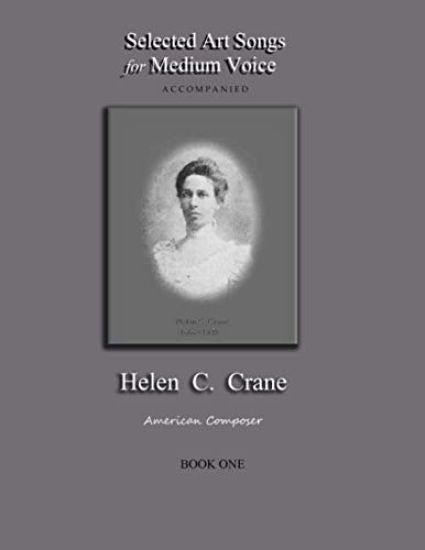
Selected Art Songs for Medium Voice accompanied Helen C. Crane Book One: American composer
a collection of representative songs from Helen Crane's early and middle periods; seven are settings of German poetic texts with literal translations to aid in interpretation; one of the songs is in English. Poets represented are Felicia Dorothea Hermans, Wilhelm Langewiesche, Marie van Vorst, Friedrich von Sallet, and Joanna Ambrosius Voigt. The pieces are written with the medium voice in mind, with a range between middle C and F an octave and a fourth above. Early pieces have a Wolf - ian lyricism and the latter are more adventurous harmonically but remain tonal and very accessible. Excellent concert / recital material.
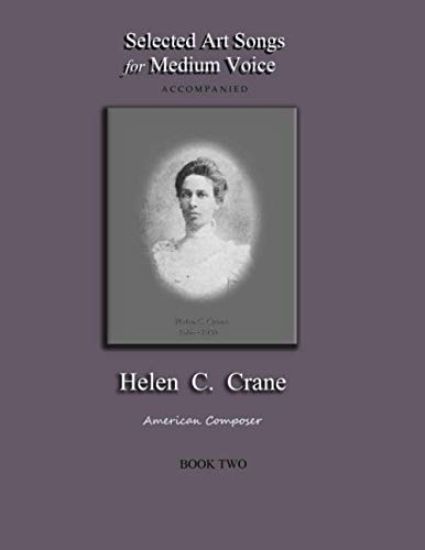
Selected Art Songs for Medium Voice Accompanied Helen C. Crane Book Two: American composer
a collection of representative songs from Helen Crane's late period - all are English: three groupings - "Love Poems of Marie von Vorst", "Old English Songs" featuring pre-nineteenth century poets; texts by Shakespeare, Campion, Dekker, Robert Herrick; then, "Newer English Songs" encompassing poets nineteenth century to time of composition: about 1923. poetic texts by W.B. Yeats, Francis Thompson, Robert Burns, William Wordsworth Austin Dobson, William Watson & Katherine Hinkson. The pieces are written with the medium voice in mind, with a range between middle C and F an octave and a fourth above. Early pieces have a Wolf - ian lyricism and the latter are more adventuresome harmonically but remain tonal and very accessible.
f-Block Chemistry

f-Block Chemistry

Helen C. Aspinall

Oxford University Press
2020
nidottu
The renowned Oxford Chemistry Primers series, which provides focused introductions to a range of important topics in chemistry, has been refreshed and updated to suit the needs of today's students, lecturers, and postgraduate researchers. The rigorous, yet accessible, treatment of each subject area is ideal for those wanting a primer in a given topic to prepare them for more advanced study or research. Moreover, cutting-edge examples and applications throughout the texts show the relevance of the chemistry being described to current research and industry. The learning features provided, including questions at the end of every chapter and online multiple-choice questions, encourage active learning and promote understanding. Furthermore, frequent diagrams, margin notes, further reading, and glossary definitions all help to enhance a student's understanding of these essential areas of chemistry. f-Block Chemistry presents the most important underlying themes of f-element chemistry, illustrating these themes with carefully chosen examples. Online resources: The online resources that accompany f-Block Chemistry feature: For students: - Multiple-choice questions for self-directed learning - Additional 'Deeper Look' content For registered adopters of the text: - Figures from the book available to download
Experimental Human-Computer Interaction

Experimental Human-Computer Interaction

Helen C. Purchase

Cambridge University Press
2012
pokkari
Experiments that require the use of human participants are time consuming and costly: it is important to get the process right the first time. Planning and preparation are key to success. This practical book takes the human-computer interaction researcher through the complete experimental process, from identifying a research question to designing and conducting an experiment, and then to analysing and reporting the results. The advice offered in this book draws on the author's twenty years of experience running experiments. In describing general concepts of experimental design and analysis she refers to numerous worked examples that address the very real practicalities and problems of conducting an experiment, such as managing participants, getting ethical approval, pre-empting criticism, choosing a statistical method and dealing with unexpected events.