Kirjojen hintavertailu. Mukana 11 242 695 kirjaa ja 12 kauppaa.

Kirjahaku

Etsi kirjoja tekijän nimen, kirjan nimen tai ISBN:n perusteella.

1000 tulosta hakusanalla Helen J. Knowles

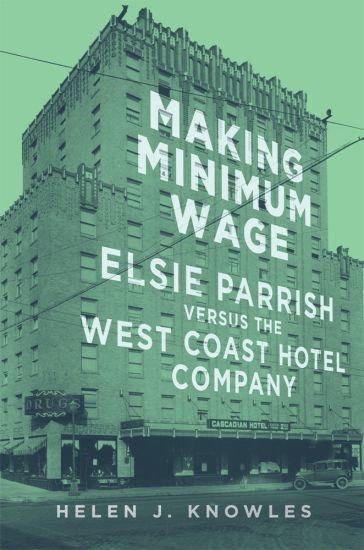
Making Minimum Wage

Making Minimum Wage

Helen J. Knowles

University of Oklahoma Press
2021
sidottu
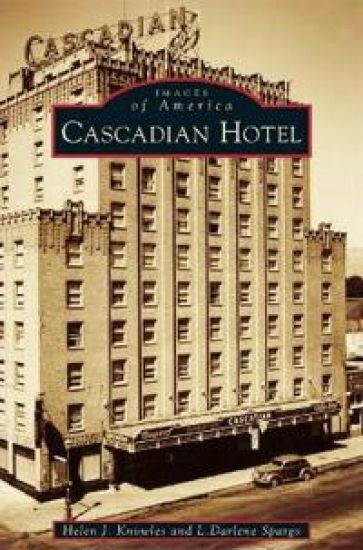
The US Supreme Court’s 1937 decision in West Coast Hotel v. Parrish, upholding the constitutionality of Washington State’s minimum wage law for women, had monumental consequences for all American workers. It also marked a major shift in the Court’s response to President Franklin D. Roosevelt’s New Deal agenda. In Making Minimum Wage, Helen J. Knowles tells the human story behind this historic case.West Coast Hotel v. Parrish pitted a Washington State hotel against a chambermaid, Elsie Parrish, who claimed that she was owed the state’s minimum wage. The hotel argued that under the concept of “freedom of contract,” the US Constitution allowed it to pay its female workers whatever low wages they were willing to accept. Knowles unpacks the legal complexities of the case while telling the litigants’ stories. Drawing on archival and private materials, including the unpublished memoir of Elsie’s lawyer, C. B. Conner, Knowles exposes the profound courage and resolve of the former chambermaid. Her book reveals why Elsie-who, in her mid-thirties was already a grandmother-was fired from her job at the Cascadian Hotel in Wenatchee, and why she undertook the outsized risk of suing the hotel for back wages. Minimum wage laws are “not an academic question or even a legal one,” Elinore Morehouse Herrick, the New York director of the National Labor Relations Board, said in 1936. Rather, they are “a human problem.” A pioneering analysis that illuminates the life stories behind West Coast Hotel v. Parrish as well as the case’s impact on local, state, and national levels, Making Minimum Wage vividly demonstrates the fundamental truth of Morehouse Herrick’s statement.
Making Minimum Wage

Making Minimum Wage

Helen J. Knowles

University of Oklahoma Press
2021
nidottu
The US Supreme Court’s 1937 decision in West Coast Hotel v. Parrish, upholding the constitutionality of Washington State’s minimum wage law for women, had monumental consequences for all American workers. It also marked a major shift in the Court’s response to President Franklin D. Roosevelt’s New Deal agenda. In Making Minimum Wage, Helen J. Knowles tells the human story behind this historic case.West Coast Hotel v. Parrish pitted a Washington State hotel against a chambermaid, Elsie Parrish, who claimed that she was owed the state’s minimum wage. The hotel argued that under the concept of “freedom of contract,” the US Constitution allowed it to pay its female workers whatever low wages they were willing to accept. Knowles unpacks the legal complexities of the case while telling the litigants’ stories. Drawing on archival and private materials, including the unpublished memoir of Elsie’s lawyer, C. B. Conner, Knowles exposes the profound courage and resolve of the former chambermaid. Her book reveals why Elsie-who, in her mid-thirties was already a grandmother-was fired from her job at the Cascadian Hotel in Wenatchee, and why she undertook the outsized risk of suing the hotel for back wages. Minimum wage laws are “not an academic question or even a legal one,” Elinore Morehouse Herrick, the New York director of the National Labor Relations Board, said in 1936. Rather, they are “a human problem.” A pioneering analysis that illuminates the life stories behind West Coast Hotel v. Parrish as well as the case’s impact on local, state, and national levels, Making Minimum Wage vividly demonstrates the fundamental truth of Morehouse Herrick’s statement.
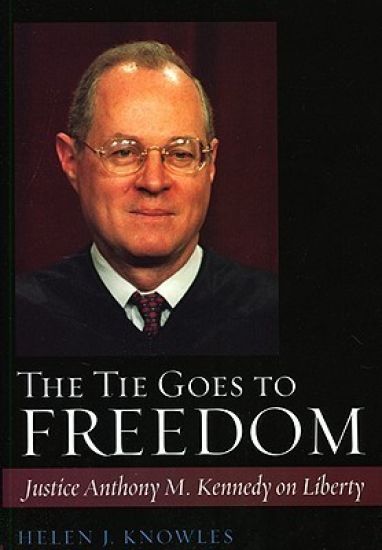
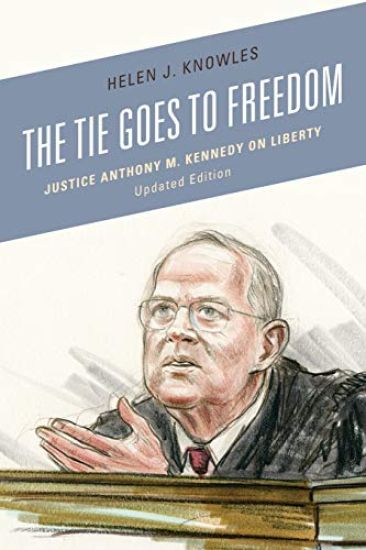
The Tie Goes to Freedom

The Tie Goes to Freedom

Helen J. Knowles-Gardner

Rowman Littlefield Publishers
2009
sidottu
At the ideological center of the Supreme Court sits Anthony M. Kennedy, whose pivotal role on the Rehnquist Court is only expected to grow in importance now that he is the lone "swing Justice" on the Roberts Court. The Ties Goes to Freedom is the first book-length analysis of Kennedy, and it challenges the conventional wisdom that his jurisprudence is inconsistent and incoherent. Using the hot-button issues of privacy rights, race, and free speech, this book demonstrates how Kennedy forcefully articulates a libertarian constitutional vision. The Tie Goes to Freedom fills two significant voids—one examining the jurisprudence of the man at the ideological center of the Supreme Court, the other demonstrating the compatibility of an expansive judicial role with libertarian political theory.
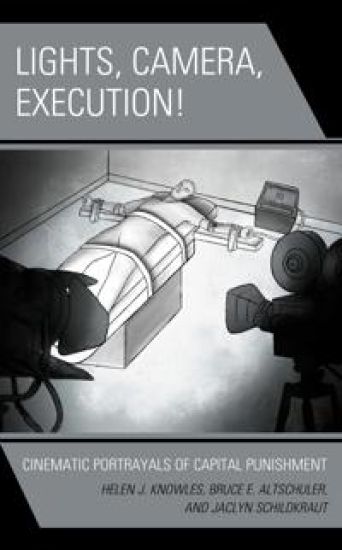
Lights, Camera, Execution!

Lights, Camera, Execution!

Helen J. Knowles-Gardner; Bruce E. Altschuler; Jaclyn Schildkraut

Lexington Books
2019
sidottu
Lights, Camera, Execution!: Cinematic Portrayals of Capital Punishment fills a prominent void in the existing film studies and death penalty literature. Each chapter focuses on a particular cinematic portrayal of the death penalty in the United States. Some of the analyzed films are well-known Hollywood blockbusters, such as Dead Man Walking (1995); others are more obscure, such as the made-for-television movie Murder in Coweta County (1983). By contrasting different portrayals where appropriate and identifying themes common to many of the studied films – such as the concept of dignity and the role of race (and racial discrimination) – the volume strengthens the reader’s ability to engage in comparative analysis of topics, stories, and cinematic techniques.Written by three professors with extensive experience teaching, and writing about the death penalty, film studies, and criminal justice, Lights, Camera, Execution! is deliberately designed for both classroom use and general readership.
The Tie Goes to Freedom

The Tie Goes to Freedom

Helen J. Knowles-Gardner

Rowman Littlefield
2018
nidottu
At the ideological center of the Supreme Court sits Anthony M. Kennedy, whose pivotal role on the Rehnquist Court is only expected to grow in importance now that he is the lone 'swing Justice' on the Roberts Court. The Ties Goes to Freedom is the first book-length analysis of Kennedy, and it challenges the conventional wisdom that his jurisprudence is inconsistent and incoherent. Using the hot-button issues of privacy rights, race, and free speech, this book demonstrates how Kennedy forcefully articulates a libertarian constitutional vision. The Tie Goes to Freedom fills two significant voids—one examining the jurisprudence of the man at the ideological center of the Supreme Court, the other demonstrating the compatibility of an expansive judicial role with libertarian political theory. At the end of Kennedy’s tenure as the most important swing justice in recent Supreme Court history, Helen Knowles provides an updated edition of her highly regarded book on Justice Kennedy and his constitutional vision.
The Tie Goes to Freedom

The Tie Goes to Freedom

Helen J. Knowles-Gardner

Rowman Littlefield
2018
sidottu
At the ideological center of the Supreme Court sits Anthony M. Kennedy, whose pivotal role on the Rehnquist Court is only expected to grow in importance now that he is the lone 'swing Justice' on the Roberts Court. The Ties Goes to Freedom is the first book-length analysis of Kennedy, and it challenges the conventional wisdom that his jurisprudence is inconsistent and incoherent. Using the hot-button issues of privacy rights, race, and free speech, this book demonstrates how Kennedy forcefully articulates a libertarian constitutional vision. The Tie Goes to Freedom fills two significant voids—one examining the jurisprudence of the man at the ideological center of the Supreme Court, the other demonstrating the compatibility of an expansive judicial role with libertarian political theory. At the end of Kennedy’s tenure as the most important swing justice in recent Supreme Court history, Helen Knowles provides an updated edition of her highly regarded book on Justice Kennedy and his constitutional vision.
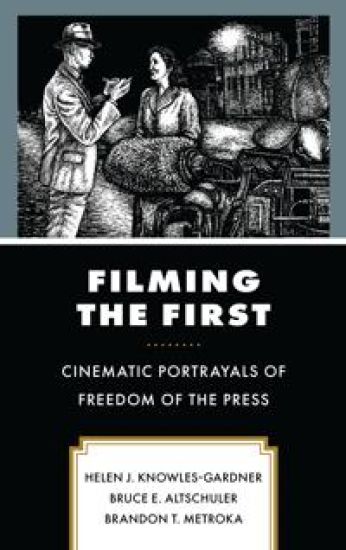
Filming the First

Filming the First

Helen J. Knowles-Gardner; Bruce E. Altschuler; Brandon T. Metroka

BLOOMSBURY PUBLISHING PLC
2024
sidottu
The First Amendment to the U.S. Constitution prohibits Congress from abridging freedom of the press. But, as the printed press has been transformed into mass media with Americans now more likely to get their political information from television or social media than from print, confidence in this important, mediating institution has fallen dramatically. Movies, in their role as cultural artifacts, have long reflected and influenced those public attitudes, inventing such iconic phrases as “follow the money” from All the President’s Men and “I’m mad as hell and I’m not going to take this anymore” from Network. Filming the First: Cinematic Portrayals of Freedom of the Press analyzes eighteen films that span from Citizen Kane to Spotlight showing changes in how the press have been portrayed over time, which voices receive the most attention and why, the relationship between the press’s “Fourth Estate” role and the imperatives of capitalism, and how, despite the First Amendment’s seemingly absolute language, the government has sometimes been able to limit what the public can read or view.
The Future of Legal Knowledge Management

The Future of Legal Knowledge Management

Andrea Miskolczi; Mark Ford; Grant Newton; Sarah Pullin; Anthony J Rhem; Hélène Russell; Chad Ergun; Katya Linossi; Pietro Brambilla

Globe Law and Business Ltd
2025
nidottu
Legal knowledge management (KM) used to mean vast law firm libraries, filing cabinets stocked with briefs, and decades of professional experience and institutional knowledge locked in senior partners' minds. As digital transformation swept through the legal industry, these evolved into document management systems and searchable databases. Although these tools represented a significant improvement, fundamental limitations remained in their ability to extract meaning from data and make connections across different sources of information. As artificial intelligence (AI) becomes increasingly embedded in law firm operations, KM professionals and teams find their role evolving, moving beyond pure practice support into a more strategic function that directly impacts firm profitability, operational efficiency, and competitive differentiation. KM professionals will play a critical role moving forward in the era of AI. However, this shift can only be achieved when KM practitioners are equipped with the right tools, skills, and resources. The Future of Legal Knowledge Management: Harnessing Artificial Intelligence provides innovative and robust solutions to some of the most pressing issues facing KM practitioners today, including the ways in which knowledge managers can build a strong data foundation for AI application; how to develop the AI-empowered lawyer; gaining organizational and partner support for AI-augmented legal KM; modernizing existing KM architecture in the age of AI; and navigating the implementation of agentic AI. Written by KM experts, technologists, and industry leaders, The Future of Legal Knowledge Management: Harnessing Artificial Intelligence serves as a comprehensive handbook for KM professionals seeking to develop their skills, broaden their expertise, and overcome the challenges presented by modern legal practice. It will equip readers with the data-driven insights and actionable strategies needed to navigate a rapidly evolving profession, embrace AI's potential, and harness its power to shape the future of KM.
Nazi Camps and their Neighbouring Communities

Nazi Camps and their Neighbouring Communities

Helen J. Whatmore-Thomson

Oxford University Press
2020
sidottu
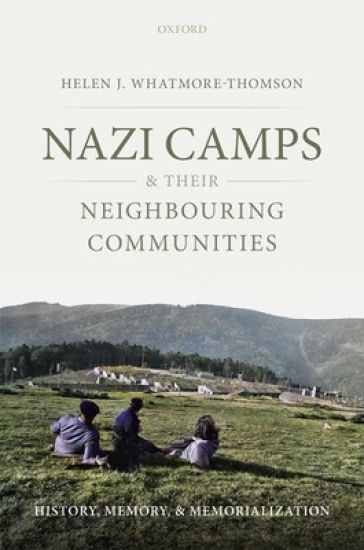
Nazi concentration camps (KZs) were established in the vicinity of local communities across Europe. Arguably, the individuals in these communities were not perpetrators, nor were they victims, like those imprisoned in the camps. Yet they did not simply stand by on the sidelines, passive, uninvolved, or untouched by the presence of the camps. Local citizenries engaged in ambiguous and highly interactive relations with their local camps, willingly and unwillingly working for the perpetrators--but also aiding inmates. After the war, Nazi camps were often repurposed, initially as post-war internment camps and subsequently as penal institutions, military compounds, or housing encampments. Over time, many were transformed into sites of memory to commemorate Nazi persecution. Governments and groups of survivors have often determined the re-use and commemoration of KZs, but these processes take place on local territory and have direct implications for nearby communities. Therefore, locals have continued to interact with camp legacies. Nazi Camps and their Neighbouring Communities examines how local populations evolved to live with the Nazi camps both before and after the war. Helen J. Whatmore-Thomson evaluates the different sorts of locality-camp relationships that developed in wartime France, Germany, and the Netherlands, and how these played out in post-war scenarios of re-use and memorialization. Using three case studies of major camps in western Europe, Natzweiler-Struthof, Neuengamme, and Vught, the book traces the contested developments of these camp sites in the changing political climates of the post-war years, and explores the interrelated dynamics and trajectories of local and national memory.
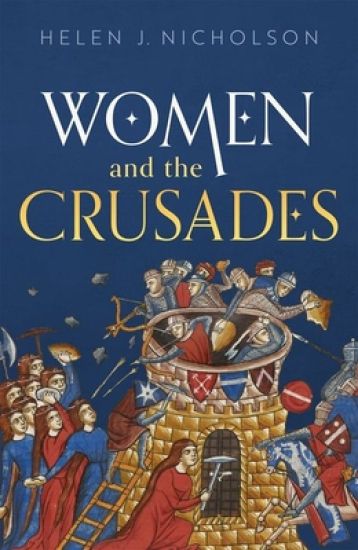
Women and the Crusades

Women and the Crusades

Helen J. Nicholson

Oxford University Press
2023
sidottu
The crusade movement needed women: their money, their prayer support, their active participation, and their inspiration... This book surveys women's involvement in medieval crusading between the second half of the eleventh century, when Pope Gregory VII first proposed a penitential military expedition to help the Christians of the East, and 1570, when the last crusader state, Cyprus, was captured by the Ottoman Turks. It considers women's actions not only on crusade battlefields but also in recruiting crusaders, supporting crusades through patronage, propaganda, and prayer, and as both defenders and aggressors. It argues that medieval women were deeply involved in the crusades but the roles that they could play and how their contemporaries recorded their deeds were dictated by social convention and cultural expectations. Although its main focus is the women of Latin Christendom, it also looks at the impact of the crusades and crusaders on the Jews of western Europe and the Muslims of the Middle East, and compares relations between Latin Christians and Muslims with relations between Muslims and other Christian groups.
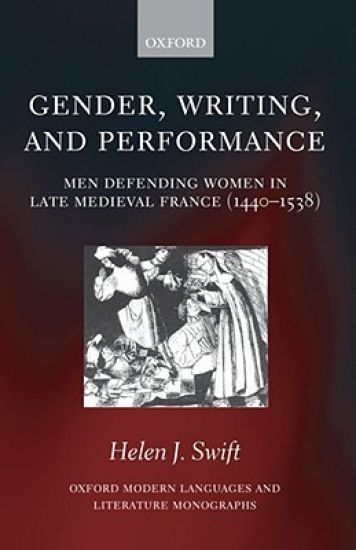
Gender, Writing, and Performance

Gender, Writing, and Performance

Helen J. Swift

Oxford University Press
2008
sidottu
This book explores the poetics of literary defences of women written by men in late-medieval and early-modern France. It fills an important lacuna in studies of this polemic in imaginative literature by bridging the gap between Christine de Pizan and a later generation of women writers and male, Neo-Platonist writers who have recently all received due critical attention. Whereas male-authored defences composed between 1440 and 1538 have previously been dismissed as 'insincere' or 'mere intellectual games', Swift formulates reading strategies to overcome such critical stumbling blocks and engage with the particular rhetorical and historical contexts of these works. Edited and as yet unedited texts by Martin Le Franc, Jacques Milet, Pierre Michault, and Jean Bouchet-catalogues of women, allegorical narratives, and debate poems-are brought together and analysed in detail for the first time in order to explore, for example, how such works address the misogynistic spectre of Jean de Meun's Roman de la rose. The book seeks to understand the contemporary popularity of the case for women (la querelle des femmes) as literary subject matter. It investigates the publication history across this period, from manuscript to print, of Le Franc's Le Champion des dames. Swift further aims to show how these texts hold interest for modern audiences. A nexus of theoretical concerns centred on performance - Judith Butler's gender performativity, Derrida's re-working of Austin's linguistic performativity through spectrality, and dramatic performance - is enlisted to articulate the interpretative engagement expected by querelle writers of their audience. The reading strategies proposed foster a nuanced and enriched perspective on the question of a male author's 'sincerity' when writing in defence of women.
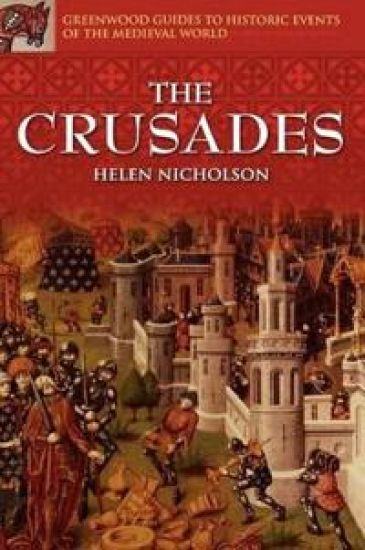
The Crusades

The Crusades

Helen J. Nicholson

Greenwood Press
2004
sidottu
The Crusades of the Middle Ages were fought by Latin Christians against peoples who they believed were threatening the existence of their Christian faith. Some of these campaigns were against Muslims, some were against other Christians, and some were against pagans. Topically oriented chapters backed up by biographies, primary documents, maps, and illustrations make this an ideal introductory reference resource to this pivotal period in European medieval history. The Crusades were distinctive because they were an invention of Latin Christians, they had their own symbols and traditions, and they were not one war but many, fought over several centuries. Thematic chapters provide an overview of the Crusades—why scholars believe they were fought, why they appealed to a very broad cross-section of Europe's population, and what motivated crusaders to dedicate years of their lives to the martial cause of Christendom. Among other interesting facts, readers will learn that to the Muslim states, the Christian Crusades were more of a distraction, as the Mongols from the East and schisms within occupied the bulk of their efforts, and that when it was convenient and advantageous—which was often—Christians and Muslims would ally with one another, or serve as mercenaries in each other's armies. Covering the classic crusades to the Holy Lands and the taking and defending of Jerusalem, Nicholson also gives equal treatment to the just as important Requonquista of the Iberian peninsula, the subjugation and conversion of pagans in North-Western Europe, the Crusades against the Ottoman Turks in the Balkans, and the internal Crusades against the heretical Albigensians and Hussites. An annotated timeline provides readers with an easy-to-follow overview of the several centuries' worth of Crusading, and a half-dozen maps provide rapid and easy-to-read geographical and political information on the most important campaigns. Seventeen biographical sketches of key Christian, Muslim, Balkan, Spanish, and pagan figures and a dozen annotated primary documents breathe fresh life into the topic, providing students and readers with a new look at the period. A glossary is provided, as is an annotated bibliography and index.
Medieval Warfare

Medieval Warfare

Helen J. Nicholson

Red Globe Press
2003
nidottu
Warfare in medieval times was never static or predictable - although there were ideals and conventions to follow, in the field commanders had to use their initiative and adapt to the needs of the moment. In this concise, wide-ranging study, Helen Nicholson provides the essential introductory guide to a fascinating subject.Medieval Warfare- surveys and summarises current debates and modern research into warfare throughout the whole of the medieval period across Europe- sets medieval warfare theory and practice firmly into context as a continuation and adaptation of practice under the Roman Empire, tracing its change and development across more than a millennium- considers military personnel, buildings and equipment, as well as the practice of warfare by land and sea
Human Rights and the Hollow State

Human Rights and the Hollow State

Helen J. Delfeld

Routledge
2014
sidottu
The book investigates the beliefs about governance that determine that state structures are the most appropriate venue for international human rights actors and activists to operate. Helen Delfeld argues that those beliefs rely on a normative perception of a nation-state, not necessarily applicable to most of the post-colonial world. While most post-colonial states may appear to demonstrate the trappings of modern nation-statehood, these projects are mostly spurred by and benefit an elite class. At the same time, there may be little identification with their government among the grassroots polity. Delfeld focuses on the Philippines as an example of a post-colonial state, using nested case studies to show how people think differently about the state at different scales. Following a two-pronged approach, she investigates key moments of state action or inaction, and then asks people at the grassroots about their perspectives on governance, their engagement with the state, and their views of human rights. Her findings indicate that people at the grassroots rely on alternative forms of governance, often in the form of NGOs, INGOs, local cooperatives, informal networks, or structures that pre-date both colonization and independence. Her research also indicates the possibility that some of the most effective human rights actors do not rely on the state, as demonstrated by comparing locally-generated campaigns aimed at promoting environmental rights with state campaigns that address violence against women.The Hollow State and Human Rights shows that rights initiatives misdirected through a "hollow state" might strengthen the mechanisms of the state, but might not actually create a more attentive nation-state. Human rights activists and actors may be far more effective by accessing local structures directly, the practical implications of which go beyond the Philippines to other post-colonial states.
The Juicy Smoothie Health Bar

The Juicy Smoothie Health Bar

Helen J. Simpson

W Foulsham Co Ltd
2016
pokkari
Public and scientific interest in personal health - specifically superfoods and smoothies - is rocketing. We're all more conscious of the destructive effects of processed foods, the expensive cost of our illnesses on the health system and the environmental impact on the world. Many of us already suffer from chronic health conditions and many more are keen to ensure we keep them at bay for as long as possible. The Juicy Smoothie Health Bar gives us a toolbox to defend ourselves against ill health; teaching us to use smoothies to nurture, regenerate and repair our bodies. Divided into 3 sections: smoothies to greatly improve health, smoothies to help you lose extra weight, and smoothies to help combat specific conditions - the book draws on the latest scientific evidence into antioxidants, flavonoids and polyphenols to provide a comprehensive range of recipes, all taste-tested for deliciousness.