

Kirjahaku
Etsi kirjoja tekijän nimen, kirjan nimen tai ISBN:n perusteella.
1000 tulosta hakusanalla Helen Louise Cohen



Cahiers d’Art 2018
Rémi Labrusse; Jean-Louis Cohen; Miquel Barceló; Rosa Maria Mallet; Elisa Sclaunick; Hans Ulrich Obrist; Helen Marten; Koo Jeong A; Karel Malich
Cahiers d'art
2020
nidottu
The 2018 Cahiers d'Art revue revisits Mir 's works and relationship between Mir and Cahiers d'Art through an anthology of the most beautiful texts published in the revue. It also introduces unpublished objects and pieces from the artist's collection. The stencil Mir made for the No. 1-4 of the 1936 revue is silkscreened as this revue's cover. The issue also includes an interview with Staffan Ahrenberg and Miquel Barcel , and works by Helen Marten, Koo Jong A and Karel Malich. Anchored in the beauty of the Catalan land and in the primitive power of objects, Mir 's works unfold their magical dimension alongside movements and theories. The art critic and founder of Cahiers d'Art, Christian Zervos never stopped following and defending the work of this unclassifiable artist, "the most lyrical painter of his time" and "the most important post cubist artist". Mir is indeed present in Cahiers d'Art from the first year of its existence, 1926, utill the last, 1960. He drew many covers and his famous stencil "Help Spain " (Aidez l'Espagne ) was published in the No. 4-5 of the 1937 issue of the Cahiers d'Art revue. This issue of the new revue, under the direction of R mi Labrusse, revisits the relationship between Mir and Cahiers d'Art through an anthology of the most beautiful texts published in the revue. It also provides insight into the great originality of Mir 's primitivism and a discovery of two collections of the artist: the objects that filled his studio, and the unpublished paintings that he added into certain books in his library. An essay by lisa Sclaunick is dedicated to Mir 's unpublished correspondence with writer Jacques Dupin. A text by Jean-Louis Cohen pays tribute to the architect Jos -Luis Sert who created the buildings of the Palma studio and the Barcelona Foundation, while Rosa Maria Mallet returns to the history of the Mir Foundation. Lastly, four artists complete the revue with a contemporary counterpoint: the Spanish Miquel Barcel , the English Helen Marten, the South Korean Koo Jong A and the Czech Karel Malich.

Hunter provides a glimpse inside North Korean society, detailing the everyday life of people living in perhaps the most isolated, secretive society of the 20th century. In this declassified CIA study, she describes the world's most extreme cult society under the charismatic totalitarian leader, Kim Il-song, who ruled his people for 45 years—longer than any other leader of the 20th century. Kim Il-song's totalitarian cult society comes closest to George Orwell's 1984 than any society yet contrived. Hunter brings to life what it is like to live in a thoroughly thought-controlled society—which also is the world's most class-conscious society. Based on all the sources available to the CIA at the time, this book is the most comprehensive look at North Korean life ever published. It is essential reading for foreign policy officials, Asian Studies scholars, and the general public interested in world affairs.
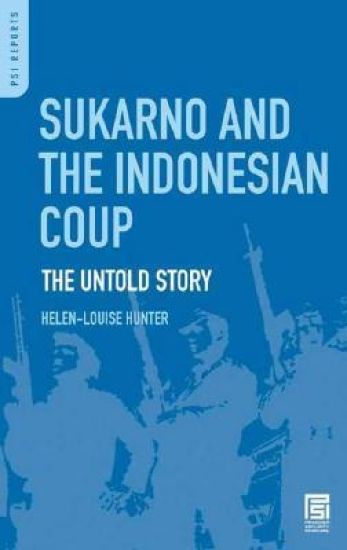
On September 30, 1965, six of Indonesia's highest ranking generals were killed in an effort by President Sukarno to crush an alleged coup. The events of that were part of a rapidly growing power struggle pro and anti-communist factions. The elimination of the generals, however, did little to increase and preserve Sukarno's power, though, and he was stripped of the presidency in 1967. Hunt's work is a unique and original examination of the events that culminated on that night in September, 1965. It is the first detailed account of the Indonesian Coup that reveals the previously unknown workings of the PKI's ultra-secret Special Bureau, a clandestine organization within the Communist Party that may be the prototype of other similar entities that flourished around the world in the mid-50's and 60s. No such expose of secret communist organizations committed to covert killings of the top military or political leaders of the country has ever been published. She establishes beyond any doubt that the PKI, under Chairman Aidit's direction, using the capabilities of a secret organization within the PKI that only Aidit and a handful of trusted high-level members of the Communist Party even knew about, and, most importantly, acting with President Sukarno's full knowledge and approval, planned and then-dramatically-failed to execute a bold plan to kill the top leadership of the Army and proclaim a new socialist state under President Sukarno's leadership with PKI Chairman Aidit as his proclaimed successor. At the time of the coup, government analysts as well as non-government scholars were of two minds. Some, like the group at Cornell University, were convinced that the PKI (Indonesian Communist Party) had not been involved, that the coup was the action mid-level army officers against the top leadership. That was the official line at the time. Others were convinced that the PKI alone had planned and executed the coup in its long-held desire to remove the pro-U.S. army leadership. No one at the time saw the hand of Indonesia's world-famous President Sukarno in the affair.

In the late 1950s, Communists decided that Zanzibar offered them a particular favorable opportunity for expanding their influence.
This work has been selected by scholars as being culturally important and is part of the knowledge base of civilization as we know it.This work is in the public domain in the United States of America, and possibly other nations. Within the United States, you may freely copy and distribute this work, as no entity (individual or corporate) has a copyright on the body of the work.Scholars believe, and we concur, that this work is important enough to be preserved, reproduced, and made generally available to the public. To ensure a quality reading experience, this work has been proofread and republished using a format that seamlessly blends the original graphical elements with text in an easy-to-read typeface.We appreciate your support of the preservation process, and thank you for being an important part of keeping this knowledge alive and relevant.
This work has been selected by scholars as being culturally important and is part of the knowledge base of civilization as we know it.This work is in the public domain in the United States of America, and possibly other nations. Within the United States, you may freely copy and distribute this work, as no entity (individual or corporate) has a copyright on the body of the work.Scholars believe, and we concur, that this work is important enough to be preserved, reproduced, and made generally available to the public. To ensure a quality reading experience, this work has been proofread and republished using a format that seamlessly blends the original graphical elements with text in an easy-to-read typeface.We appreciate your support of the preservation process, and thank you for being an important part of keeping this knowledge alive and relevant.

This work has been selected by scholars as being culturally important and is part of the knowledge base of civilization as we know it.This work is in the public domain in the United States of America, and possibly other nations. Within the United States, you may freely copy and distribute this work, as no entity (individual or corporate) has a copyright on the body of the work.Scholars believe, and we concur, that this work is important enough to be preserved, reproduced, and made generally available to the public. To ensure a quality reading experience, this work has been proofread and republished using a format that seamlessly blends the original graphical elements with text in an easy-to-read typeface.We appreciate your support of the preservation process, and thank you for being an important part of keeping this knowledge alive and relevant.

This work has been selected by scholars as being culturally important and is part of the knowledge base of civilization as we know it.This work is in the public domain in the United States of America, and possibly other nations. Within the United States, you may freely copy and distribute this work, as no entity (individual or corporate) has a copyright on the body of the work.Scholars believe, and we concur, that this work is important enough to be preserved, reproduced, and made generally available to the public. To ensure a quality reading experience, this work has been proofread and republished using a format that seamlessly blends the original graphical elements with text in an easy-to-read typeface.We appreciate your support of the preservation process, and thank you for being an important part of keeping this knowledge alive and relevant.

This volume provides a concise synthesis of human-animal relations over time, charting shifting attitudes towards animals from domestication to the present day. It asks how non-human species have shaped human history, and how humans have reconfigured the animal world.Humans have had a long and close relationship with animals. They have hunted them, consumed them as food and fashion, exploited them as energy sources, utilised them in warfare, exhibited them in zoos and menageries, and studied them for science. In the process, they have radically changed the way in which many animals live, subjecting them to captivity, altering their diets, constraining their movements and, through selective breeding, reshaping their bodies. The book explores the use of animals for sustenance, labour, companionship and display, and traces the rise of the animal rights movement. It also assesses how humans have impacted the overall biodiversity of the planet, driving some species of animals to extinction and permitting others to colonise new continents. With case studies on animal astronauts, celebrity kakapos, globetrotting pandas and cocaine hippos, Animals in World History offers a lively and accessible introduction to human-animal relations for students and instructors of animal studies, environmental history, and social and cultural history.
This volume provides a concise synthesis of human-animal relations over time, charting shifting attitudes towards animals from domestication to the present day. It asks how non-human species have shaped human history, and how humans have reconfigured the animal world.Humans have had a long and close relationship with animals. They have hunted them, consumed them as food and fashion, exploited them as energy sources, utilised them in warfare, exhibited them in zoos and menageries, and studied them for science. In the process, they have radically changed the way in which many animals live, subjecting them to captivity, altering their diets, constraining their movements and, through selective breeding, reshaping their bodies. The book explores the use of animals for sustenance, labour, companionship and display, and traces the rise of the animal rights movement. It also assesses how humans have impacted the overall biodiversity of the planet, driving some species of animals to extinction and permitting others to colonise new continents. With case studies on animal astronauts, celebrity kakapos, globetrotting pandas and cocaine hippos, Animals in World History offers a lively and accessible introduction to human-animal relations for students and instructors of animal studies, environmental history, and social and cultural history.
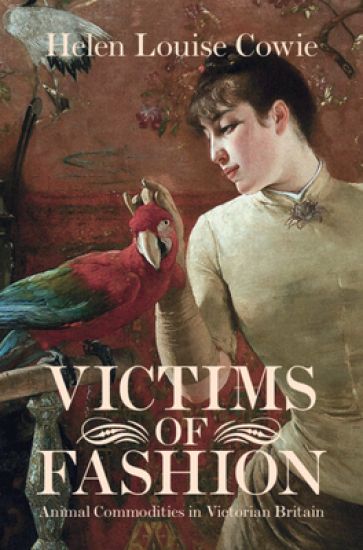
Animal products were used extensively in nineteenth-century Britain. A middle-class Victorian woman might wear a dress made of alpaca wool, drape herself in a sealskin jacket, brush her hair with a tortoiseshell comb, and sport feathers in her hat. She might entertain her friends by playing a piano with ivory keys or own a parrot or monkey as a living fashion accessory. In this innovative study, Helen Cowie examines the role of these animal-based commodities in Britain in the long nineteenth century and traces their rise and fall in popularity in response to changing tastes, availability, and ethical concerns. Focusing on six popular animal products – feathers, sealskin, ivory, alpaca wool, perfumes, and exotic pets – she considers how animal commodities were sourced and processed, how they were marketed and how they were consumed. She also assesses the ecological impact of nineteenth-century fashion.


Mobile Professional Voluntarism and International Development
Helen Louise Ackers; James Ackers-Johnson
Palgrave Macmillan
2016
sidottu
This book is open access under a CC BY license.This book explores the impact that professional volunteers have on the low resource countries they choose to spend time in. Whilst individual volunteering may be of immediate benefit to individual patients, this intervention may have detrimental effects on local health systems; distorting labour markets, accentuating dependencies and creating opportunities for corruption. Improved volunteer deployment may avoid these risks and present opportunities for sustainable systems change. The empirical research presented in this book stems from a specific volunteering intervention funded by the Tropical Health Education Trust and focused on improving maternal and newborn health in Uganda. However, important opportunities exist for policy transfer to other contexts.
The Weaver, V2, No. 3, July, 1937
Helen Louise Allen; Mary M. Atwater; Jane H. Hillman
Literary Licensing, LLC
2013
nidottu