
Kirjahaku
Etsi kirjoja tekijän nimen, kirjan nimen tai ISBN:n perusteella.
1000 tulosta hakusanalla Helen May Brian


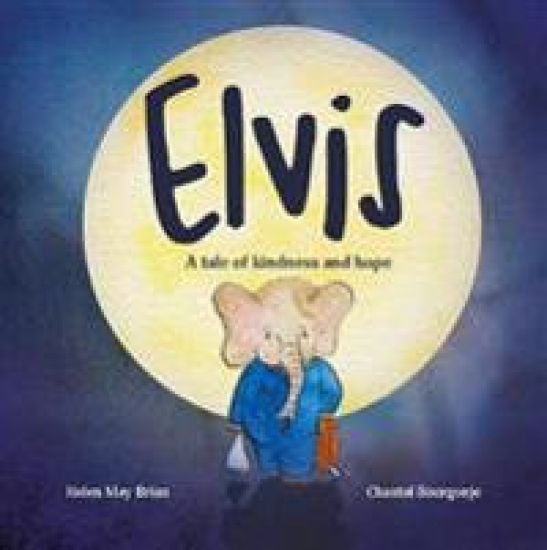
Helen May the field mouse lives in a shoe at the top of a hill surrounded by all of her creature friends. She loves her home with a view and doesn't plan to leave. But one day, she hears some startling news. The farmer plans to sell their little piece of paradise, and the new owners plan to turn it into a resort. Helen May calls a meeting of all her animal friends. They decide she should talk to Farmer George and convince him to keep his land and their home. But will the farmer listen to a little mouse? Through rhyming words and pictures, Helen May Saves the Day tells the story of a little field mouse, who overcomes her biggest fear of facing a human to fight for what she loves most: her home and friends. It teaches children that even the smallest creature can make a big difference in this world if they set their mind to it.
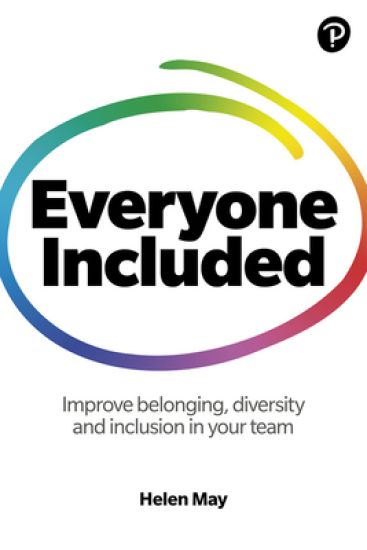
Everyone Included: How to improve belonging, diversity and inclusion in your team
Helen May
pearson education limited
2022
nidottu
Diversity and inclusion (D&I) isn’t just an HR exercise – it can make a real different to your team performance too. By making everyone in your team feel like they belong, you’ll be able to boost motivation and productivity. Everyone Included helps you make inclusion, belonging and wellbeing central to your team. By helping everyone feel that they belong, your team will foster genuine inclusion and be ready to adapt and evolve in the future. With a step-by-step plan to design and implement a diversity and inclusion plan that brings results: Where are you now? – Understand your team profile now by conducting a belonging Audit to identify your how inclusive your team is.What do I do next? – Design a D&I plan, including a business case to win support, and identify key metrics to measure its effectivenessHow do I keep going? – Ensure your programme continually improves and remains relevant by creating measurements and feedback loops Everyone Included is your comprehensive, step-by-step guide to creating a diversity and inclusion strategy that delivers results for your team.

The twentieth century was a time of great change in early years education. As the century opened, the use of Froebel's kindergarten methods infiltrated more infant classrooms. The emergence of psychology as a discipline, and especially its work on child development, was beginning to influence thinking about how infants learn through play. While there were many teachers who maintained Victorian approaches in their classrooms, some others experimented, were widely read and a few even travelled to the US and Europe and brought new ideas home. As well, there was increasing political support for new approaches to the "new education" ideas at the turn of the century. All was not plain sailing, however, and this book charts both the progress made and the obstacles overcome in the course of the century, as the nation battled its way through world wars and depressions. It's an interesting story as the author discusses changes in school buildings, teaching practice and teacher education, the teaching of reading and other curriculum areas, Maori education and the emergence of kohanga reo and the teaching of Maori language in primary schools. Along the way we meet a range of individuals, including C.E. Beeby, Sylvia Ashton-Warner, Gwen Somerset, Don Holdaway, Elwyn Richardson, Marie Bell and Marie Clay and the many less well-known but significant people who worked in or influenced early years education. We also meet many well-known New Zealanders who have recounted their first days at school. This is a fascinating account of a rich history that has involved us all. And yes, school milk gets a mention.
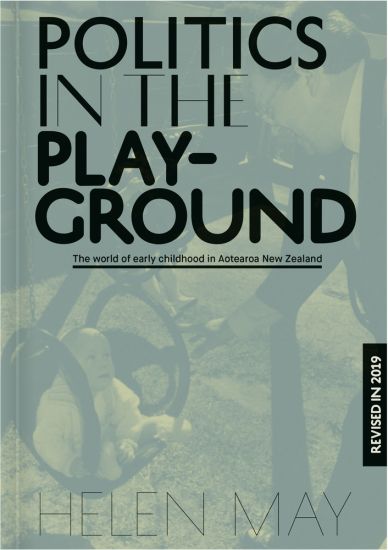
Freshly updated in 2019, the third edition of Politics in the Playground: The world of early childhood in Aotearoa New Zealand is a lively history of early childhood education and care in Aotearoa New Zealand in the postwar era. The book follows on from Discovery of Early Childhood (1997, 2013), which traced the origins of institutional care and education for young children in Europe, US and New Zealand prior to state interest and serious investment. This latest edition brings the story right up to date with developments under the Labour coalition government of Jacinda Ardern. The place of children in New Zealand's social history makes this book a remarkable record of social movements. The postwar search for security, the radicalism of the 1960s and 1970s, the rise of feminism, the role of the state in social issues, increasing employment of women - all have impacted on early childhood education. The language of the debate has shifted from 'social progress' in mid-century, to the economic terminology of the 1990s, some cautious consideration of the young child citizen in the 2000s, followed by the rhetoric of 'risk', the 'vulnerable child' and a new story in this revised edition covering the 2010s. This is an account of critical issues for young children that will interest parents, policy- makers, teachers and students.
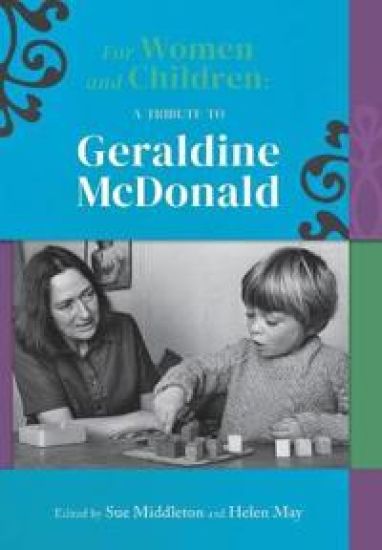
Geraldine McDonald (1926-2018) was a pioneer of feminist research and political advocacy in early childhood, and more broadly across the education and public service sectors. She began this work in the mid-1960s, a time when there were no courses on women's studies and there was little research in education or other social sciences that included women's experiences and perspectives. Her outspokenness on "women's issues" was often met with resistance. Her career with NZCER included establishing its Early Childhood Unit and serving as Deputy Director of the organisation.The contributors to this festschrift are mainly women born during or shortly after the Second World War. In different ways, all have been deeply influenced by Geraldine. Some worked with her as colleagues, in research or writing projects, on committees, in women's or educational networks, or as members of her family. Others did not know her personally but were influenced by her writing. The book engages with the main themes in her body of work with the aim of protecting it from becoming fragmented, lost, or forgotten. It showcases the originality of Geraldine's research and illustrates how it informed her own and others' advocacy work for gender equality. Together, the contributors offer a "generational legacy" of a cohort of post-war feminists' engagements with education in Aotearoa New Zealand.

Native American Literature underwent a Renaissance around 1968, and the current canon of novels written in the late twentieth century in American English by Native American or mixed-blood authors is diverse, exciting and flourishing. Despite this, very few such novels are accepted as part of the broader American literary canon.This book offers a valuable and original approach to contemporary Native American literature. Dennis’s contemplation of space and spatialized aesthetics is compelling and persuasive. Considering Native American literature within a modernist framework, and comparing it with writers such as Woolf, Stein, T.S Eliot and Proust results in a valuable and enriching context for the selected texts. Vital reading for scholars of Native American Literature, this book will also provide good grounding in the subject for those with an interest in American and twentieth century literature more generally.

Native American Literature underwent a Renaissance around 1968, and the current canon of novels written in the late twentieth century in American English by Native American or mixed-blood authors is diverse, exciting and flourishing. Despite this, very few such novels are accepted as part of the broader American literary canon.This book offers a valuable and original approach to contemporary Native American literature. Dennis’s contemplation of space and spatialized aesthetics is compelling and persuasive. Considering Native American literature within a modernist framework, and comparing it with writers such as Woolf, Stein, T.S Eliot and Proust results in a valuable and enriching context for the selected texts. Vital reading for scholars of Native American Literature, this book will also provide good grounding in the subject for those with an interest in American and twentieth century literature more generally.

Growing a kindergarten movement in Aotearoa New Zealand
Helen May; Kerry Bethell
New Zealand Council for Educational Research (NZCER) Press
2017
nidottu
Generations of New Zealanders have memories of themselves or their children at kindergarten, and new memories are being made every day. The first kindergartens appeared here in colonial times--a revolutionary idea imported from Germany that suggested children would unfold through play. This book tells the story of how those ideas were adopted, adapted, and thrived in New Zealand. With the New Zealand Free Kindergarten Union (now NZ Kindergartens) about to enter its centennial decade, it is time to remember the people who have been central to the movement and how they have nurtured it for future generations. The story is peopled with powerful personalities who were (and are) committed to the ideals of kindergarten. Over the decades, this commitment led to a string of campaigns to promote opportunities for children and training for teachers. Sometimes the story is one of adversity and survival. Kindergarten has reinvented itself for different times and for different populations and places. It has formed alliances across government agencies, education organisations, and political party lines.Throughout, children are at the heart of the movement--which is why kindergartens and their associations hold a special place in the hearts of families and whānau they serve.Authors Helen May and Kerry Bethell have both taught early years education and are widely published. They weave their scholarly research through the story of the people, places, and values of the kindergarten movement. The book is illustrated with photographs and cartoons from every decade.

Taking up a little-known story of education, schooling, and missionary endeavor, Helen May, Baljit Kaur, and Larry Prochner focus on the experiences of very young ’native’ children in three British colonies. In missionary settlements across the northern part of the North Island of New Zealand, Upper Canada, and British-controlled India, experimental British ventures for placing young children of the poor in infant schools were simultaneously transported to and adopted for all three colonies. From the 1820s to the 1850s, this transplantation of Britain’s infant schools to its distant colonies was deemed a radical and enlightened tool that was meant to hasten the conversion of 'heathen' peoples by missionaries to Christianity and to European modes of civilization. The intertwined legacies of European exploration, enlightenment ideals, education, and empire building, the authors argue, provided a springboard for British colonial and missionary activity across the globe during the nineteenth century. Informed by archival research and focused on the shared as well as unique aspects of the infant schools’ colonial experience, Empire, Education, and Indigenous Childhoods illuminates both the pervasiveness of missionary education and the diverse contexts in which its attendant ideals were applied.
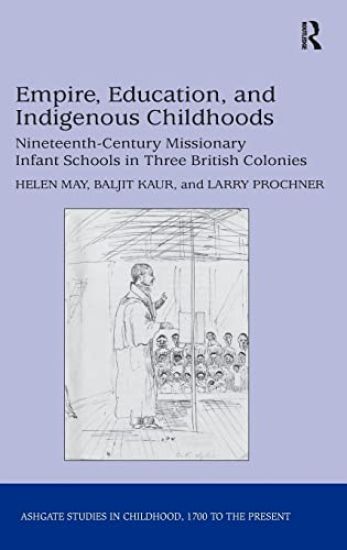
Taking up a little-known story of education, schooling, and missionary endeavor, Helen May, Baljit Kaur, and Larry Prochner focus on the experiences of very young ’native’ children in three British colonies. In missionary settlements across the northern part of the North Island of New Zealand, Upper Canada, and British-controlled India, experimental British ventures for placing young children of the poor in infant schools were simultaneously transported to and adopted for all three colonies. From the 1820s to the 1850s, this transplantation of Britain’s infant schools to its distant colonies was deemed a radical and enlightened tool that was meant to hasten the conversion of 'heathen' peoples by missionaries to Christianity and to European modes of civilization. The intertwined legacies of European exploration, enlightenment ideals, education, and empire building, the authors argue, provided a springboard for British colonial and missionary activity across the globe during the nineteenth century. Informed by archival research and focused on the shared as well as unique aspects of the infant schools’ colonial experience, Empire, Education, and Indigenous Childhoods illuminates both the pervasiveness of missionary education and the diverse contexts in which its attendant ideals were applied.

Growing from a year-long commitment to write one haiku a day, Catstrawe ranges through family history and female relationships, the stimulation of travel and the inspiration to found in the immediate environment, politics and the world situation, but always, at its heart, the experience of living with cancer. Quickly outgrowing the limitations of seventeen syllables to explorer more extended forms, this is a book about living life to the full in the face of the inevitability of death.

Lucid, linguistically dextrous, and woven through with Welsh phrases, and words and passages in French, this exquisitely observed sequence of haiku and haibun was written during lockdown, though only refers to Covid elliptically. There is nothing obvious here—instead there are connections—with nature, with relationships, with what is lost and what is saved.
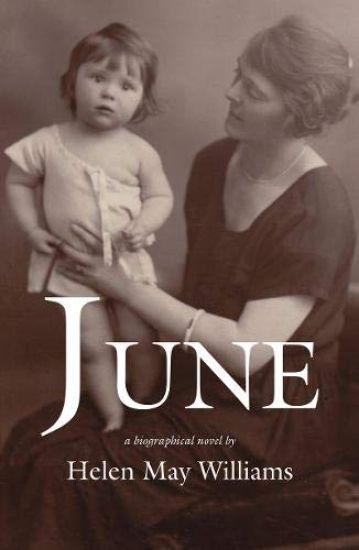
Based in part on the author’s mother’s handwritten memoirs, this novel is an act of bricolage in which the narrator keeps finding gaps in the materials. We desire to regain the past, but every time we attempt it we fabricate it anew. Through various narrative voices, the author discovers a different sense of her mother than she held during her lifetime. This is a type of biographical revisionism. We cannot know the past, especially that of our mothers, but we can re-member them. Meticulously researched, this book constitutes an extended meditation on memory, the strength of memory and its fallibility.
Si Nous Lisions
Grace Cochran; Helen May Eddy; Clara Atwood Fitts
Literary Licensing, LLC
2012
nidottu
Reimagining Teaching in Early 20th Century Experimental Schools
Alessandra Arce Hai; Helen May; Kristen Nawrotzki; Larry Prochner; Yordanka Valkanova
Springer Nature Switzerland AG
2020
sidottu
This book considers the diffusion and transfer of educational ideas through local and transcontinental networks within and across five socio-political spaces. The authors examine the social, political, and historical preconditions for the transfer of “new education” theory and practices in each period, place, and school, along with the networks of ideas and experts that supported this. The authors use historical methods to examine the schools and to pursue the story of the circulation of new ideas in education. In particular, chapters investigate how educational ideas develop within contexts, travel across boundaries, and are adapted in new contexts.

Reimagining Teaching in Early 20th Century Experimental Schools
Alessandra Arce Hai; Helen May; Kristen Nawrotzki; Larry Prochner; Yordanka Valkanova
Springer Nature Switzerland AG
2021
nidottu
This book considers the diffusion and transfer of educational ideas through local and transcontinental networks within and across five socio-political spaces. The authors examine the social, political, and historical preconditions for the transfer of “new education” theory and practices in each period, place, and school, along with the networks of ideas and experts that supported this. The authors use historical methods to examine the schools and to pursue the story of the circulation of new ideas in education. In particular, chapters investigate how educational ideas develop within contexts, travel across boundaries, and are adapted in new contexts.

Hvordan kan vi best hjelpe elever med ekstra oppfølgingsbehov i overgangen fra skole til arbeidsliv? Veien til arbeidslivet innebærer ofte en utdannelse og et samarbeid mellom utdanningsinstitusjoner og arbeidslivet for å sikre gode overganger. Hva kreves av skolen og læreren? Hva kreves av individet og arbeidslivet? I skole, på vei til jobb søker å gi noen nye perspektiv og nye verktøy for hvordan skolen kan lykkes i sitt opplæringsoppdrag. Overgangsmodellen supported transition er utviklet spesielt for de som jobber med ungdommer med behov for ekstra oppfølging, men er nyttig for allesom jobber i feltet mellom skole og arbeid. Dette er en praktisk rettet bok for lærere som underviser i arbeidslivsfag og yrkesfaglig fordypning, og for de som underviser på universiteter og høyskoler i fag som inkluderingskompetanse, karriereveiledning, vernepleie, sosialt arbeid, lærerutdanningen og andre tilhørende emner.